Poem of the Week, by Marge Piercy


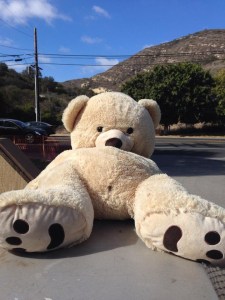
Look at us, walking around in the world with only skin to cover up the muscles attached to tendon attached to bone that we’re all made of, invisible blood flowing through all of us all the time. Don’t our bodies seem so insubstantial for all the experiences we go through, all the conversations we have, all the music and tears and talk and laughter that pours out of us? So much of what makes up the heart of us is invisible. People from my past, for good and for not, flitted through my mind when I read this poem.

William Road

The visible and the in-
     – Marge Piercy

Some people move through your life
like the perfume of peonies, heavy
and sensual and lingering.
Some people move through your life
like the sweet musky scent of cosmos
so delicate if you sniff twice, it’s gone.
Some people occupy your life
like moving men who cart off
couches, pianos and break dishes.
Some people touch you so lightly you
are not sure it happened. Others leave
you flat with footprints on your chest.
Some are like those fall warblers
you can’t tell from each other even
though you search Petersen’s.
Some come down hard on you like
a striking falcon and the scars remain
and you are forever wary of the sky.
We all are waiting rooms at bus
stations where hundreds have passed
through unnoticed and others
have almost burned us down
and others have left us clean and new
and others have just moved in.


For more information on Marge Piercy, please click here.

Poem of the Week, by Todd Boss


My friend Erica and I are both the if-your-fingers-are-busy-then-your-concentration-is-more-focused types. We like to sit next to each other in meetings because we can then present a united front of seamstressery, which is a word I just made up. Erica, an artist specializing in handmade paper creations (her work is stunning), calmly plies her needle while I either knit or quilt. In this way, we can pay close attention to what’s being said. Slow, rhythmic projects that take time and care, like quilting or gardening or cooking or long hikes, both keep me sane and bring ideas floating into my head. When I read this poem by Todd Boss it brought me right back to elementary school, those fat pencils and thick paper with the wide lines. Wooden desks. The whispery sound of pencil on paper. The tangibility of the physical world.

Shack hammock (1)

The World Is in Pencil

– Todd Boss

—not pen. It’s got
that same silken
dust about it, doesn’t it,
that same sense of
having been roughed
onto paper even
as it was planned.
It had to be a labor
of love. It must’ve
taken its author some
time, some shove.
I’ll bet it felt good
in the hand—the o
of the ocean, and
the and and the and
of the land.


For more information on Todd Boss, please click here.

Poem of the Week, by Mary Karr

Scrolling through a few hundred poems this morning, no poetry goal in mind, I found this one by Mary Karr. It flung me back into memories of my long-ago cat Clemens, who appeared in my life one night when we were eating salmon. He hurled himself up from the ground and clung to the screen window of our first-floor apartment, yowling. We took him in and he never lIMG_1181eft. Clem was born to the streets and it was not possible to keep him inside all the time. He was a street cat, a warrior, scourge of the feline neighborhood. One day I returned home to find him lying on the front lawn, near death, one eye gouged half-out, deep wounds in his tail and sides that took him weeks both in the hospital and at home to recover from. He loved running water and sometimes I let the kitchen faucet trickle just to watch him crouch in the sink, batting at it. His nickname was shui mao, which translates as water cat. He loved tall boxes just barely big enough to contain him, from which he would stare out, sure that no one could see him. When he was nine he developed diabetes. It was twice-daily insulin shots from then on, none of which slowed him down much. He died at 17, having finally become an old, slow cat. Clem was magnificent. I still miss him.

For a Dying Tomcat Who’s Relinquished His Former Hissing and Predatory Nature
     – Mary Karr

I remember the long orange carp you once scooped
from the neighbor’s pond, bounding beyond
her swung broom, across summer lawns

to lay the fish on my stoop. Thanks
for that. I’m not one to whom offerings
often get made. You let me feel

how Christ might when I kneel,
weeping in the dark
over the usual maladies: love and its lack.

Only in tears do I speak
directly to him and with such
conviction. And only once you grew frail

did you finally slacken into me,
dozing against my ribs like a child.
You gave up the predatory flinch

that snapped the necks of so many
birds and slow-moving rodents.
Now your once powerful jaw

is malformed by black malignancies.
It hurts to eat. So you surrender in the way
I pray for: Lord, before my own death,

let me learn from this animal’s deep release
into my arms. Let me cease to fear
the embrace that seeks to still me.


For more information on Mary Karr, please click here.

Poem of the Week, by Jim Daniels

IMG_4028Those boots over there were sitting amongst the rundown running shoes and loafers and wingtips on a display rack of men’s shoes at Experienced Goods in Brattleboro, Vermont a few years ago. They were $8. It was clear that they were at least an inch too long for me, but because they were narrow I tried them on anyway and they fit as if someone had poured liquid leather around my feet and ankles and it magically turned into boots. I took them to an old-school cobbler to be resoled.

“Can you tell me what brand these are?” I said. “Because I need to buy only this brand for the rest of my life.”

He smiled.

“You can’t buy this brand,” the cobbler said. “There is no brand. These boots are probably thirty years old. They were handmade in Italy.”

Leather boots, steel toe boots especially, are one of the few things left in the world that can’t be rushed. They can’t be stonewashed or bleached or chemically altered in order to save time, because what boots need to fit right is exactly that: time. This poem reminds me of that fact.

Work Boots: Still Life
     – Jim Daniels

Next to the screen door
work boots dry in the sun.
Salt lines map the leather
and laces droop
like the arms of a new-hire
waiting to punch out.
The shoe hangs open like the sigh
of someone too tired to speak
a mouth that can almost breathe.
A tear in the leather reveals
a shiny steel toe
a glimpse of the promise of safety
the promise of steel and the years to come.

For more information on Jim Daniels, please click here.

Poem of the Week, by Leah Falk


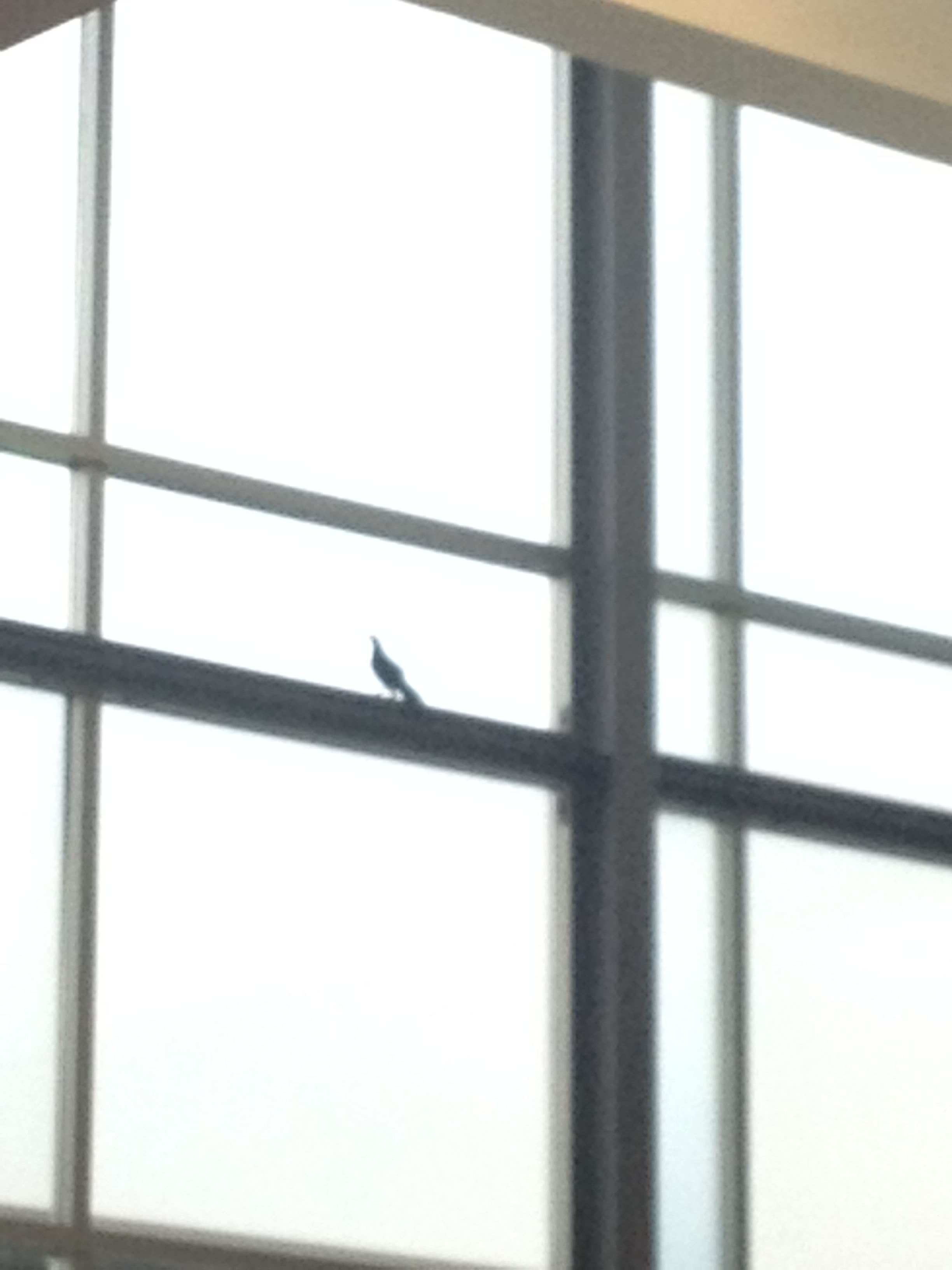
See that bird below? I’ve been watching him sing his heart out for hours now, here at the Austin, TX airport, where we have both taken up residence, me for the better part of 24 hours and him for who knows how long. A combination of overbooked flights, rebooked flights, unbooked flights and the chaos of the SXSW music festival have given me the opportunity to get to know this airport well, although probably not as well as this bird. I wander from one end of the terminal to another, listening to live music, eating pretzel bits offered up by the Auntie Anne’s server, talking to the Earl Campbell Sports Bar waiter who recognized me this morning from dinner last night, and listening to the bird. He might not be singing so much as wailing, and who can blame him? He made me think of this beautiful poem by Leah Falk. A torn page in the book of animals.

IMG_3996.JPG


Noah, to His Dove

– Leah Falk


With your wings of paper, fly, my bird, and find

a man who stands in water. In this land,

even far from shore, the brows of waves might break

against a sandy table, glass moon lit

to guide them toward last call, their salty end.


To the man who holds that trembling room

together with his feet—who holds his heart

against erosion—give your gentle body,


its crisp folds, its fragile case, its ink

as sweet as liquor. If he reads you over

and again, build us a house upon his rocky breast,


gather clay and willow. Until then, when I come

to your torn page in the book of animals,

my own heart stills and digs a trench that fills with rain.


For more information on Leah Falk, please click here.

My website.​​

My blog.
My Facebook page.

Twitter: @alisonmcghee

Poem of the Week, by Alden Nowlan

IMG_0382When I was a kid, the school bus I rode back and forth to school was a horror show of cruelty perpetrated by bullies who were aided and abetted by the bus driver. Every four years I pretend to be British (a six-week election campaign! silence until September!) but it’s not working. Being bullied, watching others be bullied, staying silent about the crime of bullying, watching the as-yet-unbullied align themselves nervously behind the bullies with the goal of not being bullied themselves are all part of the same putrid bully swamp. A poem about someone rejecting the surround-sound meanness, even covertly, even though he’s scared, can act as partial antidote to the poison. Poem of the week, by Alden Nowlan.

Flossie at School
     – Alden Nowlan

Five laths in a cotton dress
was christened Flossie
and learned how to cry,
her eyes like wet daisies
behind thick glasses.

She was six grades ahead of me
and wore bangs; the big boys
called her “The Martian,”
they snowballed her home,
splashed her with their bicycles,
left horse dung in her coat pockets.

She jerked when anyone spoke to her,
and when I was ten
I caught up with her one day
on the way home from school,
and said, Flossie I really like you
but don’t let the other kids know I told you,
they’d pick on me, but I do like you,
I really do, but don’t tell anybody.
And afterwards I was ashamed
for crying when she cried.


For more about Alden Nowlan, click here.

Poem of the Week, by Ellery Akers

California, choo choo train cloudsMany years ago I read Innumeracy, a slender, astonishing book by John Allen Paulos, about how the understanding or lack thereof of basic math and statistics affects everything about the way we live our lives. What I learned in that book humbled me and has stayed me with me ever since, especially the singular fact that every breath every one of us takes contains at least three molecules of the air breathed by every human being and creature who has ever lived on this earth. Gandhi. Hitler. Wooly mammoths. Jesus Christ. The prophet Mohammad. Your great grandparents, your great grandchildren. Every, single, breath. This poem makes me think of that all over again, in yet another way. Poem of the Week, by Ellery Akers.

Breathing
– Ellery Akers

I love to feel as if I’m just another body, a breather along with the others:
blackbirds taking sips of air, garter snakes
lapping it up with their split tongues,
and all those plants
that open and close and throw up streamers of oxygen:
maybe that cottonwood that tilts across the creekbed
is the very one that just sucked up carbon dioxide
and let me breathe, maybe I should hang a card around it,
Thank you for the next two minutes of my life,
maybe some of
the air I just swallowed used to be inside the hot larynx of a fox,
or the bill of an ash-throated flycatcher,
maybe it just coursed past
the scales of a lizard–a bluebelly –
as he wrapped himself around his mate,
maybe he took an extra breath and let it out
and that’s the one I got.
Maybe all of us are standing side by side on the earth
our chests moving up and down,
every single one of us, opening a window,
loosening a belt, unzipping a pair of pants to let our bellies swell,
while in the pond a water beetle
clips a bubble of air to its shell and comes back up for another.
You want sanitary? Go to some other planet:
I’m breathing the same air as the drunk Southerner,
the one who rolls cigarettes with stained yellow thumbs
on the bench in the train station,
I’m breathing the same air as the Siamese twins
at the circus, their heads talking to each other,
quarreling about what they want to do with their one pair of hands
and their one heart.
Tires have run over this air,
it’s passed right over the stiff hair of jackrabbits and road kill,
drifted through clouds of algae and cumulus,
passed through airplane propellers, jetprops,
blades of helicopters,
through spiderlings that balloon over the Tetons,
through sudden masses of smoke and sulfur,
the bleared Buick filled with smoke
from the Lucky Strikes my mother lit, one after another.
Though, as a child, I tried my best not to breathe,
I wanted to take only the faintest sips,
just enough to keep the sponges inside,
all the lung sacs, rising and falling.
I have never noticed it enough,
this colorless stuff I can’t see,
circulated by fans, pumped into tires,
sullenly exploding into bubbles of marsh gas,
while the man on the gurney drags it in and out of his lungs
until it leaves his corpse and floats past doorknobs
and gets trapped in an ice cube, dropped into a glass.
After all, we’re just hanging out here in our sneakers
or hooves or talons, gripping a branch, or thudding against the sidewalk:
as I hold onto my lover
and both of us breathe in the smell of wire screens on the windows
and the odor of buckeye.
This isn’t to say I haven’t had trouble breathing, I have:
sometimes I have to pull the car over and roll down the window,
and take in air, I have to remember I’m an animal,
I have to breathe with the other breathers,
even the stars breathe, even the soil,
even the sun is breathing up there,
all that helium and oxygen,
all those gases blowing and shredding into the solar wind.


For more information about Ellery Akers, please click here.
Poem of the Week, by Rebecca Foust

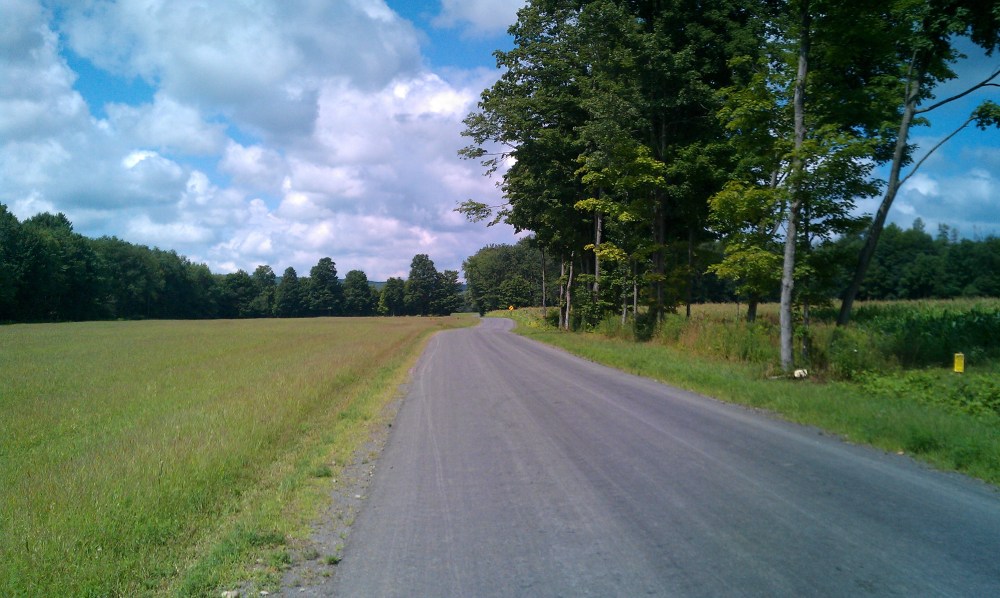
I had another poem all ready to go this morning. Then I got a text from a distant city where someone I love lives: “Went to the tree lighting last night but the crowd was so huge that we got afraid of being in the middle of it so we watched from afar.” This text and the following one, “Avoiding crowds at all costs,” felt like the capper to a hard week of hard news. So I turned to my file of comfort-poems, like The Peace of Wild Things by Wendell Berry, like Kindness by Naomi Shihab Nye, like To My Young Friends Who Are Afraid by William Stafford, but none of them felt right. Then I read this one, by Rebecca Foust, and it struck the right chord. Poem of the Week.

Vernal
– Rebecca Foust

Some things we believe cannot be redeemed.
But in a valley the Railroad finally forgot,
the silted, slugged ditch we would not eat fish from
runs again, a river, rilled as before
by clear water, not black. Grass grows back
between tracks and rails. Limestone spalls
hewn from the mountain heal into soil.
Stumps heaped with live coals, split, and winched out
in spring frail a new circlet of green.
Panthers are seen. A son is born blue, and lives.
Some things we believe cannot be redeemed,
but the dawn, as yet, is diurnal. The woods keep
a hushed vigil, then rustle with life we can’t see;
small ponds well from the ground while we sleep.


For more information on Rebecca Foust, please click here.

My Facebook page.

Poem of the Week, by Franz Wright

Me last Thursday, on the way to the airport and halfway into a deep conversation about religious extremism with my Somali-born Uber driver: “It horrifies me. How does the longing for purpose and passion that every young person has turn into the belief that their god is the only god, and that their god justifies murder and mayhem and terror?”

Him (31 years old, handsome, laughing, who along with his Somali-born wife works full-time on different shifts so that they can trade off taking care of their four little kids): “I will tell you something. I almost became one of them.”

Pause.

“Um. . . you did?”

“Yes. After we fled the civil war in Somalia we lived in Nairobi for three years and I went to a new mosque. I was 18. And the leader taught hate. I began to be filled with hate and to think that others should suffer and die.”

“What changed?”

“I felt my heart turning hateful. And I decided to bring a notebook to the mosque with me for one week. I had one column Hate and another column Love and I kept track of what he was teaching. At the end of the week it was all hate. And I stopped going to the mosque.”

“And now? Did you find a mosque in Minneapolis that feels right to you?”

“I don’t go to any mosque anymore. I don’t raise my kids in any religion. If I want to pray, I pray inside my own head. My religion is two words only. You want to know what they are?”

“I do.”

“Don’t hate.”

Poem of the week, by Franz Wright.

 Solution
– Franz Wright

What is the meaning of kindness?
Speak and listen to others, from now on,
as if they had recently died.
At the core the seen and unseen worlds are one.


For more information about Franz Wright, please click here.

My Facebook page.

Poem of the Week, by Kathleen Jamie

When I was a child the story of the Pied Piper, who lured the children of Hamelin out of town and  into the side of a mountain, from which they never appeared again, held a dark fascination. Typing that last sentence out made me realize that it still does. The piper with his irresistible tune, the children who willingly followed, the finality of the mountain closing behind them: something about that story is enchanting in an awful way. This poem, which feels translated from a long-ago time (even though it’s not), brings me right back to the feeling that those old legends and fairy tales –the Grimm versions, not the sanitized Disney versions, conjures up in me.

The Hinds
– Kathleen Jamie

Walking in a waking dream
I watched nineteen deer
pour from ridge to glen-floor,
then each in turn leap,
leap the new-raised
peat-dark burn. This
was the distaff side;
hinds at their ease, alive
to lands held on long lease
in their animal minds,
and filing through a breach
in a never-mended dyke,
the herd flowed up over
heather-slopes to scree
where they stopped, and turned to stare,
the foremost with a queenly air
as though to say: ‘Aren’t we
the bonniest companie?
Come to me,
You’ll be happy, but never go home.’

For more about Kathleen Jamie, please click here.

My https://www.facebook.com/Alison-McGhee-119862491361265/.