Poem of the Week, by Andrea Gibson
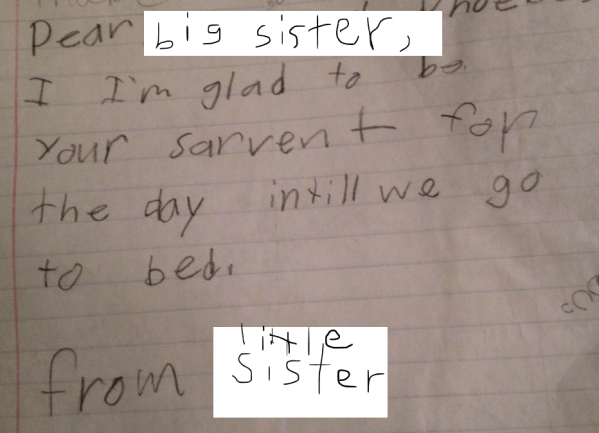
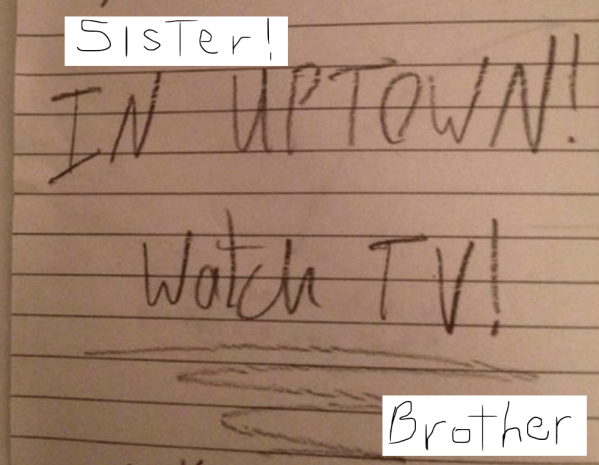
 A few weeks ago an anonymous teen sent me the note to the right, and I wished I could put my arms around them. Three times in my own life, I’ve called a crisis hotline. Each time, I was calling because someone I loved was contemplating suicide, and I wanted to get help for them. Advice by proxy, with me as the conduit. Each time, the volunteer kept ignoring my pleas for help for my friend and calmly and gently steered me back to myself: Where are you right now? How do you feel right now? What’s your plan for when we hang up?
What was really happening was that the hotline volunteer understood –when I didn’t–that I had called because of my own desperation and terror. These conversations lasted close to an hour each time, and when I hung up, some small part of peace and belief had been restored in me and I was able to keep going. Sometimes you feel, for whatever reason, that you can’t burden your friends and family with your pain and worry. I can’t begin to express my gratitude to these anonymous voices, trained to listen, and to see below the surface.
Those voices are why I added crisis hotlines to the back of my novel What I Leave Behind, which is a book at core about kindness in the face of profound sorrow. What good can an anonymous voice on the other end of an anonymous phone line do? A lot, because that voice is not, in fact, anonymous. None of us are anonymous. We are all connected. Like the brilliant Andrea Gibson says in their mesmerizing poem below, What I know about living is the pain is never just ours. Every time I hurt I know the wound is an echo, so I keep listening for the moment the grief becomes a window.
The Nutritionist, by Andrea Gibson
The nutritionist said I should eat root vegetables,
said if I could get down thirteen turnips each day
I would be grounded, rooted.
Said my head would not keep flying away to where the darkness lives.
The psychic told me my heart carries too much weight,
said for twenty dollars she’d tell me what to do.
I handed her the twenty and she said, “Stop worrying, darling,
you will find a good man soon.”
The first psycho-therapist said I should spend three hours a day
sitting in a dark closet with my eyes closed and my ears plugged.
I tried it once but couldn’t stop thinking
about how gay it was to be sitting in the closet.
The yogi told me to stretch everything but the truth,
said focus on the out breath,
said everyone finds happiness
if they can care more about what they can give
than what they get.
The pharmacist said Klonopin, Lamictal, Lithium, Xanax.
The doctor said an antipsychotic might help me forget
what the trauma said.
The trauma said, “Don’t write this poem.
Nobody wants to hear you cry about the grief inside your bones.”
But my bones said, “Tyler Clementi dove into the Hudson River
convinced he was entirely alone.”
My bones said, “Write the poem.”
To the lamplight considering the river bed,
to the chandelier of your faith hanging by a thread,
to everyday you cannot get out of bed,
to the bullseye of your wrist,
to anyone who has ever wanted to die:
I have been told sometimes the most healing thing we can do
is remind ourselves over and over and over
other people feel this too.
The tomorrow that has come and gone
and it has not gotten better.
When you are half finished writing that letter
to your mother that says “I swear to God I tried,
but when I thought I’d hit bottom, it started hitting back.”
There is no bruise like the bruise
loneliness kicks into your spine
so let me tell you I know there are days
it looks like the whole world is dancing in the streets
while you break down like the doors of their looted buildings.
You are not alone
in wondering who will be convicted of the crime
of insisting you keep loading your grief
into the chamber of your shame.
You are not weak
just because your heart feels so heavy.
I have never met a heavy heart that wasn’t a phone booth
with a red cape inside.
Some people will never understand
the kind of superpower it takes for some people
to just walk outside some days.
I know my smile can look like the gutter of a falling house
but my hands are always holding tight to the rip cord of believing
a life can be rich like the soil,
can make food of decay,
turn wound into highway.
Pick me up in a truck with that bumper sticker that says,
“It is no measure of good health
to be well adjusted to a sick society.”
I have never trusted anyone
with the pulled back bow of my spine
the way I trusted ones who come undone at the throat
screaming for their pulses to find the fight to pound.
Four nights before Tyler Clementi
jumped from the George Washington bridge
I was sitting in a hotel room in my own town
calculating exactly what I had to swallow
to keep a bottle of sleeping pills down.
What I know about living
is the pain is never just ours.
Every time I hurt I know the wound is an echo,
so I keep listening for the moment the grief becomes a window,
when I can see what I couldn’t see before
through the glass of my most battered dream
I watched a dandelion lose its mind in the wind
and when it did, it scattered a thousand seeds.
So the next time I tell you how easily I come out of my skin
don’t try to put me back in.
Just say, “Here we are” together at the window
aching for it to all get better
but knowing there is a chance
our hearts may have only just skinned their knees,
knowing there is a chance the worst day might still be coming
let me say right now for the record,
I’m still gonna be here
asking this world to dance,
even if it keeps stepping on my holy feet.
You, you stay here with me, okay?
You stay here with me.
Raising your bite against the bitter dark,
your bright longing,
your brilliant fists of loss.
Friend, if the only thing we have to gain in staying is each other,
my god that is plenty
my god that is enough
my god that is so so much for the light to give
each of us at each other’s backs
whispering over and over and over,
“Live. Live. Live.”
To listen to Andrea Gibson perform this poem, click here.
For more information on poet and performer Andrea Gibson, click here.
 Here’s the fourth-floor walkup you called home. Here’s the tiny room overlooking Joy Street where Laurel used to roll her waitressing change into paper tubes for the rent. Here’s your room, with the big saggy bed left by a previous tenant. Here’s the bathroom where you didn’t pee at night because darkness was the domain of the cockroaches. Here’s the plant in the sunny window that you wound around itself because it was out of control.
  When he was little, my son sometimes asked me questions that seized my heart, questions like Mama, what if we’re all characters in a book, and someone is writing us right now? Where these questions came from, I don’t know. Then and now he was what I think of as an old soul. Once, when he was a teenager and we sat in a waiting room, I assumed he was bored and offered him a book to read. No, he said, I’m just going to sit here and think.
  My friend Todd is an art museum guard by day and an artist by day and night. He composes and records original songs, dives deep into pop music he orders from Japan, watches and re-watches Miyazaki films, reads and re-reads favorite novels and finds something new in them each time. Whatever draws him, he will follow: He’s learning Japanese, has become a sushi expert, and gradually, over the years, has compiled a collection of hilarious and somehow profound observations on life as a museum guard.
  Q: Does writing about hard things ever make you agitated and upset, so that you have to walk away from the writing and regain your equilibrium?
 A few years ago I sat in a crowded auditorium listening to a speaker lecture on a topic I don’t remember. What I do remember is that fifteen minutes into his lecture, he was interrupted by an audience member who jumped to his feet and, under the guise of asking a question, began to harangue the speaker. The speaker, who was elderly and softspoken, was clearly stunned at the interruption, which had clearly been planned. The audience member grew taller and louder as he launched into his own, counterpoint lecture. He gesticulated. He menaced.
 Long ago I left behind the simple prayers of my childhood, the ones spoken in unison with others in church, or around the table at a special meal when everyone named something they were thankful for. I’ve never known what God is, and I don’t know what God is to others. If forced to come up with a definition, my definition of God would be something like the feeling of my children on either side of me in bed as I read them to sleep when they were little. God would be the high school students I used to teach, ringed on the floor in our classroom on the giant pillows I’d made, still and silent and sometimes falling asleep on Friday afternoons as I read them stories. God would be the idea and the feeling of peace, of a place where nothing bad can happen, where only love and comfort dwell. God would be the poems that swell my heart open in a way that almost hurts, like this one below.
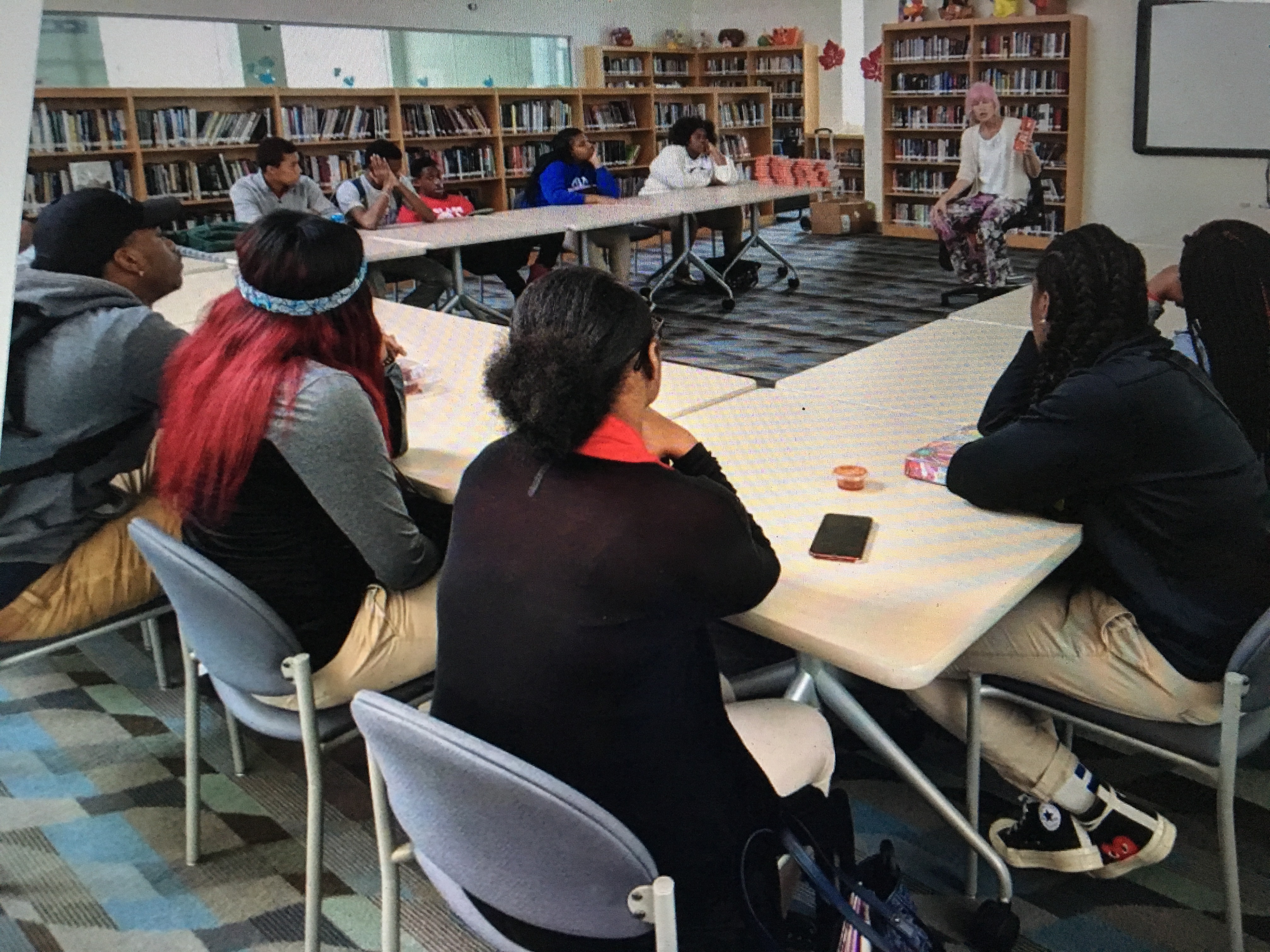 Me to a roomful of high school students last week: “Raise a hand if you’ve lost someone you love to murder.”
 If home is defined as the place where you don’t have to think –you can just be— then you can find home not just in a place but a person. I believe in love at first sight –it’s happened to me–and I also believe in recognition at first sight. Sometimes they’re the same thing. A knowing. An old understanding. The instinctive, animal perception that you are in the presence of a kindred spirit. You look at them, they look at you, and you both relax. You already know each other.
  eight and were the reason my nickname for her was Dry Salty Crunchy Carbohydrate.