Poem of the Week, by Maria Mazziotti Gillan
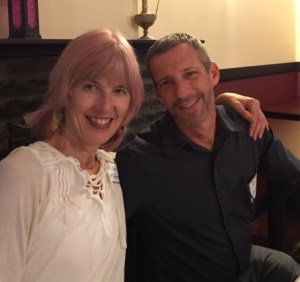 Neither my friend nor I had been to a high school reunion in many years –in my case, decades–and we were both nervous. The years we had spent growing up together in upstate New York seemed far away, and we hadn’t kept in touch with many classmates. So we met early, at the bar in that tiny stoplight-less town, and fortified ourselves with gin while paging through our yearbook to remind ourselves of faces and names. At one point I said to him, It’s been decades. We don’t look the same, will anyone else?
Of course not. The banquet room was full of strangers. But as the night wore on, fragments of memory returned. In the curve of a middle-age woman’s smile I flashed back on the girl she used to be, laughing down the hall, her long dark hair parted in the middle. A man came smiling up to me —Alison!–and I remembered dancing at a bar with him and some other friends the week we graduated. Another classmate came up to my friend and told him, almost crying, how much she admired the man he had become.
So what was it like?, the painter asked me when we talked late that night. It was like saying goodbye to my former self, I said, like putting my childhood to bed. All of which reminds me of this poem, which I loved the minute I read it years ago. Sometimes it’s so hard to know you’re beautiful when you’re young.
Nighties
– Maria Mazziotti Gillan
At my bridal shower, someone gave me
a pink see-through nightgown and pink satin
slippers with slender heels and feathers.
The gown had feathers on it, too.
I’ve always hated my legs and even then,
when I was still thin and in good shape,
I didn’t want to wear that nightgown
or slippers, didn’t want to parade
in front of you like some pinup.
But I wore them anyway, all those negligees
I got as shower presents, sleazy nylon
I didn’t know was tacky. When I wore
sporty nightgowns, I’d leap into bed
not wanting you to notice how
the nightgown revealed what I thought
my biggest flaw. In all the young years
of our marriage, I wore a different nightgown
every night, not that it stayed on for long,
and afterward I’d pull it back on, not wanting
our children to see me naked in our bed.
I felt so sophisticated in those nightgowns,
like the ones Doris Day wore in movies.
Only years later, when my daughter buys me
a nightgown made of soft and smooth blue silk,
do I realize that the first ones I owned
were imitations of this one
I hold now to my cheek, grateful
to have been once so young,
to have loved you in nylon and silk
and in my own incredible skin.
For more information on Maria Mazziotti Gillan, please click here.
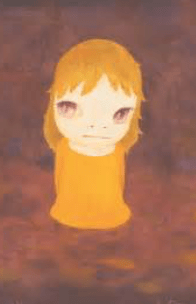
 For years I’ve written
  A few days ago at the store I stood in line, my groceries on the conveyor belt: butter, greens, an avocado, carrots and peppers and potatoes. The person behind me placed their items on the belt: two packages of ice cream sandwiches. About once a year I get a craving for an ice cream sandwich, and looking at the picture on the boxes made me want one. I turned to see who was buying them. She was middle-aged, with faded hair and a worn, tired face, wearing a jacket with a broken zipper. Hunched over. She’s been through some things, was the thought in my mind, and I waited for her to look up so I could smile at her and chat a little while we waited for the cashier. But she never did look up. And I thought of this poem, by the wondrous Dorianne Laux. So many people out there, all of us maybe, who have been through some things. Oh, the water.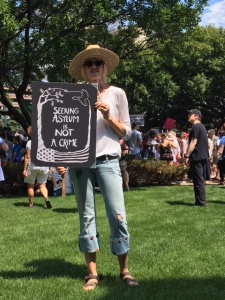
 Growing up in the age of Darwinian elementary schools –the gym teacher would choose the two best athletes to captain every team, and one by one they would pick off first the good athletes, then the midlings, then the uncoordinated, until finally there was only one child remaining, huddled against the wall– I hated gym class. Not because I was bad at sports (I’m not) but because I can’t stand cruelty. And that little ritual was fundamentally cruel.
  My son was two years old and we were in the backyard. It was early spring, and I was digging around in the dirt when he suddenly bent double and started laughing and pointing. Dinosaurs, he said, dinosaurs! I followed his pointing finger to the patch of ferns next to us. They were just beginning to unfurl their fronds, and the stem of each was bent and curved, and in that instant I saw what he saw: the long curved necks of T-Rexes. My laughing little boy, looking at the world in a way I’d never seen it before. I have never looked at ferns the same way since. The memory of that day almost chokes me up, and so does this small poem.
  Rough, rough week. Children torn from their parents at borders, the suicides of loved people who projected happiness, the cruelty of our elected employees and the ongoing and unfathomable cowardice of their minions who stand by, watching our democracy crumble. Last night I scrolled through poem after poem, looking for one with clear eyes and a level gaze, like this one below. A poem that sees the situation for what it is and imagines it as it can be. Time for us to be the goddesses who remake this world.
  Yesterday, after heavy rains, I went for a long walk. I kept hearing opera music and I looked around to see a man grinning at me and nodding from his car, where the windows were open and the volume turned way up. I laughed and waved back at him, and the below poem leaped up into my mind. My grandmother, whose life was extraordinarily hard, used to recite it to us with an unfamiliar lilt in her voice.