 Thirty years ago I stood in a kitchen reading through a letter of complaint sent to a business about one of their products. “Oh my God,” I remember saying. “Whoever wrote this letter is a horrible speller. And the grammar? Jeez!” Then I turned the page over and looked at the signature. And realized that the letter had been written by someone I loved, someone who had worked incredibly hard their whole life long, someone who could always be counted on to help, someone who was right there in the room.
That memory has haunted me ever since. When I think about it, the sensation of shame that flooded through me in that moment, that almost made me fall on my knees, was the beginning of a long slow road that brought me to where I am now, a writer and a teacher of writing who doesn’t care how bad her students’ spelling and grammar are. I am so so sorry, a student wrote me last week, thank you for being so patient and correcting my horrible spelling. All my terrible mistakes must feel like fingernails on a chalkboard to you.
But they don’t. I don’t care anymore about things like that. The surface doesn’t matter to me. Years and years of listening to others’ stories and watching others’ faces when their mistakes are pointed out, when they’re being laughed at, when they smile and smile and smile while their eyes fill with tears, have softened and gentled me. They have turned me into someone who will sit with her laptop propped on her lap and spend whatever time it takes to see through to the golden, glowing sun that shines beneath all those halting sentences.
Persimmons, by Li-Young Lee
In sixth grade Mrs. Walker
slapped the back of my head
and made me stand in the corner
for not knowing the difference
between persimmon and precision.
How to choose
persimmons. This is precision.
Ripe ones are soft and brown-spotted.
Sniff the bottoms. The sweet one
will be fragrant. How to eat:
put the knife away, lay down newspaper.
Peel the skin tenderly, not to tear the meat.
Chew the skin, suck it,
and swallow. Now, eat
the meat of the fruit,
so sweet,
all of it, to the heart.
Donna undresses, her stomach is white.
In the yard, dewy and shivering
with crickets, we lie naked,
face-up, face-down.
I teach her Chinese.
Crickets: chiu chiu. Dew: I’ve forgotten.
Naked: I’ve forgotten.
Ni, wo: you and me.
I part her legs,
remember to tell her
she is beautiful as the moon.
Other words
that got me into trouble were
fight and fright, wren and yarn.
Fight was what I did when I was frightened,
Fright was what I felt when I was fighting.
Wrens are small, plain birds,
yarn is what one knits with.
Wrens are soft as yarn.
My mother made birds out of yarn.
I loved to watch her tie the stuff;
a bird, a rabbit, a wee man.
Mrs. Walker brought a persimmon to class
and cut it up
so everyone could taste
a Chinese apple. Knowing
it wasn’t ripe or sweet, I didn’t eat
but watched the other faces.
My mother said every persimmon has a sun
inside, something golden, glowing,
warm as my face.
Once, in the cellar, I found two wrapped in newspaper,
forgotten and not yet ripe.
I took them and set both on my bedroom windowsill,
where each morning a cardinal
sang, The sun, the sun.
Finally understanding
he was going blind,
my father sat up all one night
waiting for a song, a ghost.
I gave him the persimmons,
swelled, heavy as sadness,
and sweet as love.
This year, in the muddy lighting
of my parents’ cellar, I rummage, looking
for something I lost.
My father sits on the tired, wooden stairs,
black cane between his knees,
hand over hand, gripping the handle.
He’s so happy that I’ve come home.
I ask how his eyes are, a stupid question.
All gone, he answers.
Under some blankets, I find a box.
Inside the box I find three scrolls.
I sit beside him and untie
three paintings by my father:
Hibiscus leaf and a white flower.
Two cats preening.
Two persimmons, so full they want to drop from the cloth.
He raises both hands to touch the cloth,
asks, Which is this?
This is persimmons, Father.
Oh, the feel of the wolftail on the silk,
the strength, the tense
precision in the wrist.
I painted them hundreds of times
eyes closed. These I painted blind.
Some things never leave a person:
scent of the hair of one you love,
the texture of persimmons,
in your palm, the ripe weight.
For more information on Li-Young Lee, please click here.
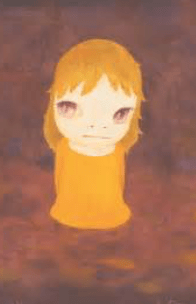 Sometimes I dream that I’m trying to get to Paris. I’m at the airport but I left my passport at home, and I can’t get a cab to go fetch it, and once I’m home I can’t remember where the passport is, and once I’m back at the airport I’m at the wrong terminal, and now I can’t find my ticket, and what happened to my roller bag, and, and, and this dream goes on all night long and I wake up exhausted. Sometimes don’t you want to step out of yourself for a day, or even a few hours, and just be someone else? Or no one else? This is when you need to read the poem below, by the hypnotic Mr. Cummings, because he knows exactly how you feel.
 I’ll rewrite this whole life and this time there’ll be so much love, / you won’t be able to see beyond it.
  What wearies you? What renews you? Who brings you joy? Who exhausts you? When you think of safety and comfort and happiness, what place or person comes to mind? The answers to these questions are already known to you. They live in your body, in a place beyond conscious thought and its dangerous companions, rationalization and overriding.
  Five years ago this week my older daughter and I were sitting on the porch of a cafe in Istanbul, smoking a hookah and eating mezes and pita bread. Later, we walked the streets of our neighborhood, which was on the Bosphorus. At one point the muezzins began their call to prayer, the sound of their voices wafting over the stone walls and cobblestones of that vast and sprawling city. The sun was falling below the horizon and my daughter was walking ahead of me, her tumble of dark curls falling over her navy jacket, and my heart seized up in a familiar way, the way it has seized up my entire life, when the world is too beautiful and you want to stop and freeze it but the minutes are passing and passing and passing regardless.
 Once, a long time ago, I went to a jumprope exhibition in the gym of a middle school. There were teams of tandem jumpers, rope dancers, and synchronized twirling. The students had practiced for many weeks prior to the exhibition. This was back in the days of big VHS camcorders, and I had one on my shoulder so I could record the coolest moments. At the very end of the competition, the gym floor cleared and a single jump roper entered the room from a side door. One of his legs was twisted up behind his head –it looked effortless, he was that flexible and agile–and he did so many tricks so fast and so well, jump-roping the whole time, that I kept the camcorder trained on him. The crowd burst into a roar.
  We used to call them the funnies, and I have a memory of sitting on my dad’s big lap while he folded the newspaper in half, then quarters, so he could read them to me. This would have been on a Sunday, because I remember the strips as being full-color. I still read the daily comics, even though most of them are terrible – tired, unfunny, boring, and retreading the same exact ground for decades on end. Once in a while a strip comes along that’s electrifyingly good –Calvin & Hobbes, Boondocks, Cul de Sac–but they don’t last long, usually because their creators have the courage to cancel them when they’ve run out of steam. So I read out of habit, with no expectation of transcendence. But every once in a while one of them pierces my heart, like today’s Pearls Before Swine, by Stephan Pastis.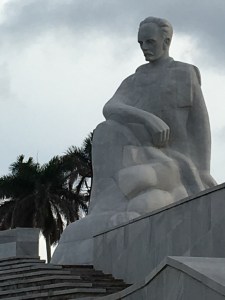


 “It was a time like this. . . when all things fall apart.”
