Poem of the Week, by Joyce Sutphen

Registration for our January 8-13 2024 Write Together session is in full swing. I’d love to see you in this one hour, twice-daily workshop in which we all quietly write together from a guided prompt. It’s a beautiful way to usher in the new year. 

For many years I taught creative writing at a non-traditional university for working adults, many the first in their family to go to college, many returning to college after a decades-long break. In the beginning we gave no grades. Instead, we hand-wrote long narrative evaluations of our students’ work. These narratives took forever to compose–like, forever–but when done right they were profoundly reflective documents.

I used to sit late at night with a pen in my hand, picturing this student and that, re-reading their stories and poems and memoirs. If you’re going to be an artist you have to push yourself in ways you’re scared to. You have to experiment, challenge and challenge and challenge yourself. You have to be fearless, and how can you be fearless if you’re afraid you won’t get an A? To this day I refuse to grade my students’ creative writing.

Things You Didn’t Put On Your Resumé, by Joyce Sutphen

How often you got up in the middle of the night
when one of your children had a bad dream,

and sometimes you woke because you thought
you heard a cry but they were all sleeping,

so you stood in the moonlight just listening
to their breathing, and you didn’t mention

that you were an expert at putting toothpaste
on tiny toothbrushes and bending down to wiggle

the toothbrush ten times on each tooth while
you sang the words to songs from Annie, and

who would suspect that you know the fingerings
to the songs in the first four books of the Suzuki

Violin Method and that you can do the voices
of Pooh and Piglet especially well, though

your absolute favorite thing to read out loud is
Bedtime for Frances and that you picked

up your way of reading it from Glynnis Johns,
and it is, now that you think of it, rather impressive

that you read all of Narnia and all of the Ring Trilogy
(and others too many to mention here) to them

before they went to bed and on the way out to
Yellowstone, which is another thing you don’t put

on the resumé: how you took them to the ocean
and the mountains and brought them safely home.


Click here for more information about poet Joyce Sutphen. Things You Didn’t Put On Your Resumé is from her book Carrying Water to the Field, University of Nebraska Press, 2019.

alisonmcghee.com
My podcast: Words by Winter
Poem of the Week, by Joyce Sutphen

I’d love to see you in one (or both!) of our two remaining fall four-hour Zoom workshops this coming week: The Intuitive Leap on November 14, and Poetry, from Flicker to Flame, on November 17. Click here and scroll down for all the details.

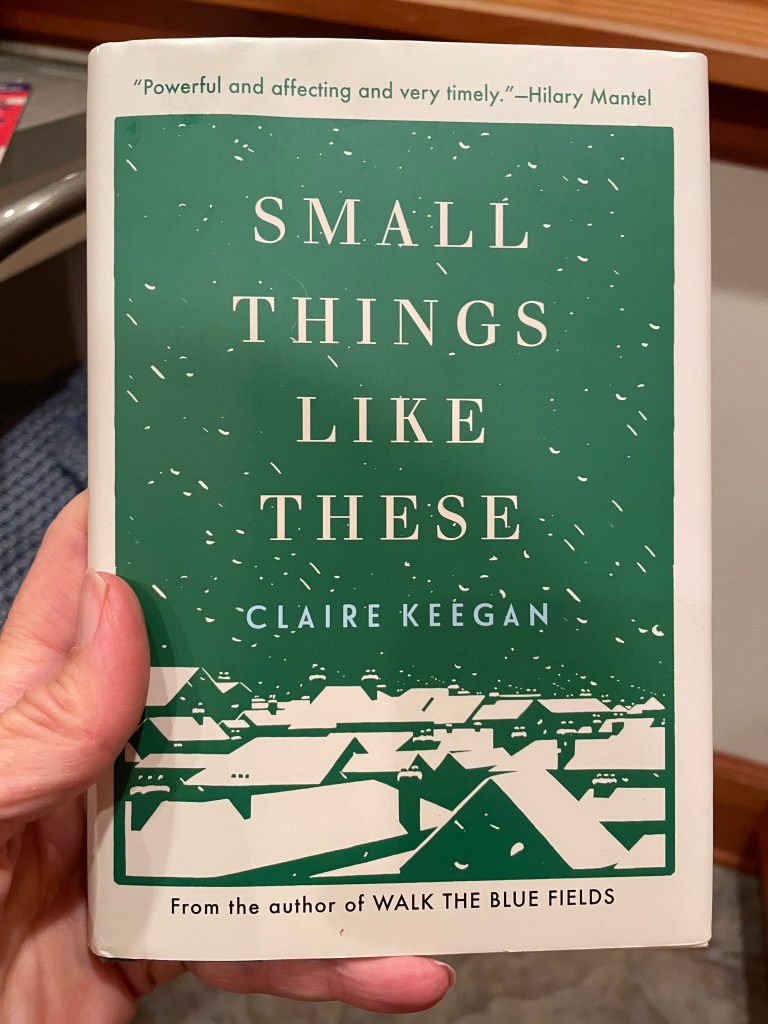
I read it in one sitting, my daughter said about a book. Here, you can have it. I too read it in one sitting and texted her this photo. What did you think? she asked, and I sensed her trepidation – what if I hadn’t liked it?

Broke my heart, I wrote. So beautiful and so painful.

I sensed her relief through the ether. The things and places and people we love can be hard to share, because what if others don’t feel the same way? This is why I can’t be in a book club, and why I usually don’t tell people my favorite movie because it’s often scorned. It hurts to think how I must have hurt people in my life by unknowingly scoffing at the things they hold dear.

Forgive Me John Keats, by Joyce Sutphen

The day we read your “Ode on a Grecian Urn”
I wasn’t able to make them see it.

I couldn’t get them to hear your voice, to
imagine you standing in a bare room,

slowly circling the urn, noticing
the lovers and the piper and the town,

and how it occurred to you that not one
detail would change; no one would ever grow

old there, the leaves would never fall. I tried
to get them to think about Art and Life–

how one is long and the other is short,
how death may be the mother of beauty.

But forgive me John Keats, I failed to let
them see your hand (still warm) held out to us.

Click here for more information about the wondrous poet Joyce Sutphen.

alisonmcghee.com
My podcast: Words by Winter

Poem of the Week, by Joyce Sutphen

I was a girl, walking along the Charles River in Boston on a sunny day, no one else within earshot, when suddenly a young couple got out of a car next to me, the girl in a tight sundress and heels, big smile, radiating friendliness. Her male partner silent, a half-smile on his face.

The girl was full of questions for me. She invited me to join them for coffee, tea, lunch. It’ll be fun, she said. That big smile. But something in me was wary. Something in me knew to smile, excuse myself, and back away.

I’ve never forgotten this five-minute encounter. It’s haunted me for decades, but why? Because they were going to do something terrible to you, I woke up thinking a few weeks ago. They were going to do something indescribably awful, and somehow you knew it.

Last week some friends and I were talking about all the narrow escapes in our lives, all the twists and turns of fate that somehow we’d eluded. Do you think life is just a never-ending series of lucky misses? one of them asked.

My Luck, by Joyce Sutphen

When I was five, my father,
who loved me, ran me over
with a medium-sized farm tractor.

I was lucky though; I tripped
and slipped into a small depression,
which caused the wheels to tread

lightly on my leg, which had already
been broken (when I was three)
by a big dog, who liked to play rough,

and when I was nine, I fell
from the second-floor balcony
onto the cement by the back steps,

and as I went down I saw my life go by
and thought: “This is exactly how
Wiley Coyote feels, every time!”

Luckily, I mostly landed on my feet,
and only had to go on crutches
for a few months in the fifth grade—

and shortly after that, my father,
against his better judgment,
bought the horse I’d wanted for so long.

All the rest of my luck has to do
with highways and ice—things that
could have happened, but didn’t.

Click here for more information about the wondrous Joyce Sutphen.

alisonmcghee.com

Words by Winter: my podcast

Poem of the Week, by Joyce Sutphen

My poems podcast, Words by Wintercan be found here.

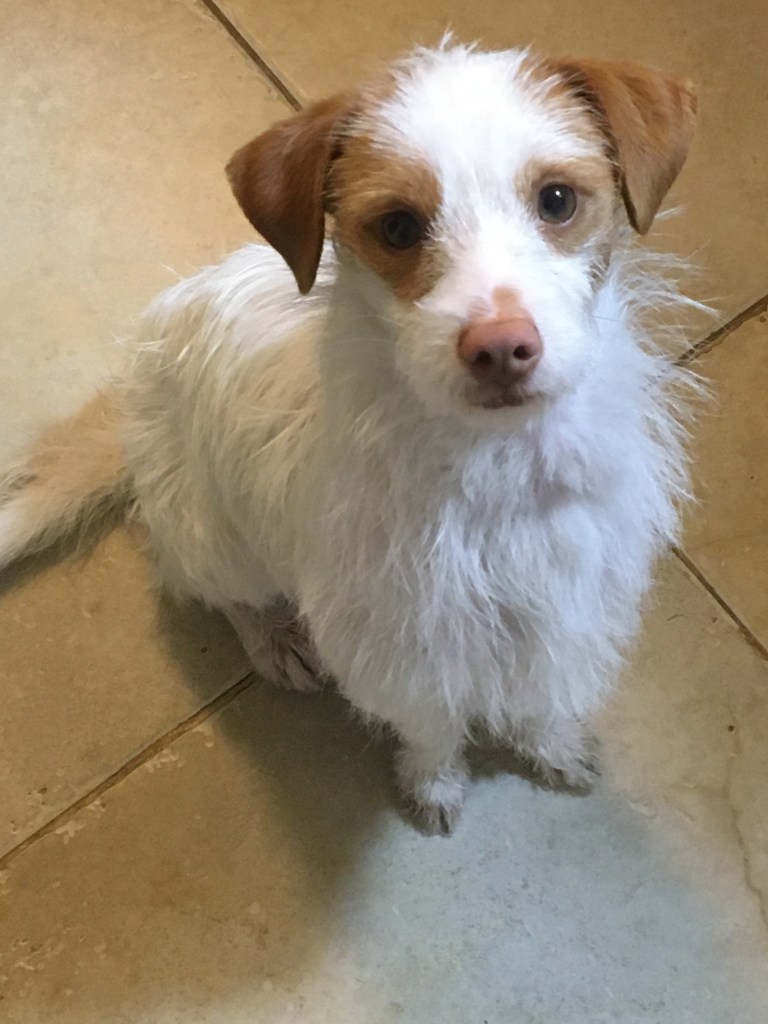
“Paco, my one real goal in life is for you to be happy.” Actual words that came out of my mouth yesterday. There’s no come on, hurry up about walks with this boy. He gets to choose where he wants to go and how long he wants to spend sniffing that clump of grass. He gets to inspect a dead worm all he wants, and if he wants to roll in it, okay, fine (kind of).

We wander and inspect and I try to see the world through his nose and ears and eyes. His love of the world and his fascination with the garbage cans in the same alley we walk down day after day makes me think of this beautiful poem, by a poet who somehow, always, manages to find words to keep the soul alive.

What to Do, by Joyce Sutphen


Wake up early, before the lights come on
in the houses on a street that was once
a farmer’s field at the edge of a marsh.

Wander from room to room, hoping to find
words that could be enough to keep the soul
alive, words that might be useful or kind

in a world that is more wasteful and cruel
every day. Remind us that we are
like grass that fades, fleeting clouds in the sky,

and then give us just one of those moments
when we were paying attention, when we gave
up everything to see the world in

a grain of sand or to behold
a rainbow in the sky, the heart
leaping up.

For more information about Joyce Sutphen, please click here.
alisonmcghee.com

Poem of the Week, by Joyce Sutphen

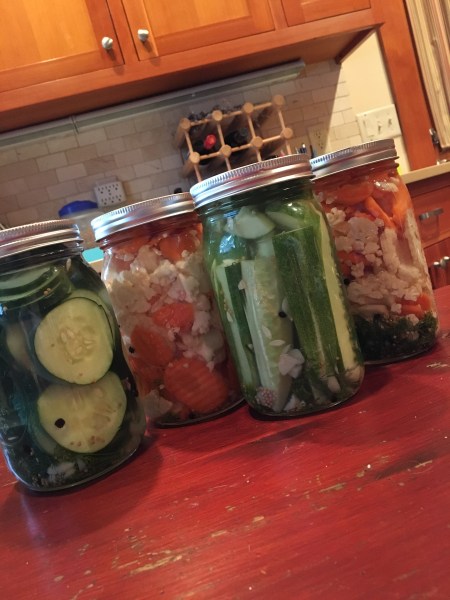
IMG_4786Last month I was in the foothills of the Adirondacks, poking around my parents’ giant vegetable garden (the thing could supply a small farmer’s market) talking tomatoes and beans with my father. Every summer and fall growing up we had an assembly line in the kitchen, washing and chopping and blanching and bagging zucchini and corn and beans and all kinds of squash for the freezer. Like most of the men I grew up around, my father always wears a hat (cap for everyday, hat-hat for solemn occasions), goes to the diner every morning, knows how to drive a tractor and change its oil, and has spent his life working hard and helping his neighbors and voting in elections. Joyce Sutphen’s elegant, fierce poems bring me back to my childhood. Some of them, like this one below, bring me to tears.

Our Fathers
     – Joyce Sutphen

Our fathers, who lived all their lives on earth—
are going now. They have given us all
we need, and when we asked, they gave us more.

Their names are beautiful to us, holy
as the names of stars, as familiar
as the roads we traveled, falling asleep

on the way from one farm to another.
Their kingdoms were small; they were never
interested in more than one homestead,

and as for evil: although they could not
keep it from us, they tried to keep us from
temptation, though we were like all children

and wanted our own power and glory,
world without end, forever and amen.


For more information on Joyce Sutphen, please click here.

Website
Blog
Facebook page
@alisonmcghee

Stand before a bookcase, close your eyes, pick a book, open it up, jab your finger down on the page, and use that sentence as your opening

“…together, country-western on the radio.”

Johnny Cash. Tammy Wynette. Dolly Parton. Loretta Lynn. Lynn Anderson. Hank Williams. Glen Campbell. Johnny Cash. Johnny Cash. Has Johnny Cash been mentioned? Johnny Cash.

These are the country-western singers you grew up with, the ones who were on the radio in the station wagon as you and your family drove. Which you had to do all the time –drive– since you lived five miles north of the nearest town.

These are the singers whose records you played on the record player. The first record you bought with your own money, when you were a little kid, was Johnny Cash at Folsom Prison.

You and your family once saw Johnny at an outdoor stadium in Toronto. It poured down rain, and your seats were out in the open. No shelter. “If you stay, I’ll play,” he said, and he went through guitar after guitar as each one got soaked on stage.

Dolly you loved, and you love even more now. She felt like a friend. Loretta you were a little scared of, but you admired her. Glen made you dream about wide-open spaces and horses and cowboy boots. Lynn had a song called “Fancy” that you listened to over and over and over and over and over and over, before you even understood what the song was about. Hank, Hank. . . something about him made you want to cry. Tammy made you think. But not too hard. She felt like the lesser of the country sisters.

Johnny, though, he was everything. You mourned the day he died, and you love his daughter partly because she’s a good songwriter, and partly because she loved her dad so much.

Country-western on the radio. Baseball on the radio. The WIBX morning show on the radio.

There was a lot of radio in your life, back then, and none of it was the NPR that you listen to nonstop now.

Kathi and April are both doing it, so why shouldn't she?

clam-man-sylvan-beach1She copies her friends and decides to write a poemish thing a day for a month. After all, if they told her to jump off a bridge, sure, she would jump off a bridge. Why not?

Good Lord,  I’ve got to write a poemish thing, she tells her daughter. They are sitting in a semi-grimy motel room on Day Four of a 1500-mile road trip. It’s check-out time.

Like right now, she says to her daughter. Quick, give me a topic.

Fruit! says the daughter.

Fruit? Too general. Too broad. Despite the fact that for some reason all she can picture is Minnie Pearl in a fruit hat with the price tag dangling off.

Give me a specific fruit, she says to her daughter.

Apple!

Her daughter sounds so sprightly. Fruit! Apple! That’s what happens when you’re a child, packed and ready to go and eating a pre-packaged sweet roll of indeterminate age while watching morning television in a semi-grimy motel  room. You become sprightly.

Sprightly or not,  the daughter said apple and apple it shall be.

Apple. What can possibly be poemized about an apple that won’t make her weep with cliche?

Eve ate one and all the trouble began: the new clothes, the shame, the forcible exit from the garden. But was  it so great in that garden, really? The whole idea always strikes her as the equivalent of the white clouds and harps and halos in the New Yorker cartoon heavens, those blah middle-aged paunchy angels peering down at the lost world below.

* * *

Apple

Is it fun, with all that peace up there? Do you look down on us, you who used to be us, down here amongst the grit and the grime, you who no longer eat anything, let alone apples, peering down from your clouds on we who do, and shake your heads knowingly, glad to be done with it all and safe up on your clouds?

Or do you wish you were still here? Do you secretly wish you could trade places with, say, me, still eating apples, like this one, warm in my hand from a tree warmed by September sunshine?

I would, if I were you. Look at this apple, and look at me eating it. Look at me, with this crunch and this color and this flavor flooding my mouth.

Give me dirt. Give me tears, and a throat sore from crying. Give me laughter that makes my stomach hurt. Give me sex. Give me this wide brown churning river outside this grimy hotel window. Give me these muscles and bone and blood still dripping from this cut thumb. Give me a mountain that makes my legs ache. Give me this beating heart that hurts in a thousand ways. Give me this child, that man, this dog and the sun glinting off that hurrying river.

Give me fear,  and give me wonder.

Keep your clouds and your harps and your halos,  poor sad jealous angels peering down from your whiteness, and give me this world, this enormous world with its dirt, and its bruises, and its worms, yeah, I’ll take them too.

* * *