Are you interested in a week of twice-daily no-pressure writing together on Zoom? Click here for details on our June 10-16 session of Write Together. I’d love to see you there!
More than seventeen years have passed for the woman who wrote this poem. She re-upped her bargain with the planets when Venus and Jupiter and Mercury again conjoined in the southwestern sky, and if she’s lucky she’ll keep re-upping it as long as she’s alive. This poem goes out to everyone –not just mothers, but everyone–who would trade their own life if it meant someone they loved could keep living.
Bargain, by Alison McGhee
The newspaper reports that at twilight tonight Venus and Jupiter will conjoin in the southwestern sky, a fist and a half above the horizon. They won’t come together again for seventeen years. What the article does not say is that Mercury, the dark planet, will also be on hand. He’ll hover low, nearly invisible in a darkened sky. I stare out the kitchen window toward the sunset.
Seventeen years from now, where will I be? Mercury, Roman god of commerce and luck, let me propose a trade: Auburn hair, muscles that don’t ache, and a seven-minute mile. Here’s what I’ll give you in return: My recipe for Brazilian seafood stew, a talent for French-braiding, an excellent sense of smell and the memory of having once kissed Sam W.
Then I see my girl across the room. She stands on a stool at the sink, washing her toy dishes and swaying to a whispered song, her dark curls a nimbus in the lamplight. The planets are coming together now. Minute by minute the time draws nigh for me to watch. Minute by minute my child wipes dry her red plastic knife, her miniature blue bowls.
Mercury, here’s another offer, a real one this time: Let her be. You can have it all in return, the salty stew, the braids, the excellent sense of smell and the softness of Sam’s mouth on mine. And my life. That too. All of it I give for this child, that seventeen years hence she will stand in a distant kitchen, washing dishes I cannot see, humming a tune I cannot hear.
Interested in a week of twice-daily no-pressure writing together on Zoom? Click here for details on our June 10-16 session of Write Together. I’d love to see you there!
A couple of weeks ago my daughter demonstrated a theragun to me. A theragun is a personal massager that’s kind of like a jackhammer, in a good way, and my daughter ran it up and down my shoulders and back a little fearfully.
I just don’t want to hurt those tiny bones of yours, she said at one point.
Which made me laugh, because I think of myself as tough and strong. Which I am. But then I read this poem and remembered the theragun, and for a second imagined a distant future, one I hope never happens.
Carrying mother on my back, by Ishikawa Takuboku
Carrying mother on my back Just for a joke. Three steps: then weeping— She’s so light.
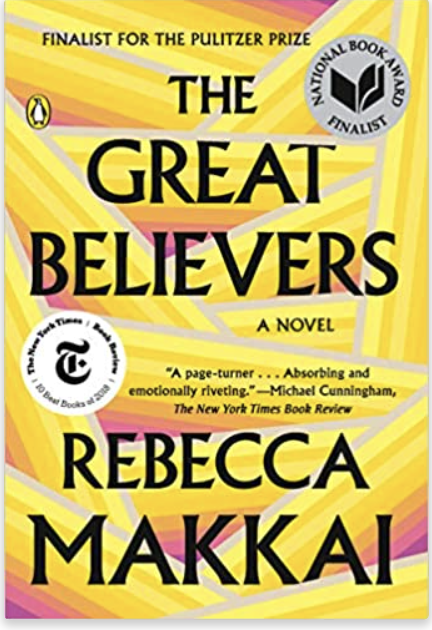
The Great Believers, by Rebecca Makkai. This is my first Makkai novel but it won’t be my last. Because I don’t read book descriptions, reviews, or book jackets before I read a book, I wasn’t prepared for the emotional heft of this novel, which revolves around a core group of beloved friends and flips back and forth between the 1980s and 2015. Makkai’s command of detail and deep knowledge of the beginning of the AIDS crisis brought me right back to those early days, when my gay friends were so young and confronting that hideous, bewildering disease that took so many of them. The emotional and physical havoc of AIDS, and the love, support and anger within the community, reverberates throughout this elegy of a novel. Intense. Painful. Powerful.
Dear Mr. Henshaw, by Beverly Cleary. After The Great Believers I turned to Beverly Cleary as both a palate cleanser and to continue my goal of reading children’s classics I never read when I was a child. Cleary’s trademark hilarity, deadpan realism, and inventiveness with structure and situation are on full display here, but I did not expect to tear up as many times as I did. This small book, structured first as letters from a child to his favorite author, Mr. Henshaw, and then as Dear Mr. Henshaw entries in a private journal, grows in depth and power as we experience the boy’s life along with him from childhood to adolescence. So much wisdom in this novel, which packs an emotional punch I did not anticipate. Then I looked at the book cover again and saw it had won the Newbery, so…duh. Wonderful book.
Kudos, by Rachel Cusk. In this, the final novel in the Transit trilogy, Cusk again stunned me with the precision, strangeness, and almost overwhelming honesty with which the people in her books speak to each other. Every bit of social niceties is stripped away, so that each conversation goes straight to the gut, or jugular, or heart of the heart of the situation. Our same novelist is again traveling to another part of Europe for a book conference. Cusk neither analyzes nor returns to conversations between the people in her novels, but fragments of them haunt me, such as the unknowing contempt, in Kudos, of a celebrated male writer for the wife he describes as perfectly happy being the stay at home mother of their children. After which he casually mentions she just finished a book for children which happened to sell in a three-book deal. DUDE. Cusk’s people have conversations that lay bare the complexities of marriage and divorce in a way that’s profoundly uncomfortable for me to read. I’ve never read someone who writes like Rachel Cusk.
Lucy by the Sea, by Elizabeth Strout. Because of my no-prior-info policy with regard to reading, this latest Lucy Barton novel by Strout took me by surprise. This is the first pandemic novel I’ve read, and it hurt in ways I wouldn’t have predicted. Everything we/the world went through. All the ways we/the world changed. Add to the omnipresent fear, pain and loneliness the murder of George Floyd, which happened a 20-minute from my own house in Minneapolis, which Strout pinpoints as ground zero for the resulting wild anger and uprisings that rose around the country, and this novel went straight to my gut. Although I initially wanted to throttle Lucy for her dithering, by the end of this slender novel I was struck –yet again—by the odd, organic wisdom this fascinating fictional woman brings to her understanding of life and human relationships and, by extension, to our current lives.
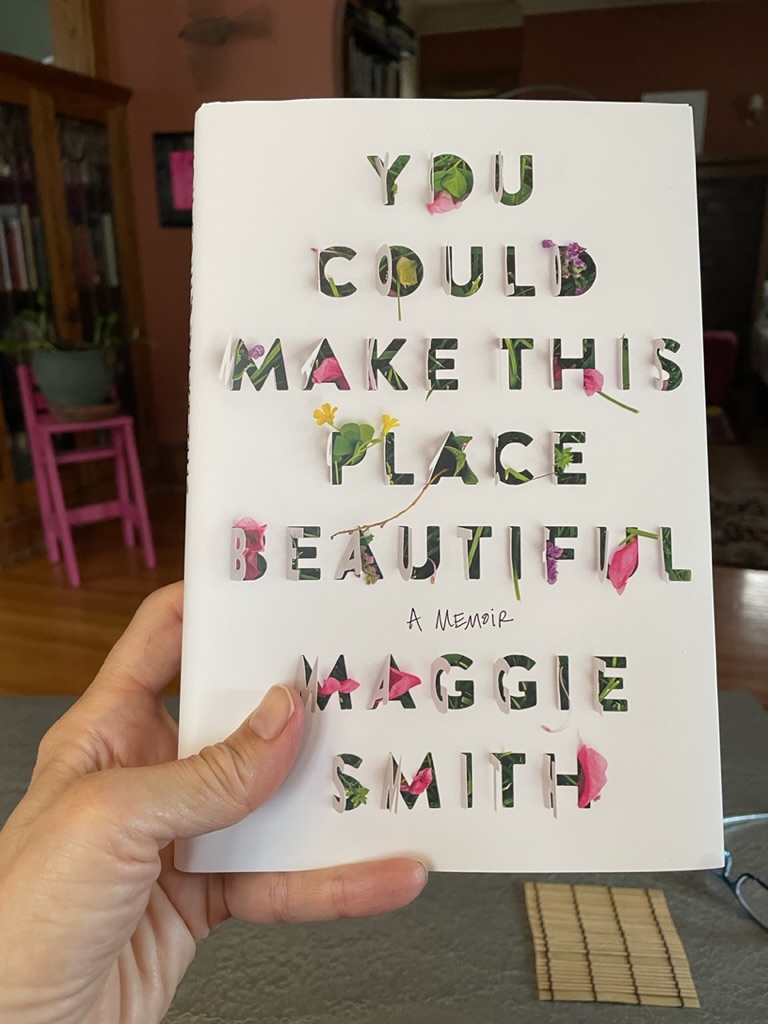
You Could Make This Place Beautiful, by Maggie Smith. In this memoir, by the poet who penned Good Bones, a poem that stunned me (and the rest of the world) when it came out, Smith wonders aloud on the page in each of the brief, illuminative passages that compose the book about the selves she was in her marriage, as it crumbled, and as she makes her way through the first years afterward. Widely thought of as a “divorce” memoir, I see this book as so much more than that: a woman finding her place as an artist in a world that regards the work of writing as not work, as something to be done when it doesn’t inconvenience others, as something so difficult to claim that I remember how awkward and embarrassed I felt when, in my own life, I forced myself to say “I’m working” instead of “I’m writing.” Why can’t we (and I’m talking specifically about women here) be partners and mothers and artists? Answer: we can. You Could Make This Place Beautiful is the fierce, searching story of a woman staking her claim in the world.
Fourteen spots still open in our June Write Together session. Click here for details and to register. I’d love to see you in the Zoom room!
A heart-shaped box of drugstore chocolates was a big deal, back in the day. It was an annual Valentine’s treat from my parents, my dad really, since my mother hates to shop and he did almost all of it. Covered in cellophane, a big red bow, a whole little box for each of us.
As a grownup I turned into a chocolate snob, but when I pass by the Valentine’s chocolate display at CVS I remember how special it was, what a treat, to hold that heart-shaped box and know it was mine. Most of the time it’s not the thing itself that matters but the person, the homeland, the time of life behind the thing. Those, we hold in our heart of hearts forever.
The Sound of Music, by Kathryn Nuernberger
When I tell you I love the song “Edelweiss” you have to understand that even though I too am a sophisticate who scorns musicals, I was once a little girl who stood in my grand- father’s living room singing, Cuckoo! Cuckoo! while he sipped his scotch and laughed at my preciosity. And when I sing the lyrics in your ear—Small and bright, clean and white, you look happy to meet me —you have to understand my grandfather only ever had one friend, a jeweler who also drank scotch, and left his $10,000 Rolex to my grandfather, who wore it even though it turned his wrist green, wore it to the funeral, where the daughter sang in her ethereal voice. Blossom of snow may you bloom and grow, bloom and grow forever. She couldn’t take her eyes off the casket. You have to understand that my grandfather kept spinning that heavy gold around his wrist, and when he raised his voice to join in, he cried to sing it. Edelweiss, edelweiss, bless my homeland forever.
Click here for details and to register for our new Write Together session in June. I’d love to see you in the Zoom room!
Someone I love told me recently that she had first glimpsed her future husband at a dance and was instantly captivated by the sparkle in his eyes and his intense interest in everyone and everything. Four months later they were engaged.
She told me about their wedding long ago, and how when it was over, and she and her new husband were driving away from the reception, just the two of them, she looked at him and felt everything in her relax. A feeling of deep security, of I’m safe now, I’ll always be able to count on him, filled her entire being.
Anniversary, by Cecilia Woloch
Didn’t I stand there once, white-knuckled, gripping the just-lit taper, swearing I’d never go back? And hadn’t you kissed the rain from my mouth? And weren’t we gentle and awed and afraid, knowing we’d stepped from the room of desire into the further room of love? And wasn’t it sacred, the sweetness we licked from each other’s hands? And were we not lovely, then, were we not as lovely as thunder, and damp grass, and flame?
Click here for more information about Cecilia Woloch.
Click here for details and to register for our new Write Together session in early June. I’d love to see you in the Zoom room!
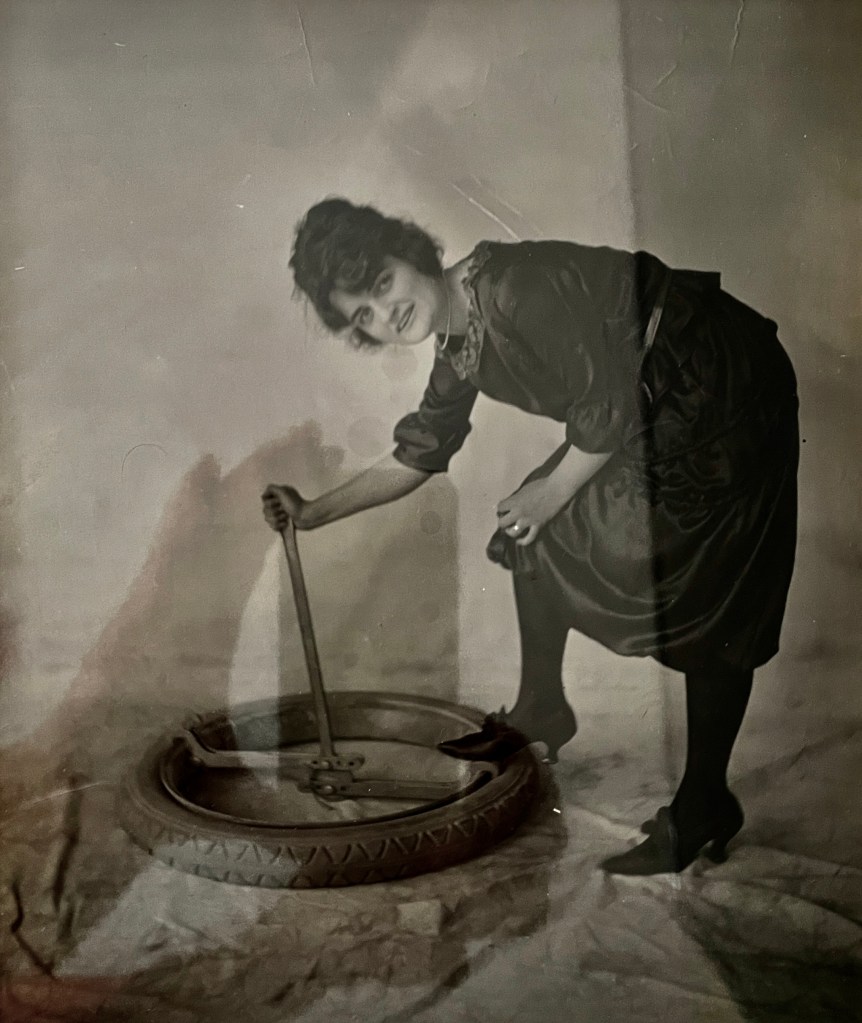
One of my grandmothers worked as a legal secretary in a Manhattan law firm, proud of her skill with shorthand and typing. Once, her boss, who was otherwise a good guy, yelled at her in front of the entire secretarial pool. Later that day he called her into his office to apologize. You shouted at me in public, she said, and you’ll apologize to me in public. Which he did.
My grandmother marched in the streets of New York as a suffragette. She had her first and only child at age forty and raised her with a love at once fierce and unconditional. This poem made me think of her, as I often do, and her hard, brave life. It hurts me to remember how much she always wanted to go to France. One of my first short stories, drafted while sitting on a bench on Sacré-Coeur, was about a young woman wandering the streets of Paris in honor of the grandmother who never had the means to travel.
My time in better dresses, by Marge Piercy
I remember job hunting in my shoddy and nervous working class youth, how I had to wear nylons and white gloves that were dirty in half an hour for jobs that barely paid for shoes.
Don’t put down Jew, my mother warned, just say Protestant, it doesn’t commit you to anything. Ads could still say “white” and in my childhood, we weren’t.
I worked in better dresses in Sam’s cut-rate department store, $3.98 and up. I wasn’t trusted to sell. I put boxes together, wrapped, cleaned out dressing rooms.
My girlfriend and I bought a navy taffeta dress with cutout top, wore it one or the other to parties, till it failed my sophistication test. The older “girls” in sales, divorced, sleek,
impressed me, but the man in charge I hated, the way his eyes stroked, stripped, discarded. How he docked our pay for lateness. How he sucked on his power like a piece of candy.
Click here for details and to register for our new Write Together session in early June. I’d love to see you in the Zoom room!
The first day you bring him home, hold the little street pup in your arms while he trembles and trembles. Reassure him you’ll be good to him. Tell him you’ll try to make every day a happy day. Make some food for him and watch him gobble it. Worry about his silence; why doesn’t he ever make a sound?
Two weeks in, leap when you hear a sharp and insistent bark. Turn from the stove to behold an unblinking, time to go for a walk gaze. Realize he hasn’t trembled or prostrated himself on the floor at the sound of his name in at least a week.
Two years in, sing him a good morning song when he wakes up. Race up and down the stairs playing I’m gonna get you until your heart pounds. Structure your time around runs and walks and visits to the dog park. Make room in the bed. Make room on your lap. A dog fills a dog-sized hole you didn’t know was there.
A Small-Sized Mystery, by Jane Hirshfield
Leave a door open long enough, a cat will enter. Leave food, it will stay. Soon, on cold nights, you’ll be saying “Excuse me” if you want to get out of your chair. But one thing you’ll never hear from a cat is “Excuse me.” Nor Einstein’s famous theorem. Nor “The quality of mercy is not strained.” In the dictionary of Cat, mercy is missing. In this world where much is missing, a cat fills only a cat-sized hole. Yet your whole body turns toward it again and again because it is there.
Click here for more information about Jane Hirshfield.
My father, who died last month, was a giant of a man from boyhood on. He was famous for keeping the house-heating wood stove in our kitchen cranked to stupefying levels of heat. Much of our childhood was spent in service to that wood stove: cutting, chopping, hauling and stacking wood to keep it fed.
Many of my abiding memories of my father are centered around wood, which, even in his eighties, he continued to chop and haul. As a child, his giant presence could be overwhelming, but I picture him now, and think of how easy it can be to overlook, in a giant man, the tenderness and gentleness that also lived inside him.
The Pick, by Cecilia Woloch
I watched him swinging the pick in the sun, breaking the concrete steps into chunks of rock, and the rocks into dust, and the dust into earth again. I must have sat for a very long time on the split rail fence, just watching him. My father’s body glistened with sweat, his arms flew like dark wings over his head. He was turning the backyard into terraces, breaking the hill into two flat plains. I took for granted the power of him, though it frightened me, too. I watched as he swung the pick into the air and brought it down hard and changed the shape of the world, and changed the shape of the world again.
Click here for details and to register for our new Write Together session in early June.
Click here for more information about Cecilia Woloch.
Welcome to the world, Dear Brother!I’m so happy that this book, a collaboration with Tuan Nini (the artist I refer to as the Mad Genius) will be in the world as of this summer. (We’re thrilled that it’s already been chosen as a Junior Literary Guild selection.)
I’m horrible at describing my own books but here goes me trying to think like a book jacket person: Dear Brother is a graphic novel-ish (yes, I made up that category and I’m sticking with it) about a little sister whose travails with her older brother are chronicled in notes, photos, sketches and texts. Sister’s always the sidekick, never the star, or at least that’s how it feels.
Brother proclaims himself America’s Famous Chef, but it’s Sister who does the chopping and clean-up. Brother proclaims himself America’s Famous Magician, but it’s Sister who’s the one he nearly saws in half. Brother proclaims himself America’s Famous Daredevil, but guess who ends up with the broken leg?
Worst of all, when it’s time to get a family pet, Sister wants the dog she’s always longed for, but Brother insists on…a bearded dragon.
Like Dear Sister, the first in the Dear series, Dear Brother chronicles the evolving relationship, over time, between siblings. A cult favorite among siblings of all ages, Dear Sister has been described as both “unremittingly funny” and “I’m not crying, you’re crying.”
Dear Brother will be here on August 8, but you can pre-order it now, and I would be so grateful if you did. Here’s why: the number of books printed is determined by the number of pre-orders it receives. This seems backward to me, and maybe to you too, but we live in an inside-out world.
Soooo…if you’ve got a child or an adult in your life who was once a sibling, or who ever felt overlooked, or unseen, or ignored, and maybe feels like laughing and possibly crying about it all, Dear Brother is the book to pre-order. Here are a bunch of pre-order links for you. Thank you so much!
Lots of old photos have been passing around my family these days, some I don’t remember ever being taken, except there I am: a laughing baby, a smiling teen, a young woman making funny faces at her babies, most recently a middle-aged woman in a pink sweatshirt crouched next to her dad, both smiling up at the photo taker.
Oh my face. You’ve been with me through every moment of my life, never questioning any feeling or how to express it. Immediately and by instinct you pull yourself into smiles, tears, laughter, anger, excitement. The older I get the more I appreciate you and all we have been through together, and the fact that no matter how you change, you are the face that everyone who loves me loves.
(Excerpt from) Ode to My Hands, by Tim Seibles
Five-legged pocket spiders, knuckled starfish, grabbers of forks, why do I forget that you love me: your willingness to button my shirts, tie my shoes—even scratch my head! which throbs like a traffic jam, each thought leaning on its horn. I see you
waiting anyplace always at the ends of my arms—for the doctor, for the movie to begin, for freedom—so silent, such patience! testing the world with your bold myopia: faithful, ready to reach out at my softest suggestion, to fly up like two birds when I speak, two brown thrashers brandishing verbs like twigs in your beaks, lifting my speech the way pepper springs the tongue from slumber.
Click here for details and to register for our new Write Together session in early June.
Click here for more information about Tim Seibles.









 Alison McGhee