Fall workshops just scheduled!

Hi everyone. How are you doing these days? Surviving? Possibly thriving? Looking without and within and taking stock? Do you feel yourself changing in ways you didn’t expect? Maybe windows are blowing open in your mind and heart the way they are in mine.

One thing certain in a world of upheaval is that storytelling —by artists in all forms—is alive and well. What stories are you turning to for comfort or revelation or laughter these days? What stories are you telling your partner, your friends, your family and your children?

What are the stories you’re telling yourself? Those are the ones that most interest me. Times when everything feels unsteady and in flux lead to new artistry. Uncertainty and curiosity can propel you into the work in ways that complacency can’t. (I spent last winter writing poems that shock me with their fierceness. And then I wrote a screenplay. And now I’m writing a graphic novel.)

It’s all interesting, a friend of mine once said about life. Even when everything sucks, I’m just so interested to see what will happen. These words speak to me as a creative writing teacher. It never fails to stun me what happens in the alchemy of a creative writing room. Give a roomful of humans the same ten minutes and the same prompt, and listen to the ten wildly different stories that emerge.

Finding and nurturing someone’s creative spark is a privilege and honor, and it’s what I most love as a teacher. I’ve just scheduled a whole slew of fall one-day workshops, including a new one, “The Gift of Words.” Take a look at them and see if any are of interest to you. They’re all taught via Zoom and I’d love to see you in one!

All workshops are limited to ten participants (a minimum of five is needed to run the class). Cost: $75 per workshop. To register, send payment via Venmo to Alison-McGhee-1, or via Paypal to alison_mcghee@hotmail.com (use the Send to a Friend option or I’ll be charged a fee), or by personal check (contact me for a mailing address). Be sure to note which class you’re registering for.

NOTE: I welcome ALL writers and respect everyone’s individual financial circumstances. Sometimes, when under duress, it’s even more important to feed your creative soul. Hence, if you’re broke (I’ve been there), let me know and we’ll work out a pay-as-you’re-able fee, from $10 to $75. No questions asked, no proof required.

The Art of Writing Picture Books

Do you love picture books? Have you ever wanted to write one? Are you curious how to go about it? Welcome to my one-day picture book writing workshop! In our intensive, fun class, we’ll deconstruct some classic picture books, talk about ideas for new ones, and go through all the nuts and bolts, such as how long can a picture book be? What’s the relationship between writer and artist? How do you write a picture book that children will love and adults won’t mind reading ten thousand times in a row? We’ll come up with ideas, draft a basic outline for one or more picture books, and leave time for Q&A.  This class is designed for people of any writing ability or experience – all are welcome. Guaranteed to be illuminating, exhilarating and fun.

Date and Time: Tuesday, October 12, 7-10 EST, 6-9 pm CST, 5-8 MST, 4-7 PST. $75 (see payment info above).

The Transformation of Trauma

Are you haunted by the memory of trauma? Maybe someone sexually assaulted you, or abused you over a long period of time. Maybe as a child, or adult, you struggled through domestic violence or emotional manipulation. If your life is compromised by these memories, and you’re looking for a way to work through them and find a happier and more peaceful life, welcome to this workshop.

The making of art, in all its many and varied forms, can be a profound way to make sense of past experiences that were unfair, unwanted, and cruel. We’ll do some brief writings, read and discuss a few short readings, and hopefully find ways to unlock your own power.

Date and Time: Friday, October 15, 2-5 pm EST, 1-4 pm CST, 12-3 pm MST, 11-2 pm PST. Free.

Note: This class is always free.

The Freedom of Form

When you’re stuck in a piece of writing, feeling lifeless, what do you do? Grind through, hoping desperately that a window will open? Give up? Take a break? Declare yourself a failure and slink off to drown your sorrows? I’ve taken a shot at all these methods, and none of them work as well for me as re-framing the work itself. I give myself seemingly arbitrary rules to work within, e.g., Write this scene as a series of text messages, or, Write this novel as a series of one-hundred-word passages.

The freedom of assigned form is real, people, and it’s why novels usually have chapters, and picture books are usually under 500 words. It’s why enduring forms of poetry like haiku and sonnets and sestinas are still alive and thriving. In this workshop, which is designed for writers in all genres, we will play with form as a way to open up your writing, your mind and your heart to the freedom and creativity inherent in all art. This class is designed for people of any writing ability or experience – all are welcome. Guaranteed to be illuminating, exhilarating and fun.

Bonus: Weekly writing prompts will be emailed to you for one month following the end of class.

Date and Time: Saturday, October 16, 11-2 EST, 10-1 pm CST, 9-noon MST, 8-11 am PST. $75.

A Novel Idea: Ways to Coax that Book Into Reality

Is there a book within you that wants to be written? Stories that want to be told? Do ideas and an urge to write them out come to you at work, while walking the dog, cooking dinner, folding laundry, and in dreams? Are you frustrated because you don’t know how to begin, or how to keep going once you’ve begun? Welcome to this workshop, drawn from my own experience as a novelist, in which every single book presents its own specific building-block challenges.

Through a series of in-class prompts, discussion of creative process –both general and specific to you– and intuitive and practical analysis, we’ll come up with an individual book-writing practice plan for each participant. Note: This class will be helpful for anyone who wants to write a book, regardless of genre or subject matter.

Date and Time: Saturday, November 13, 11-2 EST, 10-1 pm CST, 9-noon MST, 8-11 am PST. $75.

Bonus: Weekly writing prompts will be emailed to you for one month following the end of class.

Writing from the Body

Our bodies hold within them everything that has ever happened to us. We may not consciously recall events from long ago, or even recently, but our bodies do. Ask your body to recall a moment of great joy, of great sorrow, of exhilaration or trauma, and physical memory will come washing back over you. Writing from your body, instead of your mind, is an intuitive and potent means of connecting both with yourself and readers.

Brief in-class writings and discussion of short published works (provided) will focus on the power of physical memory as entry into powerful writing. This class is designed for people of any writing ability or experience – all are welcome. Guaranteed to be illuminating, exhilarating and fun.

Date and Time: Wednesday, November 17, 7-10 pm EST, 6-9 pm CST, 5-8 pm MST, 4-7 pm PST. $75.

Bonus: Weekly writing prompts will be emailed to you for one month following the end of class.

The Gift of Words

Think of the people you love in your life. Picture them in your mind. Recall conversations you’ve had with them, times you’ve watched them in motion. The sound of their voice, their laughter, tears, songs. The way they touch their pets, their children, their flowers. The way they touch you. Everything about the people you love is specific and particular and unique to them, and so is the way you love them.

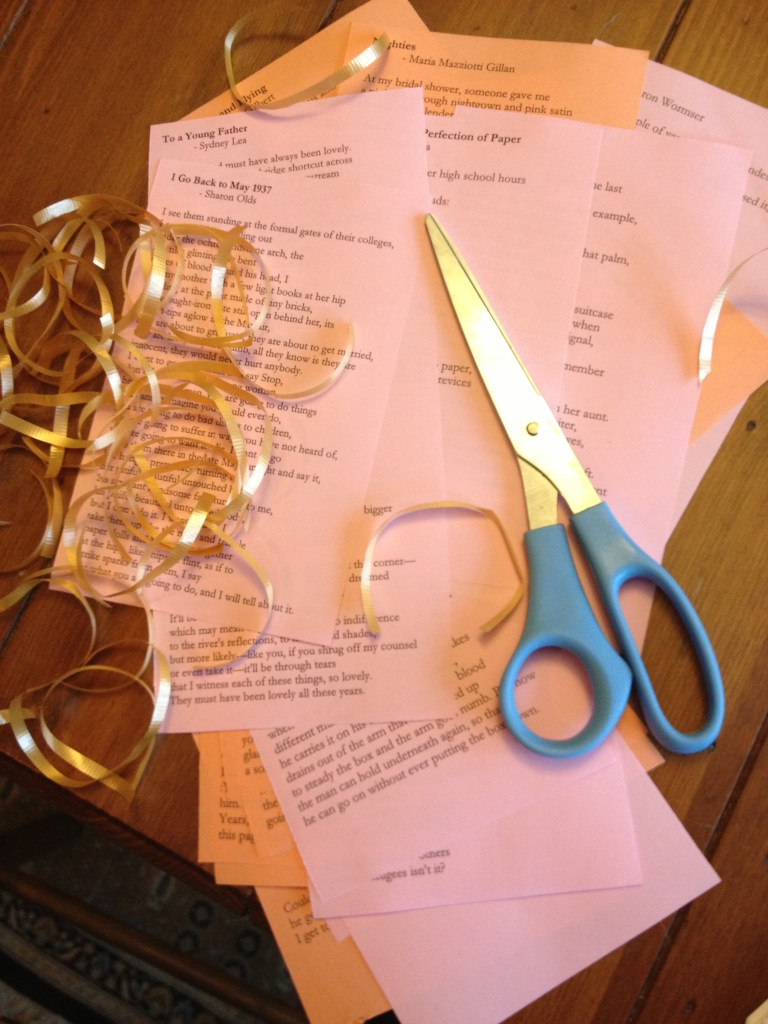
In this three-hour workshop, you will write three gifts of words to the people you love. Each will be different, each will be a one of a kind gift specific to one singular human: a gift of the heart from you to them. A beautiful gift for a special occasion or no occasion.

Day and Time: Saturday, November 20, 11-2 EST, 10-1 pm CST, 9-noon MST, 8-11 am PST. $75.

Building a Story

NOTE: THE NEW SESSION OF BUILDING A STORY FILLED IMMEDIATELY, BUT I’LL BE SCHEDULING MORE SESSIONS IN THE FUTURE. PLEASE LET ME KNOW IF YOU’D LIKE ME TO ADD YOUR NAME TO THE WAITLIST FOR THIS ONE.

Dates and time: Wednesday evenings, October 13-November 10, 2021.
Time: 6-9 pm, CST. (Feel free to bring your dinner to class!)
Enrollment: Limited to eight.
Cost: $400 via Venmo, Paypal, or personal check. Venmo: @Alison-McGhee-1. Paypal: alison_mcghee@hotmail.com (be sure to use the “send to a friend” option).
Questions or to register: Email me at alisonmcghee@gmail.com.

This five-week class is designed for both fiction and memoir writers. (Poets might also find it useful, but I don’t recommend it for picture book writers.) Each week will focus on a different, essential craft of good storytelling, from character development to dialogue to narrative arc. We’ll examine both published work and class submissions.

Participants are welcome (but never required!) to share their work with the class as a whole, and everyone will receive weekly detailed feedback from me.

Bonus: I’ll send out a weekly writing prompt for the month following class.

Poem of the Week, by Camille T. Dungy

My poems podcast, Words by Wintercan be found here.

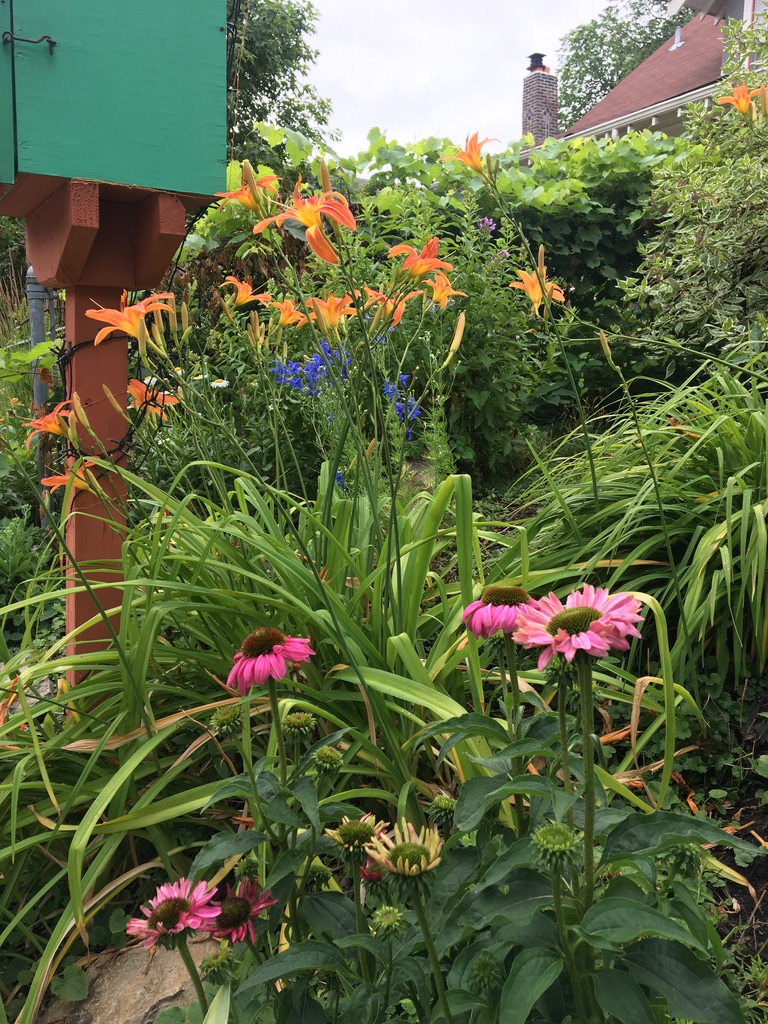
When I bought my house, its little city sloping front yard was scrubby grass. Every year I dug holes and stuck perennials into them.

Now there’s no grass left, just phlox and coneflowers and bee balm and Russian sage and baby’s breath and lilies and balloon flowers and on and on.

As the flowers grow and thrive, so do the bees and butterflies and birds and bugs and worms and squirrels and rabbits.

When I read this gorgeous sweep of a poem I thought of how the wolves changed Yellowstone. How the flowers changed our yard. Neither change took much time. This fact gives me some hope yet for the world.

For mor​e information about Camille Dungy, please check out her website.

​alisonmcghee.com

Poem of the Week, by Kari Gunter-Seymour

An older man with a cane came to my front yard poetry hut a couple weeks ago. Big smile. Lively eyes. He thanked me for all the new poets he’d found over years via the poetry hut and we began talking about his favorite Minnesota poets.

He was handsome in the same tall lean way as my friend John Zdrazil, curious in the same intense way. Had they met, they would have been instant friends. I kept thinking that this man, with his love of Minnesota and books, his wide intellect and knowledge, was the man my beloved Zdrazil would eventually have become.

Alison, have you ever been to northwestern Minnesota? the man asked. Sure, I said. A few times just last month on my way to a little town near Alexandria. I didn’t tell him it was to say goodbye to Zdrazil and then attend his funeral.

But his eyes turned keen and focused. He observed me for a minute in silence. You know, Alison, he eventually said, I’ve had so many blessings. But you and your poems have been the most beautiful gift of my life.

This was so much like something Zdrazil said in our last conversation that I teared up. It can’t be true –this man doesn’t even know me–but his words brought my friend back so fiercely.

Which little town were you driving to? he said. A teeny little place called Elbow Lake. You wouldn’t know it, I said. He smiled. Oh, but I would. I was born and grew up in Elbow Lake.

Sometimes your dead friends return, to embrace you unconditionally.

The Whole Shebang Up for Debate, by Kari Gunter-Seymour

Today I gave a guy a ride, 
caught in a cloudburst 
jogging down East Mill Street.  
Skinny, backpacked, newspaper 
a makeshift shield, unsafe 
under any circumstances.
I don’t know what possessed me.

I make bad decisions, am forgetful, 
cling to structure and routine
like static electricity to polyester,                 
a predicament of living under 
the facade I always add to myself.

Said he needed to catch a GoBus,
shaking off droplets before climbing in. 
He gabbed about Thanksgiving plans,
his mom’s cider-basted turkey, 
grandma’s pecan-crusted pumpkin pie.

It was a quick, masked ride.
Bless you, he said, unfolding himself
from the car. No awkward goodbyes, 
no what do I owe you? Just Bless you
and a backward wave. 

At the stop sign, my fingers stroked 
the dampness where he sat minutes before. 
Sometimes life embraces you 
so unconditionally, it shifts 
your body from shadow 
into a full-flung lotus of light.

For more information on Kari Gunter-Seymour, please check out her website.

alisonmcghee.com
Words by Winter: my podcast

Poem of the Week, by Stephen Dunn

My dog and I often walk past a house being built on Lake of the Isles. For two years now I’ve watched this house take shape from a staked hole in the ground to the beamed stone and frame beauty it’s becoming. A craftsman built curved and arched stone walls by hand, hefting each rock in his hands, considering its possible place in the wall.

Every time we walk past I compliment the men on their work. Windows like portholes. A huge framed entrance. Those beautiful wave-like stone walls. The house is made of rock and slate and wood and light and endless hours of skill and artistry and labor.

At some point this house will be finished, and the people who paid for it will move in. Along with their belongings they will bring their hearts and minds, their feelings toward each other and the world. Within the untouched rooms of this huge home will be laughter and fights and sorrows and hopes and regrets.

But the rooms of the house will always remember the touch of the men who made them, the deep, slow care embedded in their walls.

The Room, by Stephen Dunn

The room has no choice.
Everything that’s spoken in it
it absorbs. And it must put up with

the bad flirt, the overly perfumed,
the many murderers of mood—
with whoever chooses to walk in.

If there’s a crowd, one person
is certain to be concealing a sadness,
another will have abandoned a dream,

at least one will be a special agent
for his own cause. And always
there’s a functionary,

somberly listing what he does.
The room plays no favorites.
Like its windows, it does nothing

but accommodate shades
of light and dark. After everyone leaves
(its entrance, of course, is an exit),

the room will need to be imagined
by someone, perhaps some me
walking away now, who comes alive

when most removed. He’ll know
from experience how deceptive
silence can be. This is when the walls

start to breathe as if reclaiming the air,
when the withheld spills forth,
when even the chairs start to talk.

Stephen Dunn, “The Room” from What Goes On. For more information on Stephen Dunn, please click here.

alisonmcghee.com
Words by Winter: my podcas

Poem of the Week, by Maggie Smith

The photo on the right is one of a bunch of family photos in my living room. Is that your daughter? people sometimes ask, and I smile. She does look like me, doesn’t she? I say.

But the girl on the windsurfer is me, long ago, back in a life I used to live: a tiny one-room apartment, coffee from the miniature percolator my grandmother gave me, a rented electric typewriter perched on an apple crate, the camping pad I slept on because the room was too small for a bed. Annie Lennox singing about how sweet dreams are made of these.

I remember the day that photo was taken. Trying not to fall so my hair would stay dry. Trying to lean back far enough for that perfect balance between my body and the wind’s invisible force.

I tried hard back then, and I try hard now. Nothing was perfect then. Nothing is perfect now. Are that girl and I still, somehow, on both sides of here and there?

Threshold, by Maggie Smith

You want a door you can be
            on both sides of at once

                        You want to be
            on both sides of here

and there, now and then,
            together and—what

                        do we call the life
            we would wish back,

If we could? The before?)
            —alone. But any open

                        space may be
            a threshold, an arch

of entering and leaving.
            Crossing a field, wading

                        through nothing
            but timothy grass,

imagine yourself passing from
            and into. Passing through

                        doorway after
            doorway after doorway.

Friends! Please join the wondrous Maggie Smith and me in a virtual conversation this Monday evening, August 2, at 7 pm CST. We’ll be discussing her gorgeous new book Goldenrod, in which I found this beautiful poem. Free and open to all. Just click here to register.

For more information on Maggie Smith, please check out her website.

My poems podcast, Words by Wintercan be found here.

alisonmcghee.com

Poem of the Week, by Robert Francis

My poems podcast, Words by Wintercan be found here.

I’m a self-taught maker of extremely imprecise, freeform story quilts that I hand-quilt and then embroider. This morning as I flicked around the internet looking for cool hand-quilt block patterns, the word “quilt” suddenly looked entirely wrong. Too short, too abrupt, missing one or more letters, and what about that t at the end…just so weird.

When I was a kid I purposely turned words into not-words by saying them over and over and over and over until poof, they transmogrified into shapes and sounds, othernesses without meaning. Now here was the word quilt, a happy familiar word my entire life, doing the same thing to me, saying You think you know me? You don’t.

Which makes me wonder about everything else I think I know, but don’t.

Nothing Is Far, by Robert Francis

Though I have never caught the word
of God from any calling bird,
I hear all that the ancients heard.

Though I have seen no deity
enter or leave a twilit tree,
I see all that the seers see.

A common stone can still reveal
something not stone, not seen, yet real.
What may a common stone conceal?

Nothing is far that once was near.
Nothing is hid that once was clear.
Nothing was God that is not here.

Here is the bird, the tree, the stone.
Here in the sun I sit alone
between the known and the unknown.


For more information about the grievously under-sung poet Robert Francis, please click here.

alisonmcghee.com

Poem of the Week, by Nikki Giovanni

My poems podcast, Words by Wintercan be found here.

One afternoon when I was twenty-six I left South High School and jumped into my little red car. Turned on the music –was it a tape?–as loud as it would go. Maybe Annie Lennox, maybe Joan Armatrading. Stopped at the red light on Cedar and 22nd, waited until it turned green, and put my foot on the gas.

In that moment, several things happened at once. The tiny car rocked from a blast of wind. A blur of rushing red filled the windshield. My foot jammed on the brake. In the second afterward, I slammed the dashboard with my hand and the music stopped while I watched a giant, silent fire truck speed on down Cedar.

In all the years since there have been more moments of almost-death, but it’s that day, and the memory of how wildly I wanted to live, that came flooding through me when I read this poem.

Possum Crossing, by Nikki Giovanni

Backing out the driveway
the car lights cast an eerie glow
in the morning fog centering
on movement in the rain slick street

Hitting brakes I anticipate a squirrel or a cat or sometimes
a little raccoon
I once braked for a blind little mole who try though he did
could not escape the cat toying with his life
Mother-to-be possum occasionally lopes home … being
naturally … slow her condition makes her even more ginger

We need a sign POSSUM CROSSING to warn coffee-gurgling
neighbors:
we share the streets with more than trucks and vans and
railroad crossings

All birds being the living kin of dinosaurs
think themselves invincible and pay no heed
to the rolling wheels while they dine
on an unlucky rabbit

I hit brakes for the flutter of the lights hoping it’s not a deer
or a skunk or a groundhog
coffee splashes over the cup which I quickly put away from me
and into the empty passenger seat
I look …
relieved and exasperated …
to discover I have just missed a big wet leaf
struggling … to lift itself into the wind
and live

For more information about Nikki Giovanni, please click here.

alisonmcghee.com

Poem of the Week, by Joy Harjo

My poems podcast, Words by Wintercan be found here.

Think up a person, I tell the zoom room, like a toddler with wild red curls. Hands go up. People emerge. Now give me an object, like a ceramic pit bull. Objects appear. We write them all down, column A and column B. Now put one from each column together and write down what happens.

Ten minutes later, everyone reads aloud what they wrote. We lean forward to listen, clap, nod, laugh. Witnesses to unknown people and unknown worlds that instantly conjured themselves into being.

My fingers have spent their lives clattering across the keyboard, conjuring up worlds. What’s real? What’s not? Is there a difference? This poem feels so familiar.

The Poem I Just Wrote, by Joy Harjo

The poem I just wrote is not real.
And neither is the black horse
who is grazing on my belly.
And neither are the ghosts
of old lovers who smile at me
from the jukebox.

For more information about Joy Harjo, our current poet laureate, please click here.

alisonmcghee.com

Poem of the Week, by Ellen Bass

My poems podcast, Words by Wintercan be found here.

The world is too big if you make it so. This sentence has been running through my head lately. Every time I feel besieged by the world’s problems, which is most of the time, it comes back to me.

This morning the dog and I got up at dawn and went into our tiny backyard. We watered the vegetables and the flowers and the baby apple trees and the mint. The water made rainbows over the mint and the tight clean smell of it reset my mind a little. So I went in search of more lighten-ment. Crushed a little lavender, some Russian sage, basil, rosemary, more mint, until the air was full of their scents and so was I. The world is too big if you make it so.

Any Common Desolation, by Ellen Bass

can be enough to make you look up
at the yellowed leaves of the apple tree, the few
that survived the rains and frost, shot
with late afternoon sun. They glow a deep
orange-gold against a blue so sheer, a single bird
would rip it like silk. You may have to break
your heart, but it isn’t nothing
to know even one moment alive. The sound
of an oar in an oarlock or a ruminant
animal tearing grass. The smell of grated ginger.
The ruby neon of the liquor store sign.
Warm socks. You remember your mother,
her precision a ceremony, as she gathered
the white cotton, slipped it over your toes,
drew up the heel, turned the cuff. A breath
can uncoil as you walk across your own muddy yard,
the big dipper pouring night down over you, and everything
you dread, all you can’t bear, dissolves
and, like a needle slipped into your vein—
that sudden rush of the world.

For more information on Ellen Bass, please click here.

alisonmcghee.com

Poem of the Week, by Laura Gilpin

My poems podcast, Words by Wintercan be found here.

Whenever I pass a baby on the sidewalk our eyes meet and hold. Babies turn their heads to keep holding that gaze, sometimes all the way to the end of the block. They want to examine me, so they do. This is what I most appreciate about babies; that acceptance of themselves and what they want.

My dog is also like this. When he wants his belly rubbed, his throat stroked, he flops next to me and pushes his nose into me until I pet him. He’s taught himself how to speak what he must think is Human: low mutterings, high warbles that all mean touch me touch me touch me. He too knows what he wants and is unafraid to ask for it.

I don’t exactly know why babies and dogs and this poem make me want to cry, but they do.


The Two-Headed Calf, by Laura Gilpin

Tomorrow when the farm boys find this
freak of nature, they will wrap his body
in newspaper and carry him to the museum.

But tonight he is alive and in the north
field with his mother. It is a perfect
summer evening: the moon rising over
the orchard, the wind in the grass. And
as he stares into the sky, there are
twice as many stars as usual.

For more information on Laura Gilpin, please click here.

alisonmcghee.com