Poem of the Week, by Kevin Carey
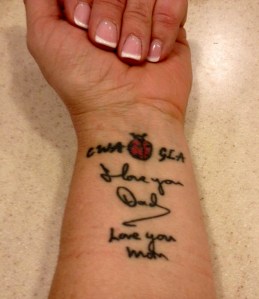 Tough choosing a poem this week amidst the hours spent hiking, walking, trying to tromp my way into some form of inner calm. More hours on the couch scrolling through my thousands of poems. Searching for certain poets, the ones who bring me comfort because they’re fearless, because they talk about life the way it is, because they use ordinary words to write about ordinary things that in their magic hands turn transcendent and remind me that I’m not in this alone. That I am never alone. That all over this country right now, there are others waking every morning and breathing in and breathing out and reminding themselves that the world has never been easy, that humankind has always been under threat by the few among us who take pleasure in being cruel, in inciting violence, in tearing apart the social fabric because . . . why? because they can, I guess. Yes, we are always under siege by those who would divide us for their own sick pleasure, and also yes, we are always fighting back. Sometimes with harshness, and sometimes with a book that lasts for a lifetime, as in this beautiful poem.
Reading to My Kids
– Kevin Carey
When they were little I read
to them at night until my tongue
got tired. They would poke me
when I started to nod off after twenty pages
of Harry Potter or Lemony Snicket.
I read (to them) to get them to love reading
but I was never sure if it was working
or if it was just what I was supposed to do.
But one day, my daughter (fifteen then)
was finishing Of Mice and Men in the car
on our way to basketball.
She was at the end when I heard her say,
No, in a familiar frightened voice
and I knew right away where she was.
“Let’s do it now,” Lennie begged,
“Let’s get that place now.”
“Sure, right now. I gotta. We gotta,”
and she started crying, then I started crying,
and I think I saw Steinbeck
in the back seat nodding his head,
and it felt right to me,
like I’d done something right,
and I thought to myself, Keep going,
read it to me, please, please, I can take it.
For more information about Kevin Carey, please click here.

 My dog is sleeping on the couch right now. We can read each other’s minds; before I get up from this table in a few minutes to go for a run, he will already have jumped down and trotted over to me, knowing I’m about to leave. When I return, he will be waiting at the door to greet me. He doesn’t wake up disturbed like me at the daily news, which even though I don’t watch television and I avoid certain headlines, I know anyway. It’s in the air, in the invisible waves that connect us to each other and the world. It’s a battle not to give in to the disgust and despair and cynicism and snark that sometimes feels omnipresent and, weirdly, more socially acceptable than hope. Hope is harder, and so is the steadfast work that makes things better. The dog in this beautiful poem reminds me of my own dog. Not everything is bad, he says, in action if not words.
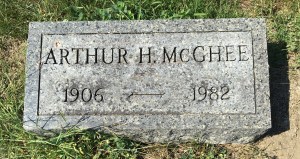
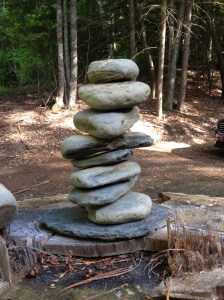 This poem makes me think of my mother and father, who, from my vantage point, seem to spend most of their time doing good things for others. Need sixty pounds of stuffing for the Octoberfeast? Sure. Need a ride to your dentist appointment sixty miles away? No problem. All-day help in the homeless shelter kitchen every third Wednesday? Of course. A listening ear in a time of sadness? They are there. They are there, they are there, they are there. Some people write checks and then there are the people like my parents, who wade in knee deep to fill the plates and then wash the plates, brew the coffee and then pour the coffee, welcome the new babies, slip a $20 in their graduation cards eighteen years later, and stand in line in dark clothes to say goodbye when the time comes. We are all headed to the same place; may as well name it Jerusalem, or Mecca, or the meaning-of-a-life-whatever-that-may-be, and make those steps count.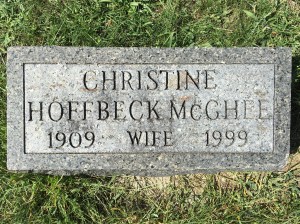
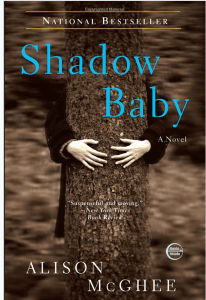 When I was eighteen I left the landscape of my childhood –the foothills of the southwestern Adirondacks, in far upstate New York– for college in Vermont, and in all the years since I have never spent more than a week at a time in my homeland, always to visit my parents. You would think I left that world behind, the day I got to college, and in a way that’s true. The horizons of my life blew wide open that day, and they have kept right on opening. But every adult novel I’ve ever written is set in that land, with its maples and oaks that turn to flame in the autumn, pine trees in winter that look black against deep snow that looks blue or white or pink, depending. The people in those novels aren’t real, I conjured them up out of my heart and my head, but I wish they had been around when I was a girl. Maybe I would’ve loved them, maybe they would’ve loved me. When Alan Gillis in this beautiful, dreamlike poem below talks about the girl who sheds the skin of her longing only to escape into more longing, I know in my bones what he means. I guess everyone does.
 Long ago, only fifteen years after they were first discovered by farmers digging a well near Xian, I went to see the terracotta warriors. The memory haunts me. The place wasn’t well organized back then – you sort of stumbled around and then down into the ground, where the clay soldiers, thousands of them, stood at attention. Signs: “No spitting. No taking pictures. No taking artifacts.” The guy we had hired to drive us out to the site bent down at one point and scraped up some clay dust and dropped it right into my pocket. No taking artifacts, I whispered to him, and he shrugged and laughed and said, Now you’ve got some 10,000 year old dirt to take back to America. It was the soldiers that haunt me, though. Their faces, their bodies, their height and weight, the breadth of their shoulders: All different, like looking at an army of real men frozen in time. I stood looking at them, wondering about their lives. This poem by Lisel Mueller makes me remember them all over again.
 Walking Man was someone I first noticed many years ago because he walked as fast as me (apparently I walk with great purpose), and he seemed to walk all day long, every day of the year, tromping the lakes and streets of our southwest Minneapolis neighborhood. He was a strong, well-built, handsome man. In summer he wore shorts and a t-shirt, in winter jeans and a parka. One time only has Walking Man returned my hello; his eyes are usually fixed on a far horizon. Once, about fifteen years in, I passed a man sitting on a bench on Lake Calhoun and did a double-take. Was that Walking Man? Sitting? Yes. The first time I ever saw him not in motion. Two days ago an old man in jeans and a t-shirt came toward me on Lake Street: extreme bowlegs, a mane of flowing white hair, a rocking gait that hurt to witness, so painful did it look. I watched that old man lurch toward me, hoped he didn’t have far to walk, wondered if I could help. Then I realized who it was.
 Alison McGhee