Poem of the Week, by Joseph Fasano

Click here to read more about my new novel Telephone of the Tree, which has received three starred reviews and is an Amazon Best Book of the Year. 

Sometimes I envy people who have a group of friends they do things with as a group over decades: book clubs, game nights, dinners, theater, music, a yearly fishing or camping trip. My friendships are deep and close and span decades but they’re mostly individuals here, couples there, spanning all ages and stations and places in life.

Once, in a hard time, I took a piece of scrap paper and wrote Who to Call at the top, followed by a list of friends. Most of the names on it came instantly, friends I’m always in touch with. Others were surprising –when was the last time we talked?– but then again not really, because we are connected at the core. Glancing at my Who to Call list reminds me I’m not alone, even when it feels like I am.

Love Poems to Our Friends, by Joseph Fasano

Where are the poems for those who know us?

Not for star-crossed loves,
for agonies of longing,
but words for those who go with us
the whole road.

How would they start, I wonder
You let me crash
when I was new to ruin.
You came to me   
though visiting hours were over.
You held me when my loves
were done, were flames.

Yes, we will lose a few
in the changes.
But these are the ones
who save us:
not the charmers,
not the comets of wild passion,
not the ups-and-downs of love’s unlucky hungers,

but the ones who stand
by our shoulder at the funeral
and lead us back to the land of the living
and put our favorite record on the player
and go away, and come back,
always come back,

with bread and wine
and one word, one word: stay

Click here for more information about Joseph Fasano. This poem first appeared on his Instagram page in 2024. 

alisonmcghee.com
My podcast: Words by Winter
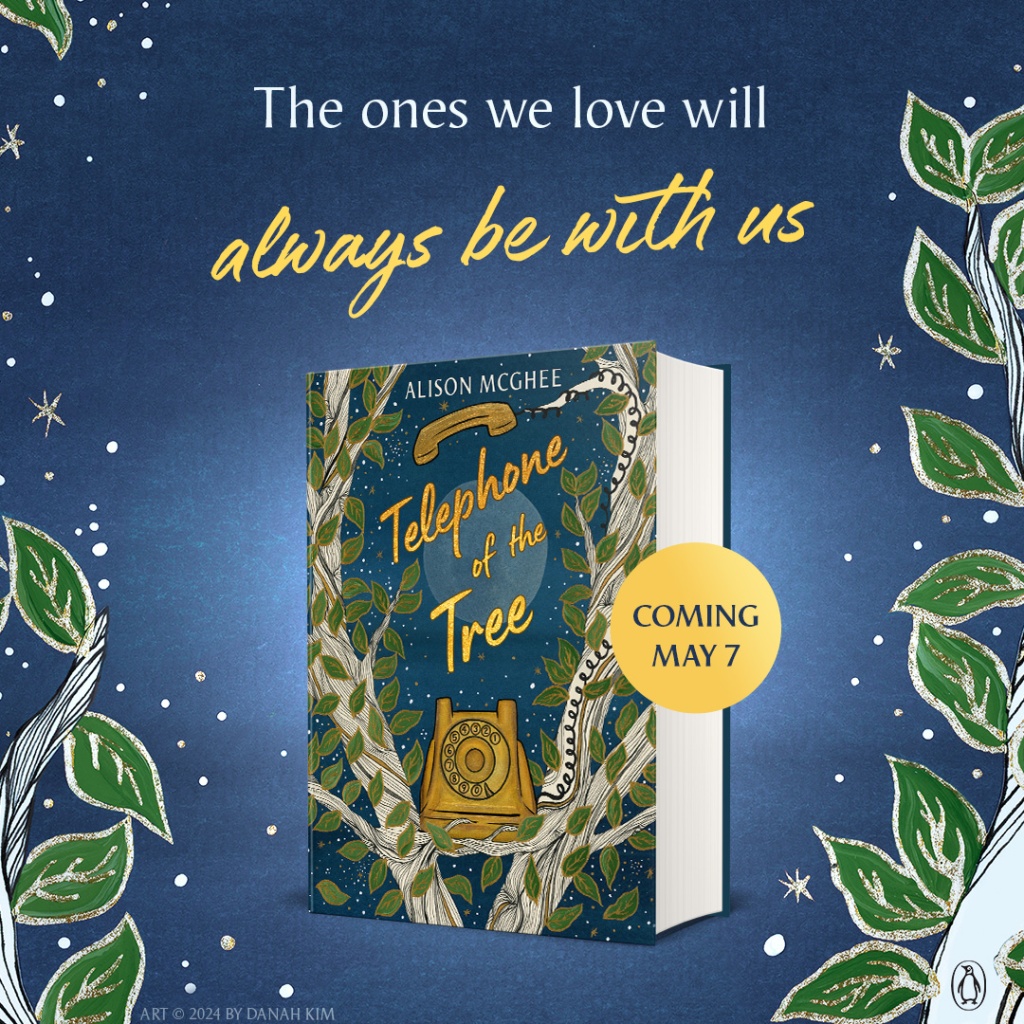
My new novel, Telephone of the Tree

Friends, Telephone of the Tree will be on bookshelves as of May 7!

Long ago, I listened to an NPR story about Japan’s “wind telephone,” a disconnected pay phone in northern Japan that people use to speak to their lost loved ones. That story has haunted me ever since, and Telephone of the Tree is the result of six years of trying (and failing) and trying (and failing) to write a book that would bring readers the same feelings of beauty and longing that the NPR story brought me. ❤️

Telephone of the Tree is supposedly for children but I keep getting emails from grownup readers that it goes straight to their own hearts. Which makes sense, because I wrote it for everyone who’s ever longed to talk, even one more time, to someone they love. Click here for pre-order links – I always encourage buying from independent book stores. (Also, the reason you always hear writers urging their friends to pre-order their books is that the number of pre-orders determines how many books are printed…!)

The first few (starred!) reviews are in:

★ 
“Rather than trot in a therapist or some other mouthpiece for wise counseling, the author gives her protagonist subtler (and more believably effective) help reaching that insight—most notably parents who give her space rather than unwanted advice, and her grandfather’s old telephone.  Readers feeling Ayla’s profound sense of loss will be relieved when she finds a way to live with it. Raw and sad but lit with occasional glints of humor and ending, as it should, on a rising note.” —Kirkus, starred review

★ “The reveal that the phone was placed by Ayla’s grandpa who used it to “call” his wife after she passed is just one beautiful details in a story that focuses on generational healing rather than generational trauma. While more mature readers may quickly realize that Kiri has died, the novel’s hybrid of lyrically written plot fragments and stream of consciousness serve to poetically reveal the facts as Ayla becomes ready to process them.” —The Bulletin of the Center for Children’s Books, starred review

“Inspired by Itaru Sasaki’s phone booth in Japan, where people can symbolically call deceased loved ones, McGhee lays bare the powerful emotions entangled with loss while demonstrating the strength found in community.” —Booklist

“McGhee injects a speculative twist to this tender tale about death and grief. Employing spare, sensory language, McGhee explores the painful negative space created by loss and the devastation of a friendship cut short, as well as the healing found in moving forward while remembering that ‘there’s more… so much more.'” —Publishers Weekly

Penguin Random House, the publisher, describes the book this way:

An unforgettable story of grief and the support of community as a young girl, faced with aching loss, begins to understand that what we love will always be with us.

Ayla and her best friend Kiri have always been tree people. They each have their own special tree, and neighbors and family know that they are most likely to be found within the branches. But after an accident on their street, Kiri has gone somewhere so far away that Ayla can only wait and wait in her birch, longing to be able to talk with Kiri again.

Then a mysterious, old-fashioned telephone appears one morning, nestled in the limbs of Ayla’s birch tree. Where did it come from? she wonders. And why are people showing up to use this phone to call their loved ones? Especially loved ones who have passed on.

All Ayla wants is for Kiri to come home. Until that day comes, she will keep Kiri’s things safe. She’ll keep her nightmares to herself. And she will not make a call on that telephone.