Poem of the Week, by Tom Hennen

After a lifetime of winter (the Adirondack mountains, Vermont, Minnesota) I can do without -40 windchills, insta-frozen nose hairs, ice and the mummification required to step onto the front steps with shovel in hand, but I could never do without the change of seasons. Spring, summer, fall, winter: I don’t know how life is experienced by people who live in places where nothing much changes, weatherwise. I only know what it feels like to wake up and step outside and smell the air and look at the sky and listen to ice melting or birds singing or wind in the leaves, to see that first maple leaf flutter red to the ground in the fall or that first pussy willow budding in the spring, and how it hurts my heart. Not hurts, exactly, but that’s part of it. Stretches my heart. Fills my heart. Reminds me that time is turning, for all of us —In the darkness of the barn their woolly backs were full of light gathered on summer pastures–and how nothing ever really goes away. Every summer is held deep in the heart of every winter.


Sheep in the Winter Night, by Tom Hennen

Inside the barn the sheep were standing, pushed close to one
another. Some were dozing, some had eyes wide open listening
in the dark. Some had no doubt heard of wolves. They looked
weary with all the burdens they had to carry, like being thought
of as stupid and cowardly, disliked by cowboys for the way they
eat grass about an inch into the dirt, the silly look they have
just after shearing, of being one of the symbols of the Christian
religion. In the darkness of the barn their woolly backs were
full of light gathered on summer pastures. Above them their
white breath was suspended, while far off in the pine woods,
night was deep in silence. The owl and rabbit were wondering,
along with the trees, if the air would soon fill with snowflakes,
but the power that moves through the world and makes our
hair stand on end was keeping the answer to itself.


For more information on Tom Hennen, please click here.

Poem of the Week, by Kaylin Haught

img_5353Young woman across the street, waving and calling to me as I trudge through the snowdrifts on the way home from my astonishingly wonderful church for the non-churchy, where I go seeking solidarity amongst my equally post-election troubled neighbors and friends: “Mama! Mama!”
Me, calling back: “I’m not your mama!”
YW: “Thank you, mama, come here!”
Me, crossing the street in an Oh, what the hell sort of way: “. . . Yes?”
YW, gesturing to a small car with two enormous rolled rugs sticking out of the trunk and windows): “Please mama, please help.”
Me: “Honey, are you nuts? You’re half my age and twice as solid.”
YW: “Thank you mama, God bless you mama.”
Me, after deciding that the universe has brought me this interesting experience and I might as well roll with it, heaving the first rug out of the trunk/window and dragging it with difficulty and no help across the entryway to her apartment building, then repeating the process with Rug #2, at which point she gestures happily for me to follow her down a hallway with Rug #1: “No way, sister. You’re on your own now.”

YW: “Thank you mama! God bless you mama!”

Whatever the above anecdote –which ended with me heaving both rugs down the hallway, angling them into her apartment, propping them against the wall of her living room and then leaving without unwrapping and arranging them for her, much to her chagrin– has to do with today’s poem of the week, I’m not sure, other than it falls into the categories of Life is interesting and mystifying and Some people have no qualms asking for exactly what they want and My back hurts now and Sometimes I just feel like saying yes.

God Says Yes To Me
– by Kaylin Haught

I asked God if it was okay to be melodramatic
and she said yes
I asked her if it was okay to be short
and she said it sure is
I asked her if I could wear nail polish
or not wear nail polish
and she said honey
she calls me that sometimes
she said you can do just exactly
what you want to
Thanks God I said
And is it even okay if I don’t paragraph
my letters
Sweetcakes God said
who knows where she picked that up
what I’m telling you is
Yes Yes Yes

For more information on Kaylin Haught, please click here.

Poem of the Week, by Nancy Henry

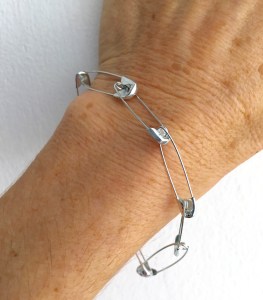
img_5354Poetry sites are bookmarked on my computer and the first thing I do when I wake up is go from one to the other, reading poems. Four per morning, sometimes more. I hardly ever read any poems I like. Why do you read poems you don’t like? asks the man who knows me best, watching me sigh and roll my eyes. Because I have to read a ton of poems I don’t like in order to find one I do like, which is the truth. Maybe one out of a hundred poems will seize me. Even so, one out of a hundred poems adds up. They add up and up and up, to a beautiful tumble of beautiful poems I will keep reading forever. You know what else adds up? Cruel statements add up, and vicious diatribes add up, and chants of lock her up add up, and rallies of falsehoods and hatred add up. But good deeds add up too, damn it, and so do people who fill a hollow no one else can fill, as in this beautiful poem below. Hail to the unsung and underpaid caregivers, for they are the ones who mend the wounds, smooth the sheets, clean the vomit of humanity from the streets and from our souls.
People Who Take Care
     – Nancy Henry

People who take care of people
Get paid less than anybody
people who take care of people
are not worth much
except to people who are
sick, old, helpless, and poor
people who take care of people
are not important to most other people
are not respected by many other people
come and go without much fuss
unless they don’t show up
when needed
people who make more money
tell them what to do
never get shit on their hands
never mop vomit or wipe tears
don’t stand in danger
of having plates thrown at them
sharing every cold
observing agonies
they cannot tell at home
people who take care of people
have a secret
that sees them through the double shift
that moves with them from room to room
that keeps them on the floor
sometimes they fill a hollow
no one else can fill
sometimes through the shit
and blood and tears
they go to a beautiful place, somewhere
those clean important people
have never been.

For more information on Nancy Henry, please click here.

Poem of the Week, by Maggie Smith

Life is short, though I keep this from my children.
Life is short, and I’ve shortened mine
in a thousand delicious, ill-advised ways,
a thousand deliciously ill-advised ways
I’ll keep from my children. The world is at least
fifty percent terrible, and that’s a conservative
estimate, though I keep this from my children.
For every bird there is a stone thrown at a bird.
For every loved child, a child broken, bagged,
sunk in a lake. Life is short and the world
is at least half terrible, and for every kind
stranger, there is one who would break you,
though I keep this from my children. I am trying
to sell them the world. Any decent realtor,
walking you through a real shithole, chirps on
about good bones: This place could be beautiful,
right? You could make this place beautiful.

For more information about Maggie Smith, please click here.

Poem of the Week, by Kevin Carey

11666099_1232950340052033_2760881278274778804_nTough choosing a poem this week amidst the hours spent hiking, walking, trying to tromp my way into some form of inner calm. More hours on the couch scrolling through my thousands of poems. Searching for certain poets, the ones who bring me comfort because they’re fearless, because they talk about life the way it is, because they use ordinary words to write about ordinary things that in their magic hands turn transcendent and remind me that I’m not in this alone. That I am never alone. That all over this country right now, there are others waking every morning and breathing in and breathing out and reminding themselves that the world has never been easy, that humankind has always been under threat by the few among us who take pleasure in being cruel, in inciting violence, in tearing apart the social fabric because . . . why? because they can, I guess. Yes, we are always under siege by those who would divide us for their own sick pleasure, and also yes, we are always fighting back. Sometimes with harshness, and sometimes with a book that lasts for a lifetime, as in this beautiful poem.


Reading to My Kids
     – Kevin Carey

When they were little I read
to them at night until my tongue
got tired. They would poke me
when I started to nod off after twenty pages
of Harry Potter or Lemony Snicket.
I read (to them) to get them to love reading
but I was never sure if it was working
or if it was just what I was supposed to do.
But one day, my daughter (fifteen then)
was finishing Of Mice and Men in the car
on our way to basketball.
She was at the end when I heard her say,
No, in a familiar frightened voice
and I knew right away where she was.
“Let’s do it now,” Lennie begged,
“Let’s get that place now.”
“Sure, right now. I gotta. We gotta,”
and she started crying, then I started crying,
and I think I saw Steinbeck
in the back seat nodding his head,
and it felt right to me,
like I’d done something right,
and I thought to myself, Keep going,
read it to me, please, please, I can take it.


For more information about Kevin Carey, please click here.

Website
Blog
Facebook page
@alisonmcghee

Poem of the Week, by Kait Rokowski

Driven, impatient and judgmental person that I am, I constantly work to hold myself in check. Be kind, for everyone is fighting a great battle*, I remind myself. Every time I’m about to walk into a room, a classroom especially, because teachers have enormous power and please, please do not ever let me abuse that power, I recite those words to myself. Be gentle, Alison. Be kind. Keep the lesser angels of your nature in check, because you don’t know the whole story. You will never know the whole story.  IMG_4206


A Good Day
     – Kait Rokowski

Yesterday, I spent 60 dollars on groceries,
took the bus home,
carried both bags with two good arms back to my studio apartment
and cooked myself dinner.
You and I may have different definitions of a good day.
This week, I paid my rent and my credit card bill,
worked 60 hours between my two jobs,
only saw the sun on my cigarette breaks
and slept like a rock.
Flossed in the morning,
locked my door,
and remembered to buy eggs.
My mother is proud of me.
It is not the kind of pride she brags about at the golf course.
She doesn’t combat topics like, ”My daughter got into Yale”
with, ”Oh yeah, my daughter remembered to buy eggs”
But she is proud.
See, she remembers what came before this.
The weeks where I forgot how to use my muscles,
how I would stay as silent as a thick fog for weeks.
She thought each phone call from an unknown number was the notice of my suicide.
These were the bad days.
My life was a gift that I wanted to return.
My head was a house of leaking faucets and burnt-out lightbulbs.
Depression, is a good lover.
So attentive; has this innate way of making everything about you.
And it is easy to forget that your bedroom is not the world,
That the dark shadows your pain casts is not mood-lighting.
It is easier to stay in this abusive relationship than fix the problems it has created.
Today, I slept in until 10,
cleaned every dish I own,
fought with the bank,
took care of paperwork.
You and I might have different definitions of adulthood.
I don’t work for salary, I didn’t graduate from college,
but I don’t speak for others anymore,
and I don’t regret anything I can’t genuinely apologize for.
And my mother is proud of me.
I burned down a house of depression,
I painted over murals of greyscale,
and it was hard to rewrite my life into one I wanted to live
But today, I want to live.
I didn’t salivate over sharp knives,
or envy the boy who tossed himself off the Brooklyn bridge.
I just cleaned my bathroom,
did the laundry,
called my brother.
Told him, “it was a good day.”


For more information on Kait Rokowski, please click here.

*Wise words attributed, variously, to Philo of Alexandria or Plato or Ian MacLaren.

Poem of the Week, by Ada Limon

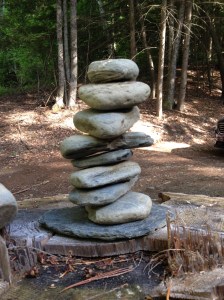
14100516_603168419863170_3525948158388452292_nMy dog is sleeping on the couch right now. We can read each other’s minds; before I get up from this table in a few minutes to go for a run, he will already have jumped down and trotted over to me, knowing I’m about to leave. When I return, he will be waiting at the door to greet me. He doesn’t wake up disturbed like me at the daily news, which even though I don’t watch television and  I avoid certain headlines, I know anyway. It’s in the air, in the invisible waves that connect us to each other and the world. It’s a battle not to give in to the disgust and despair and cynicism and snark that sometimes feels omnipresent and, weirdly, more socially acceptable than hope. Hope is harder, and so is the steadfast work that makes things better. The dog in this beautiful poem reminds me of my own dog. Not everything is bad, he says, in action if not words.
The Leash
     – Ada Limon

After the birthing of bombs of forks and fear,
the frantic automatic weapons unleashed,
the spray of bullets into a crowd holding hands,
that brute sky opening in a slate metal maw
that swallows only the unsayable in each of us, what’s
left? Even the hidden nowhere river is poisoned
orange and acidic by a coal mine. How can
you not fear humanity, want to lick the creek
bottom dry to suck the deadly water up into
your own lungs, like venom? Reader, I want to
say, Don’t die. Even when silvery fish after fish
comes back belly up, and the country plummets
into a crepitating crater of hatred, isn’t there still
something singing? The truth is: I don’t know.
But sometimes, I swear I hear it, the wound closing
like a rusted-over garage door, and I can still move
my living limbs into the world without too much
pain, can still marvel at how the dog runs straight
toward the pickup trucks break-necking down
the road, because she thinks she loves them,
because she’s sure, without a doubt, that the loud
roaring things will love her back, her soft small self
alive with desire to share her goddamn enthusiasm,
until I yank the leash back to save her because
I want her to survive forever. Don’t die, I say,
and we decide to walk for a bit longer, starlings
high and fevered above us, winter coming to lay
her cold corpse down upon this little plot of earth.
Perhaps, we are always hurtling our body towards
the thing that will obliterate us, begging for love
from the speeding passage of time, and so maybe
like the dog obedient at my heels, we can walk together
peacefully, at least until the next truck comes.

 
For more information on Ada Limon, please click here.

Poem of the Week, by Philip Terman

IMG_4539This poem makes me think of my mother and father, who, from my vantage point, seem to spend most of their time doing good things for others. Need sixty pounds of stuffing for the Octoberfeast? Sure. Need a ride to your dentist appointment sixty miles away? No problem. All-day help in the homeless shelter kitchen every third Wednesday? Of course. A listening ear in a time of sadness? They are there. They are there, they are there, they are there. Some people write checks and then there are the people like my parents, who wade in knee deep to fill the plates and then wash the plates, brew the coffee and then pour the coffee, welcome the new babies, slip a $20 in their graduation cards eighteen years later, and stand in line in dark clothes to say goodbye when the time comes. We are all headed to the same place; may as well name it Jerusalem, or Mecca, or the meaning-of-a-life-whatever-that-may-be, and make those steps count.
Walking to Jerusalem
     – Philip Terman

Pedometer attached to her belt, your mother, spry and strong
at eighty, joins the other Methodist Church members
in calculating the 5,915 miles, no matter the weather, to add up
all the way from Linesville, Pennsylvania to Jerusalem.
They need not worry about miracles or pausing
at the signs of the cross. They need not stop for security
to check their purses for weapons. They need no visa
nor baggage, no money to exchange for shekels, no guide-
book, no guide. They need no ancient tongue or prophecies.
They are, simply, day by day, walking, mile after mile:
the sink to the table, uptown to the post office, down
the block to visit the sick neighbor. Sundays to and from church.
And when they walk far enough, adding up their pedometers
together, they will arrive in Jerusalem. And keep walking.


For more information on Philip Terman, please click here.

Poem of the Week, by Lisa Olstein

img_5054 img_5055

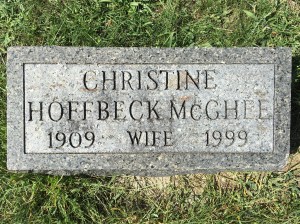
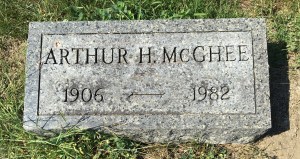
Hello, my grandparents. I drove by the farm before I came here. It took me a while to find it – I finally had to call Mom and Dad from the car because I drove up and down McGhee Hill Road and could not seem to find the driveway. No red barn, no white farmhouse, no sloping green lawn with big trees. Turns out I’d forgotten that you have to go up and over the hill before you get to the farm – it’s on the other side. You’ll be happy to hear that it looks beautiful. They’ve turned the barn into some kind of pottery place, or art studio. Artisanal cheese, maybe. Whoever those New Yorkers you sold it to are, they obviously love the place. Not the way we did, though. No one could love it the way we did, back then. 

Dear One Absent This Long While
     – Lisa Olstein

It has been so wet stones glaze in moss;
everything blooms coldly.

I expect you. I thought one night it was you
at the base of the drive, you at the foot of the stairs

you in a shiver of light, but each time
leaves in wind revealed themselves,

the retreating shadow of a fox, daybreak.
We expect you, cat and I, bluebirds and I, the stove.

In May we dreamed of wreaths burning on bonfires
over which young men and women leapt.

June efforts quietly.
I’ve planted vegetables along each garden wall

so even if spring continues to disappoint
we can say at least the lettuce loved the rain.

I have new gloves and a new hoe.
I practice eulogies. He was a hawk

with white feathered legs. She had the quiet ribs
of a salamander crossing the old pony post road.

Yours is the name the leaves chatter
at the edge of the unrabbited woods.


For more information on Lisa Olstein, please click here.

Poem of the Week, by Alan Gillis

screen-shot-2016-09-17-at-11-08-39-amWhen I was eighteen I left the landscape of my childhood –the foothills of the southwestern Adirondacks, in far upstate New York– for college in Vermont, and in all the years since I have never spent more than a week at a time in my homeland, always to visit my parents. You would think I left that world behind, the day I got to college, and in a way that’s true. The horizons of my life blew wide open that day, and they have kept right on opening. But every adult novel I’ve ever written is set in that land, with its maples and oaks that turn to flame in the autumn, pine trees in winter that look black against deep snow that looks blue or white or pink, depending. The people in those novels aren’t real, I conjured them up out of my heart and my head, but I wish they had been around when I was a girl. Maybe I would’ve loved them, maybe they would’ve loved me. When Alan Gillis in this beautiful, dreamlike poem below talks about the girl who sheds the skin of her longing only to escape into more longing, I know in my bones what he means. I guess everyone does.

To Be Young and in Love in Middle Ireland
      – Alan Gillis

The girl from the satellite
town holds berries in the fast stream
supermarket queue.
She carries her longing like a stream of song,
her melody
a body over the boundary
of what is solid and what flows.

The guys in the depression-
hit town are tripping in the fruit
aisle. Falling for her
berry lightness they slip out
from their outlines. One guy says
she takes the form of a dream,
or the dream of a form.

On the page of the regional
night berries
pulse like the notes of a song
in the stream. The girl
who sheds the skin of her longing
escapes into more
longing.

In a dream on the margins
of town one of the guys
hears a girl sing, her voice
like strings,
a basket of ripe berries
floating into the night
on a stream.

The girl, the guy, in derelict
bedrooms hear lucent songs
undressing,
streaming from their outlines
through the boundaries
of town wrapping around them
the scent of fresh berries.

And I was the guy and the girl
was within
the page of the town
ever, over, after, never, the song
long, long, long, long.
The stream is slipped as the ground
you stand on.

Build houses out of song.
The berries are undressing.
The stream is long, gone, long.
The girl dreams a form of dream,
or forms a dream of form:
the boundaries of song in the night
undressed as a stream in the morning.


For more information on Alan Gillis, please click here.

Website
Blog
Facebook page
@alisonmcghee