Poem of the Week, by Lisel Mueller

Screen Shot 2018-04-05 at 8.43.51 AMRough, rough week. Children torn from their parents at borders, the suicides of loved people who projected happiness, the cruelty of our elected employees and the ongoing and unfathomable cowardice of their minions who stand by, watching our democracy crumble. Last night I scrolled through poem after poem, looking for one with clear eyes and a level gaze, like this one below. A poem that sees the situation for what it is and imagines it as it can be. Time for us to be the goddesses who remake this world. 


The End of Science Fiction
     – Lisel Mueller

This is not fantasy, this is our life.
We are the characters
who have invaded the moon,
who cannot stop their computers.
We are the gods who can unmake
the world in seven days.
Both hands are stopped at noon.
We are beginning to live forever,
in lightweight, aluminum bodies
with numbers stamped on our backs.
We dial our words like Muzak.
We hear each other through water.
The genre is dead. Invent something new.
Invent a man and a woman
naked in a garden,
invent a child that will save the world,
a man who carries his father
out of a burning city.
Invent a spool of thread
that leads a hero to safety,
invent an island on which he abandons
the woman who saved his life
with no loss of sleep over his betrayal.
Invent us as we were
before our bodies glittered
and we stopped bleeding:
invent a shepherd who kills a giant,
a girl who grows into a tree,
a woman who refuses to turn
her back on the past and is changed to salt,
a boy who steals his brother’s birthright
and becomes the head of a nation.
Invent real tears, hard love,
slow-spoken, ancient words,
difficult as a child’s
first steps across a room. 

For more information about Lisel Mueller, please click here.  
Website
Blog
Facebook page
@alisonmcghee

Poem of the Week, by Leigh Hunt

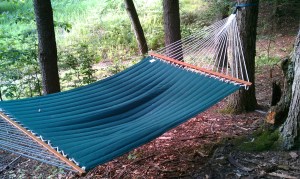
Shack hammockYesterday, after heavy rains, I went for a long walk. I kept hearing opera music and I looked around to see a man grinning at me and nodding from his car, where the windows were open and the volume turned way up. I laughed and waved back at him, and the below poem leaped up into my mind. My grandmother, whose life was extraordinarily hard, used to recite it to us with an unfamiliar lilt in her voice. 
Then, late last night when I was putting together this post, I scrolled through my sent-poem files and found notes between me and two old friends from 2006, when I first sent out this poem. From Norma Fox Mazer: Yeehaw! You should send this one out at least once a year! From Phebe Hansen: Yay for love! xxoo. I loved Norma and Phebe. Both are gone now, but their smiles and laughter and bright eyes leaped up from their words on the screen into my mind, full of life, just like this poem.


Jenny Kissed Me
            – Leigh Hunt

Jenny kissed me when we met,
    Jumping from the chair she sat in;
Time, you thief, who love to get
    Sweets into your list, put that in;
Say I’m weary, say I’m sad,
    Say that health and wealth have missed me,
Say I’m growing old, but add,
    Jenny kissed me.

For more information about Leigh Hunt, please click here.

Poem of the Week, by Pat Mora

img_0560

Mrs. Martin was the only one who believed in me.

When Mr. Jackson died I flew across the country to his funeral and told his family what he had meant to me. 

I still have the note that Miss Delaney gave me on the last day of third grade.  

I named my son after Mr. James, the way you might name a son for his father. Because that’s how important Mr. James was to me. 

Teachers wield power –sometimes for bad, like the first-grade teacher who hung a sign around my sister’s neck that read “I talk too much in class,” but mostly for good. And that power lasts a lifetime. How many times I have given this prompt in a workshop —Think of a powerful figure from your childhood and write about that person– and listened to story after story about a teacher. A magical teacher who created a cloud of safety around a child ignored, unseen, and unsung, as in the quiet, lovely poem below. 


Ode to Teachers, by Pat Mora

I remember
the first day,
how I looked down,
hoping you wouldn’t see
me,
and when I glanced up,
I saw your smile
shining like a soft light
from deep inside you.

“I’m listening,” you encourage us.
“Come on!
Join our conversation,
let us hear your neon certainties,
thorny doubts, tangled angers,”
but for weeks I hid inside.

I read and reread your notes
praising
my writing,
and you whispered,
“We need you
and your stories
and questions
that like a fresh path
will take us to new vistas.”

Slowly, your faith grew
into my courage
and for you—
instead of handing you
a note or apple or flowers—
I raised my hand.

I carry your smile
and faith inside like I carry
my dog’s face,
my sister’s laugh,
creamy melodies,
the softness of sunrise,
steady blessings of stars,
autumn smell of gingerbread,
the security of a sweater on a chilly day.    


For more information on Pat Mora, please click here.​

Website
Blog
Facebook page
@alisonmcghee

Poem of the Week, by Robyn Sarah

IMG_9595

Last week I visited The Tenement Museum on the Lower East Side of Manhattan. My grandfather and his family lived there when they first emigrated to New York, after fleeing the pogroms in Russia at the turn of the 20th century. Small dark rooms. No electricity. No running water. Four toilets in the back yard for the entire building. Family piecework factories. One of my great-uncles died of TB, which he contracted in a sweatshop. No, scratch that. He died of suicide because he didn’t want to put his family through the pain and expense of a long and agonizing death. 

On our tour, I was the only American. When the tour guide asked if there had once been languages spoken in our families that are no longer spoken, I was the only one to raise my hand: “Sure. Russian, Yiddish, German, Danish, French.” My ancestors lived not an American dream but an American story, like most of us.  It was a relief to emerge from that dark, cramped tenement and stand in the sunshine. 


On Closing the Apartment of My Grandparents of Blessed Memory, by Robyn Sarah

And then I stood for the last time in that room.
The key was in my hand. I held my ground,
and listened to the quiet that was like a sound,
and saw how the long sun of winter afternoon
fell slantwise on the floorboards, making bloom
the grain in the blond wood. (All that they owned
was once contained here.) At the window moaned
a splinter of wind. I would be going soon.

I would be going soon; but first I stood,
hearing the years turn in that emptied place
whose fullness echoed. Whose familiar smell,
of a tranquil life, lived simply, clung like a mood
or a long-loved melody there. A lingering grace.
Then I locked up, and rang the janitor’s bell.    


For more information on Robyn Sarah, please click here.

Website
Blog
Facebook page
@alisonmcghee

Poem of the Week, by E.E. Cummings

Screen Shot 2018-04-05 at 8.44.54 AMSometimes I dream that I’m trying to get to Paris. I’m at the airport but I left my passport at home, and I can’t get a cab to go fetch it, and once I’m home I can’t remember where the passport is, and once I’m back at the airport I’m at the wrong terminal, and now I can’t find my ticket, and what happened to my roller bag, and, and, and this dream goes on all night long and I wake up exhausted. Sometimes don’t you want to step out of yourself for a day, or even a few hours, and just be someone else? Or no one else? This is when you need to read the poem below, by the hypnotic Mr. Cummings, because he knows exactly how you feel.


You Are Tired, by Edward Estlin Cummings

You are tired,
(I think)
Of the always puzzle of living and doing;
And so am I.

Come with me, then,
And we’ll leave it far and far away —
(Only you and I, understand!)

You have played,
(I think)
And broke the toys you were fondest of,
And are a little tired now;
Tired of things that break, and —
Just tired.
So am I.

But I come with a dream in my eyes tonight,
And knock with a rose at the hopeless gate of your heart —
Open to me!
For I will show you the places Nobody knows,
And, if you like,
The perfect places of Sleep.

Ah, come with me!
I’ll blow you that wonderful bubble, the moon,
That floats forever and a day;
I’ll sing you the jacinth song
Of the probable stars;
I will attempt the unstartled steppes of dream,
Until I find the Only Flower,
Which shall keep (I think) your little heart
While the moon comes out of the sea.


​For more information on E.E. Cummings, please click here.​

Website
Blog
Facebook page
@alisonmcghee

Poem of the Week, by Warsan Shire

Screen Shot 2018-04-05 at 8.44.01 AMI’ll rewrite this whole life and this time there’ll be so much love, / you won’t be able to see beyond it. 

These lines, from the gorgeous poem below, bring me back to childhood and the novel that more than any other book made me want to be a writer. A Tree Grows in Brooklyn is about Francie Nolan, who grew up on the mean streets of Brooklyn in the early part of the 20th century.

She was a lonely girl, even though she was loved, and so was I. Her love for the world and being alive in it was wild and intense, and so was mine. She was filled with longing and confusion, and so was I. That one teacher –the one she adored—told her that in life, she should tell the truth of the way things happened, but that in the stories she wrote, she could make up her own endings. She could write life the way it should be. Warsan Shire is too young to have read A Tree Grows in Brooklyn, but she knows way down deep in her bones the profound power of words to transcend experience.  


Backwards, by Warsan Shire
 
         for Saaid Shire
The poem can start with him walking backwards into a room.
He takes off his jacket and sits down for the rest of his life;
that’s how we bring Dad back.
I can make the blood run back up my nose, ants rushing into a hole.
We grow into smaller bodies, my breasts disappear,
your cheeks soften, teeth sink back into gums.
I can make us loved, just say the word.
Give them stumps for hands if even once they touched us without consent,
I can write the poem and make it disappear.
Step-Dad spits liquor back into glass,
Mum’s body rolls back up the stairs, the bone pops back into place,
maybe she keeps the baby.
Maybe we’re okay kid?
I’ll rewrite this whole life and this time there’ll be so much love,
you won’t be able to see beyond it.

You won’t be able to see beyond it,
I’ll rewrite this whole life and this time there’ll be so much love.
Maybe we’re okay kid,
maybe she keeps the baby.
Mum’s body rolls back up the stairs, the bone pops back into place,
Step-Dad spits liquor back into glass.
I can write the poem and make it disappear,
give them stumps for hands if even once they touched us without consent,
I can make us loved, just say the word.
Your cheeks soften, teeth sink back into gums
we grow into smaller bodies, my breasts disappear.
I can make the blood run back up my nose, ants rushing into a hole,
that’s how we bring Dad back.
He takes off his jacket and sits down for the rest of his life.
The poem can start with him walking backwards into a room.


For more information on Warsan Shire, please read this profile of her.

Website
Blog
Facebook page
@alisonmcghee

Poem of the Week, by John Freeman

Screen Shot 2018-04-05 at 8.43.51 AMWhat wearies you? What renews you? Who brings you joy? Who exhausts you? When you think of safety and comfort and happiness, what place or person comes to mind? The answers to these questions are already known to you. They live in your body, in a place beyond conscious thought and its dangerous companions, rationalization and overriding.

If you turn to your body for answers you will know when someone’s love is not love but control and need. You will know when you are living not in safety but in fear. Over time, you will slowly learn to trust yourself. When I first read this small, curious poem below, a deep heaviness descended on me and I physically shrank into my chair in recognition and sorrow. John Freeman says so much in so few words. 


Mail, by John Freeman

We wrote one another a lot
those days, long winding
letters that crossed a country, in which
I asked if she knew my gratitude;
her replies so generous
it’s only now I realize
my gratitude wasn’t gratitude
but another request.


Poem of the Week, by Jaime Manrique

Istanbul, smoking hookahFive years ago this week my older daughter and I were sitting on the porch of a cafe in Istanbul, smoking a hookah and eating mezes and pita bread. Later, we walked the streets of our neighborhood, which was on the Bosphorus. At one point the muezzins began their call to prayer, the sound of their voices wafting over the stone walls and cobblestones of that vast and sprawling city. The sun was falling below the horizon and my daughter was walking ahead of me, her tumble of dark curls falling over her navy jacket, and my heart seized up in a familiar way, the way it has seized up my entire life, when the world is too beautiful and you want to stop and freeze it but the minutes are passing and passing and passing regardless.

You can come back here, Alison, I told myself, you can come back. A familiar silent refrain, something I have told myself every time I’m traveling and the heart seize happens again. But you can’t come back. There’s only that moment, and then another moment, and every moment replaces the previous one. Tonight I think of all the skies / I have pondered and once loved, says the poet in this gorgeous poem below. The minute I read those lines I was transported back to that beautiful evening on the Bosphorus with my beautiful girl, and my heart seized up all over again. Poem of the Week, by Jaime Manrique. 


House
     –  Jaime Manrique, translated by Edith Grossman

It is a July night
scented with gardenias.
The moon and stars shine
hiding the essence of the night.
As darkness fell
—with its deepening onyx shadows
and the golden brilliance of the stars—
my mother put the garden, her house, the kitchen, in order.
Now, as she sleeps,
I walk in her garden
immersed in the solitude of the moment.
I have forgotten the names
of many trees and flowers
and there used to be more pines
where orange trees flower now.
Tonight I think of all the skies
I have pondered and once loved.
Tonight the shadows around
the house are kind.
The sky is a camera obscura
projecting blurred images.
In my mother’s house
the twinkling stars
pierce me with nostalgia,
and each thread in the net that surrounds this world
is a wound that will not heal.


For more information on Jaime Manrique, please check out his website.

For more information on acclaimed translator Edith Grossman, please read this interview.

Website
Blog
Facebook page
@alisonmcghee

Poem of the Week, by David Kirby

Me and ArthurOnce, a long time ago, I went to a jumprope exhibition in the gym of a middle school. There were teams of tandem jumpers, rope dancers, and synchronized twirling. The students had practiced for many weeks prior to the exhibition. This was back in the days of big VHS camcorders, and I had one on my shoulder so I could record the coolest moments. At the very end of the competition, the gym floor cleared and a single jump roper entered the room from a side door. One of his legs was twisted up behind his head –it looked effortless, he was that flexible and agile–and he did so many tricks so fast and so well, jump-roping the whole time, that I kept the camcorder trained on him. The crowd burst into a roar.

Then I realized that the jump-roper was my son. Holy shit! That’s my son! I said, and that got recorded too. 

It’s weird, when your kids grow up. Of course you expect it, and it’s wonderful, but still there are moments when you can’t believe it – like, wait, what? When did this happen? How did it happen? This bittersweet poem, which I loved the first moment I read it, makes me feel like crying the same way I feel like crying when I watch that long ago videotape. Holy shit, that’s my son. 


Taking It Home to Jerome, by David Kirby

In Baton Rouge, there was a DJ on the soul station who was
always urging his listeners to “take it on home to Jerome.”

No one knew who Jerome was. And nobody cared. So it
didn’t matter. I was, what, ten, twelve? I didn’t have anything

to take home to anyone. Parents and teachers told us that all
we needed to do in this world were three things: be happy,

do good, and find work that fulfills you. But I also wanted
to learn that trick where you grab your left ankle in your

right hand and then jump through with your other leg.
Everything else was to come, everything about love:

the sadness of it, knowing it can’t last, that all lives must end,
all hearts are broken. Sometimes when I’m writing a poem,

I feel as though I’m operating that crusher that turns
a full-size car into a metal cube the size of a suitcase.

At other times, I’m just a secretary: the world has so much
to say, and I’m writing it down. This great tenderness.


​For more information on David Kirby, please click here.​


Poem of the Week, by Stephan Pastis

Alison and DonaldWe used to call them the funnies, and I have a memory of sitting on my dad’s big lap while he folded the newspaper in half, then quarters, so he could read them to me. This would have been on a Sunday, because I remember the strips as being full-color. I still read the daily comics, even though most of them are terrible – tired, unfunny, boring, and retreading the same exact ground for decades on end. Once in a while a strip comes along that’s electrifyingly good –Calvin & Hobbes, Boondocks, Cul de Sac–but they don’t last long, usually because their creators have the courage to cancel them when they’ve run out of steam. So I read out of habit, with no expectation of transcendence. But every once in a while one of them pierces my heart, like today’s Pearls Before Swine, by Stephan Pastis.


Tree Stump o’ Deep Thought You’re Not Usually Capable Of, by Stephan Pastis

No one knows what we’re doing here.
Some have faith that they do, but no one knows.

So we are scared.
We are alone.
We end.
And we don’t know where we go.

So we cling to money for comfort.
And we chase awards for immortality.
And we hide in the routine of our days.

But then the night.
Always the night.

Which, when it has you alone, whispers that
maybe none of this has any significance.

So love everyone you’re with.
Because comforting each other
on this journey we neither asked for
nor understand
is the best we can do.

And laugh as much as you can.


​For more information on Stephan Pastis, please click here.​