Poem of the Week, by Izumi Shikibu
 Every summer in my teens I canoed with friends through the Rideau region of lakes and canals in Ontario. We camped every night, swam, cooked, laughed, told ghost stories and played games. One annual camping spot was on a lake with an enormous rope swing tied to an overhanging tree. You grabbed the rope, stepped back as far as you could, swung out over the water and then plummeted. The rope swing took nerve. The drop was steep and the water cold, and once you committed, you had to leap – if you swung back you’d crash against the tree and the rocky bluff. Leaping from it was wild and exhilarating. Once, as I swung out, I looked down to see a long water snake swirling in the water directly below me. My fear of snakes is lifelong and deep-seated, and I was horrified, but there was no going back. I plummeted with my eyes closed and struck out for shore the second I surfaced.
In all the years between then and now, life has taught me a thousand times over that the most beautiful things are often shot through with sorrow and loss. But when I first read this poem, by a woman who lived and died many centuries before I was born, it was that memory –the snake, the long plummet into the freezing water, the wild surge of life as I tore toward shore–that came rushing back to me.
“Although the wind . . .”
– by 11th-century poet Izumi Shikibu, translated by Jane Hirshfield
Although the wind
blows terribly here,
the moonlight also leaks
between the roof planks
of this ruined house.
For more information on Shikibu, who lived and wrote in the 10th and 11th centuries, please click here.
 A few years ago my brother sent me a photo of my nephew, with the caption Getting his mind blown at Nickelodeon Universe. Nickelodeon Universe is a crowded and noisy place, but in the photo, my tiny nephew stands alone in a huge open space, his head craned up, staring at something I can’t see. The photo conveys profound stillness and concentration. Sometimes it pops up on my screensaver and I wonder again what my nephew was staring at, what was going through his mind.
  Once, a long time ago, someone close to me handed me a memo and asked me to read it. It was a work memo that summarized some unfair working conditions. I didn’t know who had written it, but my first comment was “Wow. Whoever wrote this can’t spell worth a damn and doesn’t know how to use punctuation, either.” The person who had handed me the memo didn’t hear me say this, for which I was instantly grateful, because it turned out that they had written it. This was a person I loved with all my heart. The shame I felt in that moment is something that will be with me forever.
  My youngest didn’t walk until she was 22 months old. Instinct told me she was fine so I didn’t worry about this, but I observed her with interest. One day, when I was in the kitchen and she was sitting in a patch of sun on the living room floor, her back to me, I watched in wonder as she rose –no hands, no support, no nothing– to a full stand and began to walk. I had never seen a child go from crawling to perfect walking in an instant like that. She never went back to crawling.
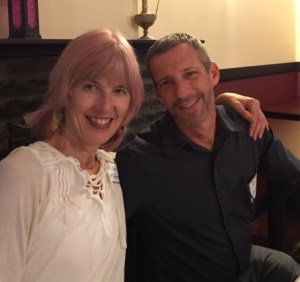 Neither my friend nor I had been to a high school reunion in many years –in my case, decades–and we were both nervous. The years we had spent growing up together in upstate New York seemed far away, and we hadn’t kept in touch with many classmates. So we met early, at the bar in that tiny stoplight-less town, and fortified ourselves with gin while paging through our yearbook to remind ourselves of faces and names. At one point I said to him, It’s been decades. We don’t look the same, will anyone else?
 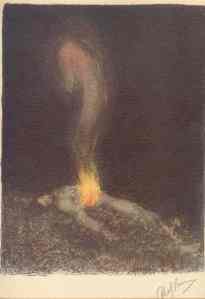 For years I’ve written
 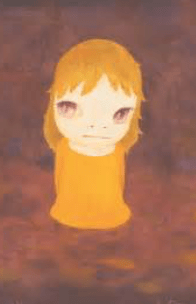 A few days ago at the store I stood in line, my groceries on the conveyor belt: butter, greens, an avocado, carrots and peppers and potatoes. The person behind me placed their items on the belt: two packages of ice cream sandwiches. About once a year I get a craving for an ice cream sandwich, and looking at the picture on the boxes made me want one. I turned to see who was buying them. She was middle-aged, with faded hair and a worn, tired face, wearing a jacket with a broken zipper. Hunched over. She’s been through some things, was the thought in my mind, and I waited for her to look up so I could smile at her and chat a little while we waited for the cashier. But she never did look up. And I thought of this poem, by the wondrous Dorianne Laux. So many people out there, all of us maybe, who have been through some things. Oh, the water.
 Growing up in the age of Darwinian elementary schools –the gym teacher would choose the two best athletes to captain every team, and one by one they would pick off first the good athletes, then the midlings, then the uncoordinated, until finally there was only one child remaining, huddled against the wall– I hated gym class. Not because I was bad at sports (I’m not) but because I can’t stand cruelty. And that little ritual was fundamentally cruel.
  My son was two years old and we were in the backyard. It was early spring, and I was digging around in the dirt when he suddenly bent double and started laughing and pointing. Dinosaurs, he said, dinosaurs! I followed his pointing finger to the patch of ferns next to us. They were just beginning to unfurl their fronds, and the stem of each was bent and curved, and in that instant I saw what he saw: the long curved necks of T-Rexes. My laughing little boy, looking at the world in a way I’d never seen it before. I have never looked at ferns the same way since. The memory of that day almost chokes me up, and so does this small poem.
  Alison McGhee