Poem of the Week, by Suji Kwock Kim
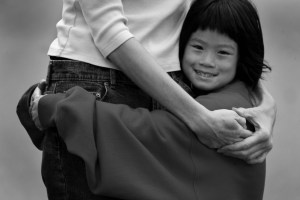
Photos 851When an idea for a new book comes to me, it feels obsessive and overwhelming and makes me almost panicky. I cope by breaking the writing down into small daily tasks. Becoming a mother felt, and still feels, the same way. The fact that my babies depended on me for their very lives was almost paralyzing. There were times when I had to force myself not to think about the immensity of the responsibility or I would have lost my mind.

Now I look back on those days, and they still feel overwhelming. I remember rocking and rocking my son, singing the Circle Game over and over, as he struggled to find peace and sleep. I remember how my daughter couldn’t fall asleep unless she was touching me, my hand on her arm or leg. I remember slowing my breathing down because her breathing would slow and deepen too, and finally she would drift off. Later, when I flew across the world and met my youngest, she first stared at me in suspicion, her dark eyes fixed on mine, and then kicked her legs, started laughing and just kept on laughing. 

One thing that helped me in a strange way, back then, was the sense that before any of my children were born, they already were. That my presence in their lives was part of a continuum that began before any of us were born. There’s nothing rational about that feeling, but there’s nothing rational about having a child. The poem below stuns me. 


Fugue, by Suji Kwock Kim

Out of albumen and blood, out of amniotic brine,
placental sea-swell, trough, salt-spume and foam,

you came to us infinitely far, little traveler, from the other world—
skull-keel and heel-hull socketed to pelvic cradle,

rib-rigging, bowsprit-spine, driftwood-bone,
the ship of you scudding wave after wave of what-might-never-
have-been.

Memory, stay faithful to this moment, which will never return:
may I never forget when we first saw you, there on the other side,

still fish-gilled, water-lunged,
your eelgrass-hair and seahorse-skeleton floating in the sonogram
screen

like a ghost from tomorrow,
moth-breath quicksilver in snowy pixels, fists in sleep-twitch,

not yet alive but not not,
you who were and were not,

a thunder of bloodbeats sutured in green jags on the ultrasound
machine

like hooves galloping from eternity to time,

feet kicking bone-creel and womb-wall,
while we waited, never to waken in that world again,

the world without the shadow of your death,
with no you or not-you, no is or was or might-have-been or never-
were
.

May I never forget when we first saw you in your afterlife
which was life,

soaked otter-pelt and swan-down crowning,
face cauled in blood and mucus-mud, eyes soldered shut,

wet birth-cord rooting you from one world to the next,
you who might not have lived, might never have been born, like
all the others,

as we looked at every pock and crook of your skull,
every clotted hair, seal-slick on your blue-black scalp,

every lash, every nail, every pore, every breath,
with so much wonder that wonder is not the word—


For more information about Suji Kwock Kim, please click here.


Website

Blog

Facebook page

@alisonmcghee


Poem of the Week, by Andrea Gibson

Screen Shot 2018-11-24 at 8.51.08 AMA few weeks ago an anonymous teen sent me the note to the right, and I wished I could put my arms around them. Three times in my own life, I’ve called a crisis hotline. Each time, I was calling because someone I loved was contemplating suicide, and I wanted to get help for them. Advice by proxy, with me as the conduit. Each time, the volunteer kept ignoring my pleas for help for my friend and calmly and gently steered me back to myself: Where are you right now? How do you feel right now? What’s your plan for when we hang up? 

What was really happening was that the hotline volunteer understood –when I didn’t–that I had called because of my own desperation and terror. These conversations lasted close to an hour each time, and when I hung up, some small part of peace and belief had been restored in me and I was able to keep going. Sometimes you feel, for whatever reason, that you can’t burden your friends and family with your pain and worry. I can’t begin to express my gratitude to these anonymous voices, trained to listen, and to see below the surface.

Those voices are why I added crisis hotlines to the back of my novel What I Leave Behind, which is a book at core about kindness in the face of profound sorrow. What good can an anonymous voice on the other end of an anonymous phone line do? A lot, because that voice is not, in fact, anonymous. None of us are anonymous. We are all connected. Like the brilliant Andrea Gibson says in their mesmerizing poem below, What I know about living is the pain is never just ours. Every time I hurt I know the wound is an echo, so I keep listening for the moment the grief becomes a window.

The Nutritionist, by Andrea Gibson

The nutritionist said I should eat root vegetables,
said if I could get down thirteen turnips each day
I would be grounded, rooted.
Said my head would not keep flying away to where the darkness lives.

The psychic told me my heart carries too much weight,
said for twenty dollars she’d tell me what to do.
I handed her the twenty and she said, “Stop worrying, darling,
you will find a good man soon.”

The first psycho-therapist said I should spend three hours a day
sitting in a dark closet with my eyes closed and my ears plugged.
I tried it once but couldn’t stop thinking
about how gay it was to be sitting in the closet.

The yogi told me to stretch everything but the truth, 
said focus on the out breath,
said everyone finds happiness
if they can care more about what they can give
than what they get.

The pharmacist said Klonopin, Lamictal, Lithium, Xanax.

The doctor said an antipsychotic might help me forget
what the trauma said.

The trauma said, “Don’t write this poem.
Nobody wants to hear you cry about the grief inside your bones.”

But my bones said, “Tyler Clementi dove into the Hudson River
convinced he was entirely alone.”

My bones said, “Write the poem.”
To the lamplight considering the river bed,
to the chandelier of your faith hanging by a thread,
to everyday you cannot get out of bed,
to the bullseye of your wrist,
to anyone who has ever wanted to die:

I have been told sometimes the most healing thing we can do
is remind ourselves over and over and over
other people feel this too.

The tomorrow that has come and gone
and it has not gotten better.

When you are half finished writing that letter
to your mother that says “I swear to God I tried,
but when I thought I’d hit bottom, it started hitting back.”

There is no bruise like the bruise
loneliness kicks into your spine
so let me tell you I know there are days
it looks like the whole world is dancing in the streets
while you break down like the doors of their looted buildings.
You are not alone
in wondering who will be convicted of the crime
of insisting you keep loading your grief
into the chamber of your shame.

You are not weak
just because your heart feels so heavy.
I have never met a heavy heart that wasn’t a phone booth
with a red cape inside.

Some people will never understand
the kind of superpower it takes for some people
to just walk outside some days.
I know my smile can look like the gutter of a falling house
but my hands are always holding tight to the rip cord of believing
a life can be rich like the soil,
can make food of decay,
turn wound into highway.

Pick me up in a truck with that bumper sticker that says, 
“It is no measure of good health
to be well adjusted to a sick society.”

I have never trusted anyone
with the pulled back bow of my spine
the way I trusted ones who come undone at the throat
screaming for their pulses to find the fight to pound.
Four nights before Tyler Clementi
jumped from the George Washington bridge
I was sitting in a hotel room in my own town
calculating exactly what I had to swallow
to keep a bottle of sleeping pills down.

What I know about living
is the pain is never just ours.
Every time I hurt I know the wound is an echo,
so I keep listening for the moment the grief becomes a window,
when I can see what I couldn’t see before
through the glass of my most battered dream
I watched a dandelion lose its mind in the wind
and when it did, it scattered a thousand seeds.

So the next time I tell you how easily I come out of my skin
don’t try to put me back in.
Just say, “Here we are” together at the window
aching for it to all get better
but knowing there is a chance
our hearts may have only just skinned their knees,
knowing there is a chance the worst day might still be coming

let me say right now for the record,
I’m still gonna be here
asking this world to dance,
even if it keeps stepping on my holy feet.

You, you stay here with me, okay?
You stay here with me.

Raising your bite against the bitter dark,
your bright longing,
your brilliant fists of loss.
Friend, if the only thing we have to gain in staying is each other,
my god that is plenty
my god that is enough
my god that is so so much for the light to give
each of us at each other’s backs
whispering over and over and over,
“Live. Live. Live.”

To listen to Andrea Gibson perform this poem, click here.

For more information on poet and performer Andrea Gibson, click here.

Website

Blog

Facebook page

@alisonmcghee

Poem of the Week, by Czeslaw Milosz

Boston public garden ducklingsHere’s the fourth-floor walkup you called home. Here’s the tiny room overlooking Joy Street where Laurel used to roll her waitressing change into paper tubes for the rent. Here’s your room, with the big saggy bed left by a previous tenant. Here’s the bathroom where you didn’t pee at night because darkness was the domain of the cockroaches. Here’s the plant in the sunny window that you wound around itself because it was out of control.

Here’s the curbside rocking chair that your friend lugged up for you. Here’s the curbside rug on the living room floor where you used to host your Chinese dinner parties. Here’s the couch you were lying on that spring Thursday when the phone call came. This is the place you fled a few weeks later. The place where you were a girl and then not. The place that comes back to you in dreams, just the way this poem does. 

Encounter
    – Czeslaw Milosz

We were riding through frozen fields in a wagon at dawn.
A red wing rose in the darkness.

And suddenly a hare ran across the road.
One of us pointed to it with his hand.

That was long ago. Today neither of them is alive,
Not the hare, nor the man who made the gesture.

O my love, where are they, where are they going
The flash of a hand, streak of movement, rustle of pebbles.
I ask not out of sorrow, but in wonder.

 
For more information on Czeslaw Milosz, please click here

Poem of the Week, by Anne Sexton

IMG_0695When he was little, my son sometimes asked me questions that seized my heart, questions like Mama, what if we’re all characters in a book, and someone is writing us right now? Where these questions came from, I don’t know. Then and now he was what I think of as an old soul. Once, when he was a teenager and we sat in a waiting room, I assumed he was bored and offered him a book to read. No, he said, I’m just going to sit here and think. 
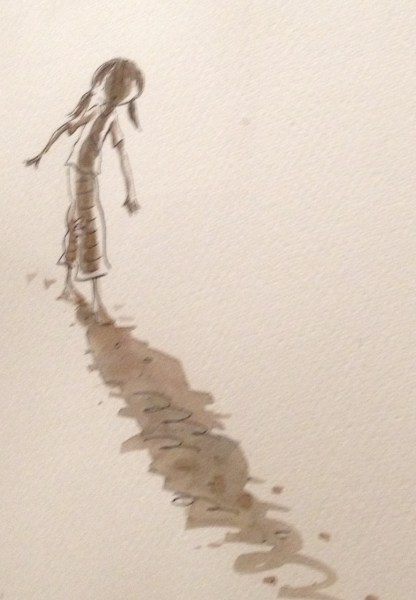
These days, in the midst of theories that maybe we’re all characters in a video game being played by beings in a galaxy far, far away, I think about my son’s long-ago question. Then and now I have no answers. Curiosity, fear, longing and wonderment, all tumbling around inside me like an animal clutched fast to my heart. 


The Poet of Ignorance, by Anne Sexton

Perhaps the earth is floating,
I do not know.
Perhaps the stars are little paper cutups
made by some giant scissors,
I do not know.
Perhaps the moon is a frozen tear,
I do not know.
Perhaps God is only a deep voice
heard by the deaf,
I do not know.

Perhaps I am no one.
True, I have a body
and I cannot escape from it.
I would like to fly out of my head,
but that is out of the question.
It is written on the tablet of destiny
that I am stuck here in this human form.
That being the case
I would like to call attention to my problem.

There is an animal inside me,
clutching fast to my heart,
a huge crab.
The doctors of Boston
have thrown up their hands.
They have tried scalpels,
needles, poison gasses and the like.
The crab remains.
It is a great weight.
I try to forget it, go about my business,
cook the broccoli, open the shut books,
brush my teeth and tie my shoes.
I have tried prayer
but as I pray the crab grips harder
and the pain enlarges.

I had a dream once, 
perhaps it was a dream,
that the crab was my ignorance of God.
But who am I to believe in dreams? 


Click here for more information about the beautiful poet Anne Sexton.  

Website

Blog

Facebook page

@alisonmcghee

Poem of the Week, by Carl Dennis

IMG_0696My friend Todd is an art museum guard by day and an artist by day and night. He composes and records original songs, dives deep into pop music he orders from Japan, watches and re-watches Miyazaki films, reads and re-reads favorite novels and finds something new in them each time. Whatever draws him, he will follow: He’s learning Japanese, has become a sushi expert, and gradually, over the years, has compiled a collection of hilarious and somehow profound observations on life as a museum guard. 

Todd is an artist, and so am I, and the ways we go about it are so different. I’ve never pulled an all-nighter in my life. I rarely re-read books or re-watch movies. When an idea grabs me, the intensity of the grabbing almost scares me. Instead of diving in full throttle the way Todd would do, I’m more likely to hold the idea in the back of my mind and channel its power into small daily tasks on my scrap paper to-do list. 

There’s no one way to be an artist in the world, no one way to make your art. Books result from my process just as music results from Todd’s. But I look at him and the way he lives his life and it’s like I’m looking at a planet similar to the one I live on, close by but unavailable to me. There are so many ways to read the beautiful poem below, most of them related to history and the ways it repeats. But when I read it, it was the difference between the poet Carl Dennis and his brother that struck me, because it’s the difference between Todd and me, and it almost made me cry.


War and Peace, by Carl Dennis

In 1949, when I was ten,
a year after the airlift for beleaguered Berlin
had foiled Stalin’s attempt to starve it
and the Marshall Plan was offering battered Europe
a hand to get on its feet, my brother Robert,
six years older, inched his way, in the room we shared,
through the thousand pages of War and Peace
while I lay sleeping. It took him four months,
an hour a night, a project that seemed to me
even more peculiar than his listening after school
to symphonies and quartets. Yes, our mother
had often mentioned the book as her father’s favorite,
the one he’d first read, in his village near Uman,
in Tolstoy’s Russian, though he’d learned his Russian
after Yiddish and Ukrainian. But that didn’t explain
my brother’s pressing on after the first few pages.
Four months just to learn about the families
he tried to describe to me, the Bolkonskis
and Rostovs and Bezukhovs, or about the French
on the march near Moscow, and Tsar Alexander.
it was all so far from the suburb of St. Louis
where we were living peaceably with our parents
most of the time, in a quiet neighborhood.
Of course, by the time my brother read Tolstoy
he’d listened to music composed in Madrid and Naples,
in Leipzig, Vienna, and St. Petersburg.
On a Saturday close to his thirteenth birthday,
before he was driven off to his Bar Mitzvah,
he lost himself in the Rite of Spring.
If I say I followed my brother’s lead when sixteen
by reading, all summer long, his dog-eared copy
of War and Peace—the Maude translation—
I don’t equate my motive for sticking with it—
wanting to be like him, not left behind—
with his simple wish to open his life
to the wonders available. When I need to list
the wonders I’ve seen, I begin by returning
to the year I was ten, 1949,
the year that NATO began its efforts
to defend the free world from the world of darkness,
when my brother crossed the border each night
as if darkness were not an obstacle,
as if the iron curtain were a curtain of gauze,
no harder to lift than to turn a page.    


​For more information on Carl Dennis, please click here.​

Website

Blog

Facebook page

@alisonmcghee

Poem of the Week, by Tony Hoagland

img_6112Q: Does writing about hard things ever make you agitated and upset, so that you have to walk away from the writing and regain your equilibrium?

A: Nope. Life is what’s hard. Writing is always solace.

This exchange took place in a university undergraduate creative writing class a couple of weeks ago. Writing is how I translate all the emotion and experience of living into something that’s bigger than me. It’s a means of transcendence, a way to push away all that hugeness and also absorb it. To make a connection with other human beings you don’t know and have never met.

So is reading, poetry especially. For decades Tony Hoagland’s work has been solace. It’s like he saw into my heart and wrote poems meant just for me, even though he was beloved by so many. I meant to write him a letter this fall, telling him how much he means to me, but he died last week, so my letter will never be written. Don’t take it personal, they said; but I did, I took it all quite personal– Oh Tony, I’m so sad you’re gone.


Personal, by Tony Hoagland

Don’t take it personal, they said;
but I did, I took it all quite personal—

the breeze and the river and the color of the fields;
the price of grapefruit and stamps,

the wet hair of women in the rain—
And I cursed what hurt me

and I praised what gave me joy,
the most simple-minded of possible responses.

The government reminded me of my father,
with its deafness and its laws,

and the weather reminded me of my mom,
with her tropical squalls.

Enjoy it while you can, they said of Happiness
Think first, they said of Talk

Get over it, they said
at the School of Broken Hearts

but I couldn’t and I didn’t and I don’t
believe in the clean break;

I believe in the compound fracture
served with a sauce of dirty regret,

I believe in saying it all
and taking it all back

and saying it again for good measure
while the air fills up with I’m-Sorries

like wheeling birds
and the trees look seasick in the wind.

Oh life! Can you blame me
for making a scene?

You were that yellow caboose, the moon
disappearing over a ridge of cloud.

I was the dog, chained in some fool’s backyard;
barking and barking:

trying to convince everything else
to take it personal too.


I’ve sent out many Tony Hoagland poems in the past, and I could send out Tony Hoagland poems every week for a year; that’s how much I loved him. For more poems by Tony, please click here.

Website

Blog

Facebook page

@alisonmcghee

Poem of the Week, by Keetje Kuipers

Screen Shot 2018-04-05 at 8.44.01 AMLong ago I left behind the simple prayers of my childhood, the ones spoken in unison with others in church, or around the table at a special meal when everyone named something they were thankful for. I’ve never known what God is, and I don’t know what God is to others. If forced to come up with a definition, my definition of God would be something like the feeling of my children on either side of me in bed as I read them to sleep when they were little. God would be the high school students I used to teach, ringed on the floor in our classroom on the giant pillows  I’d made, still and silent and sometimes falling asleep on Friday afternoons as I read them stories. God would be the idea and the feeling of peace, of a place where nothing bad can happen, where only love and comfort dwell. God would be the poems that swell my heart open in a way that almost hurts, like this one below.


Prayer, by Keetje Kuipers

Perhaps as a child you had the chicken pox
and your mother, to soothe you in your fever
or to help you fall asleep, came into your room
and read to you from some favorite book,
Charlotte’s Web or Little House on the Prairie,
a long story that she quietly took you through
until your eyes became magnets for your shuttering
lids and she saw your breathing go slow. And then
she read on, this time silently and to herself,
not because she didn’t know the story,
it seemed to her that there had never been a time
when she didn’t know this story—the young girl
and her benevolence, the young girl in her sod house—
but because she did not yet want to leave your side
though she knew there was nothing more
she could do for you. And you, not asleep but simply weak,
listened to her turn the pages, still feeling
the lamp warm against one cheek, knowing the shape
of the rocking chair’s shadow as it slid across
your chest. So that now, these many years later,
when you are clenched in the damp fist of a hospital bed,
or signing the papers that say you won’t love him anymore,
when you are bent at your son’s gravesite or haunted
by a war that makes you wake with the gun
cocked in your hand, you would like to believe
that such generosity comes from God, too,
who now, when you have the strength to ask, might begin
the story again, just as your mother would,
from the place where you have both left off.


For more information about Keetje Kuipers, please click here.


Poem of the Week, by Karla Kuskin

Screen Shot 2018-09-28 at 3.21.51 PMWhen my children were little one of our favorite books was The Philharmonic Gets Dressed. Such a simple story. In apartments all over New York City, orchestra musicians are dressing for the evening performance. Everyone wears black. They muscle their instruments, large and small, into cabs and the subway, and they head to work. My children and I read this book over and over, usually at bedtime, where it soothed their way into sleep. It’s long gone from my shelves, but I still think about it.

This book and others like it tantalize me, because the author took something familiar –an orchestra–and focused on the unfamiliar. Musicians not in their orchestra pit at a grand hall, but at home, getting dressed. The backstory. The unthought-about. It’s dangerous to think you know everything about something or someone. It leads to complacency, to boredom, and sometimes to destruction. When I read this poem below and pictured a moon radish, The Philharmonic Gets Dressed floated back into my mind. And lo and behold, Karla Kuskin was the quiet genius behind both.  


Write About a Radish, by Karla Kuskin

Write about a radish
Too many people write about the moon.

The night is black
The stars are small and high
The clock unwinds its ever-ticking tune
Hills gleam dimly
Distant nighthawks cry.
A radish rises in the waiting sky.


For more information about Karla Kuskin, please click here.

Poem of the Week, by Betsy Brown

IMG_0531The men I love most get it, with “it” being the malevolence of treating women as if we’re not equal. At one point the other night, when I could suddenly barely talk because of the rage that filled me, a male friend said about sexism, It’s like air, invisible and everywhere. And you breathe it in your whole life, but when the switch flips and you suddenly realize how deep it goes and how awful it is, it’s fucking overwhelming. 
Yes. It is.

Me at 10: Waiting on the stairs to go back into school after kickball, a classmate reached out, grabbed my breast bud and jeered as he twisted it as hard as he could in front of everyone, a moment that changed the course of my life. At 16: Standing on a subway too crowded to move a single inch, a man standing behind me shoved his fingers up my skirt and inside me. At 19: Working as a summer hotel housekeeper, a guest called for help from inside his room, and when I went in, flipped over naked on the bed to show me his erection and ask me to help him with it. At 23: A man I was making out with yanked my underwear down and kept pushing at me until I escaped and ran. 

These memories and others, which are nothing compared to what so many of my women friends have endured, bring back the humiliation and bewilderment and self-hatred I felt when they happened, when all I could think was What did I do wrong? Which is why the ending lines of the poem below, by the remarkable Betsy Brown, will be with me forever.    


Midwest Boys, by Betsy Brown

In Oshkosh, Wisconsin,
we kept it in mind
I-41 went clear down

to Florida. These scoop-necked
midsized midwestern
towns, set up separate originally

on waterways for trading–
first furs, then lumber,
the worker drinkers

voiceless then fierce
for the hell of it, tense
machinery, construction.

As a teenager you noted
mainly the routes out.
Spring, the dead mud,

the bad paint job, drifting jarred
eaves troughs, sullen pickup
sunk to its axles on the lawn.

A boy’s mind turns to the road.
Tract houses, one, one,
all along the frontage road

with tequila and Old Style, pot,
cheap speed; if you’re
a girl you try to remember:

They shoved candlesticks
up Linda. They drew on her
with her Bonne Bell.

If you pass out
they’ll strip you,
you won’t know

and if you’re lucky only
photograph you. These pictures
show up on bulletin boards.

In Eau Claire, 1992, teenage
boys dropped rocks from
an overpass over I-94,

aiming for windshields.
Martin Blommer in his
Winnebago, hit by a 32-

pound rock; his wife alongside
didn’t hear it, the crash,
the RV veered in a second

into the median, staggering
to stop, and he, in silence,
transfixed instantly, forever.

32 pounds. These are
my highways. I remember.
Long-play radio stations,

driving in moonlight
past hours of white
white mute fields.

I never wanted
to go back to Florida.
As a girl I didn’t

have much to compare–
dime bags, shot glasses, lives
that trudged with losses

and butane. I can’t forgive them.
Where could one drunk girl
find an ocean?

In the first forced blink of spring
I hate you.
I remember your names.

My curse on you is this:
May you have daughters
and may you love them.


For more information about Betsy Brown, please click here.


Website

Blog

Facebook page

@alisonmcghee

Poem of the Week, by Veronica Patterson

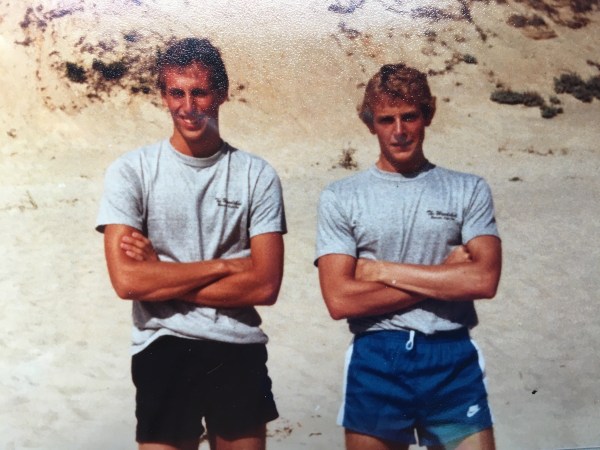
IMG_0711It was the summer of a long pink skirt, ice cream cones, cartwheels on the beach, waitress shifts followed by late nights at the bar followed by breakfast at the diner, a little rented room and a refrigerator shared with twelve other girls. This was Cape Cod, a long time ago, and my buddies Doc and RJ and Stu would descend on weekends. After we walked back from the bar I’d hold the back door open for them and they’d sneak upstairs to my room (guests weren’t allowed) to sleep on the floor around my bed. One weekend they brought a new boy with them, someone I’d never met, and I instantly liked him. That night we all decided to sleep on the beach instead of sneaking into my room. We spread quilts and looked up at the stars, waves lapping at the shore.

The new boy and I were next to each other. RJ and Doc and Stu all fell asleep but I was too aware of the boy, and he was too aware of me. I was shy that way and he must have been too, because we lay motionless on the sand, not touching, not sleeping. Hours passed. Toward dawn I turned on my side and my foot touched his, and silently he reached out and pulled me into his arms and curled his body around mine. We fell asleep, our friends around us, and when we woke up in the morning there he was, smiling at me. The poem below brought that lovely memory washing back over me. It reminds me, in these days of justified anger and pain, how much sweetness there can be between a girl and a boy, a woman and a man.   


Perseids, Later, by Veronica Patterson

          A tease of clouds intermits
the searing blueblack. Cicadas
drone in a 3 a.m. silence
          and I fall back

          onto an Army blanket, 1956,
a meadow outside Ithaca, lying with sister
and brother, in the grip of fierce
          dreams and longings, my skin

          alive with up,
drawn to the studded dark, whose
tiny burns might be those of a sparkler
          twirled too fast.

          This night, as you sleep inside,
I lift binoculars to contain
these pricking lights, which
          perforate,

          and still pull me
to them. Your dream wafts from the house,
a stay. In waning heat, in my thin
          nightshirt, I feel

          the years accordion,
and I shiver. Each of us
gets to be vast sometime. Three
          meteors streak

          the length
of a star-glazed strand
of my hair. How can the birds sleep
in this confetti of light.


​For more information on Veronica Patterson, please click here.​

Website

Blog

Facebook page

@alisonmcghee