Poem of the Week, by Joyce Sutphen

My poems podcast, Words by Wintercan be found here.

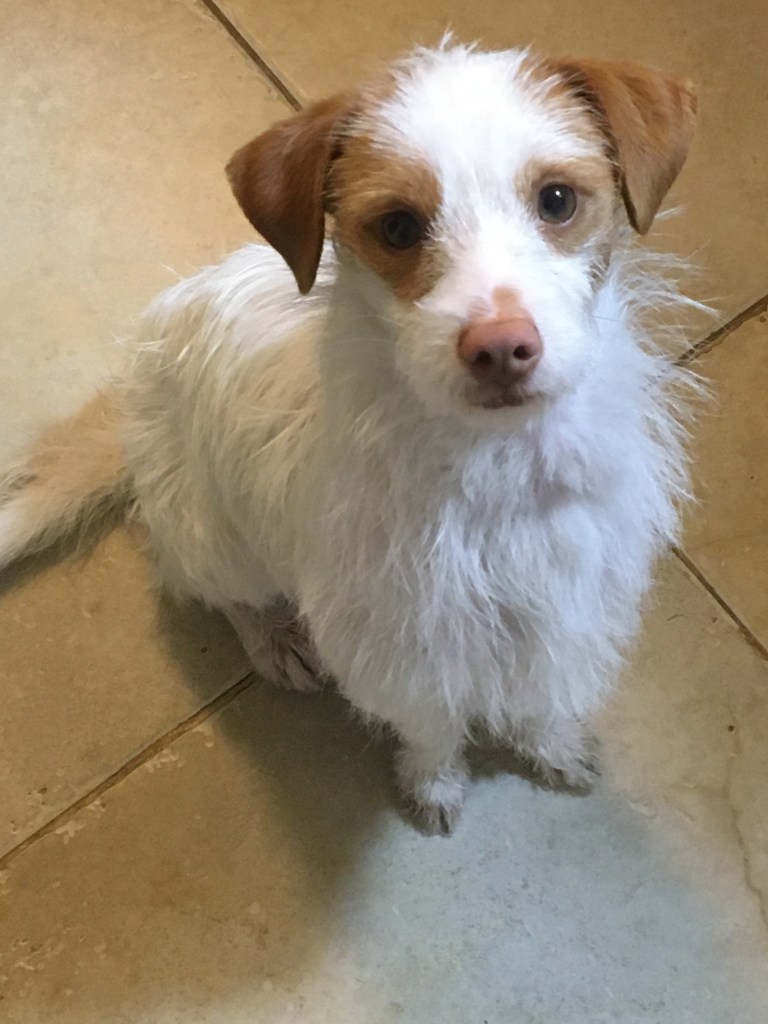
“Paco, my one real goal in life is for you to be happy.” Actual words that came out of my mouth yesterday. There’s no come on, hurry up about walks with this boy. He gets to choose where he wants to go and how long he wants to spend sniffing that clump of grass. He gets to inspect a dead worm all he wants, and if he wants to roll in it, okay, fine (kind of).

We wander and inspect and I try to see the world through his nose and ears and eyes. His love of the world and his fascination with the garbage cans in the same alley we walk down day after day makes me think of this beautiful poem, by a poet who somehow, always, manages to find words to keep the soul alive.

What to Do, by Joyce Sutphen


Wake up early, before the lights come on
in the houses on a street that was once
a farmer’s field at the edge of a marsh.

Wander from room to room, hoping to find
words that could be enough to keep the soul
alive, words that might be useful or kind

in a world that is more wasteful and cruel
every day. Remind us that we are
like grass that fades, fleeting clouds in the sky,

and then give us just one of those moments
when we were paying attention, when we gave
up everything to see the world in

a grain of sand or to behold
a rainbow in the sky, the heart
leaping up.

For more information about Joyce Sutphen, please click here.
alisonmcghee.com
Poem of the Week, by Brian Trimboli

My poems podcast, Words by Wintercan be found here.

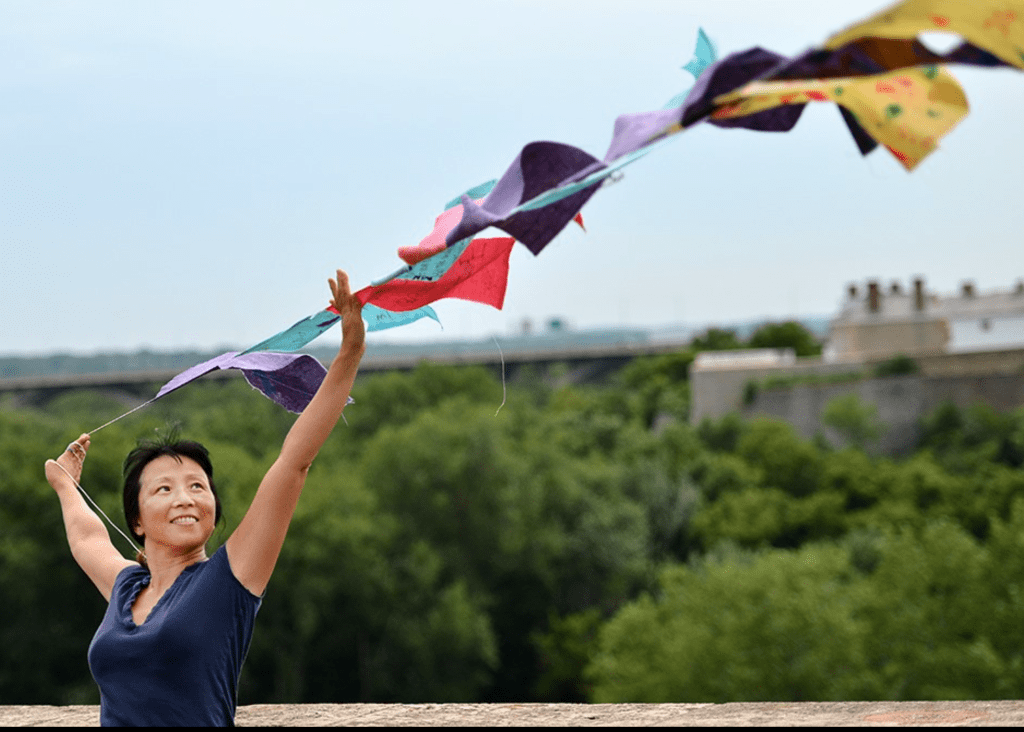
One of my dearest friends is brilliant, wild and fearless in body and mind. Whatever she does, she does with all her heart. If something entrances her she will follow it as far as she can: flamenco dancing, acupuncture, poetry, figure skating, music, rowing, the list is endless.

She doesn’t live by the rules most of us live by. I could fill the walls of my house with photos of her and those walls would come alive with her energy.

When I picture her in my mind she’s always laughing, bright eyes full of fun, but I have seen her in despair and exhaustion and pain. I don’t know exactly why this gorgeous poem, so full of pain and longing, brings her to mind, but it does. My friend was young once too. She’s never stopped dreamimg.

Things My Son Should Know After I’ve Died, by Brian Trimboli

I was young once. I dug holes
near a canal and almost drowned.
I filled notebooks with words
as carefully as a hunter loads his shotgun.
I had a father also, and I came second to an addiction.
I spent a summer swallowing seeds
and nothing ever grew in my stomach.
Every woman I kissed,
I kissed as if I loved her.
My left and right hands were rival.
After I hit puberty, I was kicked out of my parents’ house
at least twice a year. No matter when you receive this
there was music playing now.
Your grandfather isn’t
my father. I chose to do something with my life
that I knew I could fail at.
I spent my whole life walking
and hid such colorful wings.

For more information about Brian Trimboli, please click here.
alisonmcghee.com

Poem of the Week, by Stephanie Niu

My poems podcast, Words by Wintercan be found here.

My dad once told me that his school music teacher told him not to sing. Mouth the words, pretend to sing, but don’t. Every time I think about this, it hurts. Last February I was visiting my parents when they called my brother to sing him Happy Birthday. I secretly took a video of my big dad, phone clutched to his mostly-deaf ear, leaning forward in the lamplight and straining out the words.

How many songs are locked up inside each of us? When I read this beautiful poem below I wished I could go back in time and tell that little boy to sing as loud as he wanted.


A Lao Jia Song Is a Song of Home, by Stephanie Niu

There were two times I heard my father sing.
Once from behind the camera, panning to my brother’s
birthday cake, his happy birthday a key off,
so bad it is valiant, my brother blushing before the table.

The second was at a feast—a mountain village
south of Kunming where, my father pointed out,
people readied for winter like animals,
mixing butter into their tea.

There was something there, his eyes watching
the long-haired buffalo graze the cold hills
as our little bus wound up and up. His favorite American books
were the Little House series, with their descriptions

of simple tasks, how they churned butter from cream.
At the dinner, roast lamb, dark pickled flowers,
a strong tea, and before long his song:
the haunting rise of an attempt at melody,

his voice breaking before it can carry.
Somehow they recognize it, the mountain family,
and they lean over and whisper “This is a lao jia song,”
because we have never heard it

in all these years, we are sitting with strangers
trying to imagine what he is mourning.

This poem was first published in Southeast Review. For more information about Stephanie Niu, please check out her website.
alisonmcghee.com
Words by Winter: my new podcast

Poem of the Week, by Gregory Orr

My poems podcast, Words by Wintercan be found here.

I’m no dancer but I love to dance anyway. So many memories of dancing. A ballet studio on the second floor of a frame house: First position. Second position. Plie. Arabesque. Releve. The Alibi: a bar in Vermont, my best friend and I waiting in the entryway every weekend until the cover dropped to half price. The tiny dance floor where every song, in my memory, is by the Police.

A swing dance party in Maine: me a newbie unable to follow the tight rhythms until a dark-eyed man curled my fingers around the tips of his: Resist me. Follow me, and at the same time resist me. A friend’s wedding: rainy night under a big tent. Boards laid across mud. The band strikes up and a laughing man holds out his hand: Come on, Alison, let’s go. Mud-soaked red shoes: one heel broken by the end of the night.

It’s been a while since things didn’t feel so messed up, politics and the planet melting down and movements bad and good rising up simultaneously, a future in which so much feels so uncertain. Been a while since I danced things out late at night in the living room, or thought of this poem.

To Be Alive, by Gregory Orr

To be alive: not just the carcass
but the spark.
That’s crudely put, but. . . 

If we’re not supposed to dance,
why all this music?

For more information about Gregory Orr, please check out his website
alisonmcghee.com

Poem of the Week, by Yalie Kamara

My new poems podcast, Words by Wintercan be found here.

When someone in my family almost but doesn’t triumph at something, one of us might say But you didn’t, a phrase that goes back long ago to our friend Kareem, who almost but didn’t score an incredible soccer goal, and his mother who, after the fourth or fifth time he reminisced about the almost-ness of it, laughed and said “But you didn’t!”

It’s a code phrase known to all of us, the way Okay see youuuuu is what my younger daughter and I say instead of goodbye, the way the father in Kim’s Convenience, a show we both adore, says it to his customers when they leave his store. The secret codes between people who love each other, and how they can last a lifetime, are what I thought of when I read this beautiful poem by Yalie Kamara.

Besaydoo, by Yalie Kamara

While sipping coffee in my mother’s Toyota, we hear the birdcall of two teenage boys
in the parking lot: Aiight, one says, Besaydoo, the other returns, as they reach
for each other. Their cupped handshake pops like the first, fat, firecrackers of summer,

their fingers shimmy as if they’re solving a Rubik’s cube just beyond our sight. Moments
later, their Schwinns head in opposite directions. My mother turns to me, revealing the
milky, John-Waters-mustache-thin foam on her upper lip, Wetin dem bin say?

Besaydoo? Nar English?
 she asks, tickled by this tangle of new language. Alright.
Be safe dude
, I pull apart each syllable like string cheese for her. Oh yah, dem nar real padi,
she smiles, surprisingly broken by the tenderness expressed by what half my family might call

thugs. Besaydoo. Besaydoo. Besaydoo, we chirp in the car, then nightly into our phones
after I leave California. Besaydoo, she says as she softly muffles the rattling of my bones
in newfound sobriety. Besaydoo, I say years later, her response made raspy by an oxygen

treatment at the ER. Besaydoo, we whisper to each other across the country. Like
some word from deep in a somewhere too newborn-pure for the outdoors, but we
saw those two boys do it, in broad daylight, under a decadent, ruinous, sun.

For more information about Yalie Kamara, please check out her website.

alisonmcghee.com

Poem of the Week, by Shilpa Kamat

My poems podcast, Words by Wintercan be found here.

Yesterday I listened to a news commentator tell me that in a few weeks things will have died down and we’d be “back to normal.” Really?

Normal used to mean the legal enslavement of Black people. Normal, in my grandmother’s day, meant she couldn’t vote. Normal, when my mother was pregnant with me, meant she had to hide her pregnancy to keep her job. Normal, when I was a kid, meant if you were gay you pretended you weren’t. Normal right now means, among many things, that most citizens live paycheck to paycheck while a few make a billion dollars a month.

Normal is a prism that shifts and changes over time, depending on your skin color, your sex, your gender, your age, your job, your money or lack thereof. I don’t want to go back to normal. Where I want to go is forward.


the demons were never, by Shilpa Kamat 

evil just regular
                                      people who prayed
                                      and were granted

thunderbolts
ethers
                                      before their hearts
                                      were grown
enough to keep
up

For more information about Shilpa Kamat, please click here.
alisonmcghee.com
Words by Winter: my new podcast

Poem of the Week, by Elizabeth Coatsworth

My new poems podcast, Words by Wintercan be found here.

As a kid I used to wake up at dawn and walk down the road to a small concrete ledge over a watering hole. There were never any cars, and I used to sit on the ledge and watch the sun come up over the valley. Sometimes, far up the hill, through the mist, the sound of cowbells (the nearest farmers were Swiss) came drifting down.

Back then I used to take photos in my mind of things I wanted to remember forever. The lone tree that stood in the field halfway up the hill. The pink and yellow dawn sky. That herd of Holsteins chiming their soft way down the hill to the watering hole, the way they looked at me with their velvet eyes. When I found this old-timey poem in an old-timey book of poems and quotes and aphorisms I pulled off my bookshelf a few weeks ago, those mind-photos came back. Happy New Year, everyone.

Swift Things Are Beautiful, by Elizabeth Coatsworth

Swift things are beautiful:
swallows and deer,
and lightning that falls
bright-veined and clear,
rivers and meteors,
wind in the wheat,
the strong-withered horse,
the runners’ sure feet.


And slow things are beautiful:
the closing of day,
the pause of the wave
that curves downward to spray,
the ember that crumbles,
the opening flower,
and the ox that moves on
in the quiet of power.

For more information about Elizabeth Coatsworth, please click here.
alisonmcghee.com
Words by Winter: my new podcast

Poem of the Week, by Olav Hauge

My new poems podcast, Words by Wintercan be found here.

A couple of days ago I went looking in my files for a long poem by Li-Young Lee, two lines of which were haunting me. The poem popped up in a journal from twenty years ago, a journal I have no memory of keeping, and I spent the afternoon reading the entire thing. All the questions that bedeviled me then still bedevil me, and I ended up shrugging and thinking Well, I guess you’ve always been who you are, Alison.

That same day, a friend sent this beautiful poem. It felt familiar to me the way some poems do, as if you were born knowing them, so I went searching through my emails only to find that I’d sent it out as the Poem of the Week almost ten years ago. Another mental shrug. All the dreams we carry, and keep carrying.

This Is the Dream, by Olav Hauge, tr. by Robert Bly and Robert Hedin

This is the dream we carry through the world
that something fantastic will happen
that it has to happen
that time will open by itself
that doors shall open by themselves
that the heart will find itself open
that mountain springs will jump up
that the dream will open by itself
that we one early morning
will slip into a harbor
that we have never known.


(in  the original Norwegian)

DET ER DEN DRAUMEN 

Det er den draumen me ber på
at noko vedunderleg skal skje,
at det må skje —
at tidi skal opna seg
at hjarta skal opna seg
at dører skal opna seg
at berget skal opna seg
at kjeldor skal springa —
at draumen skal opna seg,
at me ei morgonstund skal glida
inn på ein våg me ikkje har visst um.


For more information about Olav Hauge, please click here.

alisonmcghee.com
Words by Winter: my new podcast

Poem of the Week, by Kim Addonizio

My new poems podcast, Words by Wintercan be found here.

Look at my mother holding my baby sister in this old photo, how impossibly young and unafraid she looks. I used to carry my babies everywhere like that too, the way every parent does. Cradled in my arms, or with their legs straddling my hip. Hoisted onto my shoulders. Swung across my stomach like a football. Piggyback. Twice I flipped one daughter over onto her belly, half-vertical along my extended arm, to force out a piece of food she was choking on with the heel of my hand.

It’s the most natural thing in the world to carry your baby with just your arms. And at the same time, holy crud, it’s almost unfathomable. How all of us balance on two legs on this floating planet suspended in space, hoisting babies around like footballs. As if they didn’t depend on us for every single second of life, and us on them.

Gravity, by Kim Addonizio

Carrying my daughter to bed
I remember how light she once was,
no more than a husk in my arms.
There was a time I could not put her down,
so frantic was her crying if I tried
to pry her from me, so I held her
for hours at night, walking up and down the hall,
willing her to fall asleep. She’d grow quiet,
pressed against me, her small being alert
to each sound, the tension in my arms, she’d take
my nipple and gaze up at me,
blinking back fatigue she’d fight whatever terror
waited beyond my body in her dark crib. Now
that she’s so heavy I stagger beneath her,
she slips easily from me, down
into her own dreaming. I stand over her bed,
fixed there like a second, dimmer star,
though the stars are not fixed: someone
once carried the weight of my life.

For more information about Kim Addonizio, please click here.

alisonmcghee.com
Words by Winter: my new podcast

Poem of the Week, by Shel Silverstein

My new poems podcast, Words by Wintercan be found here.

Do you ever talk out loud to yourself? Sometimes I do, like last night in my little kitchen, making batches of toffee. To make toffee you have to stir and stir and stir, which is good because I like slow repetitive motion that takes a long time. Soothes me. Then came a voice: What a hard year it’s been, Allie. You’re doing a good job in a hard time. You’re really trying. Me, talking to myself as if I were my own daughter. The room was full of the smell of caramelized brown sugar and butter, and unlike the way I usually talk to myself, which is scolding and impatient, this voice was soft and soothing.

Forgotten Language, by Shel Silverstein

Once I spoke the language of the flowers,
once I understood each word the caterpillar said,
once I smiled in secret at the gossip of the starlings,
and shared a conversation with the housefly
in my bed.
Once I heard and answered all the questions
of the crickets,
and joined the crying of each falling dying
flake of snow,
once I spoke the language of the flowers. . . .
How did it go?
How did it go?


For more information about Shel Silverstein, please check out his website.

alisonmcghee.com
Words by Winter: my new podcast