Poem of the Week, by V. Penelope Pelizzon

Three spots still open in Plotting for Pantsers, Tuesday, October 3, 6-9:30 pm CT. To register, please click and scroll down. I’d love to see you in the zoom room!
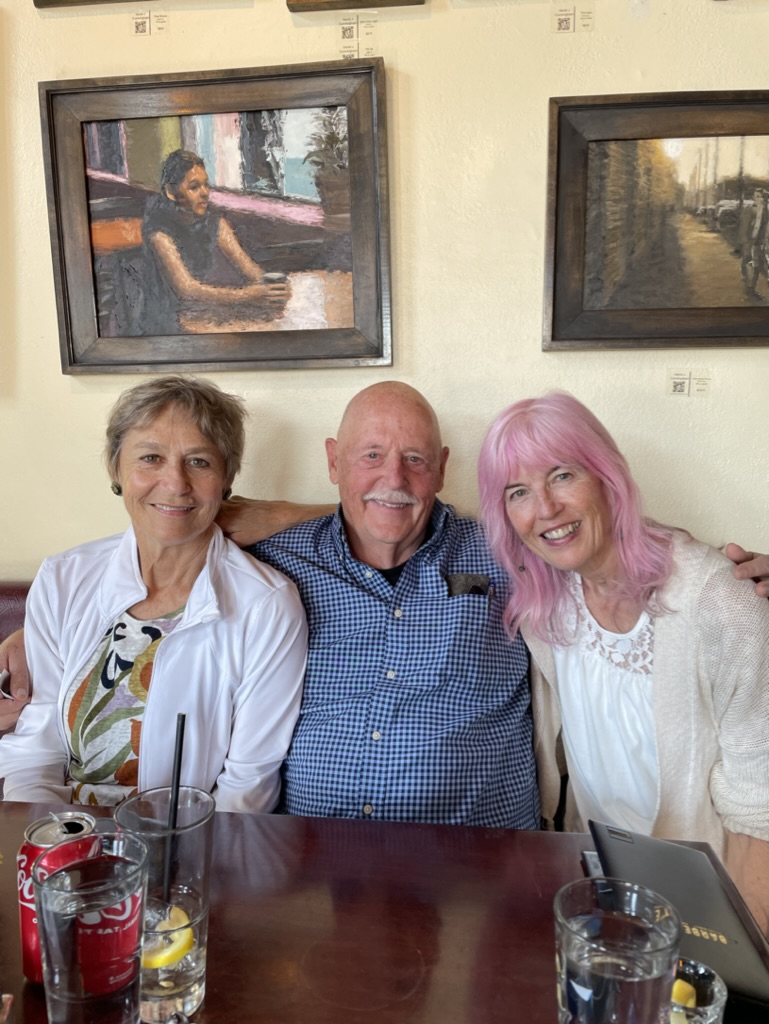
Yesterday I had breakfast with my college Chinese teacher. He and his wife were in town from Vermont and we sat and talked softly about life, about teaching, about all the years between then and now. I told him that when I think of the word “teacher,” it is he who comes to mind. I still remember the first day of Chinese 101, freshperson year in college, a long table with twenty other teenagers. A tall man strode into the room and looked each of us in the eye.

Nimen hao!” he barked.

In my memory, we all sat straight up, frozen with attention, half terrified, half transfixed. Next day, only eight students returned. I was one of them. Now the memories of tracing characters over and over, the hours and hours spent in the basement of Sunderland Language Lab, earphones clamped on my head, are like a dream. A dream of youth, and time, and a new world opened almost unknowingly because of a man who singlehandedly changed the course of my life with the power of his astonishing teaching.

To Certain Students
–  V. Penelope Pelizzon

On all the days I shut my door to light,
all the nights I turned my mind from sleep

while snow fell, filling the space between the trees
till dawn ran its iron needle through the east,

in order to read the scribblings of your compeers,
illiterate to what Martian sense they made

and mourning my marginalia’s failure to move them,
you were what drew me from stupor at the new day’s bell.

You with your pink hair and broken heart.
You with your knived smile. You who tried to quit

pre-law for poetry (“my parents will kill me”).
You the philosopher king. You who saw Orpheus

alone at the bar and got him to follow you home. You
green things, whose songs could move the oldest tree to tears.

Click here for more information on V. Penelope Pelizzon.

alisonmcghee.com.

My podcast: Words by Winter

Poem of the Week, by Dorianne Laux

长江上游肥沃

Panhandle 2013, Howard Creek yellow water flower

That little phrase above there, “changjiang shangyou hen feiwo,” is one of my favorite sentences in the world. It translates as “the upper reaches of the Yangtze River valley are very rich and fertile” which is all well and good, but what I love about it is the way it sounds when you say it. The upward swoop of the chang, the sustained note of the jiang, the downward bark of the shang and the swing of the you, the deep growl of the you, and the swift up and down finish of the feiwo. Mandarin is a language I speak to myself inside my own head. It’s part of the language of words themselves, the sound and feel of them, phrases and fragments and little mantras that in my life others have used to soothe, like All shall be well, and all shall be well, and all manner of things shall be well. All the good words that save us, that have saved us.

Tonight I Am in Love
     Dorianne Laux

Tonight, I am in love with poetry,
with the good words that saved me,
with the men and women who
uncapped their pens and laid the ink
on the blank canvas of the page.
I am shameless in my love; their faces
rising on the smoke and dust at the end
of day, their sullen eyes and crusty hearts,
the murky serum now turned to chalk
along the gone cords of their spines.
I’m reciting the first anonymous lines
that broke night’s thin shell: sonne under wode.
A baby is born us bliss to bring. I have labored
sore and suffered death. Jesus’ wounds so wide.
I am wounded with tenderness for all who labored
in dim rooms with their handful of words,
battering their full hearts against the moon.
They flee from me that sometime did me seek.
Wake, now my love, awake: for it is time.
For God’s sake hold your tongue and let me love!
What can I do but love them? Sore throated
they call from beneath blankets of grass,
through the wind­torn elms, near the river’s
edge, voices shorn of everything but the one
hope, the last question, the first loss, calling
Slow, slow, fresh fount, keep time with my salt tears.
When as in silks my Julia goes, calling Why do I
languish thus, drooping and dull as if I were all earth?
Now they are bones, the sweet ones who once
considered a cat, a nightingale, a hare, a lamb,
a fly, who saw a Tyger burning, who passed
five summers and five long winters, passed them
and saved them and gave them away in poems.
They could not have known how I would love them,
worlds fallen from their mortal fingers.
When I cannot see to read or walk alone
along the slough, I will hear you, I will
bring the longing in your voices to rest
against my old, tired heart and call you back.