Are you looking for an “experience” gift for yourself or someone you love? Spots still available in our January 8-13, 2024, Write Together session. I’d love to see you in this one hour, twice-daily workshop in which we all quietly write together from a guided prompt. It’s a beautiful way to usher in the new year. $200, with one $100 no-questions-asked scholarship available.
People keep telling me I have to pick a side, pick a side. Here’s the side I pick: The world is a mess, and the world is beautiful, and people are awful, and people are wonderful. Let me love the world, and its humans, like a mother.
Rain, New Year’s Eve, by Maggie Smith
The rain is a broken piano, playing the same note over and over.
My five-year-old said that. Already she knows loving the world
means loving the wobbles you can’t shim, the creaks you can’t
oil silent—the jerry-rigged parts, MacGyvered with twine and chewing gum.
Let me love the cold rain’s plinking. Let me love the world the way I love
my young son, not only when he cups my face in his sticky hands,
but when, roughhousing, he accidentally splits my lip.
Let me love the world like a mother. Let me be tender when it lets me down.
Let me listen to the rain’s one note and hear a beginner’s song.
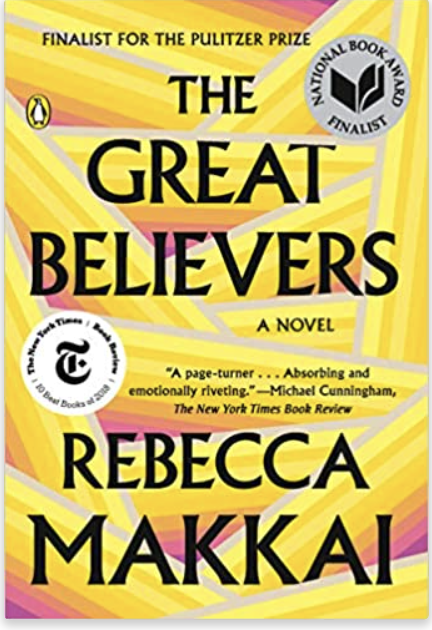
The Great Believers, by Rebecca Makkai. This is my first Makkai novel but it won’t be my last. Because I don’t read book descriptions, reviews, or book jackets before I read a book, I wasn’t prepared for the emotional heft of this novel, which revolves around a core group of beloved friends and flips back and forth between the 1980s and 2015. Makkai’s command of detail and deep knowledge of the beginning of the AIDS crisis brought me right back to those early days, when my gay friends were so young and confronting that hideous, bewildering disease that took so many of them. The emotional and physical havoc of AIDS, and the love, support and anger within the community, reverberates throughout this elegy of a novel. Intense. Painful. Powerful.
Dear Mr. Henshaw, by Beverly Cleary. After The Great Believers I turned to Beverly Cleary as both a palate cleanser and to continue my goal of reading children’s classics I never read when I was a child. Cleary’s trademark hilarity, deadpan realism, and inventiveness with structure and situation are on full display here, but I did not expect to tear up as many times as I did. This small book, structured first as letters from a child to his favorite author, Mr. Henshaw, and then as Dear Mr. Henshaw entries in a private journal, grows in depth and power as we experience the boy’s life along with him from childhood to adolescence. So much wisdom in this novel, which packs an emotional punch I did not anticipate. Then I looked at the book cover again and saw it had won the Newbery, so…duh. Wonderful book.
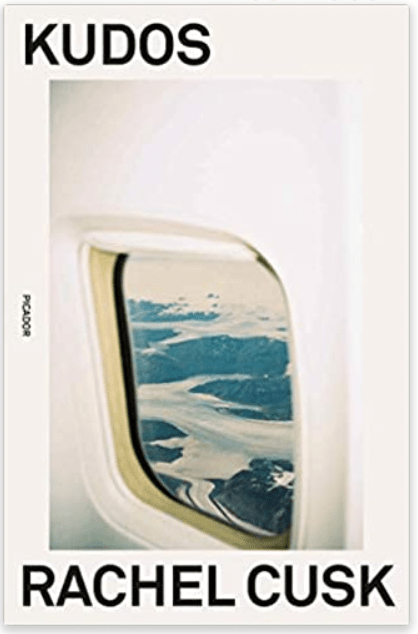
Kudos, by Rachel Cusk. In this, the final novel in the Transit trilogy, Cusk again stunned me with the precision, strangeness, and almost overwhelming honesty with which the people in her books speak to each other. Every bit of social niceties is stripped away, so that each conversation goes straight to the gut, or jugular, or heart of the heart of the situation. Our same novelist is again traveling to another part of Europe for a book conference. Cusk neither analyzes nor returns to conversations between the people in her novels, but fragments of them haunt me, such as the unknowing contempt, in Kudos, of a celebrated male writer for the wife he describes as perfectly happy being the stay at home mother of their children. After which he casually mentions she just finished a book for children which happened to sell in a three-book deal. DUDE. Cusk’s people have conversations that lay bare the complexities of marriage and divorce in a way that’s profoundly uncomfortable for me to read. I’ve never read someone who writes like Rachel Cusk.
Lucy by the Sea, by Elizabeth Strout. Because of my no-prior-info policy with regard to reading, this latest Lucy Barton novel by Strout took me by surprise. This is the first pandemic novel I’ve read, and it hurt in ways I wouldn’t have predicted. Everything we/the world went through. All the ways we/the world changed. Add to the omnipresent fear, pain and loneliness the murder of George Floyd, which happened a 20-minute from my own house in Minneapolis, which Strout pinpoints as ground zero for the resulting wild anger and uprisings that rose around the country, and this novel went straight to my gut. Although I initially wanted to throttle Lucy for her dithering, by the end of this slender novel I was struck –yet again—by the odd, organic wisdom this fascinating fictional woman brings to her understanding of life and human relationships and, by extension, to our current lives.
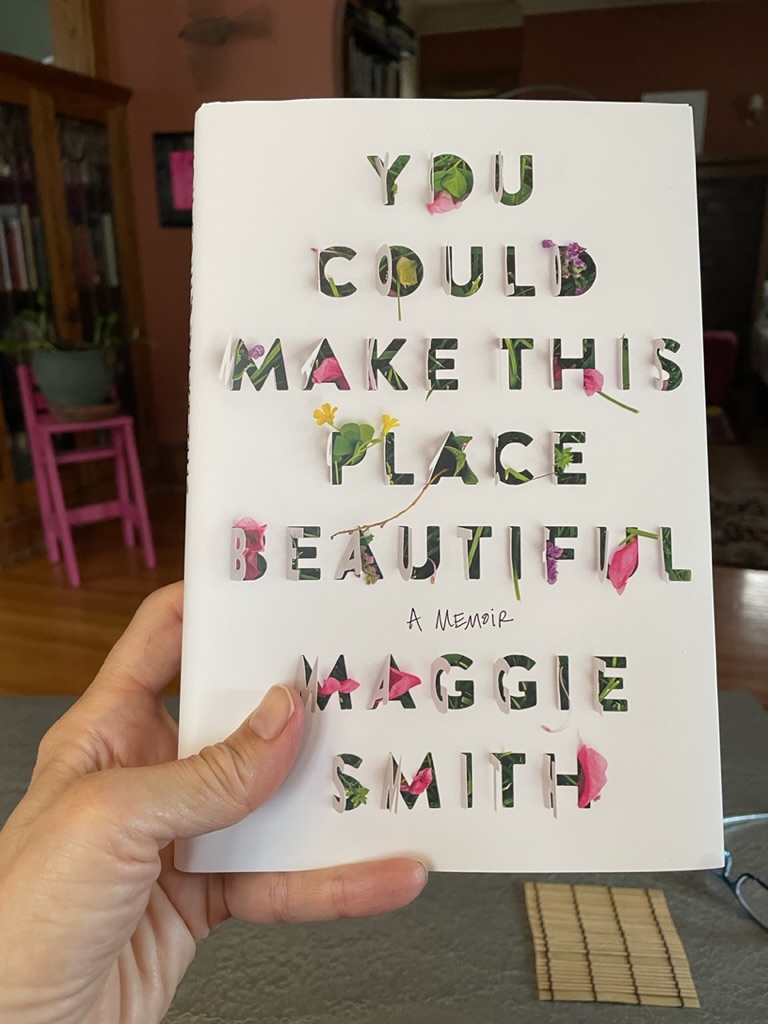
You Could Make This Place Beautiful, by Maggie Smith. In this memoir, by the poet who penned Good Bones, a poem that stunned me (and the rest of the world) when it came out, Smith wonders aloud on the page in each of the brief, illuminative passages that compose the book about the selves she was in her marriage, as it crumbled, and as she makes her way through the first years afterward. Widely thought of as a “divorce” memoir, I see this book as so much more than that: a woman finding her place as an artist in a world that regards the work of writing as not work, as something to be done when it doesn’t inconvenience others, as something so difficult to claim that I remember how awkward and embarrassed I felt when, in my own life, I forced myself to say “I’m working” instead of “I’m writing.” Why can’t we (and I’m talking specifically about women here) be partners and mothers and artists? Answer: we can. You Could Make This Place Beautiful is the fierce, searching story of a woman staking her claim in the world.
The Book of Delights, by Ross Gay. I’d dipped in and out of this book before, but finally read it straight through, essayette to essayette, until all the essayettes were gone, kind of like I do with the bags of Lindt milk chocolate truffles I buy and stash away on a high shelf. These tiny essays, every one of them, made me laugh, smile, nod, frown, and see something about the world in a slightly different way. Every time I read something by Ross Gay I feel like calling him and talking about it, that’s how much I love his work, and then I remember that oh, we’ve never met and we’re not friends in real life. (Yet…bwahaha.) So far I’ve bought four copies of this tiny book –FOUR–at my beloved neighborhood indie Magers and Quinn to give to people I adore. That alone should tell you something.
Goldenrod, by Maggie Smith. How I love this book of poems. I treasure it as much as Good Bones, and I didn’t think that would be possible. Maggie Smith’s poems are so spare. There’s space and light on every page of her books, yet what she conjures in both image and feeling is vast. She’s a word artist in her use of the visual, and of negative space. Same thing in her imagery – the woman has an uncanny ability to flip a situation, or an emotion, inside out and upside down until suddenly you see possibility and freedom where you didn’t before. (I’ve also bought four copies of this book too, one to keep, three to give away.)
Pablo and Birdy, by me. You would think that, having written this book myself, I would remember everything about it. You would be wrong. I want to adapt Pablo and Birdy into a screenplay, so I re-read it in preparation, only to find that I’d forgotten so much. In fact, it felt like a novel I’d never read before. Who was Pablo’s original family? Why was he floating alone on the sea with only a parrot to watch over him? What will happen when the winds of change come over Isla? What if there really were such a bird as a Seafaring Parrot – what could I learn, and put to rest, about my own past? (Yes, I realize this not-remembering my own novel reveals way too much about me, but so be it. Shrug emoji.)
The Night Watchman, by Louise Erdrich. Damn, this woman knows how to tell a story. I was captivated by this book from page one and didn’t want to put it down. Pixie! She will live inside me forever, and so will her sister Vera. So will Thomas, and dear Wood Mountain, and the unearthly Zhaanat. So will the land they live on so deeply that when I think about this novel I think about its people as part-land. Historical fiction based on the life of Erdrich’s grandfather, this novel is contemporary and timeless and sweeping and specific and just wonderful.
Leaving Time, by Jodi Picoult. You know those little shelf cards you often see in indie bookstores, placed by booksellers next to books they love? Sometimes one of my novels has one with something like “If you love Jodi Picoult, give Alison McGhee a try!” So I’ve always been scared to read a Jodi Picoult novel because what if I hated it, and by extension hated my own books? Finally I decided it was time to get over it, and wow did I love Leaving Time. It’s captivating, mysterious, sad, funny, with a wild twist at the end, and I learned so, so much about elephants, those beautiful creatures. Now I want to read all Jodi Picoult’s novels – which one should I read next?
Sanity and Tallulah, by Molly Brooks. This graphic novel has been on my shelf for a while now, and I finally plucked it off and figured I’d read a few pages to see if I was interested. Three hours later I’d gobbled the whole thing down – so funny and full of adventure. Two best friends relegated, with their cool and funny parents, to a far corner of the universe in a falling-apart space station who have to figure out, on the fly, how to fix the thing before everyone dies. That’s kind of the plot – I was having too much fun reading it to keep close track. The whole way through I kept thinking damn, Molly Brooks must’ve had a blast with this book. Reading Sanity and Tallulah made me want to come up with my own joyride of a graphic novel.
The photo on the right is one of a bunch of family photos in my living room. Is that your daughter? people sometimes ask, and I smile. She does look like me, doesn’t she? I say.
But the girl on the windsurfer is me, long ago, back in a life I used to live: a tiny one-room apartment, coffee from the miniature percolator my grandmother gave me, a rented electric typewriter perched on an apple crate, the camping pad I slept on because the room was too small for a bed. Annie Lennox singing about how sweet dreams are made of these.
I remember the day that photo was taken. Trying not to fall so my hair would stay dry. Trying to lean back far enough for that perfect balance between my body and the wind’s invisible force.
I tried hard back then, and I try hard now. Nothing was perfect then. Nothing is perfect now. Are that girl and I still, somehow, on both sides of here and there?
Threshold, by Maggie Smith
You want a door you can be on both sides of at once
You want to be on both sides of here
and there, now and then, together and—what
do we call the life we would wish back,
If we could? The before?) —alone. But any open
space may be a threshold, an arch
of entering and leaving. Crossing a field, wading
through nothing but timothy grass,
imagine yourself passing from and into. Passing through
doorway after doorway after doorway.
Friends! Please join the wondrous Maggie Smith and me in a virtual conversation this Monday evening, August 2, at 7 pm CST. We’ll be discussing her gorgeous new book Goldenrod, in which I found this beautiful poem. Free and open to all. Just click here to register.
The tattoo over my daughter’s heart spells out the words of love I’ve said to her every night we’ve ever slept beneath the same roof. Loving my children is the biggest, easiest part of me.
What if you loved everyone the way you love them, Alison?
Once in a while, for a tiny breath of time, I get a glimpse of what living in that imaginary world would feel like, and it’s overwhelming. It’s not the world I live in, but I wish it were.
Rain, New Year’s Eve, by Maggie Smith
The rain is a broken piano, playing the same note over and over.
My five-year-old said that. Already she knows loving the world
means loving the wobbles you can’t shim, the creaks you can’t
oil silent—the jerry-rigged parts, MacGyvered with twine and chewing gum.
Let me love the cold rain’s plinking. Let me love the world the way I love
my young son, not only when he cups my face in his sticky hands,
but when, roughhousing, he accidentally splits my lip.
Let me love the world like a mother. Let me be tender when it lets me down.
Let me listen to the rain’s one note and hear a beginner’s song.
For more information about the wondrous Maggie Smith, please click here.
Would your life be worse then than it is right now? is a question to ask yourself when you wake up every day in fear and dread of something that hasn’t happened but might happen. Something you fight and fight and work and work to prevent happening, to you or to someone you love. Foreclosure. Suicide. Recurrence of cancer. Loss of a job, a friend, a romance.
At some point the panic might be so huge that it takes over your life, and what then? Then a balance has been achieved. The thing you so fear has, in the fearing of it, destroyed your peace, your health, your daily existence. So. If the thing you fear actually happened, would your life be worse than it is right now?
Maybe. Maybe not. Maybe something else would rush in once the anticipatory dread and panic are finally gone, something huge and unfamiliar: relief. This poem brought so many feelings flooding through me.
At the End of My Marriage, I Think of Something My Daughter Said about Trees, by Maggie Smith When a tree is cut down, the sky’s like finally, and rushes in.
Even when you trim a tree, the sky fills in before the branch
hits the ground. It colors the space blue because now it can.
This post comes to you after a week in Japan, a country I’d never been before, where the kindness and gentleness of everyone I met almost overwhelmed me. An hour ago I watched the wondrous city of Tokyo recede in the distance below the plane I’m on, and then the sun set, and we headed into a vast stretch of darkness miles above the Pacific Ocean. The sky from inside an airplane is darker, bigger and somehow smaller at the same time. The air outside the window next to me is so thin I’d black out if I breathed it. Everyone in the world breathes the same constantly recycling air. We all inhabit the same small and huge planet.
During my week in Japan I met hundreds of people who had read and loved my books translated from English into Japanese, a language I don’t understand. But I did understand the look in their eyes when they spoke to me, and they understood the tones of my voice when I spoke back to them. Where do I leave off and the Japanese people begin? Where does the ground leave off and the sky begin? Where does my life end and something else, something unknown, begin? This poem, like every poem by the incomparable Maggie Smith, took my breath away.
Sky, by Maggie Smith Why is the sky so tall and over everything?
What you draw as a blue stripe high above a green stripe, white-interrupted, the real sky starts at the tip of each blade of grass and goes up, up, as far as you can see. Our house stops at the roof, at the glitter-black overlap of shingles where the sky presses down, bearing the weight of space, dark and sparkling, on its back. Think of sky not as blue, not as over, but as the invisible surround, a soft suit you wear close to the skin. When you walk, the soles of your feet take turns on the ground, but the rest of you is in the sky, enveloped in sky. As you move through it, you make a tunnel in the precise size and shape of your body.
After a reading from my new novel Never Coming Back the other night, I spoke with a woman in the audience about synesthesia, that syndrome whereby senses cross and fuse with each other. “So as someone is talking, you don’t simultaneously see the words they’re saying inside your head?” I asked the woman, and she shook her head.
“Then how do you understand them?” I asked her. “Is it just. . . sound? Sound that makes sense in your ears and translates itself into meaning?” She nodded.
Everything I say, and everything others say to me, transcribes itself instantly into words that run across the bottom of the movie screen in my mind. I can’t imagine how I would ever understand language otherwise, and the woman I was talking with couldn’t imagine how this happens for me. Our conversation reminded me of this poem by Maggie Smith, a poem that stays with me for many reasons: because I love flowers and their names, because I also love my children who can’t ever remember the names of the flowers I’ve grown in our garden their whole lives long, and because, in the end, I guess it’s the sight of them both that matters, and not the names we give them.
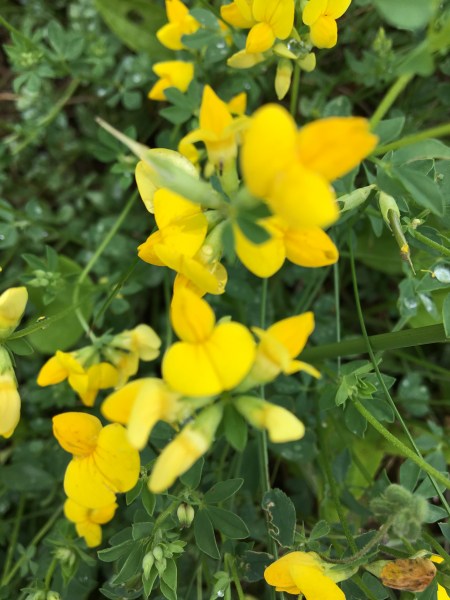
Goldenrod, by Maggie Smith
I’m no botanist. If you’re the color of sulfur and growing at the roadside, you’re goldenrod.
You don’t care what I call you, whatever you were born as. You don’t know your own name.
But driving near Peoria, the sky pink-orange, the sun bobbing at the horizon, I see everything
is what it is, exactly, in spite of the words I use: black cows, barns falling in on themselves, you.
Dear flowers born with a highway view, forgive me if I’ve mistaken you. Goldenrod,
whatever your name is, you are with your own kind. Look—the meadow is a mirror, full of you,
your reflection repeating. Whatever you are, I see you, wild yellow, and I would let you name me.
For more information on Maggie Smith, please click here.





 Would your life be worse then than it is right now? is a question to ask yourself when you wake up every day in fear and dread of something that hasn’t happened but might happen. Something you fight and fight and work and work to prevent happening, to you or to someone you love. Foreclosure. Suicide. Recurrence of cancer. Loss of a job, a friend, a romance.
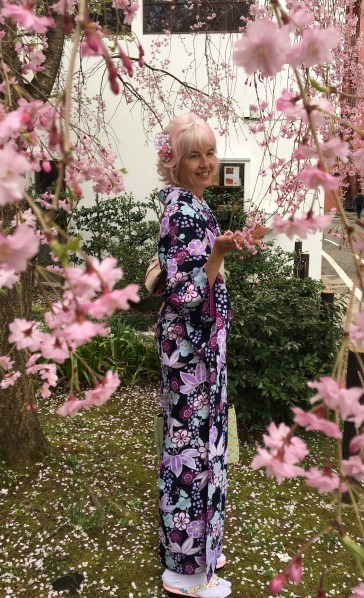 This post comes to you after a week in Japan, a country I’d never been before, where the kindness and gentleness of everyone I met almost overwhelmed me. An hour ago I watched the wondrous city of Tokyo recede in the distance below the plane I’m on, and then the sun set, and we headed into a vast stretch of darkness miles above the Pacific Ocean. The sky from inside an airplane is darker, bigger and somehow smaller at the same time. The air outside the window next to me is so thin I’d black out if I breathed it. Everyone in the world breathes the same constantly recycling air. We all inhabit the same small and huge planet.
  After a reading from my new novel
  Alison McGhee