Poem of the Week, by Tony Hoagland


A few months after my father died I was driving Route 89 in New Hampshire, a gorgeous fall day, swooping around curves of mountains turned to flame, and it came to me that my father would never make this drive again. It was just me in the car, and I howled with grief the way no one alive has ever seen me howl.

My father and I did not understand each other for many years. Once, when I was in elementary school, he brought me a huge, bright-green, horned bug from our garden: Look! You can bring it in to school for the bug project! When he turned away I placed some tomatoes on top of the bug, and later had to admit in shame that I had ‘accidentally’ crushed it. Alison! What the hell were you thinking? 

Looking back, I see a child who was afraid of that enormous bug and afraid of her enormous father, a child who could not admit fear and could not ask for help. And I see a young, gruff man who had found something magic and brought it as a gift to his daughter, sure she would love it. A scared daughter, a bewildered man. Who both, over many years, came to understand each other by sailing on, finding out the story by pushing into it, until only love remained.

Voyage, by Tony Hoagland

I feel as if we opened a book about great ocean voyages
and found ourselves on a great ocean voyage:
sailing through December, around the horn of Christmas
and into the January Sea, and sailing on and on

in a novel without a moral but one in which
all the characters who died in the middle chapters
make the sunsets near the book’s end more beautiful.

And someone is spreading a map upon a table,
and someone is hanging a lantern from the stern,
and someone else says, “I’m only sorry
that I forgot my blue parka; It’s turning cold.”

Sunset like a burning wagon train
Sunrise like a dish of cantaloupe
Clouds like two armies clashing in the sky;
Icebergs and tropical storms,
That’s the kind of thing that happens on our ocean voyage —

And in one of the chapters I was blinded by love
And in another, anger made us sick like swallowed glass
& I lay in my bunk and slept for so long,
I forgot about the ocean,
Which all the time was going by, right there, outside my cabin window.

And the sides of the ship were green as money,
and the water made a sound like memory when we sailed.

Then it was summer. Under the constellation of the swan,
under the constellation of the horse.

At night we consoled ourselves
By discussing the meaning of homesickness.
But there was no home to go home to.
There was no getting around the ocean.
We had to go on finding out the story
by pushing into it —
The sea was no longer a metaphor.
The book was no longer a book.
That was the plot.
That was our marvelous punishment.

For more information about Tony Hoagland, please read his obituary. Today’s poem first appeared in Hard Rain, published in 2005 by Hollyridge Press. 

Write Together 2026 is coming right up and we have plenty of spots still open! Come write with us for an hour each morning, January 12-17. Each day’s Zoom session features different readings, different prompts, and the chance to write quietly together in solidarity and appreciation. Click here for more information and to sign up.
Poem of the Week, by David Hernandez

Smile and say hi to everyone you pass. Be your kindest self. Focus all your energy on the students in this room. Make life better for everyone you can, every time you can. These are the vows I make and constantly break but keep re-upping nonetheless. My latest scheme: adding “with joy!” or “joyfully!” to my daily to-do lists. Vacuum joyfully! Weed with joy! Joyfully write1000 words! Weirdly, this helps.

Anyone Who Is Still Trying, by David Hernandez

Any person, any human, any someone who breaks
          up the fight, who spackles holes or FedExes
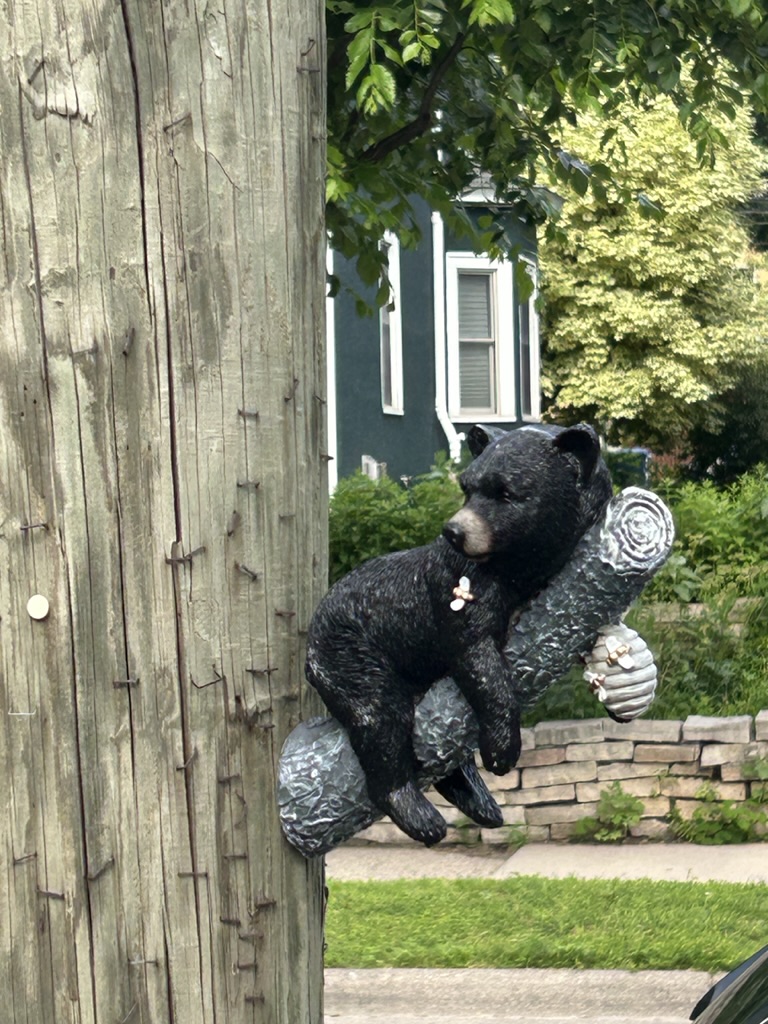
ice shelves to the Arctic to keep the polar bears
          afloat, who talks the wind-rippled woman
down from the bridge. Any individual, any citizen
          who skims muck from the coughing ocean,
who pickets across the street from antigay picketers
          with a sign that reads, GOD HATES MAGGOTS,
or, GOD HATES RESTAURANTS WITH ZAGAT RATINGS
          LESS THAN 27. Any civilian who kisses
a forehead heated by fever or despair, who reads
          the X ray, pins the severed bone. Any biped
who volunteers at soup kitchens, who chokes
          a Washington lobbyist with his own silk necktie—
I take that back, who gives him mouth-to-mouth
          until his startled heart resumes its kabooms.
Sorry, I get cynical sometimes, there is so much
          broken in the system, the districts, the crooked
thinking, I’m working on whittling away at this
          pessimism, harvesting light where I can find it.
Any countryman or countrywoman who is still
          trying, who still pushes against entropy,
who stanches or donates blood, who douses fires
          real or metaphorical, who rakes the earth
where tires once zeroed the ground, plants something
          green, say spinach or kale, say a modest forest
for restless breezes to play with. Any anyone
          from anywhere who considers and repairs,
who builds a prosthetic beak for an eagle—
          I saw the video, the majestic bird disfigured
by a bullet, the visionary with a 3-D printer,
          with polymer and fidelity, with hours
and hours and hours, I keep thinking about it,
          thinking we need more of that commitment,
those thoughtful gestures, the flight afterward. 

For more information on David Hernandez, please click here.

Poem of the Week, by Anna Belle Kaufman

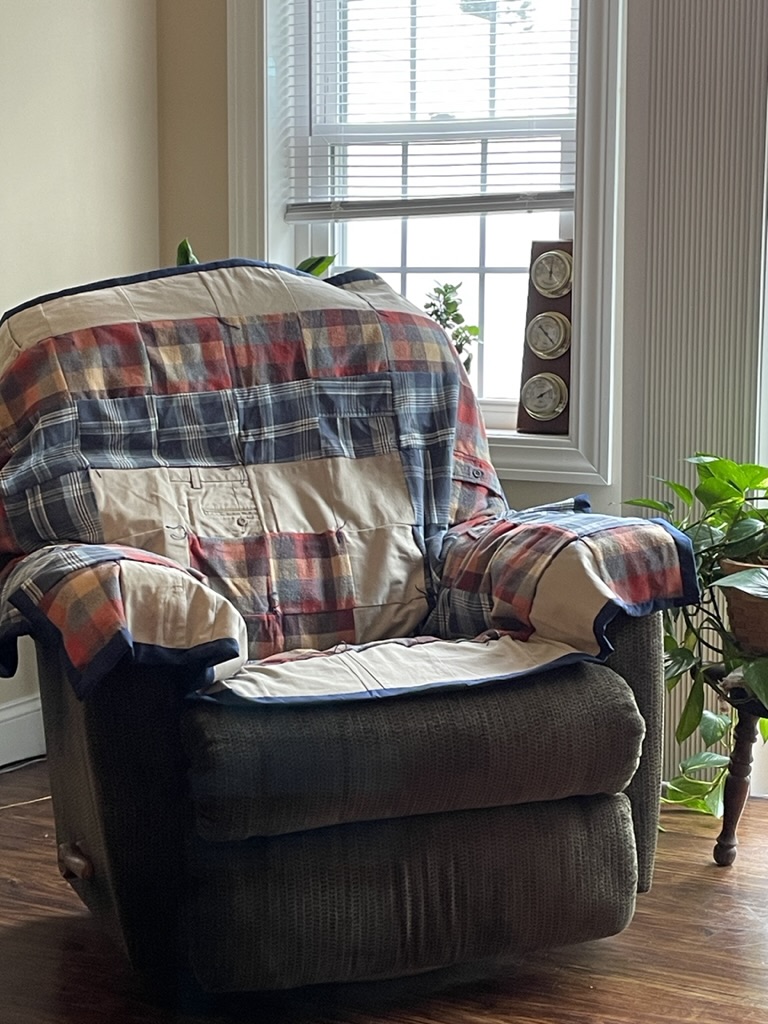
My father, who died two years ago today, was a giant man. Some of his clothes hang in my closet: his old army jacket, his Dairylea windbreaker, one of his Yankees baseball caps.

After he died I turned two of his other shirts and a pair of his worn pants into a simple patchwork quilt for my mother. It was hard to cut up his clothes. Wait, this is his favorite shirt, he’s going to need it, even though he wasn’t.

I still need him though. His enormous presence –that giant laugh, that hurricane hug, his absolute solidity–was grounding in a way I didn’t understand until he was gone.

Cold Solace, by Anna Belle Kaufman

When my mother died,
one of her honey cakes remained in the freezer.
I couldn’t bear to see it vanish,
so it waited, pardoned,
in its ice cave behind the metal trays
for two more years.

On my forty-first birthday
I chipped it out,
a rectangular resurrection,
hefted the dead weight in my palm.

Before it thawed,
I sawed, with serrated knife,
the thinnest of slices —
Jewish Eucharist.

The amber squares
with their translucent panes of walnuts
tasted — even toasted — of freezer,
of frost,
a raisined delicacy delivered up
from a deli in the underworld.

I yearned to recall life, not death —
the still body in her pink nightgown on the bed,
how I lay in the shallow cradle of the scattered sheets
after they took it away,
inhaling her scent one last time.

I close my eyes, savor a wafer of
sacred cake on my tongue and
try to taste my mother, to discern
the message she baked in these loaves
when she was too ill to eat them:

I love you.
It will end.
Leave something of sweetness
and substance
in the mouth of the world.

Click here for more information about poet, artist, and writer Anna Belle Kaufman. Today’s poem first appeared in The Sun magazine in 2010. 

 alisonmcghee.com
My podcast: Words by Winter