Jon Dee Graham, 1959-2026
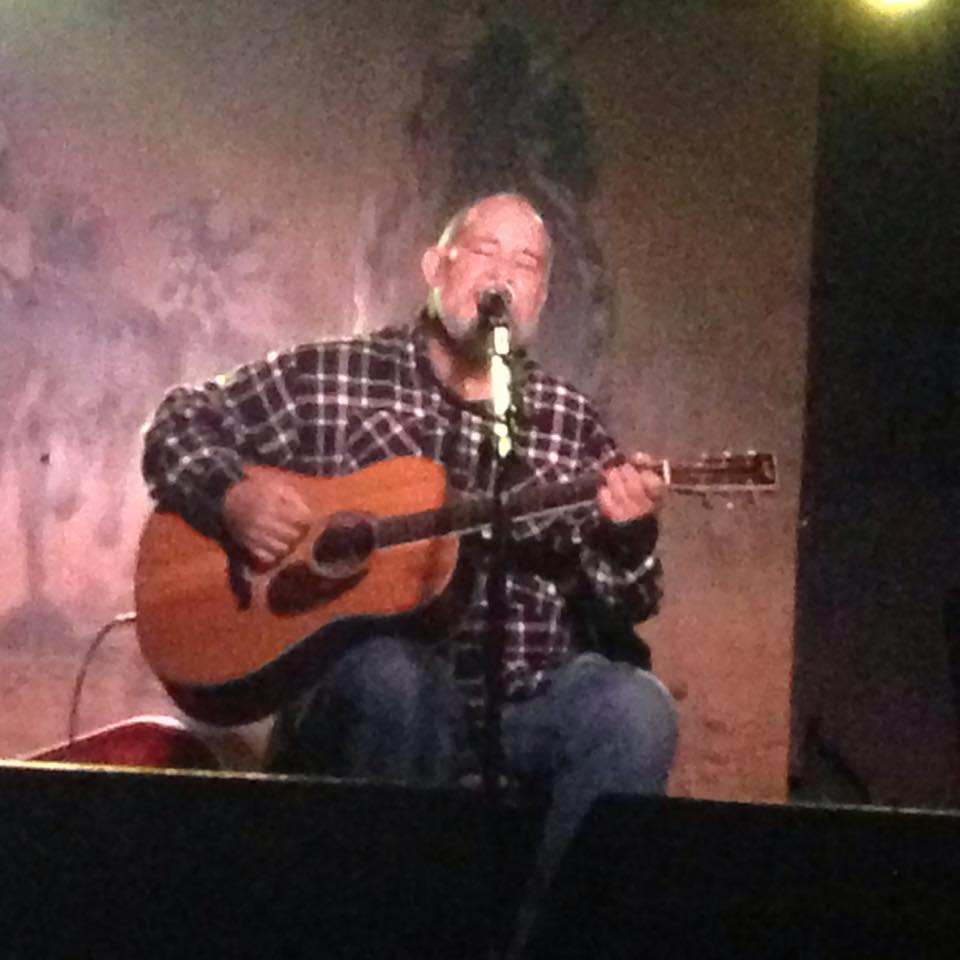
You know how sometimes you hear a song and it’s as if that song has lived inside you your whole life but only now do you realize it? Love at first listen. Tracy Chapman’s Fast Car was like that for me, and so was the first Jon Dee Graham song I ever heard, Something Wonderful Is Going to Happen. His voice came roaring out of the speakers in my little Mazda-3 and that was it, I was a lifer.

From that moment on I tracked down every Jon Dee song I could find and listened to them obsessively. That giant voice, that guitar, the everything he put into his music that everyone who ever heard him felt. I bought his CDs, because back then I still had a CD player, and a few years ago I bought a record player so I could buy his albums.

Jon Dee was a lifelong Texan. He lived in Austin but he used to tour every year, and one of the cities he came to regularly was Minneapolis, where I live. Many years ago I saw he would be in town, but only for a private house party. I messaged him –the first time I ever reached out–to ask if he would be playing anywhere else in town. Let me check on something, he wrote in response. Later that day he told me the people hosting the party were fine with having me show up. So down to a suburb I drove, into a house full of people I didn’t know, and I sat on a folding chair in the front row of their living room.
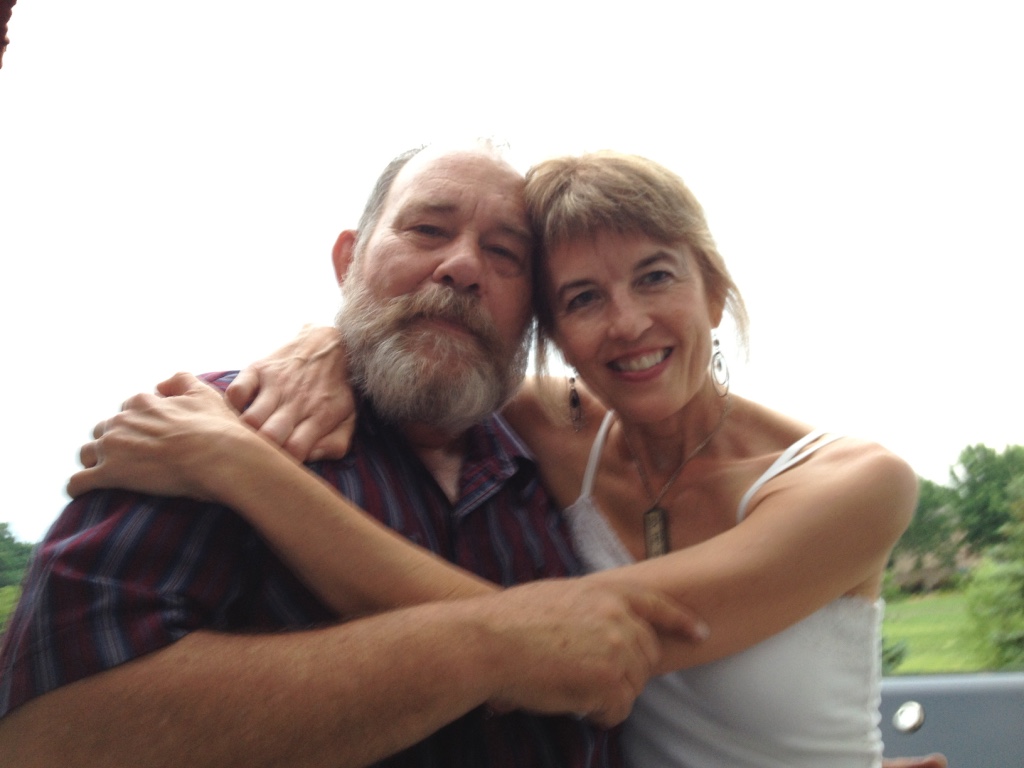
There he was, my music idol. Every song he played, I knew, and I tried not to sing along but it was hard not to. After the set he went outside to smoke and I followed him and introduced myself. Alison! he said, and gave me a hug.

That summer evening, which hangs in my memory, was long ago. I keep trying to remember the details of how we became such good friends but they’re fuzzy. Maybe because everything is a little fuzzy since last Friday, when I first heard of his death. I’m so sorry, my friend Al messaged me, and instantly I knew Jon Dee was gone. It’s hard to write those words. Hard to remember, each day since, that he’s not in this world anymore. Hard to think of how my phone won’t light up with another text from him, some little message that no matter what the topic will make me smile, if only because it came from Jon Dee.

After that first house concert I went to see him play if I were anywhere near. Once, when I was in Austin on a book tour during SXSW, I Ubered to a restaurant/bar where he was playing, sat at a table in the dark and ordered a drink. At some point he called out to the audience, wanting to know the farthest anyone had come. I called out “Minneapolis!” and he shaded his eyes and peered out into the dark room and said in a wondering voice, “Alison? That’s not you, is it?” It was.
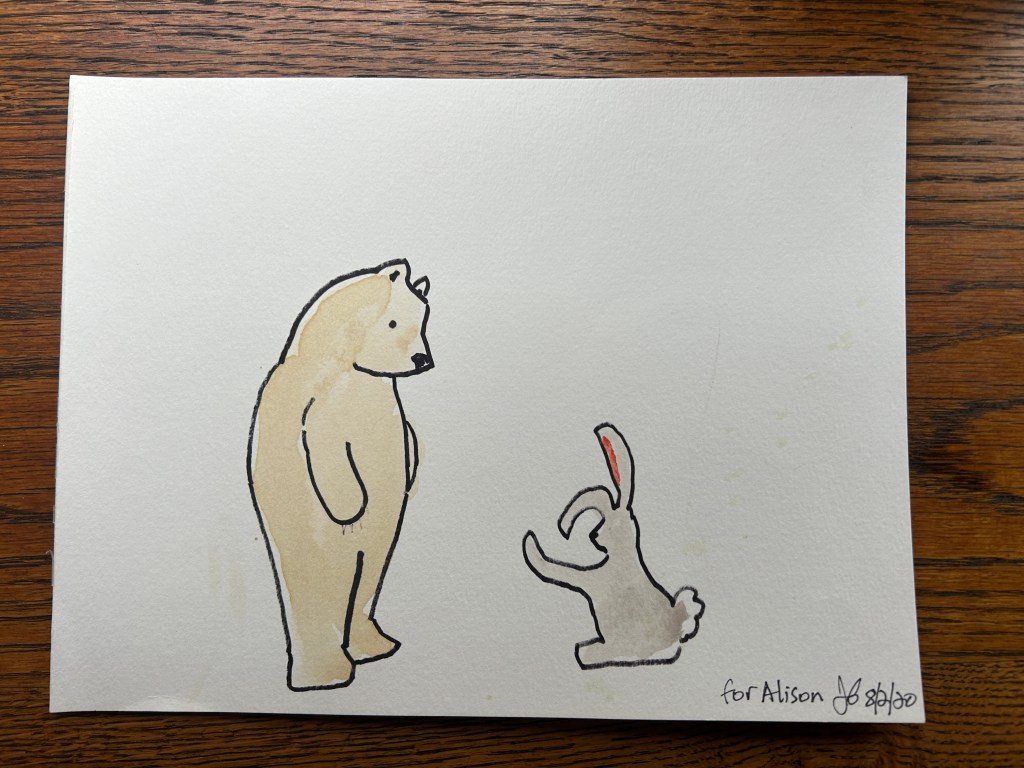
Years later, he asked me to help him with a picture book he was writing and illustrating –he was also an artist–and we worked together for a long time. Me teaching him what I know about picture books, him instantly absorbing it all.

You’re pan-artistic, JD, I texted him at one point. I mean damn. Songs. Artwork. Writing. Storytelling. What’s next? Ballet?

Hmm, he texted back. Not LIKELY. But not UNLIKELY either! I’m tryin not to rule anything out.

Another time, in Minneapolis, he had a show in one of my favorite tiny venues, The Listening Room. He came out on stage with his guitar, sat down, tuned up, then looked out at the audience. He saw me near the front, and without a word, came down into the audience and gave me a huge, silent hug. Writing that makes me choke up. I don’t even know why. Maybe because Jon Dee saw something in me, something kindred?

Whatever it was he saw in me, he saw in everyone. He had an uncanny ability to see people, to divine their heart and soul, and an equally uncanny ability to somehow, no matter the circumstance, comfort others. In the pandemic he went online each week to read picture books to his followers, calling himself Tio Pantalones and greeting everyone he saw sign on.
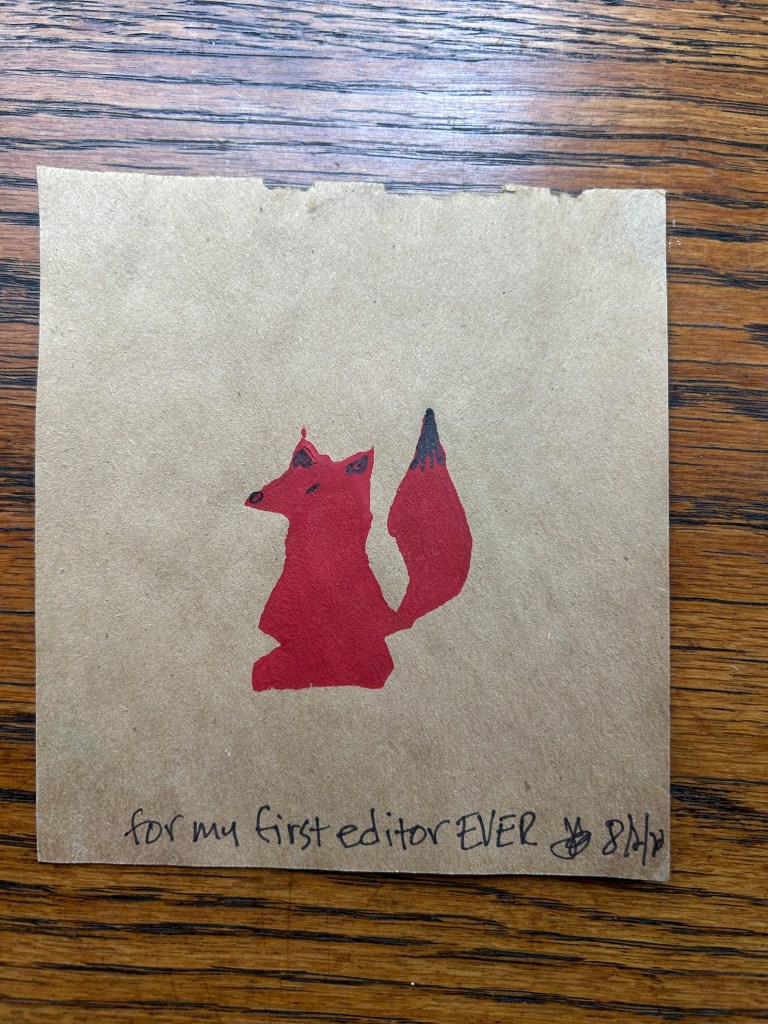
Jon Dee was a big man with a big voice and a big smile and an enormous, tender heart that he ripped out of his chest over and over and over, in every song he wrote and every story he told. His talismanic creation was The Bear, a gruff, tender bear portrayed in so many of his paintings, and the subject of the beautiful children’s book he wrote and illustrated. He identified with the Bear, he told me once, but he didn’t go into detail.

Some losses hit harder than others. The night Al messaged me, I wandered around my house, crying. But there was no one to cry with, because none of my friends but Al knew Jon Dee. I spooled up all my favorite JDG songs and listened to them on repeat. Went to bed and woke up and remembered that he was gone and my heart broke again, the way it does, morning after morning, in the wake of someone you loved so much.

I didn’t want to grieve alone but what could I do? Go online. I opened up my laptop. I’m not sure I’ve ever seen such a spontaneous outpouring of grief, so many people just like me, filled with sorrow for our lost legend. It is somehow a comfort to see this, and to know that so many others are sending their love to Jon Dee’s wife and sons, who were so beloved to him that his voice usually dropped to a whisper when he talked to me about them.

Why did he have to die when the monsters just keep, on, living? Why Jon Dee, when every day they double down on cruelty and greed and he just made the world better for everyone? I wailed to the Painter. Dumb question, without an answer, but still, why?
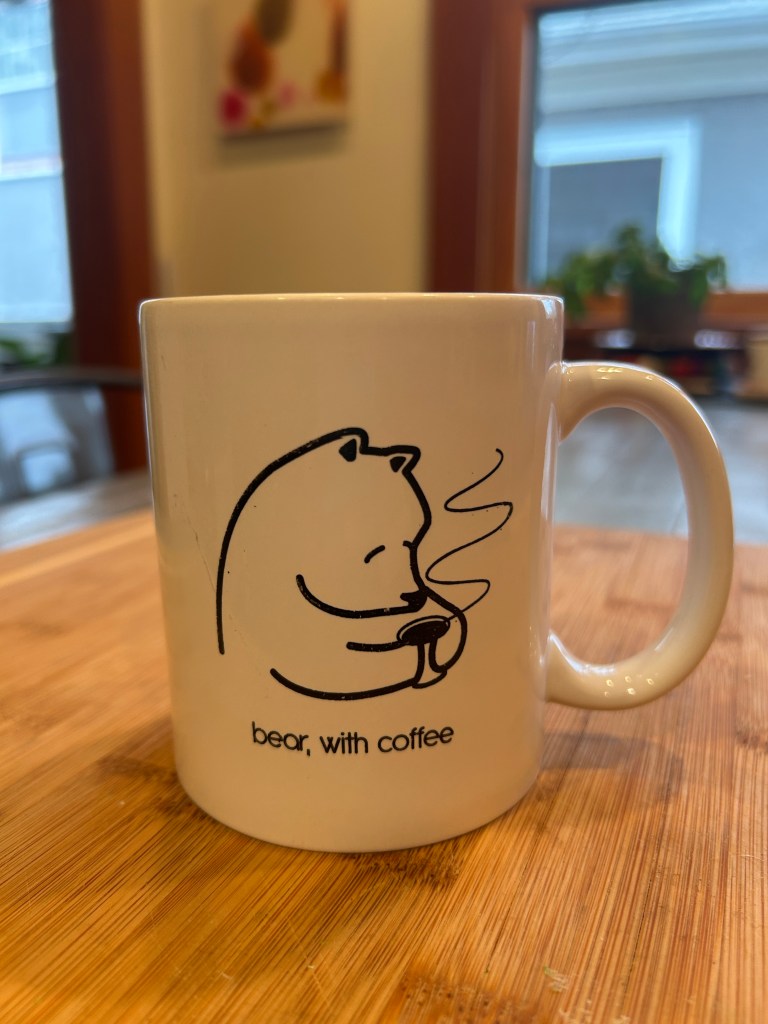
Little things around my house are all Jon Dee: a mug I bought at one of his shows, some artwork he sent me, his albums. Jon Dee did not believe in encores –he always said they were kind of doofy, like okay, we’ll all walk off stage and wait a minute, and then we’ll all walk back on and play another song–so he always played a full set and more, giving us his whole heart every time.

And then poof, he was gone.

My favorite song of his is Faithless.

The story of your life
Written page by page
Careful what you write
You gotta read it all someday

You need a strong heart
You need a true heart
You need a heart like that
In a world like this

The last Andes mint: Jon Dee Graham.

A while back, a friend handed you a mix cd, one of many he gave you over the years. Since you can remember disliking exactly one song out of the more than 20,000 that you must have heard in this friend’s presence you stuck it right in the car cd slot and turned the volume up.

Like all discs from this friend, every track was unnamed: Track 1, Track 2, Track 3. Etcetera.

Track 1 began to play. A man’s deep voice came growling out of the speakers: Something very wonderful is gonna happen, something very wonderful is gonna happen. Yeah, to you. Yeah. To you.

It was one of those times when you had to pull the car over and put it in park, stop everything you were doing so that you could just sit and listen to that song. That voice. Those words. You pressed Repeat over and over, although you wouldn’t have had to – the song was part of you the minute you heard that first joyous bellow: Something very wonderful is gonna happen.

“That song ‘Something Very Wonderful’,” you said to your friend. “Who is that?”

“That’s Jon Dee Graham,” he said.

So you went to the Electric Fetus and bought the man’s discs. Played them all through, one after the other, over and over and over, the way you like, until they were embedded in you.

Based on nothing but that first listen, you conjured up a picture in your mind of Jon Dee Graham. In it, he’s sitting on the stage in a small dark bar, a single spotlight shining down on him and his guitar, and his face is lifted up to the light and he’s laughing.

You have always thought of music as the greatest and most powerful of the arts. The conjurer of feeling, of dreams, of past and future.

There’s the music you heard when you were tiny, that insinuated itself into your body like DNA. Last night you woke up at 3 a.m. with this musical DNA idea in your head, and right away the sensation of sitting on a hard wooden chair in a yellow-painted room with stained glass windows came washing over you. You felt your legs swinging against the chair, your feet barely brushing the floor. Surrounded by a dozen other tiny little kids. Jesus loves me, this I know, for the Bible tells me so.

Every word of that Sunday School song, the way those chanting kindergarten voices floated up toward the high ceiling of that yellow room, is still inside you. Even if you left that kind of church behind decades and decades ago, you can never leave its music behind. 

Johnny Cash, Dolly Parton, Loretta Lynn, Hank Williams: their music still sings its way through your body. You remember crouching in front of the big speaker with your ear pressed to it, the better to absorb.

Other music would come later. The Grateful Dead: when you hear it now you’re back in a hotel high in the Rockies where you cleaned rooms and vacuumed and polished and scrubbed. A place from which you walked out, at the end of the day, into the smell of sage and juniper.

Neil Young’s Comes a Time and you’re back in a cinderblock dorm room with a narrow bed and a blue wool blanket and red maple leaves pressed between wax paper and Johnson’s baby powder and a braided rag rug and college textbooks stacked on a wooden desk.

Emmylou’s Luxury Liner: an apartment down a back road in Vermont with a bathtub overlooking the mountains, stars massed overhead, a set of wooden stairs that creaked in the middle of the night, someone you loved having fallen asleep to Emmylou’s voice crooning in the darkness.

Hard to listen to those songs without being transported straight back to those times. Hard not to cry, even if those times were good and you were happy.

Then there’s another kind of music, the kind that happens when you’ve become pretty much who you are in this world. Knit together. Still and always forming, but there’s a point in life at which you have absorbed so much and experienced so much, that you start to be less a sponge and more a conduit.

This is another thing you were thinking about last night at 3 a.m., this conduit idea, but you didn’t have the words to explain it. If you had a guitar, maybe, and if you knew how to play that guitar, you could have written a song about it. Sometimes, more often than you usually admit, you want to be music instead of words.

Then the title to a Flannery O’Connor short story came to you, a title that has puzzled you forever: Everything that Rises Must Converge. For the first time it made sense, there in the darkness. If you live long enough and deep enough, something is released. Something is set free, to rise higher and higher until all like-minded souls are connected. All lost, come on home.

When you got up in the morning the word transponder was scrolling across your mind and you looked it up. “A wireless device that picks up and automatically responds to an incoming signal.”

Yeah. That feels about right –weird, but right– for the constant, invisible presence of music in a life. The give and take of it, the way it fills you up and sets you thrumming and then you send it out into the world.

Everything that rises must converge. That means that unrise-able things, things like wanting fame and riches and to make sure that everyone knows how accomplished you are, have to be let go.

Only connect. That line, from a novel written in the 1860’s, has stayed famous for so long because it’s true. It’s what everyone cares about. It’s the one thing that matters.

You’ve been thinking about that lately, along with this line from your favorite childhood book: To look at everything always as though you were seeing it either for the first or last time: Thus is your time on earth filled with glory.

It’s not an easy thing to do. To look upon something as if you were seeing it for the first or last time means that all of life becomes even more intense. Light shines down on everyone and everything is infused with beauty and sorrow and wonder and gratitude. No, it’s not easy to live like that.

That’s how Jon Dee Graham lives, though. You knew it the first time you heard that first song. Something very wonderful is gonna happen. When you wake up with that familiar, huge feeling of happiness, so happy just to be alive, that’s the song you think of. 

When you sit on your porch and watch the girls in their summer dresses walking by, you think of his song Amsterdam, and how all the people in it are beautiful.

When it has been a long stretch of sadness and sorrow and exhaustion, and it feels, finally, as if maybe it wouldn’t be so bad just to lie down and sleep for a long, long time, or even just. . . disappear, his song Swept Away comes over you. Life is difficult at times, he says. I’ve fought depression my whole life.

Jon Dee’s music doesn’t bring you back to a long-ago time. It doesn’t remind you of who you used to be, in your time here on this earth. His music is who you are right here, right now, at this mid-life transponder age. It’s a big sweet life. What can you do but thank him for putting that feeling, and those words, to music.

Jon Dee Graham: I have an extremely strong belief in something I can’t explain.

Yes.

*This Friday night, August 23, Jon Dee Graham (who lives in Austin, TX) will be playing at Morrissey’s Irish Pub in the Uptown neighborhood of Minneapolis. Be there.

The seen and unseen worlds

See that big rock in the upper right hand corner of this photo? It sits on the radiator cover in your bedroom, next to the other rocks you’ve brought back from various shores and woods, along with the beach glass your best friend gave you one year for your birthday.

“You can ride as far as the big rock, and then you have to turn around.”

The big rock marked the end of the driveway, which was as far as you and your sisters were allowed to ride your bikes, when you were little. You grew up on 130 acres of woods and meadows and you were free to explore all of them, but the road, the nearly-carless road, was the boundary of that world.

When your parents had the driveway paved, not all that long ago, they dug up the big rock and hauled it out to you. They figured that you would want that big rock. They were right.

One of your daughters is in the Galapagos Islands right now. She’s teaching English in a little school on an island there, where tall rock cliffs jut vertically out of the sea, where sea lions are as plentiful as the squirrels are in Minneapolis.

Earlier today you watched a six-second video of a sea turtle clambering across the sand, a video sent to you by her on her phone. At the last second the camera swung around and there was her smiling face, her waving hand, her long sweep of dark hair. Hi, daughter, you said to the screen. You could almost smell her hair, hear her voice. And then the video disappeared.

When you were the same age that she is now, you got on a plane in upstate New York and flew across continents and oceans and landed in the middle of the night in a city so foreign that small children looked up at your vast North American height and, terrified, began to scream.

Sometimes, during the half-year you lived there, at a time of night when you knew that no one would be home in the Adirondacks to answer –international phone calls were ruinously expensive back then– you would pick up the heavy Chinese phone in the apartment you shared with a friend and two Chinese roommates and dial your parents’ phone number.

You wanted to hear it ring. You pictured it ringing there in the empty house, on the wall by the dining table, no one around to pick it up. You needed that connection.

This is what you are thinking about these days, in small and large ways: connection. Between people, between ideas, between silences and loudnesses. Between continents and oceans and worlds.

You woke this morning thinking about a friend who lives in Germany, wondering how she is. You lay there in bed picturing her hanging laundry on the line, a task that both of you love. This friend has been part of your life for some years now, a kindred spirit. You send each other small notes, poems.

You’ve never met this friend in person. Never stood in the same room with her, sat side by side drinking coffee and talking. Never spoken on the phone. Everything between the two of you has happened invisibly, in silence, via email.

It often happens that after a day in which she suddenly appears in your mind, you wake to a note from her, written while you were sleeping. That is what happened this morning. Eight weeks and eight poems but no blog post, she wrote. Are you all right?

Of course, of course, you wrote back. But it’s not always easy to know if you’re all right. Sometimes, like now, you’re going along and going along and then you look up and suddenly the world has changed. You’ve vaulted onto some new plane of being without intending to. You read a certain line of poetry, or you listen to a faraway someone’ s voice on the phone, or you come down hard on your heel and something inside twists, and in the twisting, you pivot into a slightly newer person than you were a moment before.

A bunch of flashing neurons, said someone on the radio the other day. That’s all we are. Isn’t that enough? Isn’t that a miracle in and of itself?

It seems like a miracle to you. You love reading about science, how the brain works and the ways in which it compensates when it’s injured. Two halves to a human brain. Two kidneys, two eyes, two ears, two ovaries, two hands and legs and feet.

Bodies are made in duality. Bodies contain two of many almost identical worlds, side by side, working together but separate. Parallel universes.

You’re working on a strange novel these days, a novel which has you in its grip. It’s taken you six hundred pages of wandering before you could begin to see what it was about, at heart, and what it’s partly about is the seen and unseen worlds.

You keep finding yourself writing in and about a place you can’t see and can only imagine, or remember. Where do our spirits go when we sleep? Is a dream real? Were we somewhere before we were here? Where will we go when our bodies die?

The ideas of heaven and hell make you laugh. You care so little about the concepts that you don’t think about them and never have. You’re one of those people who says things like Heaven and hell are right here on earth, and you mean it.

But still. Can’t help but wonder where I’m bound, where I’m bound, sings Johnny. Can’t help but wonder where I’m bound.

What comes after this?

Twelve thousand miles away, is a phone ringing in an empty room as you type this?

Hello stranger, sings Emmylou, put your loving hand in mine. You are a stranger, and you’re a friend of mine.

Right now, as you type this, your old friend Kingsley is in the hospital, where he has been for weeks.

“I’ve been thinking about my father these days,” he said the other night, on the phone. You lay on the couch listening to his voice, so familiar, hoarse now from a dry throat. In the background you heard the chatter of aides, a nurse, something clinking.

“Remember that photo you sent me of him?” you say. “The one at the party? I keep it on my desk so I can see his big smile. He smiled a lot, from the looks of it.”

“Yes. He did.”

Kingsley is old, and he is so weak that he cannot lift his legs, and his father has been gone for many, many years now.

“Do you miss him?” you ask. This is not the kind of question that you would have asked, twenty years ago, but it’s the kind of question you ask now.

“He always gave me good advice,” said Kingsley. “I could always go to him, and tell him my problems, and he always had good advice.”

You listened to his tired voice, and you glanced at the photo on your desk of his smiling father, bending over a birthday cake with a big knife in his hand.

“Maybe he’s with you right now,” you say. “Invisible but there.”

When you talk about chronology to your students –chronology defined in a writing class as the order in which something’s told– you tell them that many writers begin in the now and then go back in time to fill in the inbetween, back to the present and back to the past, floating here and there in time. That’s because it feels natural, you say, it’s the way we live our lives.

Once there was a five year old who stopped at the big rock at the end of the driveway.

Once there was an eleven year old who wrapped her arms around her skinny self one fall day after school because the dark blue sky and the fiery maples were so beautiful they hurt.

Once there was a twenty year old who forced herself to leave her hotel room in Taiwan because she was starving, who found a dumpling stall and sat there eating potsticker after potsticker at a penny apiece.

Once there was an exhausted young mother who wore her baby boy strapped to her body because unless he was touching her, part of her, he screamed.

Once there was a woman in mid-life, sitting at a long wooden table typing this post late at night, a glass of wine to her right and an oblong phone in a sea-blue case to her left.

You think you’re one person but you’re not. You’re all the people you ever were, at all times, everywhere.

You’ll be going along, going along, going along, and then something happens, you come down hard on your heel, or you look up at the sky at just the right moment and rays are streaming down from above between the storm clouds, and suddenly you know you’re not exactly the person you were before.

Three days ago you woke up and read the blog of a college friend whose family is gathered around her these days, who writes about what it’s like to “plunge into the truth” of her life. You silently vowed that everything you did that day would be a secret celebration of her, out of love and respect.

On that day of secret celebration, you were hyper-aware, the way she would be, of the scent of lilacs everywhere you walked and ran in this green and rain-laden city. Aware of the pavement underneath your feet. You pressed shuffle on your music and trusted that every song would have meaning, and every song did.

All that day you cried, on and off. Running down the pavement from the Y. Sitting in your car at a red light. Walking the dog past the endless lilacs.

You didn’t care who saw you. They weren’t tears of grief so much as tears of fullness. A song by Jon Dee Graham, that astonishing musician, the man who can’t write a bad song, came shuffling up.

I know it’s hard, but I know it’s sweet, complicated and incomplete, but I am in love with the world so full. Don’t turn away, don’t turn away from a world so full.

I’m trying not to, Jon Dee, you thought. Trying hard.

Is it a stretch to feel that if something once was, it will in some form always be? Invisible, maybe. Untouchable. But still there. Still here.

“When we’re old,” your mother says. “Ten years from now. Always ten years from now.”

The book you’re working on keeps shifting time and place, skywarding up into some place that for lack of a better term you think of as the spirit world, a world parallel to this one but existing in its own dimension of time and space. You don’t want the book to do this –for God’s sake, aren’t you already plotless enough? and don’t your novels already curve endlessly around on themselves?– but the novel does what it wants, and this, apparently, is what it wants.

Maybe this is the way the world really is. You and everyone else live in duality –eyes, ears, hands–and maybe, even if you don’t think of it that way, you already live in more than one world at a time. You already take, on faith, so much that is invisible: Air. Electricity. Love. Why not this too?

It’s possible that what you have long thought of as reality –the things of this world you can touch and hold and smell and taste– is only one small part of a far bigger whole. If, when you talk to your grandmother in the early mornings, to ask her advice or just say hi, you can feel her with you, then isn’t she still there?

If, when you think about a long-ago night when you made your way down to the shore and slept on a quilt on the beach because you wanted the sound of the waves in your ears, and you can smell the salt air and feel your body soothing down into the sand, then isn’t it still happening?

If, when you imagine the hand of someone you love stretched toward you, and imagine his fingers wrapped around yours, are not the two of you holding hands?

Technology and its gadgets are bringing the seen and unseen worlds closer, beginning to dissolve the boundaries you have lived by, have believed in. But it’s possible that the boundaries were never there to begin with.

The phone in your back pocket chirps again. You press a button to behold a mother and child sea lion, sunning on the rough shore of a Galapagos sea. The mother sea lion stretches and flops over. Then the camera flips around and a girl with wide eyes and a tumble of long dark curls is smiling at you. Love you, Mom, she whispers.

And immediately the screen goes blank, replaced by a static picture of a tiny white ghost.

What is the meaning of kindness?
Speak and listen to others, from now on,
as if they had recently died.
At the core the seen and unseen worlds are one.

(Solution, by Franz Wright)