Poem of the Week, by Joseph Fasano

Click here to read more about my new novel Telephone of the Tree, which has received three starred reviews and is an Amazon Best Book of the Year. 

Sometimes I envy people who have a group of friends they do things with as a group over decades: book clubs, game nights, dinners, theater, music, a yearly fishing or camping trip. My friendships are deep and close and span decades but they’re mostly individuals here, couples there, spanning all ages and stations and places in life.

Once, in a hard time, I took a piece of scrap paper and wrote Who to Call at the top, followed by a list of friends. Most of the names on it came instantly, friends I’m always in touch with. Others were surprising –when was the last time we talked?– but then again not really, because we are connected at the core. Glancing at my Who to Call list reminds me I’m not alone, even when it feels like I am.

Love Poems to Our Friends, by Joseph Fasano

Where are the poems for those who know us?

Not for star-crossed loves,
for agonies of longing,
but words for those who go with us
the whole road.

How would they start, I wonder
You let me crash
when I was new to ruin.
You came to me   
though visiting hours were over.
You held me when my loves
were done, were flames.

Yes, we will lose a few
in the changes.
But these are the ones
who save us:
not the charmers,
not the comets of wild passion,
not the ups-and-downs of love’s unlucky hungers,

but the ones who stand
by our shoulder at the funeral
and lead us back to the land of the living
and put our favorite record on the player
and go away, and come back,
always come back,

with bread and wine
and one word, one word: stay

Click here for more information about Joseph Fasano. This poem first appeared on his Instagram page in 2024. 

alisonmcghee.com
My podcast: Words by Winter
Poem of the Week, by Thich Nhat Hanh

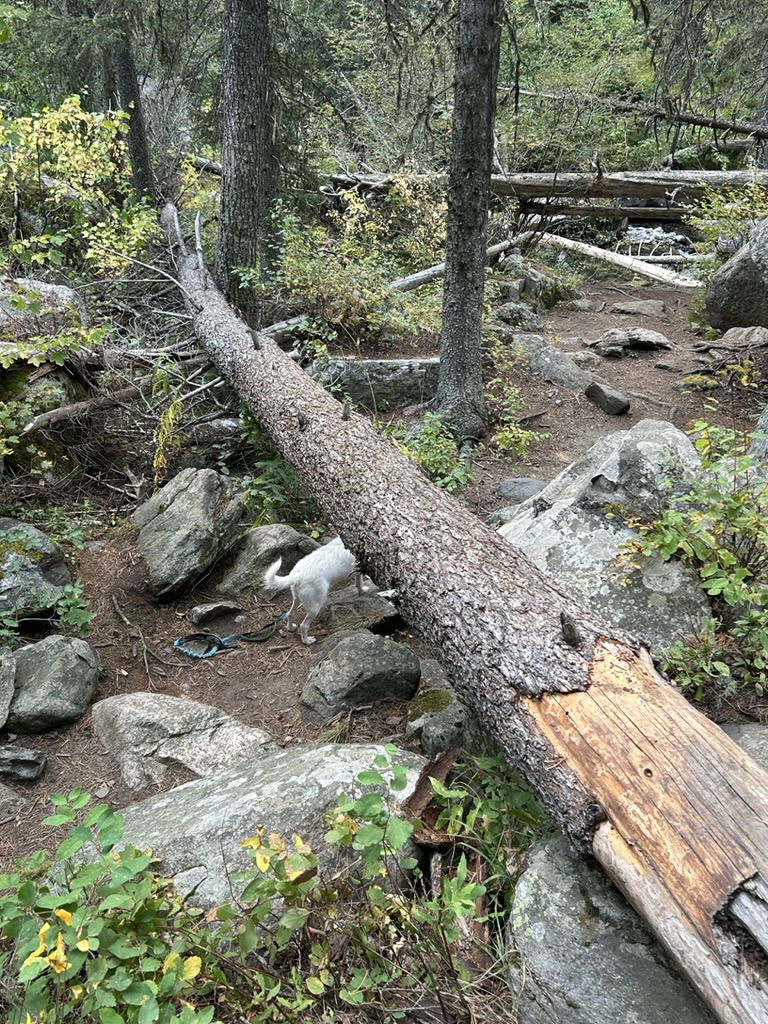
Three days after we adopted Paco, he planted his paws on the beach, eased backward out of his too-loose harness, and took off. He raced down the boardwalk, raced across four lanes of traffic on the Pacific Coast Highway, raced up Broadway, and raced up the five flights of stairs to Rosa Bonheur Street. It was here that I, who had just left the house for a jog, saw a small white dog hurtling toward me. Oh no! Someone’s dog got out!, I thought, followed immediately by Oh no! That’s MY dog!

He slowed down when he saw me and gave me an encouraging look, then raced up Poplar Street to the house, where he waited patiently for me to catch up. In the meantime, cars had pulled over everywhere, drivers jumping out to join bikers and walkers, all of them trying to help the little white dog so clearly without his humans.

When my brain feels like it’s about to break from the endless barrage of bad news, I think of that day and all the other uncountable acts of goodness in the world that we, knowing nothing about each other, including how we vote, instinctively do for each other.

The Good News, by Thich Nhat Hanh

They don’t publish
the good news.
The good news is published
by us. 
We have a special edition every moment,
and we need you to read it.
The good news is that you are alive,
and the linden tree is still there,
standing firm in the harsh Winter.
The good news is that you have wonderful eyes
to touch the blue sky.
The good news is that your child is there before you,
and your arms are available:
hugging is possible.
They only print what is wrong.
Look at each of our special editions.
We always offer the things that are not wrong.
We want you to benefit from them
and help protect them.
The dandelion is there by the sidewalk,
smiling its wondrous smile,
singing the song of eternity.
Listen! You have ears that can hear it.
Bow your head.
Listen to it.
Leave behind the world of sorrow
and preoccupation
and get free.
The latest good news
is that you can do it.

Click here for more information about Thich Nhat Hanh. Despite searching, I’m unable to find where this poem was first published. 
alisonmcghee.com
My podcast: Words by Winter
Poem of the Week, by Tina Kelley

Spots are still available in the July 17-19 mini-session of our popular Write Together sessions, in which we gather on Zoom for an hour in the morning and an hour in the evening and write quietly together from a guided prompt. Cost: $100. Click here for all the details. I’d love to see you in the Zoom room. 

My first password was a long jumble of numbers decreed to me by Compuserve and which I loathed because it had nothing to do with me or my life. My first choose-your-own password was a variation of my brother’s because his made me laugh. All my passwords since then –hundreds of them, because I don’t use a password manager even though yes, I know I should–are variations on the original. It still makes me smile.

Knowing someone’s password is a glimpse into their heart. Their mother’s childhood nickname, their father’s favorite sports team, the birthday of their child, their dog’s name, a zip code of a long ago apartment where they once lived and loved.

Lessons from the List of 100,000 Most Hacked Passwords, by Tina Kelley 
        —what God said after reading the whole thing

Oh my me! If only I had made you more imaginative.
Next upgrade, you need ten times the terabytes
of ingenuity, and boosted self-preservation too.
If you loved yourselves as I love you, sweet dim ones,

would you type in 123456 to crack every nest egg?
Number 14, after qwerty and password, is iloveyou,
which increases my faith in you. But how is yours in me?
There are 138 mentions of Jesus, but twice as many f*&%s.

368 have sex in them, including sexgod. I much prefer
glory2god and love4god, and appreciate how godgod1
ranks above ilovenookie1, if by one. 1,512 uses of love,
116 hates, including the hate in whatever. Tons o sucks.

Monkey ranks 19, dragon 20. Coming in at 37 out of 100,000?
Tinkle. No idea why. My favorite is the pilgrim, supplicant,
who tries to avoid red letter scolding and reset: letmein.
You, my lowercase meek one, get admitted to paradise.

The rest of you, pick one that reminds you to be better
every time you pay your bills or check your balances.
Make it a prayer, a remembrance of your favorite departed.
More than hackthis1. Maybe something, once, about joy?

Click here for more information about poet Tina Kelley. Today’s poem was first published in Presence: A Journal of Catholic Poetry

alisonmcghee.com
My podcast: Words by Winter
Poem of the Week, by Naomi Shihab Nye

Spots are still available in the July 17-19 mini-session of our popular Write Together sessions, in which we gather on Zoom for an hour in the morning and an hour in the evening and write quietly together from a guided prompt. Cost: $100. Please click here for all the details. I’d love to see you in the Zoom room. 

People who read this Poem of the Week regularly must think, Wow, does this woman love Naomi Shihab Nye. And they would be right. Sometimes, walking down the street, I recite lines from her poems, maybe because they’re beautiful, maybe because they make me feel less alone. Once a friend said to me, “I read a poem today that I somehow think you would love. It’s by a woman named…Naomi something?”–and I said, “Naomi Shihab Nye!”

She’s a poet who begins with a thing, a real, tangible thing like the stone in the poem below (and I am a writer who loves the thingness of things) and from that thing she somehow spirals a kite of words up into the air and stitches it to feelings and experience in a fearlessly human way. She reminds me, always, that kindness is all that matters. She reminds me, always, that we’re all the same. That we each carry a tender spot, something our lives forgot to give us.

Jerusalem, by Naomi Shihab Nye

“Lets be the same wound if we must bleed.
         Lets fight side by side, even if the enemy
is ourselves: I am yours, you are mine.”
                                    —Tommy Olofsson, Sweden

I’m not interested in
who suffered the most.
I’m interested in
people getting over it.
Once when my father was a boy
a stone hit him on the head.
Hair would never grow there.
Our fingers found the tender spot
and its riddle: the boy who has fallen
stands up. A bucket of pears
in his mother’s doorway welcomes him home.
The pears are not crying.
Later his friend who threw the stone
says he was aiming at a bird.
And my father starts growing wings.

Each carries a tender spot:
something our lives forgot to give us.
A man builds a house and says,
“I am native now.”
A woman speaks to a tree in place
of her son. And olives come.
A child’s poem says,
“I don’t like wars,
they end up with monuments.”
He’s painting a bird with wings
wide enough to cover two roofs at once.

Why are we so monumentally slow?
Soldiers stalk a pharmacy:
big guns, little pills.
If you tilt your head just slightly
it’s ridiculous.

There’s a place in my brain
where hate won’t grow.
I touch its riddle: wind, and seeds.
Something pokes us as we sleep.

It’s late but everything comes next.

For more information on Naomi Shihab Nye, please click here.

Poem of the Week, by Franz Wright

Spots are still available in the July 17-19 mini-version of our popular Write Together sessions, in which we gather on Zoom for an hour in the morning and an hour in the evening and write quietly together from a guided prompt. Cost: $100. Please click here for all the details. I’d love to see you in the Zoom room.

A few years ago I was deep in conversation about various religions and the dangers of religious extremism with my Somali-born Uber driver.

Me: “What I don’t get is how does the longing for purpose and passion that most of us feel turn into a belief, for some, that their god is the only god, and their god justifies murder and mayhem and terror?”

Him (31 years old, handsome, laughing, who along with his Somali-born wife works full-time on different shifts so that they can trade off taking care of their four little kids): “I will tell you something. I almost became one of them.”

“. . . You did?”

“Yes. After we fled the civil war in Somalia we lived in Nairobi for three years and I went to a new mosque. I was 18. And the leader taught hate. I began to be filled with hate and to think that others should suffer and die. I felt my heart turning hateful. And I decided to bring a notebook to the mosque with me for one week. I had one column Hate and another column Love and I kept track of what he was teaching. At the end of the week it was all hate. And I stopped going to the mosque.”

“And now? Did you find a mosque in Minneapolis that feels right to you?”

“I don’t go to any mosque anymore. If I want to pray, I pray inside my own head. My religion is two words only. You want to know what they are? Don’t hate.”

 Solution, by Franz Wright

What is the meaning of kindness?
Speak and listen to others, from now on,
as if they had recently died.
At the core the seen and unseen worlds are one.

Click here for more information on Franz Wright, the poet son of poet James Wright, both of whom won Pulitzer Prizes for their poetry. 
alisonmcghee.com
My podcast: Words by Winter
Poem of the Week, by Richard Jones

Spots are still available in next month’s mini-session of our popular Write Together sessions, in which we gather on Zoom for an hour in the morning and evening and write quietly together from a guided prompt. July 17-19, 10 am and 6 pm Central time. Cost: $100. Please click here for all the details. I’d love to see you in the Zoom room. 

Last week I was walking with someone I love when we saw an old man trip and nearly fall. He dusted himself off, made sure his hat was on straight, and kept going, cane in hand.

My friend and I were both quiet. We didn’t look at each other. Let it go, Alison, I told myself. He’s fine. I imagined the old man on his way to his daughter’s house, his whole family waiting there, full of love. A story conjured up to keep the sadness at bay, to turn it into something else, to transcend it.

But it didn’t surprise me when my friend turned to me and said quietly, “If I keep thinking about that old man I’ll be sad for the rest of the week,” and I nodded, because we are alike. “It’s a curse to feel so much,” she said.

A curse, and a blessing.

After Work, by Richard Jones

Coming up from the subway
into the cool Manhattan evening,
I feel rough hands on my heart –
women in the market yelling
over rows of tomatoes and peppers,
old men sitting on a stoop playing cards,
cabbies cursing each other with fists
while the music of church bells
sails over the street,
and the father, angry and tired
after working all day,
embracing his little girl,
kissing her,
mi vida, mi corazon,
brushing the hair out of her eyes
so she can see.

​For more information on Richard Jones, please click here.

alisonmcghee.com
My podcast: Words by Winter

Poem of the Week, by Benjamin Cutler

This summer, July 17-19, I’m offering a mini-session of our popular Write Together sessions, in which we gather on Zoom for an hour in the morning and an hour in the evening and write quietly together from a guided prompt. Cost: $100. Please click here for all the details. I’d love to see you in the Zoom room. 

At the diner

Once, a father called his daughter on her 33rd birthday and left a message on the answering machine.

“Happy 33rd!” he said. “Happy 33rd.”

Pause. Pause. Pause.

His daughter stood by, wondering if that was the end of it. Then came a clearing of the throat and a mumbled I love you.The daughter opened the answering machine and snatched out the tape on which her father’s message was recorded. It was the first time she’d ever heard him say that.

I am that daughter. All these years later I still have that tape, an old Radio Shack cassette.

Blessings on the fathers, all the fathers, and all the men who stand in as fathers. The fathers who are able to say “I love you” easily and often, and the fathers who aren’t. The father who pushes his child on the swing, higher and higher, and the father who lets his child hitch a ride on his wheelchair.

The father who scratches out a budget in pencil on lined yellow paper, the better to show his daughter where it all goes when she says in teenage superiority, But where could it all go? How can there be none left at the end of the month? The father who comes stumbling out of his baby’s bedroom late at night and throws himself into a chair, saying, I spend half my life in a dark room, singing. The father who untangles his child’s bobber from the weeds where she has cast it yet again, and the father who stands  his child on his feet to dance her around the room.

Blessings on the father who wore blue coveralls for the barn and washed up in Lava soap. On the father who grew old and forgot where he left the car. On the father who let his child twirl on the stool at the diner, who pulled her up the hill on the toboggan, who taught her how to make scrambled eggs. Blessings on the father who cried on the plane home from visiting his first grandchild and told his wife I wish I could do it all over. I wish I could do a better job.

Dressing My Father-in-Law for Burial, by Benjamin Cutler

I would have tied the tie differently:
full Windsor, centered and snug
against the white, pressed collar.

But his oldest son wanted the job—
and who could deny him this right?

So I watched—half Windsor,
knot too tight, loop overly loose
around the unbuttoned neck

as though the man were ready
for his after-work commute.

See him now, this grieving son—
hands atremble and earnest—tying 
Dad’s final tie: inexpertly, imperfectly.

But isn’t this how any of us love?—
the only way we know how.

Click here for more information about poet Benjamin Cutler. Today’s poem can be found in his brand-new collection, Wild Silence.

alisonmcghee.com
My podcast: Words by Winter

Poem of the Week, by Chen Chen

This summer, July 17-19, I’m offering a mini-session of our popular Write Together sessions, in which we gather on Zoom for an hour in the morning and an hour in the evening and write quietly together from a guided prompt. Cost: $100. Please click here for all the details. I’d love to see you in the Zoom room.

At some point in their early teens, my daughters and I began playing a game I thought of as the Sure game, in which the answer to every question was Sure. Can we go on a road trip this summer? Sure. Can we have ice cream every day? Sure. Can we drive a car that flies? Sure. Can I fly the car? Sure. Can we float around the sky as long as we want? Sure.

The Sure game was the most soothing game in the world. It had a calming effect on all of us. Sure was the answer to everything, and nothing was hard and everything was easy.

i love you to the moon &
– by Chen Chen

not back, let’s not come back, let’s go by the speed of 
queer zest & stay up 
there & get ourselves a little 
moon cottage (so pretty), then start a moon garden 

with lots of moon veggies (so healthy), i mean 
i was already moonlighting 
as an online moonologist 
most weekends, so this is the immensely 

logical next step, are you 
packing your bags yet, don’t forget your 
sailor moon jean jacket, let’s wear 
our sailor moon jean jackets while twirling in that lighter, 

queerer moon gravity, let’s love each other 
(so good) on the moon, let’s love 
the moon        
on the moon

Click here for more information about Chen Chen. This poem was first published in Poem-a-Day in May, 2021, by the Academy of American Poets.

alisonmcghee.com
My podcast: Words by Winter

Poem of the Week, by Catherine Pierce

This summer, July 17-19, I’m offering a mini-session of our popular Write Together sessions, in which we gather on Zoom for an hour in the morning and an hour in the evening and write quietly together from a guided prompt. $100, with one half-price no-questions-asked scholarship remaining. Please click here for all the details. I’d love to see you in the Zoom room.

A few days ago my friend Julie and I spent half an hour in the anechoic chamber at Orfield Labs, which is the official “quietest place on earth.” It was entirely dark and entirely silent but for the sounds of our breathing and my (always gurgly) stomach.

Minutes went by. My wild, tumbling mind began to still. A feeling of peace replaced thought. Usually I think of my arms and legs and head and chest as separate, but there in the chamber my body felt whole, and I was so grateful to it. When the guide opened the door and turned the lights on and asked how we felt, all I could think was I want to live here.

Abecedarian for the Power Outage, by Catherine Pierce
Absolute, the sudden silence—the fan stops
buzzing, the refrigerator hushes. No,
child, the night-light can’t turn on. The nervous
dog curls herself like a comma against any soft thing.
Everything non-house—crickets, wind rustle,
full white moon—is amplified. Everything else: vanished.
Goodbye, breaking and broken news; farewell, accomplishing. Dear
husband, shall we fool around? Dear moon, you reckless marvel.
In this floating black sphere, there are no edges,
just transformations. The microwave looks
kindly in the candle’s amber
light. The curtains are full of possibilities.
Miraculous, this gift: how
nothing can reach you here. Not what you haven’t done, not tomorrow’s
OB-GYN appointment, not all the wildfires and floods and hurricanes
piling up like megaphoned
questions you can’t answer. The night
roils around you, only it’s not the night, it’s
something bigger, something that holds you, something
that tells you, gently but firmly, this can’t last,
under no circumstances will this last.
Vellum moon, solicitous microwave—nothing
will stay. You’ve drawn
Xs through your obligations,
you’re pleading for more time, but the power blares back,
zealous in its quest to return what you dropped. Here: Every stone. Every needle.

Click here for more information about poet Catherine Pierce. This poem first appeared in the The Southern Review

alisonmcghee.com
My podcast: Words by Winter
Poem of the Week, by Brittany Rogers

This summer, July 17-19, I’m offering a mini-session of our popular Write Together sessions, in which we gather on Zoom for an hour in the morning and an hour in the evening and write quietly together from a guided prompt. Cost: $100, with one half-price no questions asked scholarship remaining. Please click here for all the details. I’d love to see you in the Zoom room.

Years ago, changes to zoning laws in my beloved Minneapolis neighborhood began a shift from small, cool, local businesses and artisans to new luxury apartments and big box retail. Then came the pandemic, the murder of George Floyd, and some hard reckonings. Currently there are lots of vacant storefronts, petty and not-petty crime, and ongoing road construction that messes things up even more. But! The big, vacant CB2 store is being turned into a roller skating rink! Disco roller skating, birthday parties, karaoke skating, toddler skating. The day I found out this great news is the same day I read this fabulous poem.

Throwback Night, Midway Skating Rink, by Brittany Rogers

I ignore the kids’ slinky arms. The dishes. They daddy. Tonight
I rush to the rink with my best friend, her fingers locked into mine.
The sun dipped already, but we sweating, edges ribboned under
summer’s breath. I forget to take pictures, but trust. We fine.
Out after dark, awestruck at our own grown. Downtown
ain’t looked like ours since they landed on Woodward and mined,
hollowed the center to erect a highrise. Joke’s on them.
Everybody here Black and in love and my,
don’t we know how to reclaim what’s ours. We on beat with it.
Look how our thighs obey: backwards, glide, turn, slow whine.
The DJ cuts to Cupid Shuffle, and even on skates, we hustle. Our necks,
tilted bottles, laughter splashing and messy. Oh, how I mined
for this belonging, scythe swinging, searching for my name. So busy
hiding from selfish, I had dropped damn near everything that was mine.

Click here for more information about Brittany Rogers. This poem was first published in Prairie Schooner

alisonmcghee.com
My ​poetry podcast: Words by Winter