Poem of the Week, by Maggie Smith

Are you looking for an “experience” gift for yourself or someone you love? Spots still available in our January 8-13, 2024, Write Together session. I’d love to see you in this one hour, twice-daily workshop in which we all quietly write together from a guided prompt. It’s a beautiful way to usher in the new year. $200, with one $100 no-questions-asked scholarship available. 

People keep telling me I have to pick a side, pick a side. Here’s the side I pick: The world is a mess, and the world is beautiful, and people are awful, and people are wonderful. Let me love the world, and its humans, like a mother.

Rain, New Year’s Eve, by Maggie Smith 

The rain is a broken piano,
playing the same note over and over.

My five-year-old said that.
Already she knows loving the world

means loving the wobbles
you can’t shim, the creaks you can’t

oil silent—the jerry-rigged parts,
MacGyvered with twine and chewing gum.

Let me love the cold rain’s plinking.
Let me love the world the way I love

my young son, not only when
he cups my face in his sticky hands,

but when, roughhousing,
he accidentally splits my lip.

Let me love the world like a mother.
Let me be tender when it lets me down.

Let me listen to the rain’s one note
and hear a beginner’s song.

Click here for more information about writer Maggie Smith.
alisonmcghee.com
My podcast: Words by Winter
Poem of the Week, by Naomi Shihab Nye

Are you looking for an “experience” gift for someone you love? Registration for our January 8-13, 2024, Write Together session is open. I’d love to see you or your loved one in this one hour, twice-daily workshop in which we all quietly write together from a guided prompt. It’s a beautiful way to usher in the new year. Fee: $200, with two $100 no-questions-asked scholarships available. 

This poem, lettered on handmade paper and framed, hangs on a wall in my house, a collective gift from friends a few years ago. Sometimes, when I feel hopeless in the face of it all, I recite lines from it to help un-paralyze myself. A small act of goodness is still a way to help the world.

Famous, by Naomi Shihab Nye

The river is famous to the fish.

The loud voice is famous to silence,   
which knew it would inherit the earth   
before anybody said so.   

The cat sleeping on the fence is famous to the birds   
watching him from the birdhouse.   

The tear is famous, briefly, to the cheek.   

The idea you carry close to your bosom   
is famous to your bosom.   

The boot is famous to the earth,   
more famous than the dress shoe,   
which is famous only to floors.

The bent photograph is famous to the one who carries it   
and not at all famous to the one who is pictured.   

I want to be famous to shuffling men   
who smile while crossing streets,   
sticky children in grocery lines,   
famous as the one who smiled back.

I want to be famous in the way a pulley is famous,   
or a buttonhole, not because it did anything spectacular,   
but because it never forgot what it could do.

Click here for more information about the wondrous Naomi Shihab Nye. Famous is included in Words Under the Words: Selected Poems by Naomi Shihab Nye.

alisonmcghee.com
My podcast: Words by Winter

Poem of the Week, by Joyce Sutphen

Registration for our January 8-13 2024 Write Together session is in full swing. I’d love to see you in this one hour, twice-daily workshop in which we all quietly write together from a guided prompt. It’s a beautiful way to usher in the new year. 

For many years I taught creative writing at a non-traditional university for working adults, many the first in their family to go to college, many returning to college after a decades-long break. In the beginning we gave no grades. Instead, we hand-wrote long narrative evaluations of our students’ work. These narratives took forever to compose–like, forever–but when done right they were profoundly reflective documents.

I used to sit late at night with a pen in my hand, picturing this student and that, re-reading their stories and poems and memoirs. If you’re going to be an artist you have to push yourself in ways you’re scared to. You have to experiment, challenge and challenge and challenge yourself. You have to be fearless, and how can you be fearless if you’re afraid you won’t get an A? To this day I refuse to grade my students’ creative writing.

Things You Didn’t Put On Your Resumé, by Joyce Sutphen

How often you got up in the middle of the night
when one of your children had a bad dream,

and sometimes you woke because you thought
you heard a cry but they were all sleeping,

so you stood in the moonlight just listening
to their breathing, and you didn’t mention

that you were an expert at putting toothpaste
on tiny toothbrushes and bending down to wiggle

the toothbrush ten times on each tooth while
you sang the words to songs from Annie, and

who would suspect that you know the fingerings
to the songs in the first four books of the Suzuki

Violin Method and that you can do the voices
of Pooh and Piglet especially well, though

your absolute favorite thing to read out loud is
Bedtime for Frances and that you picked

up your way of reading it from Glynnis Johns,
and it is, now that you think of it, rather impressive

that you read all of Narnia and all of the Ring Trilogy
(and others too many to mention here) to them

before they went to bed and on the way out to
Yellowstone, which is another thing you don’t put

on the resumé: how you took them to the ocean
and the mountains and brought them safely home.


Click here for more information about poet Joyce Sutphen. Things You Didn’t Put On Your Resumé is from her book Carrying Water to the Field, University of Nebraska Press, 2019.

alisonmcghee.com
My podcast: Words by Winter

Poem of the Week, by Jane Hirshfield

Registration for our January 8-13, 2024 Write Together session is in full swing. I’d love to see you in this one hour, twice-daily workshop in which we all quietly write together from a guided prompt. It’s a beautiful way to usher in the new year. 

I want all of it to stop. All the slaughter and blame and clamors to choose a side, choose a side, choose a side, as if choosing a side can somehow justify the slaughter of children. On our long walk today, my dog and I passed a baby tree that passersby have turned into a repository of lost mittens and gloves and scarves. They look so lonely without the people they belong to, hanging on the slender limbs as if they still hold out hope.

A Chair in Snow, by Jane Hirshfield

A chair in snow
should be
like any other object whited
& rounded

and yet a chair in snow is always sad

more than a bed
more than a hat or house
a chair is shaped for just one thing

to hold
a soul its quick and few bendable
hours

perhaps a king

not to hold snow
not to hold flowers

Click here for more information about Jane Hirshfield.

alisonmcghee.com
My podcast: Words by Winter

Poem of the Week, by Keith Leonard

Registration for our January 8-13 2024 Write Together session is in full swing. I’d love to see you in this one hour, twice-daily workshop in which we all quietly write together from a guided prompt. It’s a beautiful way to usher in the new year. 

I love going to weddings and I love dancing at weddings. I love how every wedding band plays the exact same songs and I love them all. I love how even when you’ve been dancing for hours and you could use a break and a drink so you step off the dance floor but then you hear the first few bars of Shut Up and Dance or Uptown Funk or Dancing Queen or Proud Mary and you look around at your friends and everyone’s got the Oh my God we can’t stop now! look on their faces and back out onto the dance floor you go. I love how there’s no skill or art to my dancing but who cares? Balterers of the world, unite!

Balter, by Keith Leonard

There is a word in middle English
to describe the way you dance—
with delight but without a hint
of art or skill. Al Green licks the walls
of our tiny apartment, and you balter
across the living room nursing the plants.
You balter to the sink
and sing to a toothbrush
with a mouth full of foam.
If we’re doing this right,
the ruling god of embarrassment
has no place in our home.
He can orbit the building.
He can scratch the brick
with nails as sharp as checkmarks,
but we do not need to invite him in.
I have never understood elegance.
Below the song dampening dirt,
the dead all practice a statued grace.
But here you can clap a half-step
behind the beat. You can announce
an extra note with the body abundant.
Here, you can place your hands
on my shoulders. I can lift my hands
to your waist.

Balter was first published in The Journal. Click here for more information about poet Keith Leonard.
alisonmcghee.com
My podcast: Words by Winter

Poem of the Week, by Jessica Tanck

Registration for our January 8-13, 2024, Write Together session is in full swing. I’d love to see you in this one hour, twice-daily workshop in which we all quietly write together from a guided prompt. It’s a beautiful way to usher in the new year. 

Last month, at a Moth Grand Slam, I watched the evening’s musician-composer silently practicing on stage as the audience filed in. Electric violin tucked under their cheek, eyes closed, they ran through music heard only in their head, fingers flying, grimacing in the beautiful way musicians grimace when lost in their music.

Sometimes what we most love and crave doing is obvious on the outside: the daily splotches of paint on my partner’s hands (and head), the rowing calluses on my friend’s hands, the beat-up laptop –extension of my hands and mind–that’s never more than a few feet away from me.

Samson et Dalila, Op. 47, by Jessica Tanck
       
I would wonder over it often: the welt
on my teacher’s throat. My hand cupped
round the neck of my cello, hollow

I hugged to me. So thin the music
stand, so thin what kept the din of strings
from the electric weather

of my blood. In profile my teacher’s
tucked hair, frown, perpetual bruise.
Horsehair on metal, purr torn from a gate

thrown open—and to what?
Only when she lifted her violin to play
would I understand the mark—

how close she held the carved thing
to tear its music out.

Click here for more information about Jessica Tanck. Thanks to the Cincinnati Review, where I first found her poetry.

alisonmcghee.com
My podcast: Words by Winter

Poem of the Week, by Robert Louis Stevenson

Registration for our January 8-13, 2024 Write Together session is in full swing. I’d love to see you in this one hour, twice-daily workshop in which we all quietly write together from a guided prompt. It’s a beautiful way to usher in the new year. 

It’s all just too much sometimes, this daily horror show of news. Hard to hang on to what’s left of sanity. This is when I go back in time, in my mind, to my gentle, soft spoken grandfather, who left school after the eighth grade to farm but who carried so much memorized poetry in his mind and heart. I don’t know if Where Go the Boats is one he used to recite to me, but it could have been.

Where Go the Boats, by Robert Louis Stevenson

Dark brown is the river,
golden is the sand.
It flows along for ever,
with trees on either hand.

Green leaves a-floating,
castles of the foam,
boats of mine a-boating—
where will all come home?

On goes the river
and out past the mill,
away down the valley,
a way down the hill.

Away down the river,
a hundred miles or more,
other little children
shall bring my boats ashore.

Click here for more information about Robert Louis Stevenson. 
alisonmcghee.com
My podcast: Words by Winter
Poem of the Week, by Joyce Sutphen

I’d love to see you in one (or both!) of our two remaining fall four-hour Zoom workshops this coming week: The Intuitive Leap on November 14, and Poetry, from Flicker to Flame, on November 17. Click here and scroll down for all the details.

I read it in one sitting, my daughter said about a book. Here, you can have it. I too read it in one sitting and texted her this photo. What did you think? she asked, and I sensed her trepidation – what if I hadn’t liked it?

Broke my heart, I wrote. So beautiful and so painful.

I sensed her relief through the ether. The things and places and people we love can be hard to share, because what if others don’t feel the same way? This is why I can’t be in a book club, and why I usually don’t tell people my favorite movie because it’s often scorned. It hurts to think how I must have hurt people in my life by unknowingly scoffing at the things they hold dear.

Forgive Me John Keats, by Joyce Sutphen

The day we read your “Ode on a Grecian Urn”
I wasn’t able to make them see it.

I couldn’t get them to hear your voice, to
imagine you standing in a bare room,

slowly circling the urn, noticing
the lovers and the piper and the town,

and how it occurred to you that not one
detail would change; no one would ever grow

old there, the leaves would never fall. I tried
to get them to think about Art and Life–

how one is long and the other is short,
how death may be the mother of beauty.

But forgive me John Keats, I failed to let
them see your hand (still warm) held out to us.

Click here for more information about the wondrous poet Joyce Sutphen.

alisonmcghee.com
My podcast: Words by Winter
Poem of the Week, by Rosemerry Wahtola Trommer

I’d love to see you in one (or both!) of our two remaining fall four-hour Zoom workshops: The Intuitive Leap on November 14, and Poetry, from Flicker to Flame, on November 17. Click here and scroll down for all the details.

We all walk around with a stone in our shoe, my writer friend G told me long ago, something I keep reminding myself of these days especially, as I watch people take sides, take sides, take sides, as if suffering and death are somehow more painful or more justified for some people than others.

We all hurt. We all hurt so much. We all carry so much, visible and not. There is no end of reasons to treat each other with great tenderness.

Watching My Friend Pretend Her Heart Is Not Breaking, by Rosemerry Wahtola Trommer

On Earth, just a teaspoon of neutron star
would weigh six billion tons. Six billion tons
equals the collective weight of every animal
on earth. Including the insects. Times three.

Six billion tons sounds impossible
until I consider how it is to swallow grief—
just a teaspoon and one might as well have consumed
a neutron star. How dense it is,
how it carries inside it the memory of collapse.
How difficult it is to move then.
How impossible to believe that anything
could lift that weight.

There are many reasons to treat each other
with great tenderness. One is
the sheer miracle that we are here together
on a planet surrounded by dying stars.
One is that we cannot see what
anyone else has swallowed.

Click here for more information about poet Rosemerry Wahtola Trommer.

alisonmcghee.com
My podcast: Words by Winter

Poem of the Week, by Keith Leonard

I’d love to see you in one (or both!) of our two remaining fall four-hour Zoom workshops: The Intuitive Leap on November 14, and Poetry, from Flicker to Flame, on November 17. Click here and scroll down for all the details.

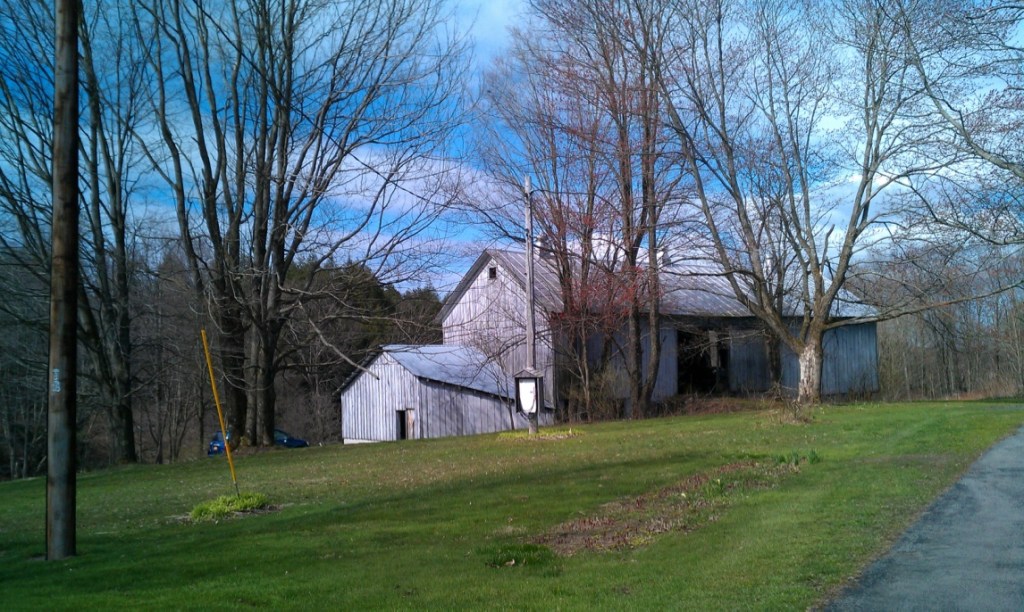
Last year, my parents sold The Homestead (150 acres of woods and fields and creeks and ancient farmhouse in far upstate New York), a huge endeavor which meant many hours of sorting through sixty-plus years of belongings, including a number of little ceramic bowls and planters with my initials on the bottom.

As I held them memory came back to me: of my high school pottery class and of the semester in college when I bought a pass to the basement pottery studio, hours of calm and peace spent sitting at the wheel, shaping clay into bowls.

I too was once my own storm–okay fine, I still am–but these tiny bowls remind me that calm and peace also live somewhere inside me.

Keel, by Keith Leonard

That half-moon smooth beam,
I think someone made it because
they had a spine and wanted
to make a stronger one,
and they sent the little skiff
out to sea for years,
and it went on boot-thudded
and shoal-scraped,
and it went on boot-thudded
and shoal-scraped, and it held
all the while like it holds
in the boatyard, though
it is belly-up on blocks
to keep out the rain, now,
and it does rain here,
and did again this morning
when I was walking your dog,
Love, thinking how I, too, 
have been boot-thudded
by love, I was my own
storm once, so young
and eager to raise the sail
of my wanting, and I just wanted
to tell you I love this old boat,
this settled-in thing.

Click here for more information on poet Keith Leonard.

alisonmcghee.com
My podcast: Words by Winter