January 6-11, 2025 Write Together session

Hello friends,

Are you a writer in need of an energy boost and a fresh start? Or someone who’s always wanted to write but aren’t sure how to begin? Is there a story or poem or essay within you that wants to be written? Maybe ideas and an urge to write them out come to you at work, while walking the dog, cooking dinner, folding laundry, and in dreams, but then life takes over and those ideas submerge themselves. If you’d like to set aside an hour a day for dedicated writing time in the company of others doing the same, our January 2025 Write Together session is now open for registration!

Write Together: January 6-11, 2025, 10-11 am CT every day (note time zone), via Zoom

In our popular Write Together sessions, we convene each morning in our Zoom Room for a one-hour session. Each hour includes a brief reading and continues with a 40- to 50-minute guided prompt (or two to choose one from), and all are designed to wake up the magical writer who lives within us all. Write Together is for writers of any and all experience in any and all genres.

The Write Together sessions were inspired by my regular January solo practice of a week devoted solely to generating new ideas, having fun, and playing around with cool new prompts. There’s something so comforting and freeing about knowing that we’re all writing together at the same time, each of us in our little Zoom boxes, with no expectation of sharing or feedback. I’ll also record the readings and prompts separately, so if you miss a day and want to catch up, you’ll be able to do so on your own time.

You won’t have to take time off work or your daily routine –unless of course you want to–but you will have six hour-long opportunities to write in a focused, intensive, exhilarating way in a room full of others doing exactly the same thing. Come have fun and see what you come up with! Our last day will extend another hour for open mic, in case you’d like to share something you wrote during the week for applause and appreciation.

Registration and payment for the January 2025 session: $100. To register, email me at alisonmcghee@gmail.com or simply send payment via personal check, Venmo to @Alison-McGhee-1, or PayPal to alison_mcghee@hotmail.com. Please email me with any questions. Note: Both $50 half-price scholarships have been claimed, but I added one more – just let me know if you need it and it’s yours, no questions asked.

Now, more than ever, we need the kindness and solace and laughter and strength of each other’s company. I’d love to see you in the Zoom room.

Poem of the Week, by George Bilgere

Our January 6-11, 2025, Write Together session is now open for registration! I’d love to see you in the Zoom room. Click here for more information.

Faint white crescent scar on my right knee: bit by a dog. Blue-black graphite in my hand: the pencil I caught in second grade that broke off in my palm. Ache in my right tibia when the weather changes: twice-broken bone. Straight white line on my palm: surgery to remove the long wooden splinter I hid as a child until the infection spread up my wrist. Tiny silver lightning bolt below my right hipbone: second-baby stretch mark.

Fake front teeth: racing to room draw in college. I vaulted over a cement wall except didn’t, because suddenly there were broken teeth and blood everywhere. (The friend I was with missed room draw to help me out and ended up in a dank fly-infested basement room our sophomore year. Did I ever thank you for that, Stephen? Thank you.)

Every time I read this poem I think about all the hidden stories we carry in our bodies as our bodies carry us through our lives.

Basal Cell, by George Bilgere

The sun is still burning in my skin
even though it set half-an-hour ago,
and Cindy and Bob and Bev and John
are pulling on their sweatshirts
and gathering around the fire pit.

John hands me a cold one
and now Bev comes into my arms
and I can feel the sun’s heat,
and taste the Pacific on her cheek.

I am not in Vietnam
nor is John or Bob, because
our deferments came through,
and we get to remain boys
for at least another summer
like this one in Santa Cruz,
surfing the afternoons in a sweet
blue dream I’m remembering now,

as the nurse puts my cheek to sleep,
and the doctor begins to burn
those summers away.

Click here for more information about poet George Bilgere. Today’s poem is from his collection The White Museum, published in
2010 by Autumn House Press.  

alisonmcghee.com
My podcast: Words by Winter

Poem of the Week, by Tyehimba Jess

Our January 6-11, 2025, Write Together session is now open for registration! I’d love to see you in the Zoom room. Click here for more information.

I’ve never been forced to perform for audiences not of my choosing, the way the Black minstrel in this poem was forced to, but this poem (for the second time this year) speaks to everything in me right now. When others think they control you, think they have power over you, declare they know what’s best for you and you’ll do it whether you like it or not, it’s time to become your own full sky.

What the Wind, Rain, and Thunder Said to Tom, by Tyehimba Jess

Hear how sky opens its maw to swallow
Earth? To claim each being and blade and rock
with its spit? Become your own full sky. Own
every damn sound that struts through your ears.
Shove notes in your head till they bust out where
your eyes supposed to shine. Cast your lean
brightness across the world and folk will stare
when your hands touch piano. Bend our breath
through each fingertip uncurled and spread
upon the upright’s eighty-eight pegs.
Jangle up its teeth until it can tell
our story the way you would tell your own:
the way you take darkness and make it moan.

Click here for more information about Tyehimba Jess. This poem is included in his Pulitzer Prize-winning collection Olio, published in 2016 by Wave Books. Olio is an effort to understand the lives of mostly unrecorded African American performers: how they met, resisted, complicated, co-opted, and sometimes defeated attempts to minstrelize them.”


alisonmcghee.com
My podcast: Words by Winter
Poem of the Week, by William Stafford

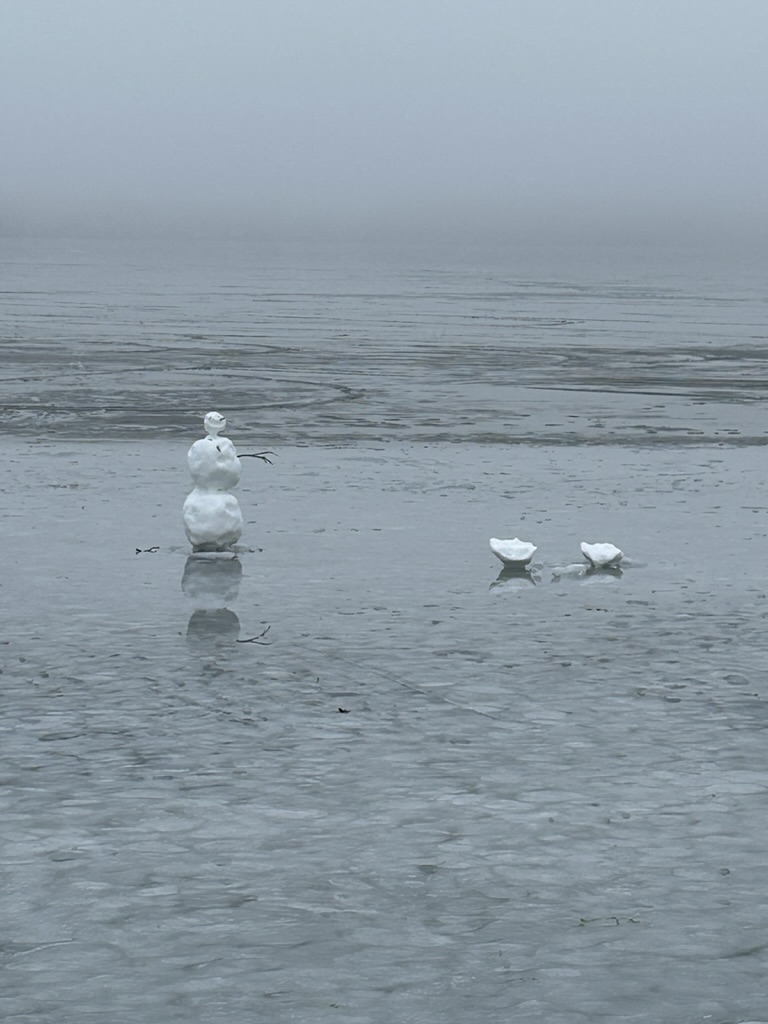
Five years ago a friend died, a Marine combat veteran, and in his honor and as noted in his obituary, I made a donation to the Wounded Warrior project, which triggered letter after letter from conservative mailing lists. Given my political leanings, it would have been easy to post those letters with a snarky comment and watch the equally snarky responses roll in, but that would only have made things worse.

Most people are not zealots. You can be a pacifist and still support veterans. You can be an atheist and still respect your neighbor’s need to pray to a God you don’t believe in. You can have deep qualms about abortion and still support the right to have one. You can despise your uncle’s homophobic comments and cut off contact with him, or you can remember how he taught you to ride a bike and showed up at all your basketball games. You can choose to open a conversation with him, one that will take a lot of patience and respect that you might assume neither of you have. But you might surprise yourselves.

A Ritual to Read to Each Other, by William Stafford

If you don’t know the kind of person I am
and I don’t know the kind of person you are
a pattern that others made may prevail in the world
and following the wrong god home we may miss our star.

For there is many a small betrayal in the mind,
a shrug that lets the fragile sequence break
sending with shouts the horrible errors of childhood
storming out to play through the broken dike.

And as elephants parade holding each elephant’s tail,
but if one wanders the circus won’t find the park,
I call it cruel and maybe the root of all cruelty
to know what occurs but not recognize the fact.

And so I appeal to a voice, to something shadowy,
a remote important region in all who talk:
though we could fool each other, we should consider—
lest the parade of our mutual life get lost in the dark.

For it is important that awake people be awake,
or a breaking line may discourage them back to sleep;
the signals we give — yes or no, or maybe —
should be clear: the darkness around us is deep.


​For more information about William Stafford, please click here.​ Today’s poem is from his collection The Way It Is: New and Selected Poems, published in 1998 by Graywolf Press. 

alisonmcghee.com
My podcast: Words by Winter

Poem of the Week, by Bethany Reid

Our January 6-11, 2025, Write Together session is now open for registration! I’d love to see you in the Zoom room. Click here for more information.

Sometimes I think of memories only I hold in my heart, now that the people who shared them with me are gone. Like the last time my dad and I stacked wood together that January day, him leaning against the cart, barely able to move but still winging chunk after chunk to my outstretched hand, and how at one point our eyes met, the same gleam of triumph in them —I can still do this, said his, and you sure as hell can, said mine.

I picture the rows and rows of wood lining the porch, ready to be chunked into the wood stove, enough to get him and my mother through the winter, the last one they spent on the homestead. I think of how my mother told me she pulled a blanket over him when she woke to find him gone, because she didn’t want him to be cold. I think of how I see him sometimes, making his way down a street in California with his walker, and how I know it’s not him but also, somehow, it is.

The Lost Brother, by Bethany Reid
        —for Matthew

Now that our mother has forgotten your name,
I see you everywhere.
In a movie, you’re the spy, swapping
one briefcase for another.
You get off buses just as I find my seat,
or I catch a glimpse of you, disappearing in a crowd.
Once I saw you at a Fourth of July fireworks,
another time, late one night
in Galway. When I wear the blue sweater
I bought there, I think of you. I’ve never mourned
you the way I’ve mourned others,
and maybe that’s why. I was glad
you’d escaped your busted marriage,
left behind your bad choices
like a trail of crumbs to be eaten by birds.
I’ve dreamed you living in a cabin
in the trees at the back of the old place,
reading Dostoevsky and writing poems.
I’m not cracked. I know you’re on that hillside
where we left you, your coffin turned away
from the marker because our mother
didn’t want your head down and feet up
for all eternity. Even that secret
has a way of animating you,
as if you might sit up, dust off your hands
with a that’s that,
and step back into your life.
Our common ground was always a raft
of ice. With you gone, it’s broken smaller.
Am I tired, after all these years,
of carrying you with me? I’m not.
You weigh nothing, a hole in my pocket.
I never forget that you’re not there.

Click here for more information about Bethany Reid. Today’s poem is from her collection The Pear Tree, first published by Moonpath Press. 
alisonmcghee.com
My poetry podcast: Words by Winter

Poem of the Week, by Kaylin Haught

Our 2025 January Write Together session is now open for registration! I’d love to see you in the zoom room. Click here for more information.

Two blocks from home a young woman cheerfully waved at me to cross the street, calling “Mama! Mama! Come here, Mama!” I wasn’t her mama but I was curious, so I crossed the street, at which point she gestured to a small car with two enormous plastic-wrapped rolled rugs sticking out of the trunk and windows and said “Please mama, help. God bless you, mama.”

This was fascinating, because she was half my age, twice my size, and by all appearances completely strong and healthy, but I decided to roll with it. I heaved the first rug out of the trunk/window and dragged it with difficulty and zero help across the long curved drive into her apartment building, then repeated the process with the second rug. At which point the young woman gestured happily for me to follow her down the hallway with the rugs: “Thank you mama! God bless you mama!”

Still fascinated (maybe because I can’t imagine myself ever being so bold), I ended up heaving both rugs down the hallway and into her apartment, where I propped them against the wall of her living room and then, despite her blessings and pleas, left without unwrapping and arranging them for her. And what this anecdote has to do with today’s poem of the week, I’m not sure, other than it falls into the categories of Life is interesting and mystifying and Some people have no qualms asking for exactly what they want and My back hurts now and Sometimes I just feel like saying yes.

God Says Yes To Me, by Kaylin Haught

I asked God if it was okay to be melodramatic
and she said yes
I asked her if it was okay to be short
and she said it sure is
I asked her if I could wear nail polish
or not wear nail polish
and she said honey
she calls me that sometimes
she said you can do just exactly
what you want to
Thanks God I said
And is it even okay if I don’t paragraph
my letters
Sweetcakes God said
who knows where she picked that up
what I’m telling you is
Yes Yes Yes

Click here for more information on Illinois poet Kaylin Haught. This poem first appeared here in 2016.

alisonmcghee.com
My podcast: Words by Winter
Poem of the Week, by W. B. Yeats

Click here to listen to an excerpt from the audiobook version of my new novel Telephone of the Tree

This was back in the days of screechy dial-up modems. The first line of the first review of my first novel came shimmering up on my clunky old computer screen: “First time novelist tries but fails to move or matter.” 

Or matter.

I sat staring at the screen, my little kids looking at me silent and troubled, knowing something was wrong. I turned to them and smiled. I laughed about the review, pretended I didn’t care. But the photo above is what I typed into my journal that night.

This is not a story about a writer who got a bad review – all writers get bad reviews (especially from the un-bylined Kirkus). Nor is it a story about a plucky young woman whose novels went on to win a bunch of awards so haha. It’s a tiny story that stands in for a much larger story of casual, ongoing cruelty in a world in which those two words –or matter–should never be written by a human being about another human being. 

Those two words broke something in me a long time ago that can’t be fixed. That’s what cruelty does. I hate witnessing cruelty and I hate knowing that I have hurt others, even inadvertently, with my words.

He Wishes for the Cloths of Heaven, by William Butler Yeats

Had I the heavens’ embroidered cloths,
enwrought with golden and silver light,
the blue and the dim and the dark cloths
of night and light and the half-light,
I would spread the cloths under your feet:
But I, being poor, have only my dreams;
I have spread my dreams under your feet;
tread softly because you tread on my dreams.

For more information on Yeats, please click here. Today’s first poem first appeared in 1899, in Yeats’s third volume of poetry, The Wind Among the Reeds

alisonmcghee.com
My podcast: Words by Winter
Poem of the Week, by Philip Terman

Need sixty pounds of stuffing for the Octoberfeast? A ride to your dentist appointment sixty miles away? All-day help in the soup kitchen every third Wednesday? Overseeing the kitchen at the monthly music coffeehouse? Organizing the Lions’ annual charity golf tournament? All my life I’ve witnessed neighbors and friends and strangers doing this kind of unsung work. Some people donate money and then there are the people like my mother, and my father until he died, who also wade in knee deep to fill the plates and then wash the plates, brew the coffee and then pour the coffee, welcome the new babies, slip a $20 in their graduation cards eighteen years later, and stand in line in dark clothes to say goodbye when the time comes. We’re all walking to the same place.

Walking to Jerusalem, by Philip Terman

Pedometer attached to her belt, your mother, spry and strong
at eighty, joins the other Methodist Church members
in calculating the 5,915 miles, no matter the weather, to add up
all the way from Linesville, Pennsylvania to Jerusalem.
They need not worry about miracles or pausing
at the signs of the cross. They need not stop for security
to check their purses for weapons. They need no visa
nor baggage, no money to exchange for shekels, no guide-
book, no guide. They need no ancient tongue or prophecies.
They are, simply, day by day, walking, mile after mile:
the sink to the table, uptown to the post office, down
the block to visit the sick neighbor. Sundays to and from church.
And when they walk far enough, adding up their pedometers
together, they will arrive in Jerusalem. And keep walking.

For more information on Philip Terman, please click here. This poem first appeared in Our Portion: New and Selected Poems, published in 2015 by Autumn House Press. 

Poem of the Week, by Gabrielle Kirsch

Click here to listen to an excerpt from the audiobook version of my new novel Telephone of the Tree

In the night an eight-year-old child wakes and listens to the sound of a horse-drawn vegetable cart clopping up the street in the rain. This is the 1940’s in New York City, when there were still horse-drawn vegetable carts. When before dawn the milkman would leave glass bottles full of milk, cream rising to the top, on the stoop. When a child would be given a nickel and told to walk to the bakery and buy “water rolls” for her and her parents.

On that night the child listens to the sounds of the rain and the horse’s hooves and silently, quietly, makes up a poem. Poems rhyme, she thinks, and poems have rhythm, and so it is with this poem. She will remember and recite it to herself for the rest of her long life. Many decades later the poet tells me this story and I think This is how it happens. This is how the love of art is born.

Awake at Night, by Gabrielle Kirsch

The rain is raining on the roof,
Down, down, down.
There is no sound but a horse’s hoof–
Pound, pound, pound. 

Today’s poem first appeared here, excerpted from an email sent to me by the poet. 

alisonmcghee.com
My podcast: Words by Winter

Poem of the Week, by Naomi Shihab Nye

Friends, if you read and liked my new novel Telephone of the Tree, I’d be grateful if you gave it a good review on Amazon or elsewhere (online reviews are important to a book’s success). You can find the book here. Thank you! 

Paco and I rounded the southern tip of Lake Bde Maka Ska a few days ago on the pedestrian path. I don’t know what he was thinking about but I was thinking about future griefs to come and how I dread going through any of them, because why wouldn’t I? Grief is hard and it hurts and it swamps, but it will come and I won’t be able to escape it.

Then a tiny inner voice said Happiness is the same way, and I examined that thought. Happiness floods me in tiny unexpected moments: pouring the hot water over the grounds, laughing at a text from my brother, watching my girl walk across a field holding flowers. It perches on my shoulders like a tiny invisible bird. I recognize it when it’s there, and how beautiful a feeling it is, but I never expect it to stay. And it doesn’t.

Generations, by Naomi Shihab Nye

At the end of an unseasonably warm day
New Year’s Eve 2017
I stood in my kitchen holding
one wooden spoon.

My mom was watching TV
in the living room
eating apples, crackers, and cheese.
My grandson slept in a stroller
in a quiet back room.
I was related to both people,
ages ninety and one.
They were peaceful.
And that was it.
The most beautiful moment
of my life.

Click here for more information about poet Naomi Shihab Nye. I’m unable to figure out where this poem was first published.

alisonmcghee.com
My podcast: Words by Winter