Poem of the Week, by Miguel M. Morales
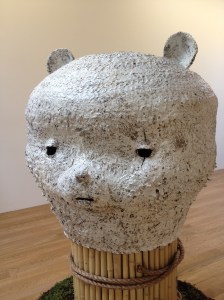 I wanted to write about why I love this poem so much, but it grabbed me by the throat and told me that it could speak for itself, thanks.
This Is a Migrant Poem, by Miguel M. Morales
This is a migrant poem
a farmworking poem, a poem that covers itself
in long sleeves to avoid the burning sun.
That drinks enough water to avoid
dehydration but not enough to get water sickness.
This poem carries a machete, a hoe, a spade,
a knife, shears, and a file for filo.
This poem walks irrigated rows collecting mud
on its boots that add five pounds to each foot.
This poem guards the cornfield where his sister,
his mother, and his cousins, squat to pee.
This poem ducks down hitting the dirt to avoid the
echoing crop duster spraying anti-poem toxins that
burn our eyes and throats.
This poem is egg and chorizo burritos in aluminum foil,
steamed shut by the heat waiting for you at lunch
in a foam cooler in the trunk at the end of rows of soybean. This poem.
This poem smells of blood—and meat.
This poem flows from carcasses into open drains
of slaughter houses, on kill floors, in chilled freezers
with knives cutting, cutting, cutting, cutting—always cutting.
They duct tape knives into this poem’s hands
to cut even when its cut hands can cut no longer.
This poem is a gift of a strong back, of sturdy legs,
of silence, of patience.
And a never-ending work ethic
a never ending work ethic
a never ending work of ethics.
This poem shows you the bigger picture.
This poem is pragmatic, strategic, and erratic.
This poem reaches as it climbs ladders, as it stoops over,
as it pulls from branches, vines, as it unearths other poems
and tosses them into buckets and sacks slung across its stanzas.
This poem is paid by the word, by the piece,
by the hour, by the day, by the acre.
This poem has no benefits, no days off,
no health insurance, no childcare.
This poem is child labor. This poem is sexual assault.
This poem is deportation. This poem is missing wages,
broken vehicles, sunstroke.
This poem avoids irrigation ditches where
La Llorona hopes to drown it.
This poem knows she commands water and sends waves
of humidity and tempting mirages of cool rippling lakes.
This poem wears a rosary and a scapular and prays to St. Francis of Assisi
to protect them from snakes and rats that live in the fields
and to St. Michael the archangel to protect them from the farmer’s son
who watches his sisters
who follows his sisters
who pulls at his sisters.
This poem wakes up early, works all damn day, sweats all damn day.
This poem always needs a shower to wash off the dirt, to wash out the dirt,
to wash away the dirt.
This poem goes to bed early to do it all again
tomorrow.
This Poem is a Migrant Poem.
A. Farm. Working. Poem.
For more information on Miguel M. Morales, please click here.
 Behold the beautiful cover of my sister Holly’s beautiful new children’s novel Matylda, Bright and Tender (a title I love so much that I say it to myself over and over). Matylda is a leopard gecko, cared for with wonder and devotion by two nine-year-old best friends named Guy and Sussy. There’s a special kinship between Guy and Matylda, whereas Sussy is a little more diffident, a little unsure of herself. Sussy wonders whether Matylda will ever be as close to her as she is to Guy.
 A long, long time ago I read Innumeracy, a slender, astonishing book by the mathematician John Allen Paulos, in which he explains how the inability of most of us to deal rationally with enormous numbers results in confused personal decisions and public policy as well as susceptibility to pseudoscience of all kinds. In one chapter Paulos lays out the fact that, on average, every breath we take contains a minimum of three molecules of air breathed by every single person who ever lived and breathed on this planet. I think about this fact every single day. It has influenced every aspect of my life, not least of which is that in times of deep grief, it brings me comfort. Breathe in, Alison. Remember that you’re breathing in some of the same air that every single person you love, the ones who are living and the ones who are dead, have breathed. This lovely, elegiac poem by Tim Nolan, one of a series about his mother and her passing, brings me that same sense of loss and comfort.
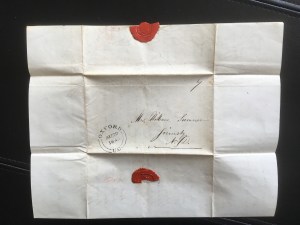 August 25th, 1849
 That photo over there to the right is the very long tail of a very large rat that ran over my bare feet as I stood at the stove cooking dinner. The story behind the tail is one of intrigue and horror – me sauteeing vegetables at the stove while chatting with The Painter who was seated behind me, me suddenly feeling a squirrel or a small cat run over my bare feet, me shrieking and whirling around to tell The Painter that a squirrel or a cat had run over my bare feet, The Painter trying desperately to contain his horror because he had witnessed exactly what ran over my bare feet and rats are not cats.
  Friends, I’m old enough to remember the Willie Horton ad. I’m old enough to remember when the Central Park Jogger –who was around my age, a jogger like me, white like me, educated like me– was raped and left for dead. I remember being terrified at the idea of “wilding” youths –who, somehow, were always black– out to get girls like me. And I remember three months ago, when I was stunned at the outcome of this election and none of my friends who aren’t white were.
 hat before spellcheck, he would say the word out loud and then look through the dictionary trying to find it by first letter. A word like psychology, for example, he would sound out and then search through all the S words. Not finding it, he would then look through all the C’s even though he was sure that it couldn’t begin with C. It was a slow and agonizing process, and all his papers came back with low grades and comments like “Your insights are terrific but you must learn to proofread.”


 Yesterday I sprinkled some sliced almonds into a small pan and turned the flame on low. I stood beside the stove watching over the pan and occasionally flipping the almonds so that they would brown evenly and not burn. When they were dark golden I shook a little sugar over them and stirred until they were caramelized. Then I turned the almonds out onto a plate to cool and took the pan over to the sink. The sink is a strange, cheap, plasticky thing, scarred from hot pans, so I held the pan up to the faucet and ran water in it to cool it down first. The water hit the pan and steam billowed up into my face. Suddenly I was breathing in vaporized sugar – I could feel it in my lungs and taste it as it went down. It was the most amazing sensation. I stood there by the sink and thought, All these years I’ve been alive and this has never once happened to me before. Then I thought of this poem, which I have secretly treasured ever since I first read it because I love how words, if you toss them around in your mind and on your tongue, turn surprising and magical in that same alchemical way.
