Poem of the Week, by Tiana Clark
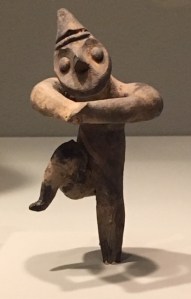 We went to a museum the other day with no specific purpose in mind and found ourselves in the Chinese art galleries. Jade. Porcelain. Bronze. Ornate vessels for cooking, for ceremonies, for burial. An arched gateway which used to lead to a family’s compound. A room with a low table, ink, brushes, where someone used to practice calligraphy. We peered in through the interwoven black wooden squares of traditional Chinese architecture. At one point a tiny capering man entranced me and I wanted to reach through the glass, and the thousands of years between us, and take him home.
Everything about the two hours in that museum, and the rainy day itself, was slow. We kept wondering how long each vessel, plate, vase, jade carving must have taken the artist to make. A long time, was all we came up with, a long, slow time. A lifetime, maybe.
I’m losing track of what life was like before the existence of this tiny computer that lives in the back pocket of my jeans and feeds me a constant stream of news and images and information and updates. When I take a break –in a yoga class, in a museum, by putting the tiny computer in another room while I lie on the couch and read–everything inside me slows down. This poem below, by Tiana Clark, resonates in my very bones.
My Therapist Wants to Know about My Relationship to Work, by Tiana Clark
I hustle
upstream.
I grasp.
I grind.
I control & panic. Poke
balloons in my chest,
always popping there,
always my thoughts thump,
thump. I snooze — wake & go
boom. All day, like this I short
my breath. I scroll & scroll.
I see what you wrote — I like.
I heart. My thumb, so tired.
My head bent down, but not
in prayer, heavy from the looking.
I see your face, your phone-lit
faces. I tap your food, two times
for more hearts. I retweet.
I email: yes & yes & yes.
Then I cry & need to say: no-no-no.
Why does it take so long to reply?
I FOMO & shout. I read. I never
enough. New book. New post.
New ping. A new tab, then another.
Papers on the floor, scattered & stacked.
So many journals, unbroken white spines,
waiting. Did you hear that new new?
I start to text back. Ellipsis, then I forget.
I balk. I lazy the bed. I wallow when I write.
I truth when I lie. I throw a book
when a poem undoes me. I underline
Clifton: today we are possible. I start
from image. I begin with Phillis Wheatley.
I begin with Phillis Wheatley. I begin
with Phillis Wheatley reaching for coal.
I start with a napkin, receipt, or my hand.
I muscle memory. I stutter the page. I fail.
Hit delete — scratch out one more line. I sonnet,
then break form. I make tea, use two bags.
Rooibos again. I bathe now. Epsom salt.
No books or phone. Just water & the sound
of water filling, glory — be my buoyant body,
bowl of me. Yes, lavender, more bubbles
& bath bomb, of course some candles too.
All alone with Coltrane. My favorite, “Naima,”
for his wife, now for me, inside my own womb.
Again, I child back. I float. I sing. I simple
& humble. Eyes close. I low my voice,
was it a psalm? Don’t know. But I stopped.
For more information about Tiana Clark, please check out her website.
 When my dog Petey was still alive I used to bring him to the Blessing of the Animals at the Basilica. One year, a woman with a small clear plastic box sat at the end of the pew next to Petey and me. She was anxious, agitated, and when the priests began walking up and down the aisle swinging incense and shaking holy water on the animals, she held the box up in the air.
 A couple of months ago I hurt a friend when I pushed a semi-joke too far. The friend didn’t say anything or change expression, but I went to bed uneasy. Despite the Painter’s assurances that he had noticed nothing and all was well, my gut said otherwise. I woke up and sent an apology, the gracious acceptance of which proved that my gut was right. In the weeks since, shame and sadness keep bubbling up in their familiar way. How many times a day do you feel like a failure? I once asked the Painter. All day every day, he answered, to which I nodded.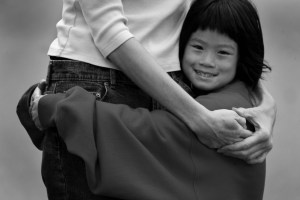

 A few weeks ago an anonymous teen sent me the note to the right, and I wished I could put my arms around them. Three times in my own life, I’ve called a crisis hotline. Each time, I was calling because someone I loved was contemplating suicide, and I wanted to get help for them. Advice by proxy, with me as the conduit. Each time, the volunteer kept ignoring my pleas for help for my friend and calmly and gently steered me back to myself: Where are you right now? How do you feel right now? What’s your plan for when we hang up?
  Here’s the fourth-floor walkup you called home. Here’s the tiny room overlooking Joy Street where Laurel used to roll her waitressing change into paper tubes for the rent. Here’s your room, with the big saggy bed left by a previous tenant. Here’s the bathroom where you didn’t pee at night because darkness was the domain of the cockroaches. Here’s the plant in the sunny window that you wound around itself because it was out of control.
  When he was little, my son sometimes asked me questions that seized my heart, questions like Mama, what if we’re all characters in a book, and someone is writing us right now? Where these questions came from, I don’t know. Then and now he was what I think of as an old soul. Once, when he was a teenager and we sat in a waiting room, I assumed he was bored and offered him a book to read. No, he said, I’m just going to sit here and think.
  My friend Todd is an art museum guard by day and an artist by day and night. He composes and records original songs, dives deep into pop music he orders from Japan, watches and re-watches Miyazaki films, reads and re-reads favorite novels and finds something new in them each time. Whatever draws him, he will follow: He’s learning Japanese, has become a sushi expert, and gradually, over the years, has compiled a collection of hilarious and somehow profound observations on life as a museum guard.
  Q: Does writing about hard things ever make you agitated and upset, so that you have to walk away from the writing and regain your equilibrium?
 Alison McGhee