My new novel, Telephone of the Tree

Friends, Telephone of the Tree will be on bookshelves as of May 7!

Long ago, I listened to an NPR story about Japan’s “wind telephone,” a disconnected pay phone in northern Japan that people use to speak to their lost loved ones. That story has haunted me ever since, and Telephone of the Tree is the result of six years of trying (and failing) and trying (and failing) to write a book that would bring readers the same feelings of beauty and longing that the NPR story brought me. ❤️

Telephone of the Tree is supposedly for children but I keep getting emails from grownup readers that it goes straight to their own hearts. Which makes sense, because I wrote it for everyone who’s ever longed to talk, even one more time, to someone they love. Click here for pre-order links – I always encourage buying from independent book stores. (Also, the reason you always hear writers urging their friends to pre-order their books is that the number of pre-orders determines how many books are printed…!)

The first few (starred!) reviews are in:

★ 
“Rather than trot in a therapist or some other mouthpiece for wise counseling, the author gives her protagonist subtler (and more believably effective) help reaching that insight—most notably parents who give her space rather than unwanted advice, and her grandfather’s old telephone.  Readers feeling Ayla’s profound sense of loss will be relieved when she finds a way to live with it. Raw and sad but lit with occasional glints of humor and ending, as it should, on a rising note.” —Kirkus, starred review

★ “The reveal that the phone was placed by Ayla’s grandpa who used it to “call” his wife after she passed is just one beautiful details in a story that focuses on generational healing rather than generational trauma. While more mature readers may quickly realize that Kiri has died, the novel’s hybrid of lyrically written plot fragments and stream of consciousness serve to poetically reveal the facts as Ayla becomes ready to process them.” —The Bulletin of the Center for Children’s Books, starred review

“Inspired by Itaru Sasaki’s phone booth in Japan, where people can symbolically call deceased loved ones, McGhee lays bare the powerful emotions entangled with loss while demonstrating the strength found in community.” —Booklist

“McGhee injects a speculative twist to this tender tale about death and grief. Employing spare, sensory language, McGhee explores the painful negative space created by loss and the devastation of a friendship cut short, as well as the healing found in moving forward while remembering that ‘there’s more… so much more.'” —Publishers Weekly

Penguin Random House, the publisher, describes the book this way:

An unforgettable story of grief and the support of community as a young girl, faced with aching loss, begins to understand that what we love will always be with us.

Ayla and her best friend Kiri have always been tree people. They each have their own special tree, and neighbors and family know that they are most likely to be found within the branches. But after an accident on their street, Kiri has gone somewhere so far away that Ayla can only wait and wait in her birch, longing to be able to talk with Kiri again.

Then a mysterious, old-fashioned telephone appears one morning, nestled in the limbs of Ayla’s birch tree. Where did it come from? she wonders. And why are people showing up to use this phone to call their loved ones? Especially loved ones who have passed on.

All Ayla wants is for Kiri to come home. Until that day comes, she will keep Kiri’s things safe. She’ll keep her nightmares to herself. And she will not make a call on that telephone.

Poem of the Week, by Julia Hartwig

Our dog Paco never tires of affection. His appetite for pets, belly rubs, neck scratching, or improvised songs sung into his ears knows no bounds. During the day he will sit at my feet and tell me, in low grunts and grrrs, eyes fixed on mine, that it’s time to take a break so he can leap onto my lap and be stroked.

What Paco wants, he asks for. And we give it to him. Our lives are all better for it. I have one human friend who reminds me of Paco: fearless, funny, and forthright in stating their needs. I’ve never been like my dog or my friend, but I aspire to be.

Demand It Courageously, by Julia Hartwig (translated by John and Bogdana Carpenter) 

    Make some room for yourself, human animal.
     Even a dog jostles about on his master’s lap to
improve his position. And when he needs space he
runs forward, without paying attention to commands
or calls.
     If you didn’t manage to receive freedom as a gift,
demand it as courageously as bread and meat.
     Make some room for yourself, human pride and dignity.
     The Czech writer Habal said:
     I have as much freedom as I take.

Click here for more information about Polish poet Julia Hartwig. Today’s poem first appeared in her collection In Praise of the Unfinished, published by Knopf in 2008.

alisonmcghee.com​ 
My podcast: Words by Winter

Poem of the Week, by Albert Goldbarth

My new novel, Telephone of the Tree, comes out on May 7. Click here for more information. 

A few days ago, my family and I rented kayaks in the Florida Panhandle and paddled up and down the Wakulla River. We saw manatees and giant turtles. Alligators and herons. Anhingas and swift schools of fish. Ancient cypress keeping watch along the banks of the rivers, their roots like enormous toes gripping the sand.

I’ve loved manatees since I first saw them in my early twenties, on the intracoastal waterway. They feel like harbingers of another time, another world, in which the only goal is to be at peace in the water. At one point in the afternoon I floated right over an enormous manatee longer than my kayak. I held my paddle in the air and stayed silent, hoping not to disturb it.

Forces, by Albert Goldbarth

It’s different for the spiderweb: 
the only architecture 
in a five-block radius not 
undone by yesterday’s tornado. 

Out at the More-4-Less, strands 
of uncooked spaghetti were driven, 
unbroken, like nails, through concrete. 
Different levels: different forces. 

I remember when Anna told me 
about the deep-sea dive that almost 
killed her, hammered and disoriented 
and tossed like debris in the middle 

of two converging vectors of power. 
That’s what she said. The whales 
only knew they were singing 
to each other. 

Click here for more information on Albert Goldbarth. I’m unable to find where today’s poem was first published – my apologies.

alisonmcghee.com
My podcast: Words by Winter

Poem of the Week, by William Stafford

You know those maps where you fill in all the states you’ve been to? The only one missing from mine is Alaska (I don’t count the time we landed briefly in Anchorage on my way to China). I’ve been to all the lower 48 states, most of them multiple times, because road trips are big in my life. The earth is a living being beneath the tires, rising and falling, sweeping west and shrinking east. Most of the time I’m solo. When I get tired, or when it gets dark, I tuck my car behind a semi for comfort. Truckers sometimes get a bad rap, and once in a while it’s justified, but for the most part they drive their trucks way more safely than most people drive their cars. 

Once, a few years ago, it was late at night in the Rockies, and I trailed behind a semi for over a hundred miles before I reached my exit. As I turned off, he tooted and waved, and I waved back. Strangers in the dark, acknowledging their connection. This poem reminds me of that night, and of all the road trips I have taken in my life.

Father’s Voice, by William Stafford

“No need to get home early;
the car can see in the dark.”
He wanted me to be rich
the only way we could,
easy with what we had.

And always that was his gift,
given for me ever since,
easy gift, a wind
that keeps on blowing for flowers
or birds wherever I look.

World, I am your slow guest,
one of the common things
that move in the sun and have
close, reliable friends
in the earth, in the air, in the rock.

Click here for more information about William Stafford. Today’s poem is from his book Allegiances, published in 1970 by Harper & Row. 

alisonmcghee.com
My podcast: Words by Winter

*This post and poem first appeared in this blog several years ago.

Poem of the Week, by Marcia Slatkin

Last week I lay awake wondering how I could possibly meet my book writing deadline before leaving on a long road trip. Get up at four, stay up late, add a thousand more words to the day’s quota? All my deadlines are brutal, and all of them are self-imposed, and as I lay there worrying, a voice said to me: You don’t have to, you know.

And then a memory popped into my mind of my baby nephew, and how once, on a family vacation, in a room full of cousins, aunts, uncles, grandparents, I watched him unfold a small sleeping mat all by himself in a corner of the room, lie down on it, and just…go to sleep.

The Virtue of Trusting One’s Mind, by Marcia Slatkin

When goats don’t want to move,
they don’t make sounds.

They fold legs at bald knees,
bend rough necks to earth,
and just sink down.

They never

rant, rail,
protest, declaim,
debate, explain, and then,
head bowed, plod meekly
forward anyway,

as I did
as a child—
and still do now.

This poem is from A Woman Milking: Barnyard Poems​, by Marcia Slatkin, published by Word Poetry Books. 

alisonmcghee.com
My podcast: Words by Winter
Poem of the Week, by Leigh Hunt

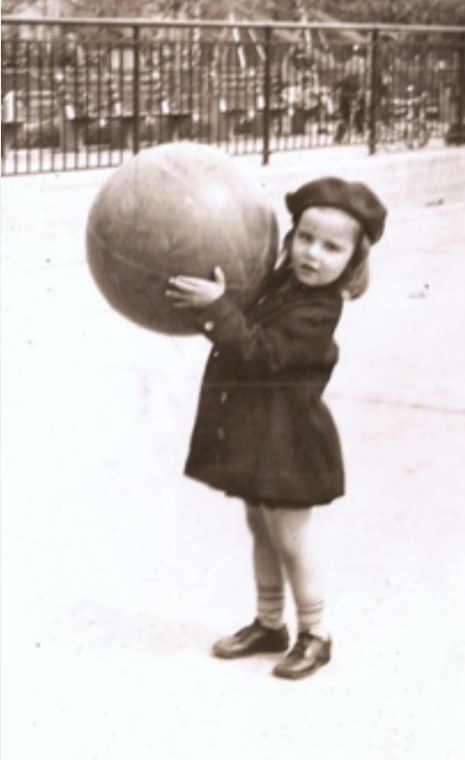
photo by Ann Steinecke

Every time this poem comes shimmering up in my mind it makes me smile. It makes the whole room light and turns the air bright. I hope you all have a Jenny you carry around in your heart.

Jenny Kissed Me, by Leigh Hunt

Jenny kissed me when we met,
    Jumping from the chair she sat in;
Time, you thief, who love to get
    Sweets into your list, put that in;
Say I’m weary, say I’m sad,
    Say that health and wealth have missed me,
Say I’m growing old, but add,
    Jenny kissed me.

Click here for more information about Leigh Hunt.
alisonmcghee.com
My podcast: Words by Winter
Poem of the Week, by Ada Limón

In fifth grade a boy in my class reached out and twisted my nearly non-existent breast while all us kids were standing on the steps after recess. The physical pain was so shocking I couldn’t breathe. Terrified that anyone might see me cry, might see how shaken I was, I stood there like a statue.

That moment felt like an end to freedom. It still does. This must be why I cried at the opening scenes of that first Wonder Woman movie. All those wild, fearless women warriors. How I’d love to go back in time, to those steps outside our elementary school. Things would end differently.

How to Triumph Like a Girl, by Ada Limón

I like the lady horses best,
how they make it all look easy,
like running 40 miles per hour
is as fun as taking a nap, or grass.
I like their lady horse swagger,
after winning. Ears up, girls, ears up!
But mainly, let’s be honest, I like
that they’re ladies. As if this big
dangerous animal is also a part of me,
that somewhere inside the delicate
skin of my body, there pumps
an 8-pound female horse heart,
giant with power, heavy with blood.
Don’t you want to believe it?
Don’t you want to lift my shirt and see
the huge beating genius machine
that thinks, no, it knows,
it’s going to come in first.

Click here for more information about Ada Limón. Today’s poem is from her collection Bright Dead Things, published in 2015 by Milkweed Editions.


alisonmcghee.com
My podcast: Words by Winter
Poem of the Week, by Ross Gay

Listen to my favorite playlist. Eat some potato chips. Snuggle with my dog. Watch TV and go to sleep. Go for a walk. Play a video game. Call my mom.

At the end of a volunteer shift on the Crisis Text Line I sometimes ask texters to tell me something nice they can do for themselves after we say goodbye. Just a small good thing, only for yourself. This question seems to make them happy, and it makes me happy too. How small and simple and ordinary the things we love are.

Sorrow Is Not My Name, by Ross Gay (for Walter Aitken)
—after Gwendolyn Brooks

No matter the pull toward brink. No
matter the florid, deep sleep awaits.
There is a time for everything. Look,
just this morning a vulture
nodded his red, grizzled head at me,
and I looked at him, admiring
the sickle of his beak.
Then the wind kicked up, and,
after arranging that good suit of feathers
he up and took off.
Just like that. And to boot,
there are, on this planet alone, something like two
million naturally occurring sweet things,
some with names so generous as to kick
the steel from my knees: agave, persimmon,
stick ball, the purple okra I bought for two bucks
at the market. Think of that. The long night,
the skeleton in the mirror, the man behind me
on the bus taking notes, yeah, yeah.
But look; my niece is running through a field
calling my name. My neighbor sings like an angel
and at the end of my block is a basketball court.
I remember. My color’s green. I’m spring.

For more information about Ross Gay, please check out his website.

Click here for more information about Ross Gay.

alisonmcghee.com
My podcast: Words by Winter
Poem of the Week, by Robert Hershon

I wrote and rewrote a bunch of intros to today’s poem, all of them about my grown children and their grandfather, who used to stock the fridge with their favorite snacks and drinks when they visited. Happy memories, so why was my chest so tight and my throat clenched? Because you miss him, Alison. Because this post is really about the two of you.

My dad, who died a year ago, was a giant of a man with a bellow of a voice, the strongest person I’ve ever known. A hug from him would literally lift you off the ground. Both of us appreciated physical work. The winter before he died, he sat on a chair on the porch while I hauled loads of wood from the barn and passed each chunk to him so he could stack it.

He had an unusual ability to accept people as they were. (When I graduated from a chichi college and didn’t even try to find a real job because I wanted to be a writer, he never said a word.) His love language was food, and every year he sent us a big box of petits-fours. The last box of them still sits unopened on my desk.

Sentimental Moment or Why Did the Baguette Cross the Road? by Robert Hershon

Don’t fill up on bread
I say absent-mindedly
The servings here are huge

My son, whose hair may be
receding a bit, says
Did you really just
say that to me?

What he doesn’t know
is that when we’re walking
together, when we get
to the curb
I sometimes start to reach
for his hand

Click here for more information about Robert Hershon. This poem was originally published in Poetry Northwest, Volume XLI, No. 3, Autumn 2000.

alisonmcghee.com
My podcast: Words by Winter


Poem of the Week, by Deborah Garrison

A tiny, delightful girl named Alma lives across the street from me. She loves my huge, wild garden, especially the small ceramic fox who keeps guard over it. She likes to pick up the fox, hug it, lug it to a different patch of flowers, and set it back down. Alma just became a big sister, and I imagine her teaching her little brother how to say “Alison’s house” when he begins to talk.

This poem brought so much back to me, momentary flashes of memory swimming up. But it was little Alma I thought of when I looked out the window at the lamplit apartment where she was probably going to bed. A long time from now, when I’m no longer and she’s weeding her own garden, will the memory of the little fox she loved so much come swimming up?

The Past Is Still There, by Deborah Garrison

I’ve forgotten so much.
What it felt like back then,
what we said to each other.

But sometimes when I’m standing
at the kitchen counter after dinner
and I look out the window at the dark

thinking of nothing,
something swims up.
Tonight this:

your laughing into my mouth
as you were trying
to kiss me.

Today’s poem, The Past Is Still There is from The Second Child, by Deborah Garrison, published by Random House. 

alisonmcghee.com
My podcast: Words by Winter