Poem of the Week, by Faith Shearin

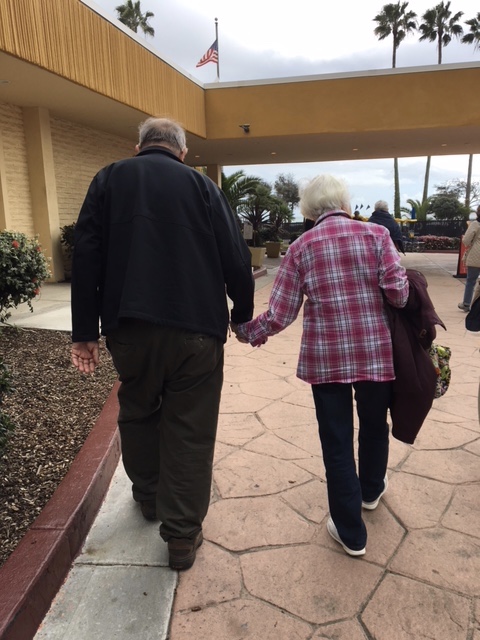
When my son was eleven he went away to camp for a full month, a decision I was not at all sure of. The camp was three hours away in another state and I missed him terribly and wrote and sent packages and tried not to worry and hoped he was having fun, which it turned out he was. At the end of camp, parents had a choice: they could pick their child up or their child could ride back to the city on the camp bus. I chose to drive up, not knowing that literally every other camper would take the bus back.

When I got there it was raining lightly. The woods were green and deep, the cabins were empty, and I suddenly felt inadequate, as if I’d deprived my son of a few more hours of fun on the bus with his friends. No one was there but a few counselors and a quiet boy in a blue rain jacket, watching me with calm eyes, waiting for me to recognize him, this same boy who had once lived inside me.

Spelling Bee, by Faith Shearin

In the spelling bee my daughter wore a good
brown dress and kept her hands folded.
There were twelve children speaking

into a microphone that was taller than
they were. Each time it was her turn
I could barely look. It wasn’t that I wanted

her to win but I hoped she would be
happy with herself. The words were too hard
for me; I would have missed chemical,

thermos, and dessert. Each time she spelled
one correctly my heart became a bird.
She once fluttered so restlessly beneath

my skin and, on the morning of her arrival,
her little red hands held nothing.
Her life since has been a surprise: she can

sew; she can draw; she can read. She hates
raisins but loves science. All the parents
must feel this, watching from the cheap

folding chairs. Somewhere inside them
love took shape and now
it stands at the microphone, spelling.

Click here for more information about poet Faith Shearin. Today’s poem is from her collection Moving the Piano, published in 2011 by Stephen F. Austin State University Press.

alisonmcghee.com
My podcast: Words by Winter
Poem of the Week, by Stanley Kunitz

I’ve kept two journals in my life, one at age nine and the other at nineteen. Most entries as a nine-year-old were about my cute baby brother or the boy I had a crush on. As a nineteen-year-old I wrote in code about things that felt overwhelming. Yesterday I read an interview with a woman who’s kept journals since she was a child. Sometimes she reaches for one and leafs through it, remembering who she used to be and the changes she’s been through. I wish I’d done that, I said to the Painter last night, then I would remember all the selves I’ve ever been. Who and what are our true affections? How do we reconcile our hearts to their feasts of losses?

The Layers, by Stanley Kunitz

I have walked through many lives,
some of them my own,
and I am not who I was,
though some principle of being
abides, from which I struggle
not to stray.
When I look behind,
as I am compelled to look
before I can gather strength
to proceed on my journey,
I see the milestones dwindling
toward the horizon
and the slow fires trailing
from the abandoned camp-sites,
over which scavenger angels
wheel on heavy wings.
Oh, I have made myself a tribe
out of my true affections,
and my tribe is scattered!
How shall the heart be reconciled
to its feast of losses?
In a rising wind
the manic dust of my friends,
those who fell along the way,
bitterly stings my face.
Yet I turn, I turn,
exulting somewhat,
with my will intact to go
wherever I need to go,
and every stone on the road
precious to me.
In my darkest night,
when the moon was covered
and I roamed through wreckage,
a nimbus-clouded voice
directed me:
“Live in the layers,
not on the litter.”
Though I lack the art
to decipher it,
no doubt the next chapter
in my book of transformations
is already written.
I am not done with my changes.

Click here for more information about Stanley Kunitz, who, in 2000, at age ninety-five, became the tenth poet laureate of the United States. Today’s poem is from from The Collected Poems of Stanley Kunitz​, published in 1978. 

alisonmcghee.com
My podcast: Words by Winter
Poem of the Week, by Andrea Gibson

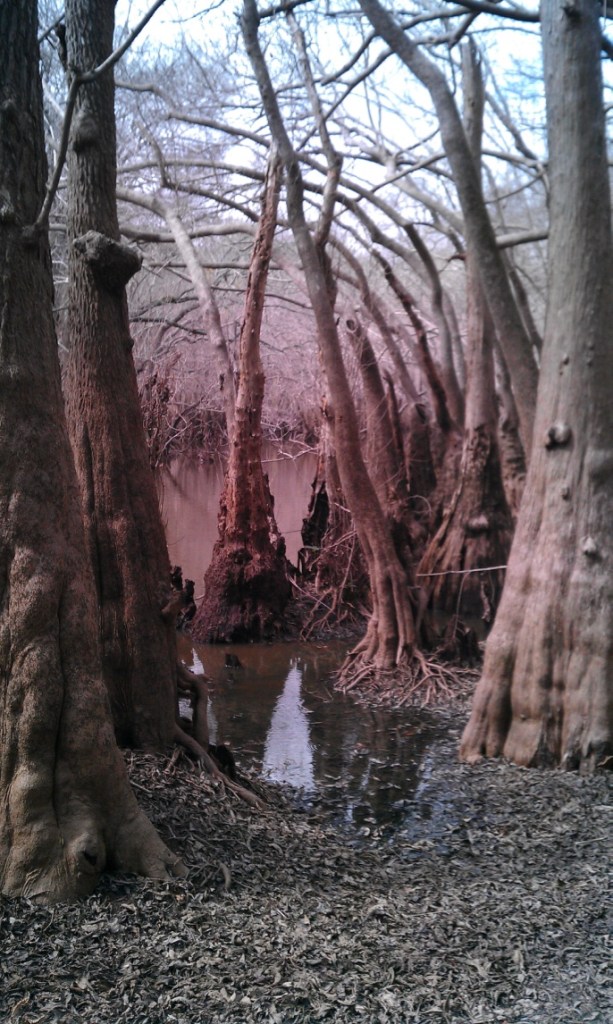
When things are too much, build yourself an invisible wall of Andrea Gibson poems to keep yourself safe and keep your heart open. Remind yourself you’ll never be out of the woods, but there’s something lovely about the woods.

In the chemo room, I wear mittens made of ice so I don’t lose my fingernails. But I took a risk today to write this down, by Andrea Gibson, 1975-2025

Whenever I spend the day crying, 
my friends tell me I look high. Good grief,  

they finally understand me.  
Even when the arena is empty, I thank god  

for the shots I miss. If you ever catch me  
only thanking god for the shots I make,  

remind me I’m not thanking god. Remind me  
all my prayers were answered  

the moment I started praying  
for what I already have.  

Jenny says when people ask if she’s out of the woods,  
she tells them she’ll never be out of the woods,  

says there is something lovely about the woods.  
I know how to build a survival shelter  

from fallen tree branches, packed mud,  
and pulled moss. I could survive forever  

on death alone. Wasn’t it death that taught me  
to stop measuring my lifespan by length,

but by width? Do you know how many beautiful things  
can be seen in a single second? How you can blow up

a second like a balloon and fit infinity inside of it? 
I’m infinite, I know, but I still have a measly wrinkle

collection compared to my end goal. I would love  
to be a before picture, I think, as I look in the mirror

and mistake my head for the moon. My dark  
thoughts are almost always 238,856 miles away 

from me believing them. I love this life, 
I whisper into my doctor’s stethoscope

so she can hear my heart. My heart, an heirloom
I didn’t inherit until I thought I could die.

Why did I go so long believing I owed the world
my disappointment? Why did I want to take

the world by storm when I could have taken it
by sunshine, by rosewater, by the cactus flowers

on the side of the road where I broke down?
I’m not about to waste more time

spinning stories about how much time
I’m owed, but there is a man

who is usually here, who isn’t today.  
I don’t know if he’s still alive. I just know

his wife was made of so much hope  
she looked like a firework above his chair.

Will the afterlife be harder if I remember
the people I love, or forget them?

Either way, please let me remember.

Click here for more information about beloved poet and spoken word artist Andrea Gibson. Today’s poem was originally published in Poem-a-Day on May 30, 2023, by the Academy of American Poets. 

alisonmcghee.com
My podcast: Words by Winter
Poem of the Week, by Gregory Djanikian

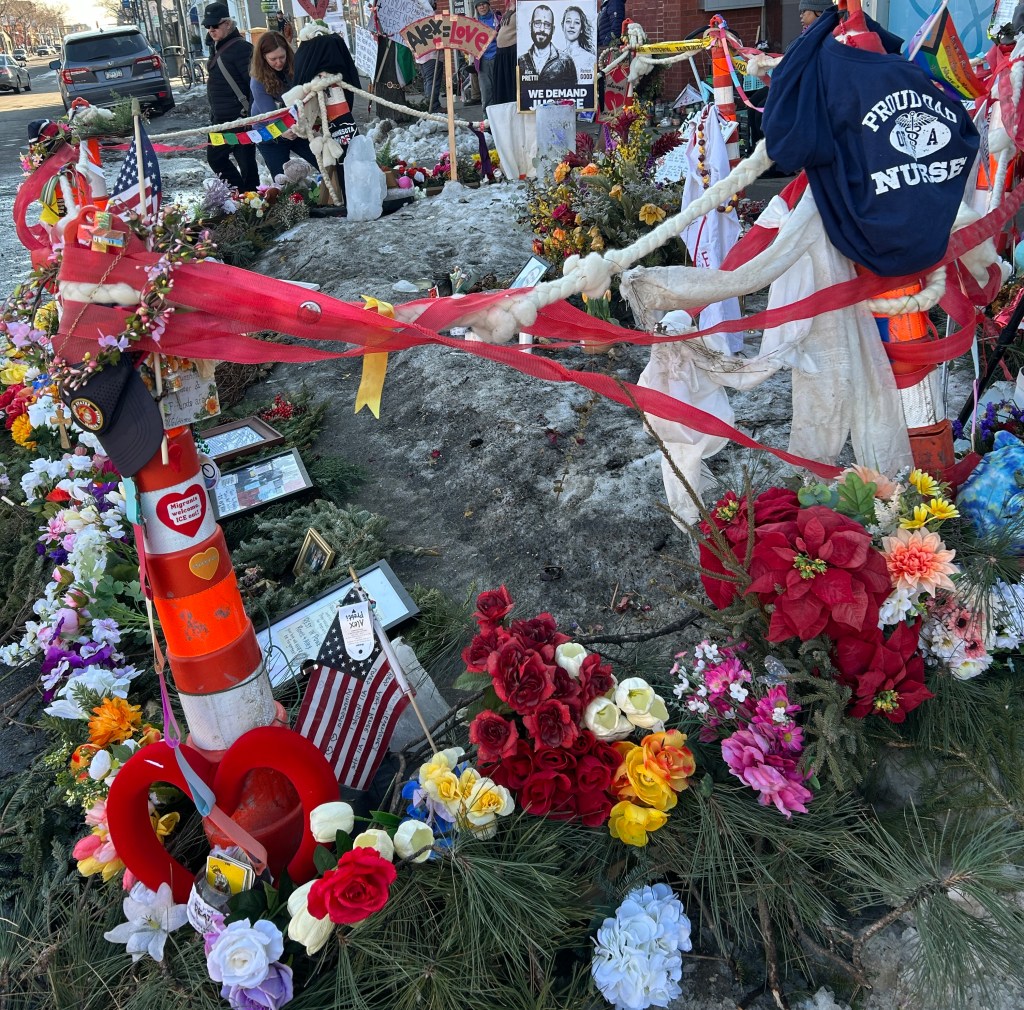
Is it pure racism? Is that the only reason? I asked a friend late Thursday night, after they voted the repulsive bill into being. Do they not know any immigrants? I ask myself, do they not know their doctors, their teachers, their cooks, servers, friends? What about the people who pick their food, landscape their lawns, line up at the day labor pickup sites, or used to, before they were too scared to do anything but hide? Do they not know anything about their own families?

Because unless you’re Indigenous or your ancestors were brought here in chains, you yourself are descended from immigrants, people who left everything behind for a dream. There’s strength in that for me. If they had that kind of determination and strength to make things better, Alison, I tell myself, then so do you.

Immigrant Picnic, by Gregory Djanikian

It’s the Fourth of July, the flags
are painting the town,
the plastic forks and knives
are laid out like a parade.

And I’m grilling, I’ve got my apron,
I’ve got potato salad, macaroni, relish,
I’ve got a hat shaped   
like the state of Pennsylvania.

I ask my father what’s his pleasure
and he says, “Hot dog, medium rare,”
and then, “Hamburger, sure,   
what’s the big difference,”   
as if he’s really asking.

I put on hamburgers and hot dogs,   
slice up the sour pickles and Bermudas,
uncap the condiments. The paper napkins   
are fluttering away like lost messages.

“You’re running around,” my mother says,   
“like a chicken with its head loose.”

“Ma,” I say, “you mean cut off,
loose and cut off  being as far apart   
as, say, son and daughter.”

She gives me a quizzical look as though   
I’ve been caught in some impropriety.
“I love you and your sister just the same,” she says,
“Sure,” my grandmother pipes in,
“you’re both our children, so why worry?”

That’s not the point I begin telling them,
and I’m comparing words to fish now,   
like the ones in the sea at Port Said,   
or like birds among the date palms by the Nile,
unrepentantly elusive, wild.   

“Sonia,” my father says to my mother,
“what the hell is he talking about?”
“He’s on a ball,” my mother says.

“That’s roll!” I say, throwing up my hands,
“as in hot dog, hamburger, dinner roll….”

“And what about roll out the barrels?” my mother asks,
and my father claps his hands, “Why sure,” he says,
“let’s have some fun,” and launches   
into a polka, twirling my mother   
around and around like the happiest top,  
 
and my uncle is shaking his head, saying
“You could grow nuts listening to us,”  
 
and I’m thinking of pistachios in the Sinai
burgeoning without end,   
pecans in the South, the jumbled
flavor of them suddenly in my mouth,
wordless, confusing,
crowding out everything else.

Click here for more information about Gregory Djanikian.
alisonmcghee.com

My podcast: Words by Winter
Poem of the Week, by Julia Hartwig

One night in college I woke up because something kept crashing down the stairwell. I peeked out and saw two giant, drunk, laughing male acquaintances throwing my bike down the stairwell, hauling it up, and throwing it down again.

Did I yell at them to stop? Nope. Did I grab my bike and bring it into my room? Nope. Tell them they owed me a new bike? Nope. What I did was instantly accept that my bike and I had met our fate and there was nothing to do about it. All I was conscious of feeling was a deep, exhausted resignation.

There have been other times in my life, when wronged, that I’ve done the same thing: give up and give in without even the beginnings of resistance. These memories are profoundly disturbing to me and I’ve finally trained myself out of it. So should everyone, especially these days, when what rightfully belongs to all of us is being snatched away by those who have no right to take it.

Demand It Courageously, by Julia Hartwig

Make some room for yourself, human animal.
      Even a dog jostles about on his master’s lap to
improve his position. And when he needs space he
runs forward, without paying attention to commands
or calls.
      If you didn’t manage to receive freedom as a gift,
demand it as courageously as bread and meat.
      Make some room for yourself, human pride and
dignity.
      The Czech writer Hrabal said:
      I have as much freedom as I take.

Click here for more information about Polish poet Julia Hartwig. Today’s poem is from In Praise of the Unfinished, published in 2008 by Knopf. 
alisonmcghee.com
My podcast: Words by Winter

Poem of the Week, by David Hernandez

Smile and say hi to everyone you pass. Be your kindest self. Focus all your energy on the students in this room. Make life better for everyone you can, every time you can. These are the vows I make and constantly break but keep re-upping nonetheless. My latest scheme: adding “with joy!” or “joyfully!” to my daily to-do lists. Vacuum joyfully! Weed with joy! Joyfully write1000 words! Weirdly, this helps.

Anyone Who Is Still Trying, by David Hernandez

Any person, any human, any someone who breaks
          up the fight, who spackles holes or FedExes
ice shelves to the Arctic to keep the polar bears
          afloat, who talks the wind-rippled woman
down from the bridge. Any individual, any citizen
          who skims muck from the coughing ocean,
who pickets across the street from antigay picketers
          with a sign that reads, GOD HATES MAGGOTS,
or, GOD HATES RESTAURANTS WITH ZAGAT RATINGS
          LESS THAN 27. Any civilian who kisses
a forehead heated by fever or despair, who reads
          the X ray, pins the severed bone. Any biped
who volunteers at soup kitchens, who chokes
          a Washington lobbyist with his own silk necktie—
I take that back, who gives him mouth-to-mouth
          until his startled heart resumes its kabooms.
Sorry, I get cynical sometimes, there is so much
          broken in the system, the districts, the crooked
thinking, I’m working on whittling away at this
          pessimism, harvesting light where I can find it.
Any countryman or countrywoman who is still
          trying, who still pushes against entropy,
who stanches or donates blood, who douses fires
          real or metaphorical, who rakes the earth
where tires once zeroed the ground, plants something
          green, say spinach or kale, say a modest forest
for restless breezes to play with. Any anyone
          from anywhere who considers and repairs,
who builds a prosthetic beak for an eagle—
          I saw the video, the majestic bird disfigured
by a bullet, the visionary with a 3-D printer,
          with polymer and fidelity, with hours
and hours and hours, I keep thinking about it,
          thinking we need more of that commitment,
those thoughtful gestures, the flight afterward. 

For more information on David Hernandez, please click here.

Poem of the Week, by Lowell Jaeger

I’ve driven the Mexi-Cali border its full length many times, slowed and stopped for border patrol checks many times. I can predict the drivers whose vehicles will be pulled over and inspected. They usually don’t look like me, which is itself a problem.

Then came Kansas, a few months ago. Cops pulled me over for fictitious reasons and asked a series of questions–are you concealing a kidnapped child; are you concealing rocket launchers; are you transporting fentanyl and methamphetamines across state lines–that would have been laughable if the men standing next to my rolled-down window hadn’t been so flat-eyed and humorless. If they hadn’t been carrying guns and badges. If I hadn’t known no one would know if they chose to do something awful to me.

But here’s the thing: we can choose to turn off the lights and sirens. We can choose not to scare each other. We can choose to be the safe harbor, the soft landing, the helping hand. If not now, then when? See you at the protests.

After Second Shift, by Lowell Jaeger

She’s stopped to shop for groceries.
Her snow boots sloshing
up and down the aisles, the store
deserted: couple stock boys
droning through cases of canned goods,
one sleepy checker at the till.

In the parking lot, an elderly man
stands mumbling outside his sedan,
all four doors wide to gusting sleet
and ice. She asks him, Are you okay?
He’s wearing pajama pants, torn slippers,
rumpled sport coat, knit wool hat.

Says he’s waiting for his wife.
I just talked to her on the payphone
over there. He’s pointing at
the Coke machine. What payphone?
she says. That one, he says.
It’s cold, she says, and escorts him inside.

Don’t come with lights
and sirens, she tells the 9-1-1
dispatcher. You’ll scare him.

They stand together. The checker
brings him a cup of coffee.
They talk about the snow.

So much snow.
They watch for the cop.
This night, black as any night,
or a bit less so.

Click here for more information about poet Lowell Jaeger. Today’s poem appeared in Or Maybe I Drift Off Alone, published in 2016 by Shabda Press. 

alisonmcghee.com
My podcast: Words by Winter
Poem of the Week, by Natalie Diaz

Book party! I rarely do book events, and I’d love to see you at the book party for my brand-new novel, Weird Sad and Silent, at Next Chapter Booksellers in St. Paul this Tuesday, May 27, at 6 pm. I’ll read a little, tell you some secrets behind the writing of the book, answer questions, and there might even be some tiny gifts for you. It’s a school night so fear not, we’ll get you home nice and early, too. Click here for all the details. 

The zinnia seedlings biding their time in the 40-degree drop in temperature from last week. The man and his dog who always stop for a poem from my poetry hut, careful to relatch the door afterwards. The hurt squirrel writhing on the lawn that I called 311 about. The man with the long box braids unloading the giant moving van who stopped to wipe the sweat from his face. So much feels fragile and precious in these days of siege from lies, cruelty, and greed. Don’t we all need refuge?

If I Should Come Upon Your House Lonely in the West Texas Desert, by Natalie Diaz

I will swing my lasso of headlights
across your front porch,

let it drop like a rope of knotted light
at your feet.

While I put the car in park,
you will tie and tighten the loop

of light around your waist —
and I will be there with the other end

wrapped three times
around my hips horned with loneliness.

Reel me in across the glow-throbbing sea
of greenthread, bluestem prickly poppy,

the white inflorescence of yucca bells,
up the dust-lit stairs into your arms.

If you say to me, This is not your new house
but I am your new home,

I will enter the door of your throat,
hang my last lariat in the hallway,

build my altar of best books on your bedside table,
turn the lamp on and off, on and off, on and off.

I will lie down in you.
Eat my meals at the red table of your heart.

Each steaming bowl will be, Just right.
I will eat it all up,

break all your chairs to pieces.
If I try running off into the deep-purpling scrub brush,

you will remind me,
There is nowhere to go if you are already here,

and pat your hand on your lap lighted
by the topazion lux of the moon through the window,

say, Here, Love, sit here — when I do,
I will say, And here I still am.

Until then, Where are you? What is your address?
I am hurting. I am riding the night

on a full tank of gas and my headlights
are reaching out for something.​ 

Click here for more information about Natalie Diaz, and click here to hear Diaz reading today’s poem. If I Should Come Upon Your House Lonely in the West Texas Desert first appeared in Postcolonial Love Poem, published in 2020 by Graywolf Press. 

alisonmcghee.com
My podcast: Words by Winter
Poem of the Week, by Jeanne Wagner

Book party! I rarely do book events and I would love to see you at the book party for my brand-new novel, Weird Sad and Silent. Please come to the launch party at Next Chapter Booksellers in St. Paul on Tuesday, May 27, at 6 pm. I’ll read a little​ and tell you some secrets behind the writing of the book. We’ll talk, we’ll celebrate, and there might even be some tiny gifts for you.​ It’s a school night so we’ll get you home nice and early, too. Click here for all the details. 

My dog makes an almost inaudible tiny hoot when he wants me to get up in the morning. A low revving sound when he wants me to bring his food out to where I’m working (he doesn’t believe in eating alone). A short, sharp yip that means he needs to go out. He makes no sound at all when I pack my roller bag for a trip; he just sits in the middle of the rug with his head down.

A few months ago when he was frantically barking at something in the ceiling –a mouse? bugs? bat?–I searched for a Dogs and Wolves playlist. He froze, tilting his head this way and that, silent. When wolves began howling he looked at me, pointed his muzzle to the ceiling and began howling softly, howling and howling. It was one of the most mournful sounds I’ve ever heard. It made me want to howl too. As if on some deep level we know there are wild lives out there, wild lives we want, wild lives that are waiting for us.

Dogs That Look Like Wolves, by Jeanne Wagner

When my dog hears the neighbor’s baby cry, he begins
to howl, his head thrown back. He’s all heartbreak and
hollow throat, tenderness rising in each ululation. He’s
a saxophone of sadness, a shepherd calling for his stray.
I’ve read that baying is both a sign of territory and
a reaching out for whatever lies beyond: home and loss,
how can they be understood without each other?
Once I had an outdoor dog who sang every day at noon
when the Angelus belled from the corner church.
She was a plain dog but I could prove, contrary to all
the theologians, that at least once a day she had a soul.
I’ve always loved dogs that look like wolves, loved
stories of wolves: the alphas, the bullies, the bachelors.
We have to forgive them when they break into our
fenced-off pastures, lured by the lull of a grazing herd,
or a complacent flock, heads bent down. Prey, it’s called.
At night wolves chorus into the trackless air, the range
of their song riding far from their bodies till they think
the stars will hear it and be moved, almost to breaking,
while my poor dog stands alone on the deck, howling
into the canyon’s breadth, as if he’s like me, looking
for a place where his song will carry. Dogs know,
if there is solace to be had, their voice will find it.
This air is made for lamentation.

Click here for more information about Jeanne Wagner. This poem is from Everything Turns Into Something Else, published by Grayson Books in 2021. 

alisonmcghee.com
My podcast: Words by Winter
Poem of the Week, by Winter Jones

Minnesotans! Book party! I rarely do book events and I would love to see you at the book party for my brand-new novel, Weird Sad and Silent, in the world as of next Tuesday. Please come to the launch party at Next Chapter Booksellers in St. Paul on Tuesday, May 27, at 6 pm. I’ll read a little, we’ll talk, we’ll celebrate, and there might even be some tiny gifts for you. Click here for all the details. 

When I read this poem I thought about how bringing a child into the world, knowing everything we know about what life may throw at them, is an act of…what, defiance in the face of it all? Selfishness, because you yourself want to feel that kind of giant love for someone else forever and ever? Hope, that they will love their lives? Faith, that you can make the world better for them and they can make the world better by being in it?

Molecules from everyone who ever lived circulate inside us. Gandhi. Hitler. Your great-great-great-great-great grandmother. That former friend who no longer speaks to you. The beloved dog who died at fifteen. The poets who wrote the poems you memorize and recite to yourself. Everyone you love, and everyone you don’t. The past, the present, the unknown future: breathe in. Breathe out.

Concessions, by Winter Jones
(There is a 98.2% chance that at least one of the molecules in your lungs came from Caesar’s last breath. From Innumeracy, by John Allen Paulos)

If Caesar, then my great-uncle too.
He waited until the farm was sold,
went into the field and shot himself.
Was his last breath soft, a letting-go? Or was it 
sorrow? I lie awake imagining his final air, 
still alive in my body. 

Then my girl lights up my phone. Three time zones
away she tracks me by cell location, senses
I’m awake in the dark: love you mama
This is the child who couldn’t sleep without my touch,
without my own breaths timed to hers.
Back then she once told me she wouldn’t be sad if I died.
You wouldn’t?
Nope. Because I’d be dead too. I couldn’t live without you.

Her air also swirls inside me.
Before she was born I was young.
I didn’t know the weight of this kind of love,
how it would hurt. Would terrify.
Would turn me dangerous, like the time I hurtled between
her and the raving man in the grocery store.

Love you more, I text back.
Every breath’s a bargain struck between fear and trust, 
a concession we make to stay in the world.
The truth we carry within: for every
great-uncle who leaves this world
by lonely blast of bullet, a bright flame of child.

Click here for more information about John Allen Paulos. 
alisonmcghee.com
My podcast: Words by Winter