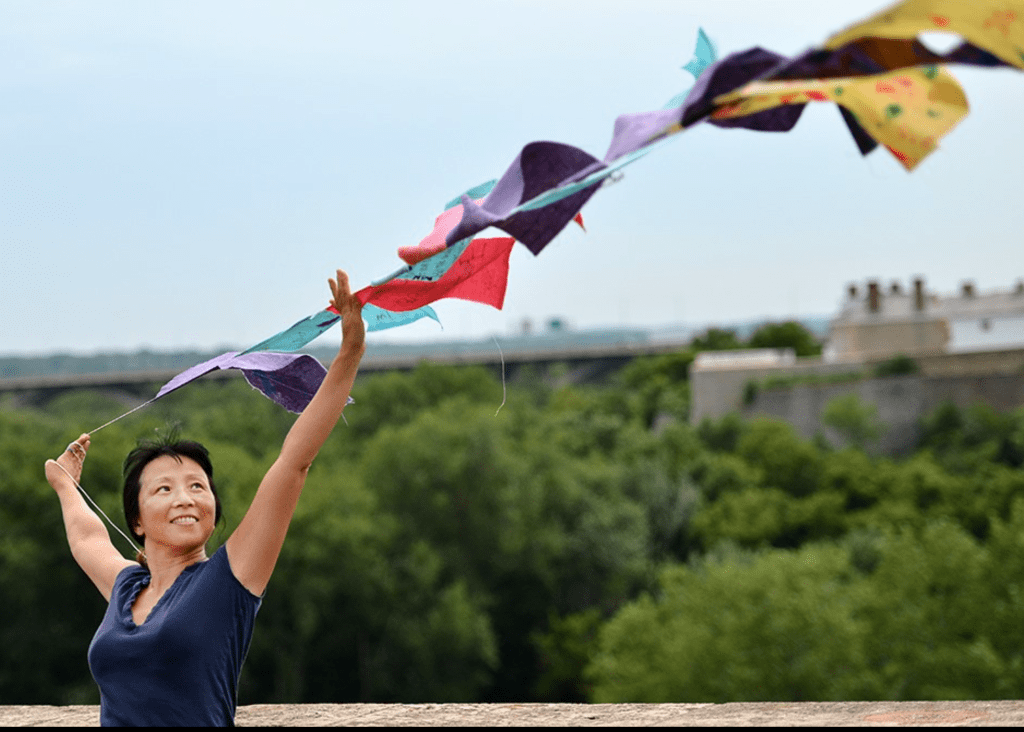
Poem of the Week, by Brian Trimboli

My poems podcast, Words by Wintercan be found here.

One of my dearest friends is brilliant, wild and fearless in body and mind. Whatever she does, she does with all her heart. If something entrances her she will follow it as far as she can: flamenco dancing, acupuncture, poetry, figure skating, music, rowing, the list is endless.

She doesn’t live by the rules most of us live by. I could fill the walls of my house with photos of her and those walls would come alive with her energy.

When I picture her in my mind she’s always laughing, bright eyes full of fun, but I have seen her in despair and exhaustion and pain. I don’t know exactly why this gorgeous poem, so full of pain and longing, brings her to mind, but it does. My friend was young once too. She’s never stopped dreamimg.

Things My Son Should Know After I’ve Died, by Brian Trimboli

I was young once. I dug holes
near a canal and almost drowned.
I filled notebooks with words
as carefully as a hunter loads his shotgun.
I had a father also, and I came second to an addiction.
I spent a summer swallowing seeds
and nothing ever grew in my stomach.
Every woman I kissed,
I kissed as if I loved her.
My left and right hands were rival.
After I hit puberty, I was kicked out of my parents’ house
at least twice a year. No matter when you receive this
there was music playing now.
Your grandfather isn’t
my father. I chose to do something with my life
that I knew I could fail at.
I spent my whole life walking
and hid such colorful wings.

For more information about Brian Trimboli, please click here.
alisonmcghee.com

Poem of the Week, by Danusha Lameris

img_1857At a wedding last weekend I sat near a curvy, beautiful woman with a deep voice who radiated a wild and warm confidence. She was free with opinions and didn’t care what others thought; an artist expressed admiration for a specific modern museum and she laughed outright.

She moves through the world in a way I don’t. My voice doesn’t project; I need a mic when giving a talk. A friend once described my narrow body, turned sideways, as like a piece of paper he could slip into his bookshelf. The wedding woman claims space in the world with her solid belief in herself. I claim space in the world by distilling it into stories made of all the ways it overwhelms me. Nonetheless we are alike, both of us caught inside the cathedral, singing inside the song.


Bonfire Opera, by Danusha Lameris
 
In those days, there was a woman in our circle
who was known, not only for her beauty,
but for taking off all her clothes and singing opera.
And sure enough, as the night wore on and the stars
emerged to stare at their reflections on the sea,
and everyone had drunk a little wine,
she began to disrobe, loose her great bosom,
and the tender belly, pale in the moonlight,
the Viking hips, and to let her torn raiment
fall to the sand as we looked up from the flames.
And then a voice lifted into the dark, high and clear
as a flock of blackbirds. And everything was very still,
the way the congregation quiets when the priest
prays over the incense, and the smoke wafts
up into the rafters. I wanted to be that free
inside the body, the doors of pleasure
opening, one after the next, an arpeggio
climbing the ladder of sky. And all the while
she was singing and wading into the water
until it rose up to her waist and then lapped
at the underside of her breasts, and the aria
drifted over us, her soprano spare and sharp
in the night air. And even though I was young,
somehow, in that moment, I heard it,
the song inside the song, and I knew then
that this was not the hymn of promise
but the body’s bright wailing against its limits.
A bird caught in a cathedral—the way it tries
to escape by throwing itself, again and again,
against the stained glass.


For more information about Danusha Lameris, please check out her website

Poem of the Week, by Wang Ping

In a recent conversation between me and an abstract painter, he claimed that spellcheck is the only reason he can spell with any degree of accuracy. T14650223_10154741240944276_6632425684321910510_nhat before spellcheck, he would say the word out loud and then look through the dictionary trying to find it by first letter. A word like psychology, for example, he would sound out and then search through all the S words. Not finding it, he would then look through all the C’s even though he was sure that it couldn’t begin with C. It was a slow and agonizing process, and all his papers came back with low grades and comments like “Your insights are terrific but you must learn to proofread.”

In many years of teaching creative writing to students whose grasp of spelling and grammar is sometimes tenuous –usually because they are immigrants or because their brains work differently from mine, and less often because they are lazy– I have had to train myself to see the heart and soul first, and the mechanics second. This has not been an easy task for me, someone to whom spelling is instinctive and usually perfect, and in the back of my mind I always hold close this poem below, my favorite of all the many written by the wild, beautiful and fierce multi-media artist Wang Ping.  

Syntax

She walks to a table
She walk to table 

She is walking to a table
She walk to table now 

What difference does it make
What difference it make 

In Nature, no completeness
No sentence really complete thought 

Language, like woman,
Look best when free, undressed.

For more information on Wang Ping, please click here.

Day Twenty-One: We go on an outing

I live in the middle of a biggish city, a city known for its theaters and art galleries and museums and music and literature, and this means that every single day and night multiple artsy things are happening all over the place.

This means that every single day and night I could be out enjoying something artsy. The choices! The variety! The endless opportunities!

But the part of me that stands in the shampoo aisle, needing to buy shampoo and gazing from one shelf to the other, trying and failing to take in the dozens –hundreds– of species and sub-species and genuses (is that the right term?) of shampoo, and then walks away exhausted, overwhelmed, and shampoo-less, is the same part of me that tends to end up most nights lying on my porch swing reading instead of heading out into the cauldron of artistic activities that boils city-wide.

Wow, that above paragraph is a big mess, isn’t it. I’m not heading back in to change a word, though. I’m plowing on to tell you that instead of lying on my porch swing reading, my friend Kingsley and I headed out to the Kinship of Rivers Festival, held yesterday at the Soap Factory art gallery in NE Minneapolis.

This was something that I had never done before, Kingsley had never done before, and no one at the Soap Factory, given that this is the first year the Kinship of Rivers Festival has taken place, had ever done before. It was all new to all of us.

We watched a Tibetan Buddhist monk work on a mandala made of colored sand. All day long he would pray as he made the mandala, and at 7 p.m., long after Kingsley and I were gone, the mandala would be dedicated and the sand dispersed, half to the audience members and half to the Mississippi and Yangtze rivers.

We watched a huge wind chime installation being made.

We saw a lion sculpture, and Kingsley posed beside it for a photo.

We stood in a huge room strung with small cotton flags, each containing a handmade painting, inscription or poem, each of which will be offered up to a river somewhere in the world.

Finally, Kingsley met my friend Ping, who initially mistook him for my father. Which he is not. But in the car on the way home, he said, “I sort of am, though, if you think of me as having adopted you.”