Poem of the Week, by John Ashbery
 Growing up in the age of Darwinian elementary schools –the gym teacher would choose the two best athletes to captain every team, and one by one they would pick off first the good athletes, then the midlings, then the uncoordinated, until finally there was only one child remaining, huddled against the wall– I hated gym class. Not because I was bad at sports (I’m not) but because I can’t stand cruelty. And that little ritual was fundamentally cruel.
I don’t see the point of competition unless you’re competing with yourself, trying to get better at something you value, something you love. All the years I sat on bleachers cheering on my children, it was an effort to remember that I was supposed to cheer for their team and not any random child on the field who made a great goal, who ran fast, who helped lift up another player. There were times when the other parents glared at me because in my absentmindedness/idiocy I would cheer for the opposing team.
I still don’t like team sports. What I don’t like about them is exactly what I despise in my country today, which is the idea that there are winners and losers, and winning is what matters. What is happening in my country right now is so far beyond right vs. left. What is happening right now is wrong, and on some level, every single one of us knows it. No matter how you spin it, there is no excuse –not one, ever– to torture children and their families. Democracy is crumbling and fascism is rising and the elected officials who should stop it, who should call out injustice and hold abusers accountable, are silent despite our protests. This poem starts out sweet and ends up terrifying, and boy does it feel familiar. It doesn’t end this way, but I would like it too: We are all one here, and if one of us goes the other goes too.
How to Continue, by John Ashbery
Oh there once was a woman
and she kept a shop
selling trinkets to tourists
not far from a dock
who came to see what life could be
far back on the island.
And it was always a party there
always different but very nice
New friends to give you advice
or fall in love with you which is nice
and each grew so perfectly from the other
it was a marvel of poetry
and irony
And in this unsafe quarter
much was scary and dirty
but no one seemed to mind
very much
the parties went on from house to house
There were friends and lovers galore
all around the store
There was moonshine in winter
and starshine in summer
and everybody was happy to have discovered
what they discovered
And then one day the ship sailed away
There were no more dreamers just sleepers
in heavy attitudes on the dock
moving as if they knew how
among the trinkets and the souvenirs
the random shops of modern furniture
and a gale came and said
it is time to take all of you away
from the tops of the trees to the little houses
on little paths so startled
And when it became time to go
they none of them would leave without the other
for they said we are all one here
and if one of us goes the other will not go
and the wind whispered it to the stars
the people all got up to go
and looked back on love
For more information on John Ashbery, please click here.
Website
Blog
@alisonmcghee
 A house I used to live in was filled with a dark and ominous energy that I felt every time I approached the front door. When I dreamed, dark birds hovered silently in the air around me, landing on my shoulders and head. The dark birds wanted me — they wanted me dead. I lived in a state of permanent exhaustion, surrounded by the forces of darkness.
  Hey there, elected employees, thanks for an especially sickening week. Proud of yourselves and your ongoing attempts to destroy our democracy?
  People look at me with confusion when I tell them I’m deeply wary of charismatic people, with charisma defined in the broad sense as “a personal magic of leadership arousing special popular loyalty or enthusiasm for a public figure (such as a political leader).” But wait, isn’t charisma charming, magnetic, powerful? Sometimes. And sometimes it’s a mask for manipulation, a bottomless need for adulation, attention, look at me look at me look at me, take care of me and do as I say because I am more important than you. Charismatic people so often go unchecked, no matter their behavior, because a) people are drawn to them by that magnetic personality and b) charismatic people often snap at anyone who calls them out on their behavior, in a vicious, malevolent and wildly cruel way.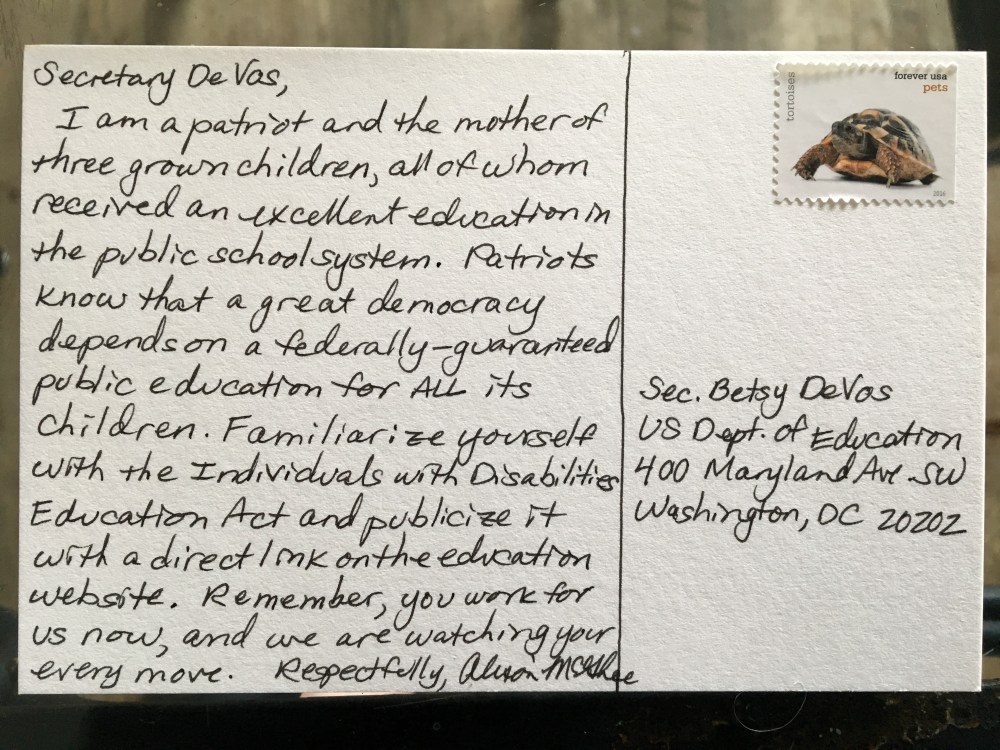


 Alison McGhee