Books I Read in April
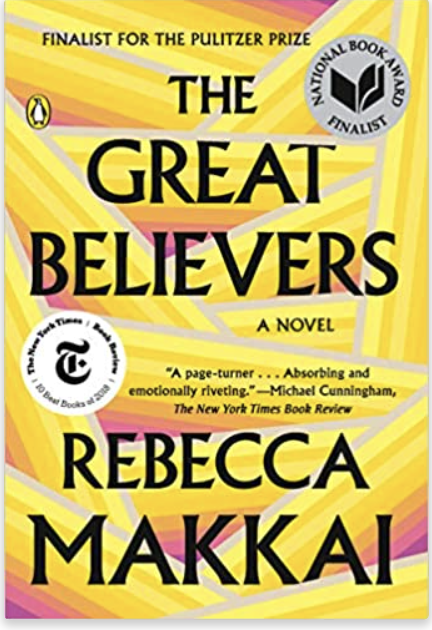
The Great Believers, by Rebecca Makkai. This is my first Makkai novel but it won’t be my last. Because I don’t read book descriptions, reviews, or book jackets before I read a book, I wasn’t prepared for the emotional heft of this novel, which revolves around a core group of beloved friends and flips back and forth between the 1980s and 2015. Makkai’s command of detail and deep knowledge of the beginning of the AIDS crisis brought me right back to those early days, when my gay friends were so young and confronting that hideous, bewildering disease that took so many of them. The emotional and physical havoc of AIDS, and the love, support and anger within the community, reverberates throughout this elegy of a novel. Intense. Painful. Powerful.

Dear Mr. Henshaw, by Beverly Cleary. After The Great Believers I turned to Beverly Cleary as both a palate cleanser and to continue my goal of reading children’s classics I never read when I was a child. Cleary’s trademark hilarity, deadpan realism, and inventiveness with structure and situation are on full display here, but I did not expect to tear up as many times as I did. This small book, structured first as letters from a child to his favorite author, Mr. Henshaw, and then as Dear Mr. Henshaw entries in a private journal, grows in depth and power as we experience the boy’s life along with him from childhood to adolescence. So much wisdom in this novel, which packs an emotional punch I did not anticipate. Then I looked at the book cover again and saw it had won the Newbery, so…duh. Wonderful book.
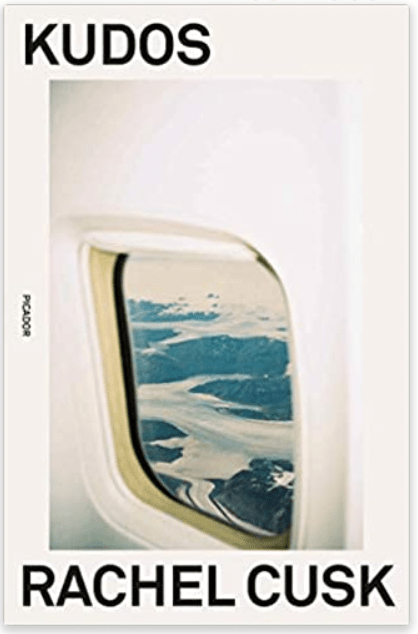
Kudos, by Rachel Cusk. In this, the final novel in the Transit trilogy, Cusk again stunned me with the precision, strangeness, and almost overwhelming honesty with which the people in her books speak to each other. Every bit of social niceties is stripped away, so that each conversation goes straight to the gut, or jugular, or heart of the heart of the situation. Our same novelist is again traveling to another part of Europe for a book conference. Cusk neither analyzes nor returns to conversations between the people in her novels, but fragments of them haunt me, such as the unknowing contempt, in Kudos, of a celebrated male writer for the wife he describes as perfectly happy being the stay at home mother of their children. After which he casually mentions she just finished a book for children which happened to sell in a three-book deal. DUDE. Cusk’s people have conversations that lay bare the complexities of marriage and divorce in a way that’s profoundly uncomfortable for me to read. I’ve never read someone who writes like Rachel Cusk.

Lucy by the Sea, by Elizabeth Strout. Because of my no-prior-info policy with regard to reading, this latest Lucy Barton novel by Strout took me by surprise. This is the first pandemic novel I’ve read, and it hurt in ways I wouldn’t have predicted. Everything we/the world went through. All the ways we/the world changed. Add to the omnipresent fear, pain and loneliness the murder of George Floyd, which happened a 20-minute from my own house in Minneapolis, which Strout pinpoints as ground zero for the resulting wild anger and uprisings that rose around the country, and this novel went straight to my gut. Although I initially wanted to throttle Lucy for her dithering, by the end of this slender novel I was struck –yet again—by the odd, organic wisdom this fascinating fictional woman brings to her understanding of life and human relationships and, by extension, to our current lives.
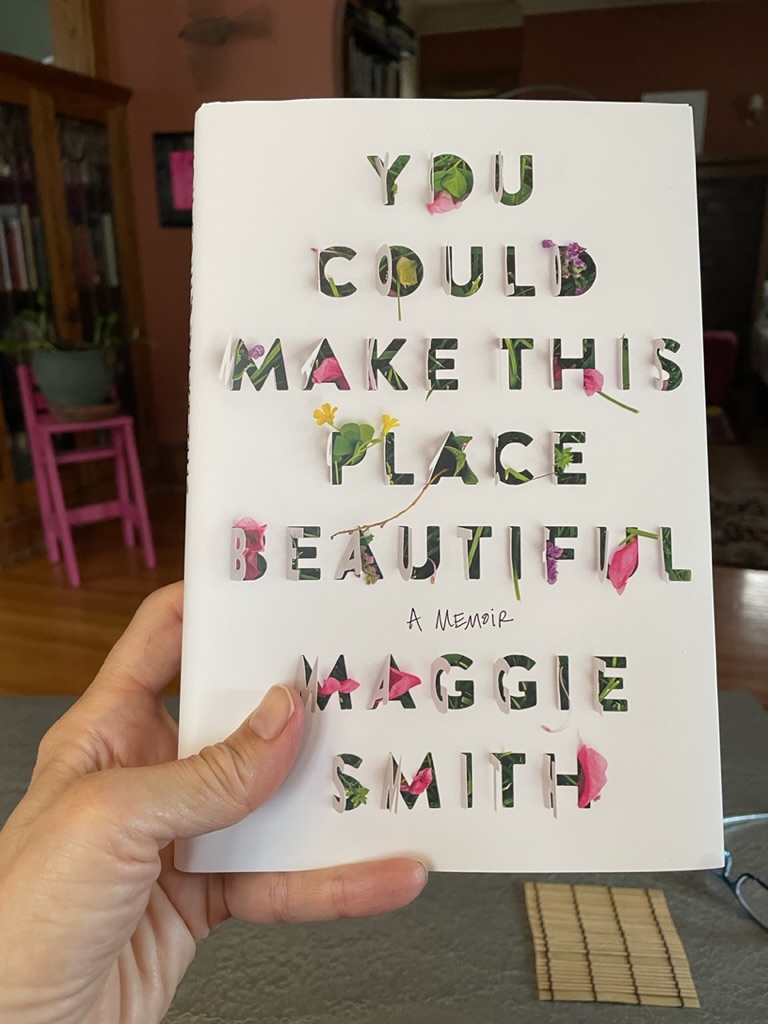
You Could Make This Place Beautiful, by Maggie Smith. In this memoir, by the poet who penned Good Bones, a poem that stunned me (and the rest of the world) when it came out, Smith wonders aloud on the page in each of the brief, illuminative passages that compose the book about the selves she was in her marriage, as it crumbled, and as she makes her way through the first years afterward. Widely thought of as a “divorce” memoir, I see this book as so much more than that: a woman finding her place as an artist in a world that regards the work of writing as not work, as something to be done when it doesn’t inconvenience others, as something so difficult to claim that I remember how awkward and embarrassed I felt when, in my own life, I forced myself to say “I’m working” instead of “I’m writing.” Why can’t we (and I’m talking specifically about women here) be partners and mothers and artists? Answer: we can. You Could Make This Place Beautiful is the fierce, searching story of a woman staking her claim in the world.

Books I Read in February

Black Panther: A Nation Under Our Feet, by Ta-Nehisi Coates. Coates is one of my favorite writers. After reading an interview in which he talks about his experience writing the first six books in Marvel’s Black Panther series, I read the first in the series, a gift from my Coates-fan son and his partner. The majesty and gravity of the visual and literary collaboration between Coates and artist Brian Stelfreeze held me in its grip for an afternoon. Black Panther reminded me of childhood, when I was obsessed with Batman comics (still am, actually) and would dream myself to sleep at night making up scenarios in which I was Batgirl, saving the world. Comics and graphic novels: I so admire what writer and artists, working in sync within the freeing confines of the hallowed graphic form, can create.

Out Stealing Horses, by Per Petterson. Such a quiet, introspective, surprising novel. It completely absorbed me, and since finishing it, I’ve been thinking about how our early adolescence –just a few moments, even—informs our understanding of adulthood ever after. How we turn those moments over and over in our minds and hearts as we age and gain wisdom. A few trustworthy friends had described this novel as “nothing happens!” so (despite the fact that I often secretly think the same of my own novels) it was never on my must-read list. But I found it riveting in the way that sitting by the bank of a river for a slow afternoon, absorbed in watching the eddies and swirls, is riveting. Highly recommend.

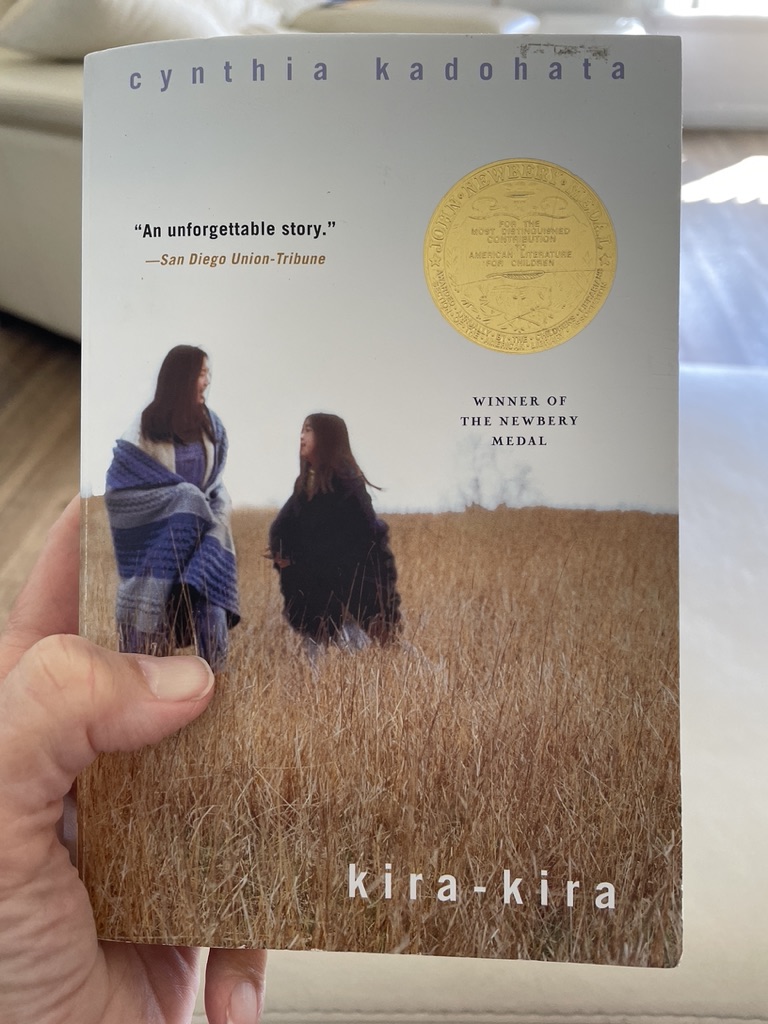
Kira-Kira, by Cynthia Kadohata. I didn’t want my heart to be broken by another book –sometimes your heart just gets tired of breaking, you know?—and I had long assumed this novel would break my heart, because such is the way of most Newbery books. But I picked it up one morning and finished it the next, swept along by the narration of Katie, the middle child of the Takeshima family, who’s blunt, funny, enjoys being “bad,” and whose sister Lynn means everything to her. Set in the 1950’s, in the chicken-sexing Japanese-American subculture of southern hatcheries, this novel feels so real in its depiction of poverty, the cruelty and abuse of racism, endless work, family devotion, and a childhood filled with wonder and love. This is also an example of the rare child narrator who feels truly, infectiously, beautifully real. This lovely novel and its people will stay with me forever.

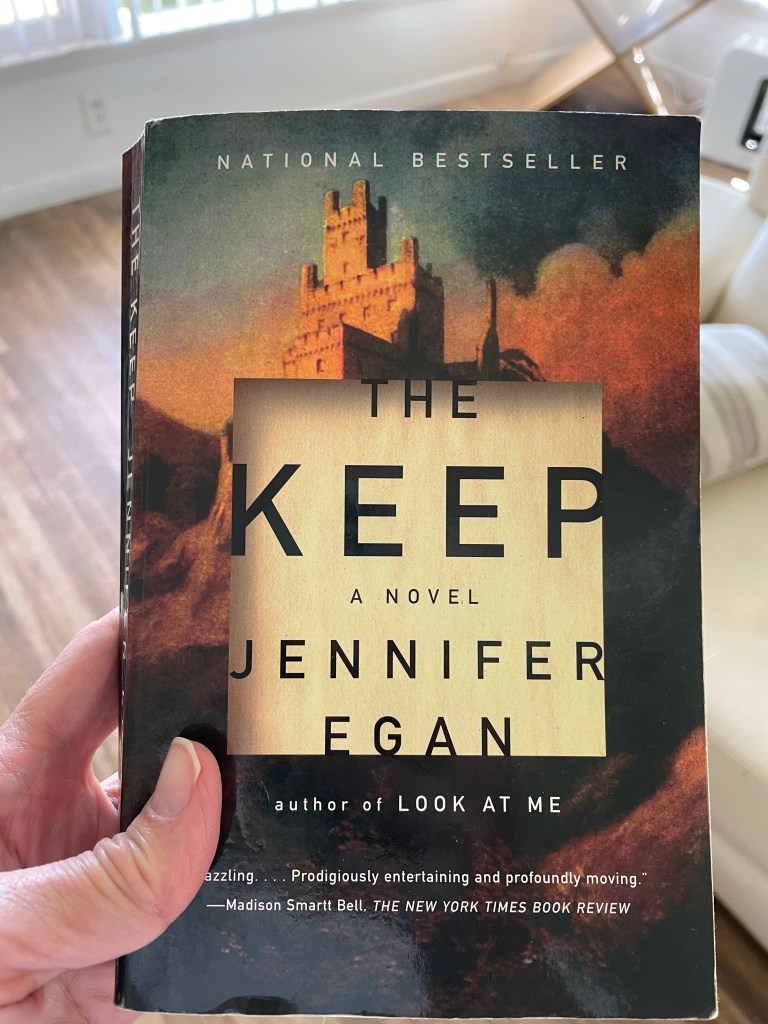
The Keep, by Jennifer Egan. Every once in a while, I pick up a novel by Jennifer Egan and each time she surprises me with the way she bends and twists her people and their narratives. She’s incredibly inventive, layering in all kinds of unusual twists that in another writer might seem showy, but not her. Who’s telling this story? I kept asking myself as I read this novel, because the narrators keep changing as the story deepens. Two cousins, bound by a singular traumatic childhood event, meet again as adults with a vision of turning a European ruin of a castle into a tech-free hotel. Technology and our addiction to it, imagination and our fundamental need for it, guilt and the ache of dreams that didn’t come true, all against the chilling backdrop of a castle from which you can never escape infuse this novel with a despairing kind of love. Brilliantly wrought.

Transit, by Rachel Cusk. Onward, ever onward, with my new infatuation with Rachel Cusk. Transit is the second in a trilogy of novels about a writer, recently divorced, whose books are both well-known and well-reviewed, who teaches occasional workshops both in England and abroad, who has two children currently staying with the father while the writer undertakes a difficult renovation of her newly-purchased awful house in a neighborhood she loves. That little summary makes it seem as if Cusk’s writing is pretty standard, yet it’s anything but. Only at the very end of Transit does the writer-narrator finally let us know her first name. Every actual “fact” of her life is painfully extracted, but who cares, because facts are not the point of these novels, in my reading of them. Instead, Cusk lays bare, with unsparing honesty, the heart and soul of a person’s hard-won insight into human nature. The conversations throughout these novels are like the (few) purely honest conversations I’ve had in my life that happen when everything is stripped away and there’s nothing to lose. I’ve already bought the third in this trilogy. Cannot get enough of this writer.

Books I Read Last Month

Outline, by Rachel Cusk. This was my first Rachel Cusk novel, and once I finished it I immediately tromped out to Magers & Quinn in -5 temps and bought Transit, the next in this trilogy. What a fascinating read, narrated by a woman, a writer herself, who’s on a week-long teaching residency in Greece. We learn virtually nothing about the narrator –I felt at arm’s distance from her all the way through the book, as she eats and drinks, goes for boat rides, teaches, and meets with friends—and yet I was drawn in to this book the same way I was drawn to the Ferrante novels, by the narrator’s sharp, level, unsparingly honest observations.

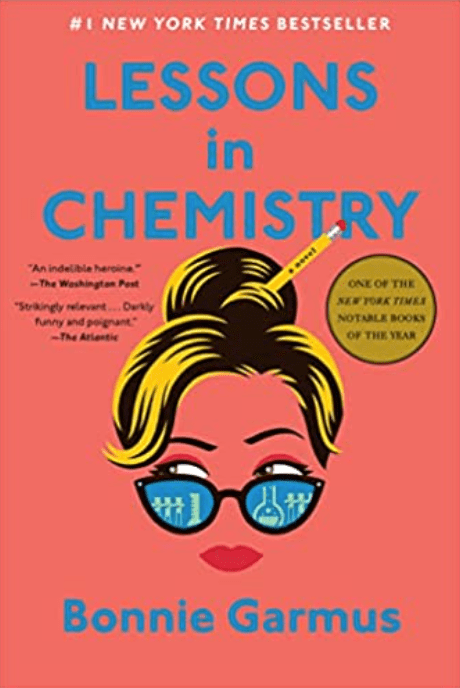
Lessons in Chemistry, by Bonnie Garmus. My mother gave me this novel for Christmas and I was delighted, because I’d heard trustworthy friends say how much they’d enjoyed it. Enjoy it I did, and I sent it on to my own daughter, so the female line of McGhee-Garmus fans might continue. Funny. Acerbic. Enraging in an exhausted, eye-rolling, my God can we just once and for all dismantle the patriarchy because everyone’s lives would be so much better way. Snappy. Skewering. Elizabeth Zott, the chemist at the heart of the book, is irresistible, at one point following up her use of the word water with “or H2O, as it’s more commonly known.” Completely enjoyable.

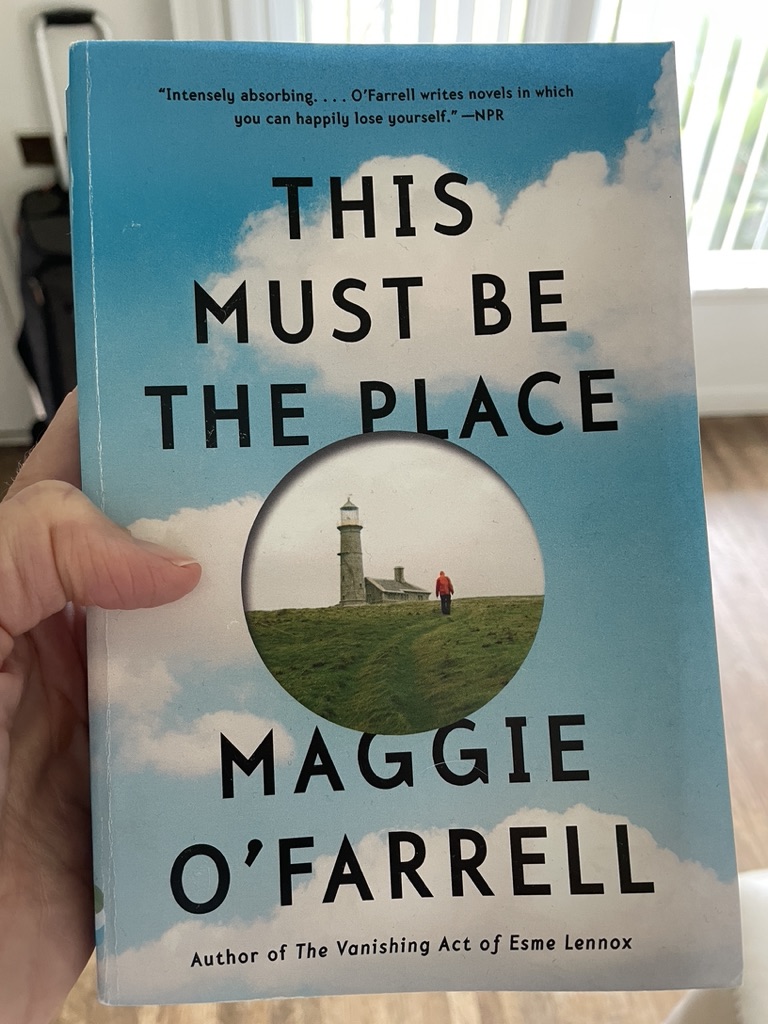
This Must Be the Place and The Hand That First Held Mine, both by Maggie O’Farrell.

Maggie O’Farrell’s Hamnet stunned me, and the day I finished it I walked to Magers & Quinn, once again in sub-zero weather, and picked up This Must Be the Place and The Hand That First Held Mine. I can’t get enough of this writer. Her brilliantly wrought characters, especially the women, oh the women. Thank you for your women, Maggie O’Farrell. Thank you for the way you write about the wild pull of motherhood, and the simultaneous and equal wild pull to make art. Thank you for way you skip back and forth in time and place, the way you weave a magic invisible web that somehow includes small me within it.

The Phantom TollBooth, by Norton Juster, ill. Jules Feiffer. I’ve been interspersing contemporary books with long-ago children’s classics I somehow never read before, The Phantom Tollbooth being one of them. This wordy, odd little book would be worth it for Jules Feiffer’s illustrations alone, but once I decided to go along for the ride of the wordplay and allegorical references throughout, I had fun. At one point I dog-eared a page so I could go back and copy out a quote from it, and I actually did go back and copy out that quote, which, trust me, doesn’t always happen.

The Roof Over Our Heads, by Nicole Kronzer. One of the many interesting aspects of this novel, about a theater family and their many actor friends and recruits who create an immersive, Victorian-themed escape-room mystery in their falling-apart Victorian mansion in a desperate attempt to raise enough money to pay for necessary repairs, is that it reads almost like a play in book form. There’s lots of rapid-fire dialogue and action narrated by an introspective, charming teen struggling to help his family and himself. At heart, The Roof Over Our Heads is a novel about the complications, depth and devotion of family love.