Poem of the Week, by Justyna Bargielska
 In second grade one of my classmates died of a common childhood disease that most of us weathered without incident. One day he was at his desk in the row next to the door, and the next day he wasn’t. In my mind I see him as he was in his Picture Day photo: dark hair parted on the side, sweater over shirt.
At seven, I thought about him every day. He and my grandfather shared the same old-fashioned first name, and it seemed strange that my grandfather could still be alive when my classmate wasn’t. I still think about that boy. When I became a mother I thought about his mother, and the silence surrounding his empty desk. When I read this poem below, I thought about him again. How we can know only the number of days we’ve already lived, not the number of days remaining.
The Great Plan B, by Justyna Bargielska
(translated from the Polish by Maria Jastrzębska)
On my ninth birthday the scoutmaster
gave me a card with the number of days
I’d already lived. It was an extraordinary number
shimmering and dancing, one of those numbers
you can’t save
in notches on a wolf’s bone
or in letters or digits, you can only
speak it onto a recordable postcard or carve it in basalt.
Do you know what our odds are? Zero.
But I’ve learnt to play for time
as it’s the body no less which is left on the battlefield.
For more information about Polish poet Justyna Bargielska, please click here.
 Once, at a Twins play-off game, I sat next to an older couple. They opened a tote and pulled out sandwiches wrapped in waxed paper, peeled carrots, small bags of grapes, and cookies. Dinner, packed at home and brought to the game. There was something about this couple I loved.
 That woman sitting on the bar stool with a martini and a magazine, or alone on her couch spinning imaginary people into books, or flying solo around the world: she is me. But won’t you be lonely? is a question I’ve heard a lot in my life, and I don’t know how to answer it, because isn’t everyone, somewhere inside themselves, lonely?
  Last weekend I watched as seven brothers and their sister gathered around a polished casket that held the body of their mother, a woman loved by all. The night before, the siblings had stayed up late laughing and telling stories of how she used to shoo them up to bed with a broom, how she taught Phys Ed for thirty-nine years while delivering papers before dawn and working in the family print shop at night, how she loved wine (with a few ice cubes) and fast-pitch softball and mint chocolate chip ice cream and the Minnesota Twins.
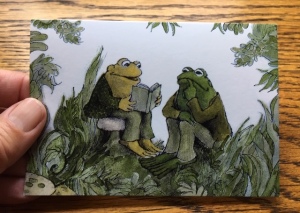 One of my best friends and I sat on my porch last night talking about how our lives might have been different. What if I’d made myself deal with that suicide instead of trying to escape the pain? What if she’d said yes to that job? What if I’d stayed in New England? What if we’d mothered our children differently?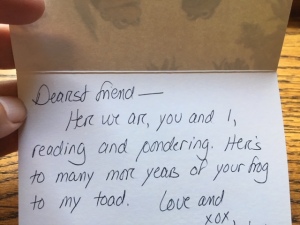
 Two lovely Japanese maple trees in a front yard one block south are symmetrically planted amid cement squares filled with small white stones. For eight years I walked past this house every day, so I could admire the way the owners, whom I always pictured as two calm men, swept the leaves and raked the stones into perfect, weed-free squares. Looking at this yard calmed my spirit. A few years ago the house was sold, and since then it has been reclaimed by wildness.
 When I was nine my father brought me a huge, bright-green, horned bug from our garden: Look! You can bring it in to school for the bug project! When he turned away I placed some tomatoes on top of the bug, and later had to admit in shame that I had ‘accidentally’ crushed it. Alison! What the hell were you thinking?
  Last night I wandered around a downtown park filled with strange, beautiful, confounding, mesmerizing art: dancers, sculptors, glass blowers, painters, musicians, weavers, poets, mask makers. It was nightfall in the city. Skyscrapers glowed around the periphery of the park, light rail trains glided by, and storm clouds gathered and dispersed overhead. At one point I sat on the base of a sculpture and took it all in, the voices and laughter and absorption on the faces of the crowd.
 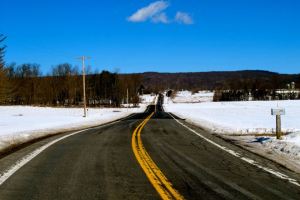 Old friend, it has been decades since that last summer before college, the last time I ever lived at home. But when I return to visit my parents and drive by the street where you once lived, I remember you. I remember rain on a canvas roof, darkness all around, the silent sleeping breath of other friends. I remember how surprised I was that someone wanted to kiss me –me?–and I remember your gentleness. Let me tell you now that you were the one who first showed me how touch could open up a new world. At seventeen I could not have known how the memory of that fleeting sweetness would sustain me in future dark times. This achingly beautiful poem brought back the memory of you.
  It was Bring Your Parent to Lunch Day at elementary school and I was sitting at a cafeteria table with my daughter. She was born between her brother and sister – there hadn’t and wouldn’t be a stretch of time when it was just the two of us in the house – and she was quietly thrilled at my presence.
 Alison McGhee