Poem of the Week, by Tony Hoagland


A few months after my father died I was driving Route 89 in New Hampshire, a gorgeous fall day, swooping around curves of mountains turned to flame, and it came to me that my father would never make this drive again. It was just me in the car, and I howled with grief the way no one alive has ever seen me howl.

My father and I did not understand each other for many years. Once, when I was in elementary school, he brought me a huge, bright-green, horned bug from our garden: Look! You can bring it in to school for the bug project! When he turned away I placed some tomatoes on top of the bug, and later had to admit in shame that I had ‘accidentally’ crushed it. Alison! What the hell were you thinking? 

Looking back, I see a child who was afraid of that enormous bug and afraid of her enormous father, a child who could not admit fear and could not ask for help. And I see a young, gruff man who had found something magic and brought it as a gift to his daughter, sure she would love it. A scared daughter, a bewildered man. Who both, over many years, came to understand each other by sailing on, finding out the story by pushing into it, until only love remained.

Voyage, by Tony Hoagland

I feel as if we opened a book about great ocean voyages
and found ourselves on a great ocean voyage:
sailing through December, around the horn of Christmas
and into the January Sea, and sailing on and on

in a novel without a moral but one in which
all the characters who died in the middle chapters
make the sunsets near the book’s end more beautiful.

And someone is spreading a map upon a table,
and someone is hanging a lantern from the stern,
and someone else says, “I’m only sorry
that I forgot my blue parka; It’s turning cold.”

Sunset like a burning wagon train
Sunrise like a dish of cantaloupe
Clouds like two armies clashing in the sky;
Icebergs and tropical storms,
That’s the kind of thing that happens on our ocean voyage —

And in one of the chapters I was blinded by love
And in another, anger made us sick like swallowed glass
& I lay in my bunk and slept for so long,
I forgot about the ocean,
Which all the time was going by, right there, outside my cabin window.

And the sides of the ship were green as money,
and the water made a sound like memory when we sailed.

Then it was summer. Under the constellation of the swan,
under the constellation of the horse.

At night we consoled ourselves
By discussing the meaning of homesickness.
But there was no home to go home to.
There was no getting around the ocean.
We had to go on finding out the story
by pushing into it —
The sea was no longer a metaphor.
The book was no longer a book.
That was the plot.
That was our marvelous punishment.

For more information about Tony Hoagland, please read his obituary. Today’s poem first appeared in Hard Rain, published in 2005 by Hollyridge Press. 

Write Together 2026 is coming right up and we have plenty of spots still open! Come write with us for an hour each morning, January 12-17. Each day’s Zoom session features different readings, different prompts, and the chance to write quietly together in solidarity and appreciation. Click here for more information and to sign up.
Poem of the Week, by Tony Hoagland

Minnesotans! There’s still room in my FREE workshop on Friday, May 2, 1-4 Central Time: The Echo That Remains. This workshop, held via Zoom, is for anyone who loved someone who died of suicide, substance abuse, or untreated mental or physical illness. Click here for more information and to register. All are welcome, no writing experience necessary. 

How many times a day do you feel like a failure? I once asked the Painter. All day every day, he answered, to which I nodded.

Ten years ago, on a whim at the end of December, I sat down at my dining table and hand-wrote myself a letter. Dear Allie, it began, here are some things you did in 2015. The letter is a simple bulleted list, but each entry, such as tried to be a good teacher and stayed in good shape despite plantar fasciitis, holds within it an arc of emotion and effort and accomplishment. I hadn’t looked at that letter since I wrote it, nor the subsequent letters I’ve written to myself every year since, but everything I tried to do that year came rushing back over me, along with a deep sense of being just one of a long, long line of humans who are all just trying.

Which brings me to this beautiful farewell poem by Tony Hoagland. The ending, which I had to read twice to understand was not an admonition but a gentle acknowledgment to himself that he had been a good man who should have been kinder to himself, still chokes me up.

Distant Regard, by Tony Hoagland

If I knew I would be dead by this time next year
I believe I would spend the months from now till then
writing thank-you notes to strangers and acquaintances,
telling them, “You really were a great travel agent,”
or “I never got the taste of your kisses out of my mouth.”
or “Watching you walk across the room was part of my destination.”
It would be the equivalent, I think,
of leaving a chocolate wrapped in shiny foil
on the pillow of a guest in a hotel–
“Hotel of earth, where we resided for some years together,”
I start to say, before I realize it is a terrible cliche, and stop,
and then go on, forgiving myself in a mere split second
because now that I’m dying, I just go
forward like water, flowing around obstacles
and second thoughts, not getting snagged, just continuing
with my long list of thank-yous,
which seems to naturally expand to include sunlight and wind,
and the aspen trees which gleam and shimmer in the yard
as if grateful for being soaked last night
by the irrigation system invented by an individual
to whom I am quietly grateful.
Outside it is autumn, the philosophical season,
when cold air sharpens the intellect; 
the hills are red and copper in their shaggy majesty.
The clouds blow overhead like governments and years.
It took me a long time to understand the phrase “distant regard,”
but I am grateful for it now,
and I am grateful for my heart,
that turned out to be good, after all;
and grateful for my mind,
to which, in retrospect, I can see
I have never been sufficiently kind.

For more information about the one and only Tony Hoagland, please read his obituary.

alisonmcghee.com
My podcast: Words by Winter

Poem of the Week, by Tony Hoagland

Four spots open in Memoir in Moments: Writing Your Life, next Friday, September 8, 1-4:30 CT. To register, please click and scroll down. I’d love to see you in the zoom room.

Eight years ago, on a whim, I sat down at my dining table and hand-wrote myself a letter. Dear Alison, it began, here are some things you did in 2015. Each entry, such as loved your children and wrote and rewrote that book and stayed in good shape despite plantar fasciitis, holds within it an arc of emotion and effort and accomplishment. I read it again just now. Everything I tried to do that year came rushing back over me, along with a sense of being just one of a long line of humans who are all just trying.

Which brings me to this beautiful farewell poem by Tony Hoagland, especially the ending lines, which I had to read twice to understand were not an admonition but a gentle acknowledgment to himself that he had been a good man who should have been kinder to himself.

Distant Regard, by Tony Hoagland

If I knew I would be dead by this time next year
I believe I would spend the months from now till then
writing thank-you notes to strangers and acquaintances,
telling them, “You really were a great travel agent,”
or “I never got the taste of your kisses out of my mouth.”
or “Watching you walk across the room was part of my destination.”
It would be the equivalent, I think,
of leaving a chocolate wrapped in shiny foil
on the pillow of a guest in a hotel–
“Hotel of earth, where we resided for some years together,”
I start to say, before I realize it is a terrible cliche, and stop,
and then go on, forgiving myself in a mere split second
because now that I’m dying, I just go
forward like water, flowing around obstacles
and second thoughts, not getting snagged, just continuing
with my long list of thank-yous,
which seems to naturally expand to include sunlight and wind,
and the aspen trees which gleam and shimmer in the yard
as if grateful for being soaked last night
by the irrigation system invented by an individual
to whom I am quietly grateful.
Outside it is autumn, the philosophical season,
when cold air sharpens the intellect; 
the hills are red and copper in their shaggy majesty.
The clouds blow overhead like governments and years.
It took me a long time to understand the phrase “distant regard,”
but I am grateful for it now,
and I am grateful for my heart,
that turned out to be good, after all;
and grateful for my mind,
to which, in retrospect, I can see
I have never been sufficiently kind.

Click here for more information about beloved poet Tony Hoagland.
alisonmcghee.com
My podcast: Words by Winter

Poem of the Week, by Tony Hoagland


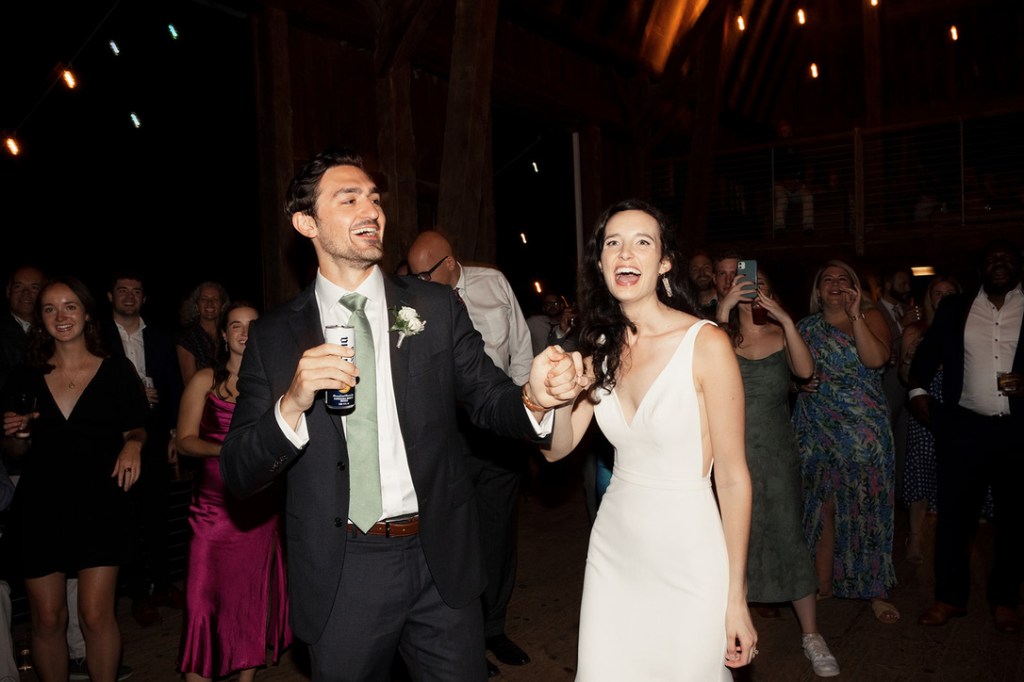
Most great celebrations, like my daughter’s wedding last month, begin long before the celebration itself. Yards of cotton chosen years ago, to be turned into a quilt. Endless bottles of vodka turned into homemade gin, enough for 180 miniature party favors. Evenings with my daughter and a letterpress kit, hand-stamping each letter of each name of each place card.

Early mornings, late nights: hand-stitching, hand-stamping, hand-steeping juniper and cardamom. Moment after moment in which I thought about how much I love both my girl and her now-husband. Nothing was hurried. Everything took time, time, time, and every moment of it was a reminder that, among our endless rushing, time itself is an act of love.

The Word, by Tony Hoagland

Down near the bottom
of the crossed-out list
of things you have to do today,

between “green thread”
and “broccoli,” you find
that you have penciled “sunlight.”

Resting on the page, the word
is beautiful. It touches you
as if you had a friend

and sunlight were a present
he had sent from someplace distant
as this morning—to cheer you up,

and to remind you that,
among your duties, pleasure
is a thing

that also needs accomplishing.
Do you remember?
that time and light are kinds

of love, and love
is no less practical
than a coffee grinder

or a safe spare tire?
Tomorrow you may be utterly
without a clue,

but today you get a telegram
from the heart in exile,
proclaiming that the kingdom

still exists,
the king and queen alive,
still speaking to their children,

—to any one among them
who can find the time
to sit out in the sun and listen.


Click here
 for more information about the beloved Tony Hoagland.
alisonmcghee.com

Words by Winter: my podcast