Poem of the Week, by Aracelis Girmay

My new poems podcast, Words by Wintercan be found here.

IMG_0531

A few days ago I was walking past Lakewood Cemetery when I saw a fresh grave, covered with dirt, through the tall iron fence. A young man and woman sat next to it with flowers, talking quietly. Something about them –their youth, their sadness–stopped me. Was the person in the grave their mother or father? A boyfriend or girlfriend? A sister or brother? A friend? 

My heart hurt for them. And there was also something beautiful about the fact they were there, wanting to be at the grave, abiding by the body of someone they loved. The young man glanced up and saw me. I blew them a kiss, pressed my hands to my heart, and walked on. 

Ars Poetica, by Aracelis Girmay

May the poems be
the little snail’s trail.
 
Everywhere I go,
every inch: quiet record
 
of the foot’s silver prayer.
I lived once.
Thank you.
It was here.

For more information on Aracelis Girmay, please click here.

alisonmcghee.com

Poem of the Week, by June Jordan

My new poems podcast, Words by Wintercan be found here.


First there was childhood, with the woods and the fields and the wondering. Then came college, where the roof of your life disappeared and you found your tribe. Then came all the years of struggle and love and longing –to be a writer, to be a mother, to be a transplant in a new land, to be a someone. And then there was the breaking, and the reconfiguration, and now there is the Reckoning. E1A4EEB4-48CE-45F2-8516-A11D28953DB0

I’m talking to myself here, trying to place pattern to my life, to reconcile past and present and possible future. Taking stock of what I’ve surrounded myself with and what I’ve put forth. If all these books and poems and teaching and essays and blogs and letters and cards and now a podcast mean I’m just fragmented? Chaotic?

Then comes this poem by a woman I idolize, a woman who wrote as many different kinds of words as I do, and it runs through me like cool water on a parched day. Maybe all these words, no matter their form, are the through-thread work of my life. My invisible hands reaching out to all the invisible people. 


These Poems, by June Jordan

These poems
they are things that I do
in the dark
reaching for you
whoever you are
and
are you ready?

These words
they are stones in the water
running away

These skeletal lines
they are desperate arms for my longing and love.

I am a stranger
learning to worship the strangers
around me

whoever you are
whoever I may become.


For more information about the astonishing, fierce, and brilliant June Jordan, please click here.

alisonmcghee.com

Words by Winter: my new podcast

Poem of the Week, by James Richardson

My new poems podcast, Words by Wintercan be found here.


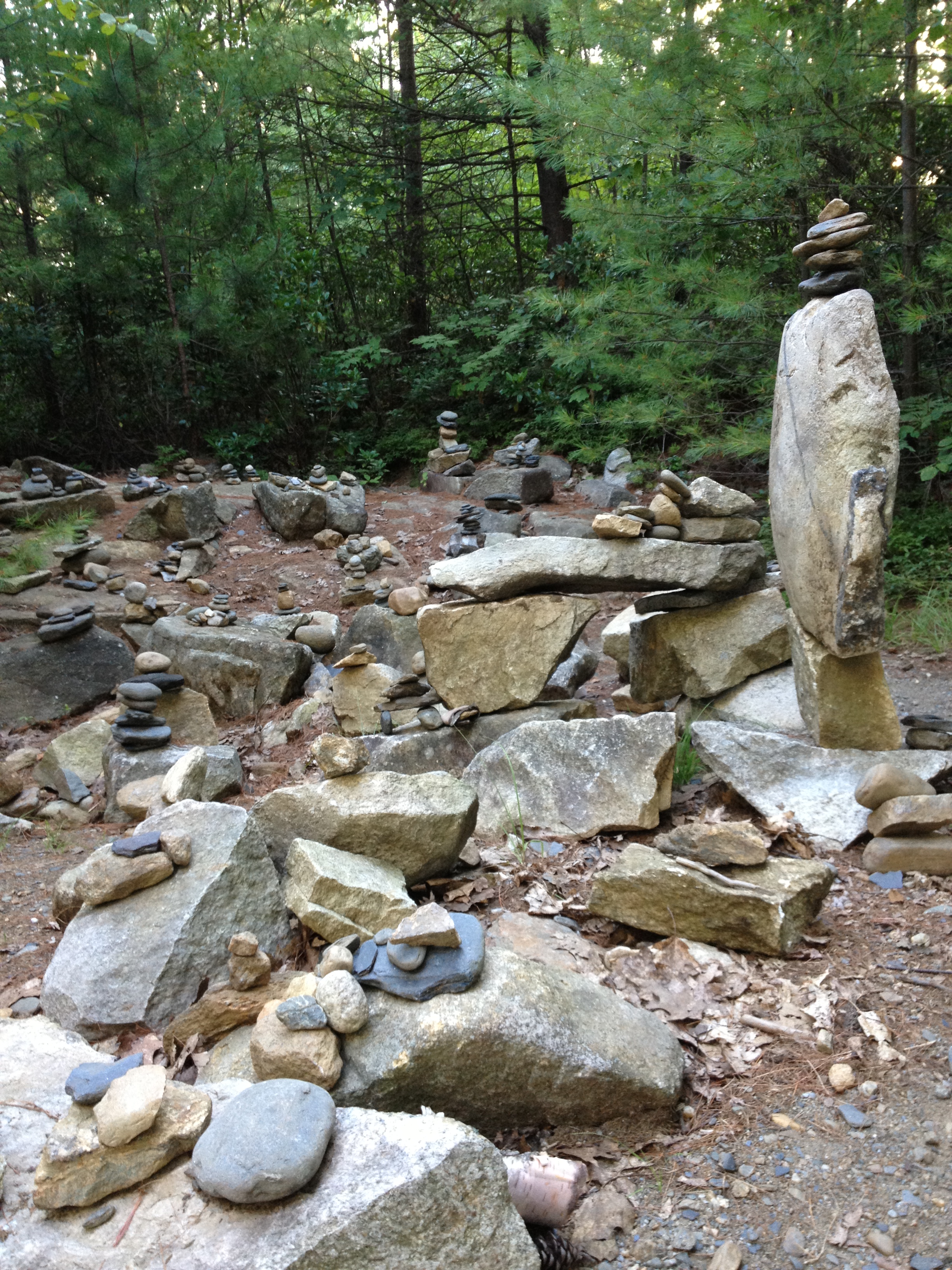
IMG_3857Most of the furniture in our house is wood, found curbside like the tiny wooden table that caught my eye yesterday a few blocks from home. Polished burled top, slender wooden dowels, sturdy legs, it looked handmade. My backpack was stuffed full of heavy groceries but I picked the table up anyway and carried it home like a baby. 

Box beam ceilings, cherry cabinets, oak floors, maple radiator covers. My house is over a century old, so the wood it’s made from must be far older than that, but it feels alive to me. After we moved in I wrote to the former owner, a cabinetmaker who had made all the kitchen cabinets, all the fitted radiator covers, a man who loves wood as much as me but, unlike me, knows everything about it. 

Can you tell me about the wood in the house? was my question, and his long, long reply detailed the specifics of each room. Sorry, he signed off. I‘m sure this is way more than you ever wanted to know. I guess you can tell how much I love wood. 

I thought about that man when I turned the tiny table over and saw the initials of the person who made it, burned into the wood.


Essay on Wood, by James Richardson

At dawn when rowboats drum on the dock
and every door in the breathing house bumps softly
as if someone were leaving quietly, I wonder
if something in us is made of wood,
maybe not quite the heart, knocking softly,
or maybe not made of it, but made for its call.

Of all the elements, it is happiest in our houses.
It will sit with us, eat with us, lie down
and hold our books, themselves a rustling woods,
bearing our floors and roofs without weariness,
for unlike us it does not resent its faithfulness
or question why, for what, how long?

Its branchings have slowed the invisible feelings of light
into vortices smooth for our hands,
so that every fine-grained handle and page and beam
is a wood-word, a standing wave:
years that never pass, vastness never empty,
speed so great it cannot be told from peace.    


For more information on James Richardson, please click here.

alisonmcghee.com

Words by Winter: my new podcast
Poem of the Week, by Naomi Shihab Nye

IMG_8937Small, wooden, stained a peeling dark red-brown, our kitchen table has moved with us from apartment to condo to house. It’s too short, so over the years I’ve glued and re-glued blocks of wood to the bottom of each leg. My little kids did their homework on it while I cooked for them, my teenagers and their friends talked and laughed around it while I cooked for them, my grown children sit around it laughing and drinking wine while I cook for them.
Salt and pepper grinders, Penzey’s Fox Point seasoning, a trivet that used to be my grandmother’s, cloth napkins each folded a different way to differentiate their owners, scuffs and burns from hot pots carelessly set down: this is our table, found curbside twenty years ago by me, who loved it at sight and for no apparent reason.

Now the table is leaving us, passed on to my daughter’s friend Shrimp, to be replaced by a kitchen island and four tall counter stools. When I sat at it yesterday eating a tomato sandwich, I thought of this beautiful poem.


Daily, by Naomi Shihab Nye

These shriveled seeds we plant,
corn kernel, dried bean,
poke into loosened soil,
cover over with measured fingertips

These T-shirts we fold into
perfect white squares

These tortillas we slice and fry to crisp strips
This rich egg scrambled in a gray clay bowl

This bed whose covers I straighten
smoothing edges till blue quilt fits brown blanket
and nothing hangs out

This envelope I address
so the name balances like a cloud
in the center of the sky

This page I type and retype
This table I dust till the scarred wood shines
This bundle of clothes I wash and hang and wash again
like flags we share, a country so close
no one needs to name it

The days are nouns: touch them
The hands are churches that worship the world


For more information about Naomi Shihab Nye, please click here.

My website
My podcast.
My Facebook page
@alisonmcgheewriter

Poem of the Week, by Kari Gunter-Seymour

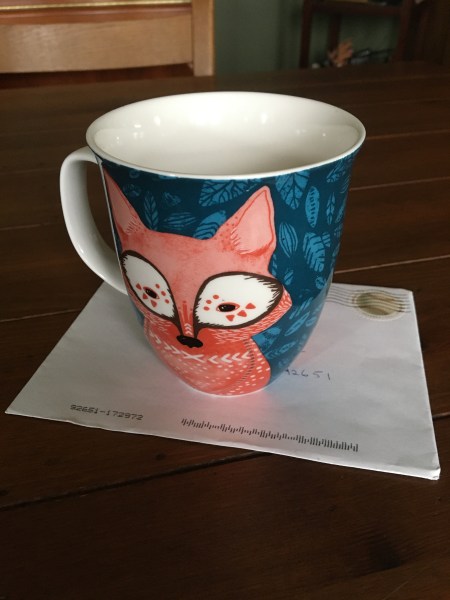
IMG_7693This morning on the porch a bee was bumbling against one of the screened windows. Its little legs drifted below its huge, furry body as it tried over and over to get out. So I upended my fox mug over it, slid a letter from my mother between the screen and the buzzing mug, then held the whole mess tight and maneuvered outside. Whisked the letter off and watched the bee lumber into the air again.

That bee made me think of the ending of this haunting poem. We endure so much to get here. To be alive. To stay alive. 


I Come From A Place So Deep Inside America It Can’t Be Seen, by Kari Gunter-Seymour
       

White oaks thrash, moonlight drifts
the ceiling, as if I’m under water.
Propane coils, warms my bones.

Gone are the magics and songs,
all the things our grandmothers buried—
piles of feathers and angel bones,

inscribed by all who came before.
When I was twelve, my cousins
called me ugly, enough to make it last.

Tonight a celebrity on Oprah
imagines a future where features
can be removed and replaced

on a whim. A moth presses wings
thin as paper against my window,
more beautiful than I could ever be.

Ryegrass raise seedy heads
beyond the bull thistle and preen.
Everything alive aches for more.


For more information on Kari Gunter-Seymour, please click here.

My new poems podcast, Words by Wintercan be found here.

My website

My Facebook page

@alisonmcgheewriter

Poem of the Week, by Marie Howe

991DA27A-58E0-41E4-87E6-9CA5515E0597Last week I was weeding my garden on a steambath afternoon when clouds tiered overhead, the air turned greenish, and a breeze sprang up. There’s a tall pine tree in my tiny front yard, with limbs that sweep down to earth, and when the first drops splatted down, I stepped inside them to watch the storm.
As a child I built a platform in the giant maple tree by the side of the road, accessible by a rope no one but me could climb. I used to stay up there for hours, reading and thinking in the crook of the tree. At one point I carved my initials into the biggest limb   –   A   R   M.   Over time, a decade or two, the tree puffed itself around the wound and healed itself. 

Trees talk to one another through their roots. Trees of the same species will share water and food. All trees in a forest are interconnected. They shelter one another, the way the tree in my front yard shelters me. 


The Copper Beech, by Marie Howe

Immense, entirely itself,
it wore that yard like a dress,

with limbs low enough for me to enter it
and climb the crooked ladder to where

I could lean against the trunk and practice being alone.

One day, I heard the sound before I saw it, rain fell
darkening the sidewalk.

Sitting close to the center, not very high in the branches,
I heard it hitting the high leaves, and I was happy,

watching it happen without it happening to me.


For more information about Marie Howe, please check out her website.

My website.

My podcast.

My Facebook page.

@alisonmcgheewriter

Poem of the Week, by Delmore Schwartz

IMG_8639Do you ever semi-wake up and not know where you are, how old you are, who is next to you (or not), what it is you are meant to do, who it is you are meant to be? As I typed that question just now, the words fugue state drifted into my mind. What exactly fugue state means I didn’t know until a second ago, when I looked it up, but it fits the feeling of those half-asleep wakings.
So does this poem. A while ago I woke up with time is the fire in which we burn running through my head. It felt familiar, but why? Had I made it up and then abandoned it somewhere in some unfinished novel? I typed the exact line into a search engine and up floated Delmore Schwartz, calling to me from the previous century, haunting me with his own unanswered questions.


Calmly We Walk Through This April’s Day, by Delmore Schwartz

Calmly we walk through this April’s day,
metropolitan poetry here and there,
in the park sit pauper and rentier,
the screaming children, the motor-car
fugitive about us, running away,
between the worker and the millionaire
number provides all distances,
it is Nineteen Thirty-Seven now,
many great dears are taken away,
what will become of you and me
(this is the school in which we learn …)
besides the photo and the memory?
(… that time is the fire in which we burn.)

(This is the school in which we learn …)
what is the self amid this blaze?
what am I now that I was then
which I shall suffer and act again,
the theodicy I wrote in my high school days
restored all life from infancy,
the children shouting are bright as they run
(this is the school in which they learn …)
ravished entirely in their passing play!
(… that time is the fire in which they burn.)

Avid its rush, that reeling blaze!
Where is my father and Eleanor?
Not where are they now, dead seven years,
but what they were then?
No more? No more?
From Nineteen-Fourteen to the present day,
Bert Spira and Rhoda consume, consume
not where they are now (where are they now?)
but what they were then, both beautiful;

each minute bursts in the burning room,
the great globe reels in the solar fire,
spinning the trivial and unique away.
(How all things flash! How all things flare!)
What am I now that I was then?
May memory restore again and again
the smallest color of the smallest day:
time is the school in which we learn,
time is the fire in which we burn.


For more information about Delmore Schwartz, click here.

My websiteMy blogMy Facebook page

Instagram: @alisonmcgheewriter 

Poem of the Week, by Bob Hicok

IMG_8741Yesterday I had a hitch installed on the back of my car. The U-Haul installation place was off a busy frontage road, its entrance blocked by men who came running up to my car, masks askew, shouting at me in Spanish, a language I (still) don’t speak, holding up fingers —one? two? and pushing each other: Me! Me! No, me! 
Finally I understood. This was a U-Haul place full of moving trucks for rent. They were asking did I need help moving, and how many men did I need? I shook my head, tried to smile, tried to explain I was only there for a hitch, tried again to smile. The look in their eyes told me they didn’t understand, told me they were just this side of desperate, told me they’d do anything for work. 


Calling Him Back from Layoff, by Bob Hicok

I called a man today. After he said
hello and I said hello came a pause
during which it would have been

confusing to say hello again so I said
how are you doing and guess what, he said
fine and wondered aloud how I was

and it turns out I’m OK. He
was on the couch watching cars
painted with ads for Budweiser follow cars

painted with ads for Tide around an oval
that’s a metaphor for life because
most of us run out of gas and settle

for getting drunk in the stands
and shouting at someone in a t-shirt
we want kraut on our dog. I said

he could have his job back and during
the pause that followed his whiskers
scrubbed the mouthpiece clean

and his breath passed in and out
in the tidal fashion popular
with mammals until he broke through

with the words how soon thank you
ohmyGod which crossed his lips and drove
through the wires on the backs of ions

as one long word as one hard prayer
of relief meant to be heard
by the sky. When he began to cry I tried

with the shape of my silence to say
I understood but each confession
of fear and poverty was more awkward

than what you learn in the shower.
After he hung up I went outside and sat
with one hand in the bower of the other

and thought if I turn my head to the left
it changes the song of the oriole
and if I give a job to one stomach other

forks are naked and if tonight a steak
sizzles in his kitchen do the seven
other people staring at their phones

hear?


For more information on Bob Hicok, please click here.

To listen to Words by Winter, my new poem and storytelling podcast, click here

My website

My Facebook page

Instagram: @alisonmcgheewriter 

Poem of the Week, by Maggie Smith

me and Arthur
The tattoo over my daughter’s heart spells out the words of love I’ve said to her every night we’ve ever slept beneath the same roof. Loving my children is the biggest, easiest part of me.

What if you loved everyone the way you love them, Alison? 

Once in a while, for a tiny breath of time, I get a glimpse of what living in that imaginary world would feel like, and it’s overwhelming. It’s not the world I live in, but I wish it were.


Rain, New Year’s Eve, by Maggie Smith

The rain is a broken piano,
playing the same note over and over.

My five-year-old said that.
Already she knows loving the world

means loving the wobbles
you can’t shim, the creaks you can’t

oil silent—the jerry-rigged parts,
MacGyvered with twine and chewing gum.

Let me love the cold rain’s plinking.
Let me love the world the way I love

my young son, not only when
he cups my face in his sticky hands,

but when, roughhousing,
he accidentally splits my lip.

Let me love the world like a mother.
Let me be tender when it lets me down.

Let me listen to the rain’s one note
and hear a beginner’s song.


For more information about the wondrous Maggie Smith, please click here.


My websiteMy blogMy Facebook page

Twitter and Instagram: @alisonmcgheewriter 


Poem of the Week, by Hayden Saunier

IMG_8643When my kids were little and nothing else worked I used to resort to the dreaded counting threat. I’m going to count to ten. One. Two. Three. Why this worked I don’t really know, but I never had to count past three. Until the day my son just kept sitting at the table, his bright blue eyes fixed on mine.

One. Two. Three. My voice got louder and slower: FOUR. F I V E. His younger sisters, panicked, urged him to get going, but he didn’t move.      S  I  X.     S   E   V   E   N.   

Oh shit, I thought, the jig’s up. I started to laugh. He did too. We both knew that something was over –some irredeemable bit of childhood–but something new had begun. The ordinary miracle of growing up, that small shift in the universe.


Hard Facts (Especially), by Hayden Saunier

Most everything we’re taught
is wrong.

Especially fixed rules
about small engine

repair in adverse
marine conditions,

walking on ice,
and anything

to do with people.
Especially our own

strange selves.
And so the door

to the ordinary miracle
swings open.


For more information about poet Hayden Saunier, please check out her website.

Words by Winter: my poetry podcast,

My website