Poem of the Week, by Olav Hauge
 Me to a roomful of high school students last week: “Raise a hand if you’ve lost someone you love to murder.”
Every hand went up.
Every hand. At least that’s how it looked to me, standing there. How do you make your way through something impossibly hard? That was the premise of our conversation, and the students took turns reading out loud from my novel What I Leave Behind, which is about exactly that. Impossible hardship is something these students are no strangers to. Institutionalized racism and sexism and poverty are all designed to keep a few people sitting pretty at the expense of so many, and one result is a roomful of children who have all watched loved ones die violently.
I asked them how they coped. Some meditated. Some did yoga. Some cooked. Some listened to music. And every one of them seemed to make art: writing, painting, drawing, singing. They clearly understood the power of art, how you can use it to translate and transcend an impossible experience, push it out of you and at the same time absorb it. Art can keep you connected to others. These students are old souls, wise beyond their years. I got back to my hotel that night to find that a friend in Germany had sent me a poem that I’d forgotten, a poem I love. A poem that the minute I saw it felt like the poem to send in honor of these beautiful, powerful youth. We have to do better by them.
This Is the Dream, by Olav Hauge (translated by Robert Hedin and Robert Bly)
This is the dream we carry through the world
that something fantastic will happen
that it has to happen
that time will open by itself
that doors shall open by themselves
that the heart will find itself open
that mountain springs will jump up
that the dream will open by itself
that we one early morning
will slip into a harbor
that we have never known.
For more information on Olav Hauge, please click here.
Website
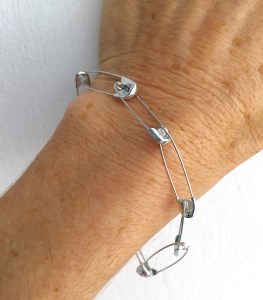 Once, at a magic show held at night in a converted barn in rural New Hampshire, I watched a girl gasp in amazement as a happy young man in a cape pulled a rabbit from a hat, and then –somehow– made a bird in a cage disappear from the stage and reappear at the back of the room. Did you see that? the girl said to me. That was amazing. She was fifteen at the time, and I remember thinking how beautiful it was that she could still be captivated by magic. Some years later, from her first job, a year spent at the poorest elementary school in the poorest neighborhood of a big city, a job which taxed her spirit to the limit because of the nearly unimaginable suffering her students lived under, she sent me a text. It was “Atten-Dance” day for the fourth-graders, a day on which all the students with good attendance got to stay after school for a dance put on for them by the girl and her colleagues. This is the best day of the year, her text said. My babies —which is what she, at 22, called her students– are so excited. They’re jumping around like the little kids they for once get to be. Like the poem below says, we can make this place beautiful. Even now.
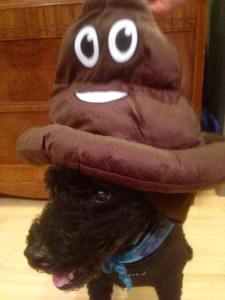 My dog is sleeping on the couch right now. We can read each other’s minds; before I get up from this table in a few minutes to go for a run, he will already have jumped down and trotted over to me, knowing I’m about to leave. When I return, he will be waiting at the door to greet me. He doesn’t wake up disturbed like me at the daily news, which even though I don’t watch television and I avoid certain headlines, I know anyway. It’s in the air, in the invisible waves that connect us to each other and the world. It’s a battle not to give in to the disgust and despair and cynicism and snark that sometimes feels omnipresent and, weirdly, more socially acceptable than hope. Hope is harder, and so is the steadfast work that makes things better. The dog in this beautiful poem reminds me of my own dog. Not everything is bad, he says, in action if not words.
 Alison McGhee