Poem of the Week, by Pauletta Hansel
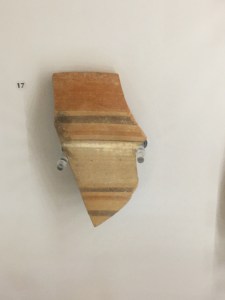 This shard of pottery is from a storage container used by an unknown someone who lived on a hill in Lisbon almost three thousand years ago. I imagine her filling the original container with soup or stew or pickles or water, then scouring it out, day after day.
Sometimes I picture the potter who made it, how they shaped its curves, worked the clay, painted those stripes with care and attention so that the pot would be beautiful. Doesn’t matter where we are or who we are or how poor or how worried or stressed or tired our lives, we make things beautiful because we want to, because we can. Because it’s a gift we can give ourselves.
The Road, by Pauletta Hansel
Where I’m from, everybody had a flower garden,
and I’m not talking about landscaping—
those variegated grasses poking up between
the yellow daylilies that bloom more than once.
Even the rusted-out trailer down in the green bottoms
had snowball bushes that outlived the floods.
Even the bootlegger’s wife grew roses up the porch pillar
still flecked with a little paint, and in the spring
her purple irises rickracked the rutted gravel drive.
Even the grannies changed out of their housedresses
to thin the sprouts of zinnias so come summer
they’d bloom into muumuus of scarlet and coral
down by the road.
Now driving that road that used to take me home,
I think how maybe it’s still true.
Everybody says down here it’s nothing
but burnt-out shake and bakes and skinny girls
looking for a vein, but everywhere I look
there’s mallows and glads, begonias in rubber tire
planters painted to match, cannies red
as the powder my mother would pat high
on her cheekbones when she wanted to be noticed
for more than her cobblers and beans.
Everywhere there’s some sort of beautiful
somebody worked hard at, no matter
how many times they were told
nobody from here even tries.
For more information about Pauletta Hansel, please click here.
My website. My blog. My Facebook page.
Twitter and Instagram: @alisonmcgheewriter
 Before taking the city bus for the first time, I was scared. How much does it cost and what if you don’t have exact change and what are those green cards everyone else seems to be holding and oh crap what about that scanner thingie? Etcetera.
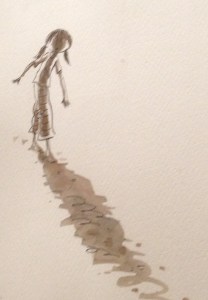 A few years ago, from my front porch, I watched an enormous, dark turtle labor its way across Emerson Avenue. It was winter. Snow and ice and slush. A giant turtle?
  This past week: the friends in a group discussion admitting they can barely ask what the honorarium is because it feels so selfish. The friend who wonders can I back out of this event in NYC because I just noticed there’s no travel reimbursement and I literally can’t afford it but I can’t stand to let anyone down. The friends who say they know it’s their own fault for feeling ashamed of their bodies and why can’t they just ignore all the ads for liposuction, juvaderm, lip filler, neck filler, breast augmentation, tummy tucks, and vaginal rejuvenation.
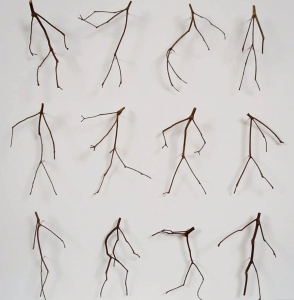 Everything physical, everything specific: the sharp scent of the woods that night in the Adirondacks when the rain drummed down on the canvas tent. The cold clear water that dazzled your body when you plummeted from the rope swing. The softness of the loam under your boots that cold dawn hike in Vermont.
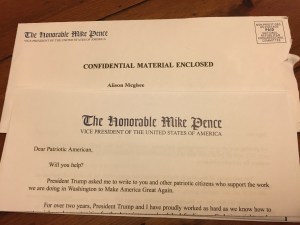 Last fall I began getting letters like this from the president, the vice-president, the NRA, anti-abortion organizations. Not my typical mail. Why me? Then it came to me: in August a friend died, a Marine combat veteran, and in his honor I made a donation to the Wounded Warrior project, which must have triggered a hundred conservative mailing lists.
 Last summer, driving to Vermont, I detoured past my grandparents’ dairy farm. That’s how I think of it –their farm, on McGhee Hill Road–even though it’s been almost half a century since it changed hands, bought by city dwellers who turned the barn into a house and the house into guest quarters.
  Who am I? What is my place in this world? How do I stay steady and strong and never stop trying to help the world? Our burning planet. The onrush of artificial intelligence. This heedless erosion of democracy. These are my three biggest panics.
  The summer I turned nineteen I took the bus west to Wisconsin, to work at a mom and pop resort where the owners housed us in a firetrap and fed us leavings from the guests’ plates.
  Alison McGhee