Poem of the Week, by James Richardson

My new poems podcast, Words by Wintercan be found here.


IMG_3857Most of the furniture in our house is wood, found curbside like the tiny wooden table that caught my eye yesterday a few blocks from home. Polished burled top, slender wooden dowels, sturdy legs, it looked handmade. My backpack was stuffed full of heavy groceries but I picked the table up anyway and carried it home like a baby. 

Box beam ceilings, cherry cabinets, oak floors, maple radiator covers. My house is over a century old, so the wood it’s made from must be far older than that, but it feels alive to me. After we moved in I wrote to the former owner, a cabinetmaker who had made all the kitchen cabinets, all the fitted radiator covers, a man who loves wood as much as me but, unlike me, knows everything about it. 

Can you tell me about the wood in the house? was my question, and his long, long reply detailed the specifics of each room. Sorry, he signed off. I‘m sure this is way more than you ever wanted to know. I guess you can tell how much I love wood. 

I thought about that man when I turned the tiny table over and saw the initials of the person who made it, burned into the wood.


Essay on Wood, by James Richardson

At dawn when rowboats drum on the dock
and every door in the breathing house bumps softly
as if someone were leaving quietly, I wonder
if something in us is made of wood,
maybe not quite the heart, knocking softly,
or maybe not made of it, but made for its call.

Of all the elements, it is happiest in our houses.
It will sit with us, eat with us, lie down
and hold our books, themselves a rustling woods,
bearing our floors and roofs without weariness,
for unlike us it does not resent its faithfulness
or question why, for what, how long?

Its branchings have slowed the invisible feelings of light
into vortices smooth for our hands,
so that every fine-grained handle and page and beam
is a wood-word, a standing wave:
years that never pass, vastness never empty,
speed so great it cannot be told from peace.    


For more information on James Richardson, please click here.

alisonmcghee.com

Words by Winter: my new podcast

Poem of the Week, by Benjamin S. Grossberg

*My new poems podcast, Words by Winter, can be found here. 

853B7327-276B-4536-BA2A-FF488CFE5606A couple of years ago my publisher emailed the cover art for a new novel. I thought it was beautiful – the rich color, the design, the way the title spread itself across the image– so I showed it to the Painter and our painter friend next door.

They studied it, turned the image this way and that, then looked at each other in a silent exchange of information. They were seeing things I didn’t, but what? 

They pointed here, pointed there, tried to explain how the typography was clumsy, too many fonts, and the kerning was off. And what did I think of the palette, was there too much cyan, was there enough contrast to read the spine copy? I tried to understand, but that would have required me to have different eyes. I thought of how hard reading can be for me, the books others rave about that I don’t, how sometimes I gnash my teeth and hunch my shoulders, mourning at how many sentences, including my own, could have been built so much more elegantly.  


The Finish Carpenter, by Benjamin S. Grossberg

Half million, and what? Cardboard subfloors—
crap, but all right. Vinyl-sided chimney.
Looks like shit, but can’t be seen indoors,
that’s something. But, Jesus, what you can see:

door frames, wall openings, kitchen pass through—
no moldings. Nothing. It’s like a face
without eyebrows. Or ears. And we’re talking new
construction, nice street. There’s window casing,

I guess we should be grateful. But they’re my folks—
pop was an architect—and I say, look, dad,
I’ll bring my god-damned miter saw. He walks
away from me, shaking his head. Glad

to do it, I say. Take me a day. He shrugs,
I see his shoulders move, his hand sweep down
in front of his face like he’s clearing bugs
or a smell. Why not, dad? Just a little crown

in the den, some chair rail. He’s seventy.
What happens—shit ceases to matter
at that age? Come on, I say. No filigree,
just finishing. You still have that step ladder,

right? He’s on the couch now, remote in hand,
surfing. I don’t get it. I don’t. Fine
corners, cornice, some detail, a few planned
correspondences. Why not? Some lines

to guide the space, hold it together. It frames
the parts. Gives shape. An order. Some wood.
That’s all I want for him. No games,
just shape, a little grace. He’s my blood;

I want him to have it nice. Mirrors and smoke,
he says, not looking up. He’s been saying it
to me twenty years, since I went broke
fixing my first place. Prewar, Sears kit

with nothing plumb, and me wild on the phone
raving about warped floor joists and plaster.
Smoke and mirrors, he said. And that’s it. Done.


Click here for more information about Benjamin S. Grossberg.

My website

My podcast.

My Facebook page

@alisonmcgheewriter

Poem of the Week, by Maggie Smith

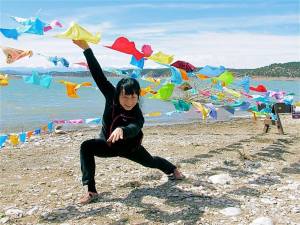
IMG_4264Would your life be worse then than it is right now? is a question to ask yourself when you wake up every day in fear and dread of something that hasn’t happened but might happen. Something you fight and fight and work and work to prevent happening, to you or to someone you love. Foreclosure. Suicide. Recurrence of cancer. Loss of a job, a friend, a romance.
At some point the panic might be so huge that it takes over your life, and what then? Then a balance has been achieved. The thing you so fear has, in the fearing of it, destroyed your peace, your health, your daily existence. So. If the thing you fear actually happened, would your life be worse than it is right now? 

Maybe. Maybe not. Maybe something else would rush in once the anticipatory dread and panic are finally gone, something huge and unfamiliar: relief. This poem brought so many feelings flooding through me.


At the End of My Marriage, I Think of Something My Daughter Said about Trees, by Maggie Smith 

When a tree is cut down, the sky’s like 
finally, and rushes in. 

Even when you trim a tree, 
the sky fills in before the branch 

hits the ground. It colors the space blue 
because now it can.


For more information about Maggie Smith, please check out her website.


My websiteMy blogMy Facebook page

Twitter and Instagram: @alisonmcgheewriter 

Poem of the Week, by James Baldwin

IMG_4907Last week, late at night, the fire alarm in my cheap motel began to shriek. Doors opened up and down the hall and men began to emerge: huge men, small men, men in their underwear, one on crutches, one pushing a walker, one carrying a case of beer, one sweating as if just out of a sauna. This is the strangest assortment of men I’ve ever seen, I murmured to myself. One of the men leered or smiled, hard to tell.

Next morning in the breakfast room I sat tapping on my laptop while the hallway men shuffled in one by one. The leer/smile man sat next to me. I could tell he wanted to talk but I pretended to be too absorbed in my work to look up. This did not stop him.

“Hey! I like your pink hair! How’s it goin’?” 

It was early. There were six hundred miles ahead of me. I didn’t want to talk. But then the last lines of this poem by James Baldwin came to me and I closed my laptop and turned to him and smiled. Had a long conversation about the fire alarm, the slim pickings at the breakfast buffet, his favorite smoking rituals back when everybody smoked, hard to believe it now, right? 

He was a lonely man. He just wanted to talk. Sometimes it feels like most people are lonely, and most people just want to talk. 


For Nothing Is Fixed, by James Baldwin

For nothing is fixed,
forever, forever, forever,
it is not fixed;
the earth is always shifting,
the light is always changing,
the sea does not cease to grind down rock.
Generations do not cease to be born,
and we are responsible to them
because we are the only witnesses they have.
The sea rises, the light fails,
lovers cling to each other,
and children cling to us.
The moment we cease to hold each other,
the moment we break faith with one another,
the sea engulfs us and the light goes out.


If you’d like to read more about James Baldwin, this is an interesting profile.

Website

Blog

Facebook page

@alisonmcghee

Poem of the Week, by Tiana Clark

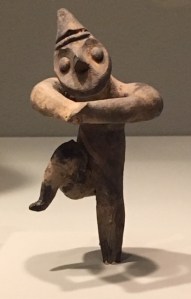
IMG_1558We went to a museum the other day with no specific purpose in mind and found ourselves in the Chinese art galleries. Jade. Porcelain. Bronze. Ornate vessels for cooking, for ceremonies, for burial. An arched gateway which used to lead to a family’s compound. A room with a low table, ink, brushes, where someone used to practice calligraphy. We peered in through the interwoven black wooden squares of traditional Chinese architecture. At one point a tiny capering man entranced me and I wanted to reach through the glass, and the thousands of years between us, and take him home. 
Everything about the two hours in that museum, and the rainy day itself, was slow. We kept wondering how long each vessel, plate, vase, jade carving must have taken the artist to make. A long time, was all we came up with, a long, slow time. A lifetime, maybe. 

I’m losing track of what life was like before the existence of this tiny computer that lives in the back pocket of my jeans and feeds me a constant stream of news and images and information and updates. When I take a break –in a yoga class, in a museum, by putting the tiny computer in another room while I lie on the couch and read–everything inside me slows down. This poem below, by Tiana Clark, resonates in my very bones.


My Therapist Wants to Know about My Relationship to Work, by Tiana Clark

I hustle
upstream.
I grasp.
I grind.
I control & panic. Poke
balloons in my chest,
always popping there,
always my thoughts thump,
thump. I snooze — wake & go
boom. All day, like this I short
my breath. I scroll & scroll.
I see what you wrote — I like.
I heart. My thumb, so tired.
My head bent down, but not
in prayer, heavy from the looking.
I see your face, your phone-lit
faces. I tap your food, two times
for more hearts. I retweet.
I email: yes & yes & yes.
Then I cry & need to say: no-no-no.
Why does it take so long to reply?
I FOMO & shout. I read. I never
enough. New book. New post.
New ping. A new tab, then another.
Papers on the floor, scattered & stacked.
So many journals, unbroken white spines,
waiting. Did you hear that new new?
I start to text back. Ellipsis, then I forget.
I balk. I lazy the bed. I wallow when I write.
I truth when I lie. I throw a book
when a poem undoes me. I underline
Clifton: today we are possible. I start
from image. I begin with Phillis Wheatley.
I begin with Phillis Wheatley. I begin
with Phillis Wheatley reaching for coal.
I start with a napkin, receipt, or my hand.
I muscle memory. I stutter the page. I fail.
Hit delete — scratch out one more line. I sonnet,
then break form. I make tea, use two bags.
Rooibos again. I bathe now. Epsom salt.
No books or phone. Just water & the sound
of water filling, glory — be my buoyant body,
bowl of me. Yes, lavender, more bubbles
& bath bomb, of course some candles too.
All alone with Coltrane. My favorite, “Naima,”
for his wife, now for me, inside my own womb.
Again, I child back. I float. I sing. I simple
& humble. Eyes close. I low my voice,
was it a psalm? Don’t know. But I stopped.

For more information about Tiana Clark, please check out her website.​

Website

Blog

Facebook page

@alisonmcghee

Poem of the Week, by Danez Smith

15844716_10155000188034276_278107369234601833_oI’m thinking of the man in the white shirt and the black pants, the one holding a briefcase, who stepped in front of the tanks in Tiananmen Square and stood there. I’m thinking of the girl in the long dress, the one who slid a flower into the barrel of the gun the officer had trained on her. I’m thinking of the woman who began a conversation with and ended up becoming a second mother to the boy who murdered her own son. I’m thinking of this tiny beautiful prayer by Danez Smith. A new year to all. May ruin end here.


Little Prayer
Danez Smith

let ruin end here

let him find honey
where there was once a slaughter

let him enter the lion’s cage
& find a field of lilacs

let this be the healing
& if not    let it be


​For more information on Danez Smith, please click here.​


Poem of the Week, by Yehuda Amichai, translated by Assia Gutmann

Screen Shot 2017-07-15 at 7.55.54 AMRemember the man in the photo to the right? He stood in front of those tanks during the Tiananmen Square protest in 1989, nothing but a briefcase in his hands. When the tanks tried to maneuver around him, he stepped in front of them again. I don’t know what became of him.

When the protest happened, I was teaching Mandarin at a big urban high school in Minneapolis, and I wheeled a television into the classroom each day so that we could watch world history being made. I was young and naive and I assumed that the protest –thousands of pro-democracy unarmed students occupying a massive public square– would end peacefully. I was wrong.  

But the Tiananmen pro-democracy movement continues to this day. One of the bravest to carry its flame throughout his life was one of my heroes, poet, human rights activist and Nobel Peace Prize laureate Liu Xiaobo*, who died yesterday from liver cancer after spending much of his adult life in prison. He consistently refused offers of freedom in return for admissions of guilt. He hoped to transcend his own personal nightmare, writing “If you want to enter hell, don’t complain of the dark.” In these terrible, ominous times –a time when our own elected employees seem bent on destroying American democracy– his example brings strength.Screen Shot 2017-07-15 at 11.12.38 AM

His wife, Liu Xia, entered into hell with him. Also a poet and activist, she suffers physical and emotional problems from the cruelty of their long separation and, now, his death. Their love was unwavering. Liu once said that it was the thought of his wife that kept him steady and strong. In mourning, I combed through my thousands of poems last night, looking for one to mark the passing of a person who had such courage and steadfastness. In the end I took a sideways turn and chose this one by Yehuda Amichai, in honor of the remarkable love between husband and wife.


In the Middle of This Century, by Yehuda Amichai (translated by Assia Gutmann)

In the middle of this century we turned to each other
with half faces and full eyes
like an ancient Egyptian picture
and for a short while.

I stroked your hair
in the opposite direction to your journey,
we called to each other,
like calling out the names of towns
where nobody stops
along the route.

Lovely is the world rising early to evil,
lovely is the world falling asleep to sin and pity,
in the mingling of ourselves, you and I,
lovely is the world.

The earth drinks men and their loves
like wine,
to forget. 
It can’t.
And like the contours of the Judean hills,
we shall never find peace.

In the middle of this century we turned to each other,
I saw your body, throwing shade, waiting for me,

the leather straps for a long journey
already tightening across my chest.
I spoke in praise of your mortal hips,
you spoke in praise of my passing face,
I stroked your hair in the direction of your journey,
I touched your flesh, prophet of your end,
I touched your hand which has never slept,
I touched your mouth which may yet sing.

Dust from the desert covered the table
at which we did not eat
but with my finger I wrote on it
the letters of your name


*Transliterated Mandarin is not pronounced the way it looks in English. Phonetically, Liu’s name is pronounced more like this: Lee-yu Shee-yow Baw. His wife’s name is pronounced more like Lee-yu Shee-yah.

 
​For more information on Yehuda Amichai, please click here.​
For more information on Liu Xiaobo, please click here.