Poem of the Week, by Marie Howe

Would you like to start the new year with an hour each morning of quiet writing in the company of others, without the pressure of sharing or feedback? Please join us for Write Together, January 12-17. Each day’s Zoom session features different readings, different prompts, and the chance to write quietly together in solidarity and appreciation. $100, with one scholarship remaining. Click here for more information and to sign up. 

The violinist with the beautiful smile in this photo used to be one of my closest friends. She lived in a small bright green ranch house right across the street from the middle school, and we would sneak out of school at lunchtime and go there to drink chocolate milk and eat peanut butter sandwiches.

Her sisters and brothers were in high school, unimaginably older and cool, laughing and talking and making offhand jokes about things like sex and drugs and rock ‘n roll. Had I been alone I would have been stunned and cowed and half-paralyzed by their coolness, their easy laughter. But I wasn’t alone. I was with her.

Why did she like me? In retrospect I was a quiet observer and not much fun back then, although maybe I’m not the best judge of that. But one reason she liked me is easy: she liked nearly everyone. She had a huge and generous heart. She was also unafraid of things that I was afraid of, like saying out loud that which scared me, hurt me, made me angry. She was honest about things. She saw life clearly, and stating the obvious didn’t scare her.

The boy I had a crush on used to ask if he could have a punch off my lunch ticket. Sure, I would say. I’ll pay you back, he would say. He’d run across the grass, back into the school. He won’t, you know, she observed. He won’t pay you back. And you’ll give it to him tomorrow if he asks. I looked at her. She looked back at me and smiled. She was wise. She was honest. She stated things the way they were. And she was unjudging. She was one of those rarest of creatures, a human being completely comfortable in her own skin.

She died of an aneurysm almost thirty years ago now, but I think of her most every day. That dark hair, those blue blue eyes, that grin. On the rare occasions when I drink chocolate milk, I make a mental toast to her. In my memory she is always smiling. A big, merry smile that showed off her high cheekbones. When I think of her, I also think of this poem.

My Dead Friends, by Marie Howe

I have begun,
when I’m weary and can’t decide an answer to a bewildering question

to ask my dead friends for their opinion
and the answer is often immediate and clear.

Should I take the job? Move to the city? Should I try to conceive a child
in my middle age?

They stand in unison shaking their heads and smiling—whatever leads
to joy, they always answer,

to more life and less worry. I look into the vase where Billy’s ashes were —
it’s green in there, a green vase,

and I ask Billy if I should return the difficult phone call, and he says, yes.
Billy’s already gone through the frightening door,

whatever he says I’ll do.

Click here for more information about Marie Howe. Today’s poem first appeared in What the Living Do, published in 1998 by W.W. Norton & Company.
alisonmcghee.com
My podcast: Words by Winter
Poem of the Week, by Manuel Iris

Would you like to start the new year with an hour each morning of quiet writing in the company of others, without the pressure of sharing or feedback? Please join us for Write Together, January 12-17. Each day’s Zoom session features different readings, different prompts, and the chance to write quietly together in solidarity and appreciation. $100, with one scholarship remaining. Click here for more information and to sign up. 

Because more than half of all suicides in the U.S. are by gun. Because my great-aunt’s leg was shot off by a hunting rifle. Because I watched a stolen Kia with boys hanging out the windows holding guns tear down my block. Because my friend was robbed at gunpoint in the church parking lot.

Because my cousin died by self-inflicted gunshot. Because someone once shot their gun off into my phone to make me think they were dead. Because my teacher friend sometimes calls in sick on Mondays because most school shootings happen on Mondays. Because the instructor in the gun familiarization class I took because I felt I should meet my enemy goes nowhere without his guns, not even room to room in his own apartment. Because when I’m in other countries I don’t worry I’ll be shot.

Prayer for a Potential Mass Murderer, a Future School Shooter, by Manuel Iris

May you find healing
before you find a weapon. 

May you find a safe place to cry
before you find a weapon. 

May your voice find the right words
and the right ears
before you find a weapon. 

May love be as available to you
as weapons are in America. 

I am talking to you
the deeply sad, the sick,
the neglected, the abused,
the bullied, the ignored,
the violent suicidal. 

You are also us,
you come from us
to bite us in the heart
with our own mouth. 

You will be us until we take
the hurt from your heart,
the rage from your mind,
the gun from your hands. 

May the silence heal
your thirst for revenge,
your heart full of hate,
your head full of plans
and scenarios. 

May your hurt
and our wound
stop existing. 

And may we stop being devoured
by the monsters we are, the pain
we have created. 

Click here for more information about Manuel Iris. Today’s poem was first published in Rattle #89, Fall 2025. 

alisonmcghee.com

Poem of the Week, by Robyn Sarah

Write Together 2026 is now open for registration! Come write with us for an hour each morning, January 12-17. Each day’s Zoom session features different readings, different prompts, and the chance to write quietly together in solidarity and appreciation. Click here for more information and to sign up. 

Last month, a week after my mother died, I was on the couch practicing Duolingo when my entire body began to shake, my gut turned to ice, and a feeling of terror overwhelmed me. You’re having a panic attack, I thought, but why? Then it came to me: there is no one in the world anymore to take care of you. No one will ever love you the way she did. This feeling was not rational, but neither is grief or panic.

Many of my mother’s favorite Poems of the Week from this blog were scattered around her apartment –she read them online and printed them out, tucked them into drawers, stuck them on the fridge, propped them up in window frames. But the one below didn’t come from me. She must have found it somewhere and loved it and printed it out. I brought it back with me and use it as a bookmark now, a small token of the essence of my mother.

Bounty, by Robyn Sarah

Make much of something small.
The pouring-out of tea,
a drying flower’s shadow on the wall
from last week’s sad bouquet.
A fact: it isn’t summer any more.

Say that December sun
is pitiless, but crystalline
and strikes like a bell.
Say it plays colours like a glockenspiel.
It shows the dust as well,

the elemental sediment
your broom has missed,
and lights each grain of sugar spilled
upon the tabletop, beside
pistachio shells, peel of a clementine.

Slippers and morning papers on the floor,
and wafts of iron heat from rumbling rads,
can this be all? No, look — here comes the cat,
with one ear inside out.
Make much of something small.

Click here for more information about Canadian writer Robyn Sarah. Today’s poem is from A Day’s Grace, published in 2003 by The Porcupine’s Quill.

alisonmcghee.com
My podcast: Words by Winter
Poem of the Week, by Dorianne Laux

Poem friends, if you are on both this list and my Substack list and want to be removed from one or the other, please let me know. None of us need yet more extraneous emails! Thanks.  

In grad school one night, at the end of the workshop, one of my classmates jokingly referred to me as the workshop’s den mother. Why? Because I sometimes baked muffins and brought them to class? Because I had a toddler and I was pregnant? I can still hear his voice. I’m not your den mother, I said. You kind of are though, someone else said, and I went silent.

Did they not think of me as a writer, a peer, their full and complete equal? Did they not see the fire that burned inside me, the fire that had always burned inside me? I was burning then, I’m burning now.

Moon in the Window, by Dorianne Laux

I wish I could say I was the kind of child
who watched the moon from her window,
would turn toward it and wonder.
I never wondered. I read. Dark signs
that crawled toward the edge of the page.
It took me years to grow a heart
from paper and glue. All I had
was a flashlight, bright as the moon,
a white hole blazing beneath the sheets.

Click here for more information about wondrous poet Dorianne Laux.
alisonmcghee.com
My podcast: Words by Winter
Poem of the Week, by Tangerine Bell

Write Together 2026 is now open for registration! Come write with us for an hour each morning, January 12-17. Each day’s Zoom session features different readings, different prompts, and the chance to write quietly together in solidarity and appreciation. Click here for more information and to sign up. 

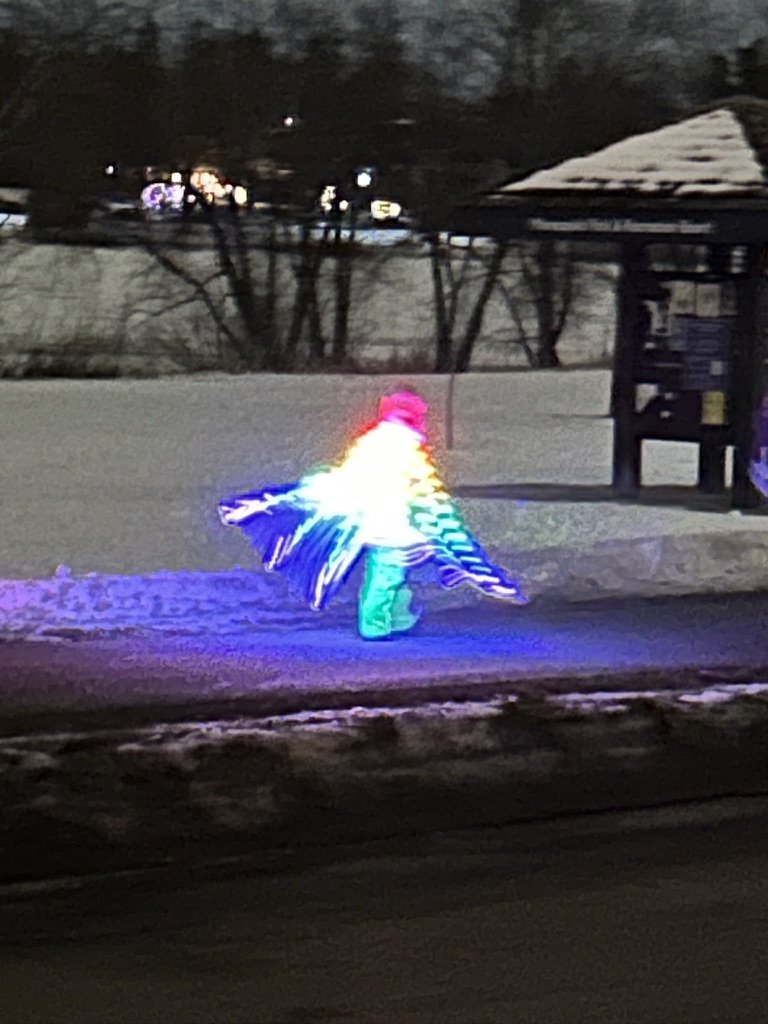
What I love about Tangerine Bell, who published her first book at 94, is her absolute refusal to shrink into the shadows. To efface herself because of her age or her gender. To pretend she didn’t care, had grown out of wanting. Nope. Give me my due, she says. I so admire people who boldly stake their claim in the world, their right to exist and be heard. I wish I’d known her.

Epitaph for an Unpublished Poet, by Tangerine Bell

No resurrection hymn can budge from dead
The one whose pungent verses rot unread.
So do not sing your songs to rouse my head.
Sing mine; sing mine. Sing mine instead.

Click here for more information about Tangerine Bell. 
alisonmcghee.com
My podcast: Words by Winter
Poem of the Week, by Ginger Andrews

Write Together 2026 is now open for registration! Come write with us for an hour each morning, January 12-17. Each day’s Zoom session features different readings, different prompts, and the chance to write quietly together in solidarity and appreciation. Click here for more information and to sign up. 

Remember playing Hot Lava? Making blanket forts? Drawing sinks and burners on big empty cardboard boxes and playing House? Running through the cornfield playing Tag and Hide & Seek? Turning the old broken-down chicken coop into a tiny house with table and chairs and curtains? Playing Restaurant and making menus and taking orders from your friend’s ever-patient grandfather? Okay, maybe a few of these are Alison-specific, but I know you know exactly what I’m talking about.

Rolls-Royce Dreams, by Ginger Andrews

Using salal leaves for money,
my youngest sister and I
paid an older sister
to taxi an abandoned car
in our backyard. Our sister
knew how to shift gears,
turn smoothly with a hand signal,
and make perfect screeching stop sounds.

We drove to the beach,
to the market, to Sunday School,
past our would-be boyfriends’ houses,
to any town, anywhere.
We shopped for expensive clothes everywhere.
Our sister would open our doors
and say, Meter’s runnin’ ladies,
but take your time.

We rode all over in that ugly green Hudson
with its broken front windshield, springs poking
through its back seat, blackberry vines growing
through rusted floorboards;
with no wheels, no tires, taillights busted,
headlights missing, and gas gauge on empty.​ 

Click here for more information about poet Ginger Andrews. Today’s poem can be found in An Honest Answer, published in 2021 by Story Line Press. 
alisonmcghee.com
My podcast: Words by Winter

Poem of the Week, by Seán Hewitt

Yesterday we walked past four men in yellow safety vests standing silently in a south Minneapolis front yard, gazing up at the limbs of an enormous oak next to an old frame house. One limb drooped close to the roof. It was a brilliant fall day, maple and oak leaves twirling to the ground in red and yellow, and maybe because I’m in love with trees or maybe because I’m me I said to the Painter Those men look like they’re having a prayer meeting for the tree.

The Painter, who used to work for a tree pruning company, explained they were trying to figure out how high to climb, where to make the cuts, calculating which way the limbs would swing on their way down to the ground, how to both keep the tree alive and the house safe.

Which also feels like a kind of prayer.

Leaf, by Seán Hewitt

For woods are forms of grief
grown from the earth. For they creak
with the weight of it.
For each tree is an altar to time.
For the oak, whose every knot
guards a hushed cymbal of water.
For how the silver water holds
the heavens in its eye.
For the axletree of heaven
and the sleeping coil of wind
and the moon keeping watch.
For how each leaf traps light as it falls.
For even in the nighttime of life
it is worth living, just to hold it. 

Click here for more information about poet and novelist Seán Hewitt. Today’s poem is from his collection Tongues of Fire, published in 2020 by Jonathan Cape Press.
alisonmcghee.com
My podcast: Words by Winter

Poem of the Week, by W.S. Merwin

I still see the look in my mother’s dark eyes, decades ago, when I told her a decision I had made, one that would cause the people I most love to suffer. She reached for my hands. It will be okay, she said. Everything will be okay. And that gave me strength. Many years later she told me she hadn’t known at all that it would be okay, but I knew I had to tell you that.

Last week it was my turn to tell my mother, my lifelong love, that it would be okay. That in her absence we would take care of each other, that we would go on and be happy. I did not tell her my heart was broken, because she would have worried. It would have distracted her from the profound work of dying. She needed to be free.

Before she entirely lost her words, she leaned her head on my arm in the middle of the night and kissed it. Do you feel like you’re my mother now? she murmured. I do, I answered. Well, you’re a very nice mother, she said, and she smiled like a little girl.

Good Night, by W.S. Merwin

Sleep softly my old love
my beauty in the dark
night is a dream we have
as you know as you know

night is a dream you know
an old love in the dark
around you as you go
without end as you know

in the night where you go
sleep softly my old love
without end in the dark
in the love that you know

Click here for more information about W.S. Merwin. Today’s poem is from his collection The Shadow of Sirius and was published by Copper Canyon Press in 2008. 
alisonmcghee.com
My podcast: Words by Winter
Poem of the Week, by Czeslaw Milosz

Here’s the fourth-floor walkup you called home. Here’s the tiny room overlooking Joy Street where your sister used to roll her waitressing change into paper tubes for the rent. Here’s your room, with the big saggy bed left by a previous tenant. Here’s the bathroom where you didn’t pee at night because darkness was the domain of the cockroaches. Here’s the plant in the sunny window that you wound around itself because it was out of control.

Here’s the curbside rocking chair that your friend lugged up for you. Here’s the curbside rug on the living room floor where you used to host Chinese dinner parties. Here’s the couch you were lying on that spring Thursday when the phone call came. This is the place you fled a few weeks later. The place where you were a girl and then not. The place that comes back to you in dreams, just the way this poem does. 

Encounter, by Czeslaw Milosz

We were riding through frozen fields in a wagon at dawn.
A red wing rose in the darkness.

And suddenly a hare ran across the road.
One of us pointed to it with his hand.

That was long ago. Today neither of them is alive,
Not the hare, nor the man who made the gesture.

O my love, where are they, where are they going
The flash of a hand, streak of movement, rustle of pebbles.
I ask not out of sorrow, but in wonder.

For more information on Czeslaw Milosz, please click here
alisonmcghee.com
My podcast: Words by Winter 
Poem of the Week, by Dick Westheimer

The time one of my babies fell off the changing table. The time I, crazed with sleeplessness, slapped one of my little ones on the top of their head in the middle of the night. The time I didn’t know what to do or say in response to one of my teenagers and I regret what I did and said. The time, the time, the time. They laugh when I apologize for these things and say they don’t even remember. But I do.

Quantum Falling, by Dick Westheimer

When I dropped the hammer
from the top rung—
twelve feet below,
on my ten year old’s head—
he looks up right before
the fall. His,
mine. I am no longer the dad
who knows all.
The boy’s now an NP and says
I did right—kept him
awake, from fading,
from falling away.
He still dreams
of the ladder, the wall,
the house,
the blooming black flower
he’d become
when the hammer hit,
recalls my face
blank, falling away
into the wide-open mouth
of the sky. I still see him
when I look in the mirror
at night—alive and dead—
knowing
the truth
about
me.​ 

Click here for more information about Dick Westheimer. Today’s poem was published in the August 2025 edition of Rattle, from their Ekphrastic Challenge series. 
alisonmcghee.com
My podcast: Words by Winter