Books I Read in April
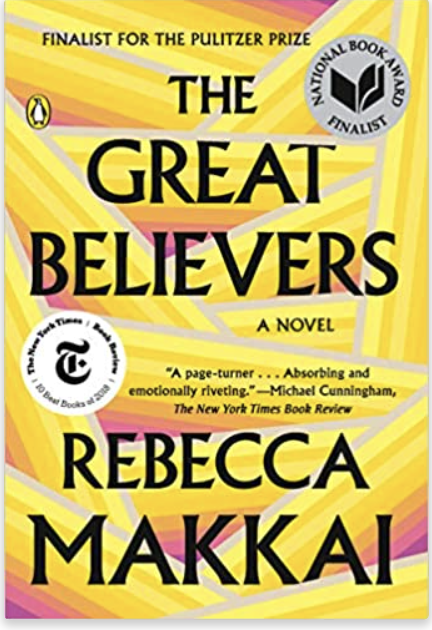
The Great Believers, by Rebecca Makkai. This is my first Makkai novel but it won’t be my last. Because I don’t read book descriptions, reviews, or book jackets before I read a book, I wasn’t prepared for the emotional heft of this novel, which revolves around a core group of beloved friends and flips back and forth between the 1980s and 2015. Makkai’s command of detail and deep knowledge of the beginning of the AIDS crisis brought me right back to those early days, when my gay friends were so young and confronting that hideous, bewildering disease that took so many of them. The emotional and physical havoc of AIDS, and the love, support and anger within the community, reverberates throughout this elegy of a novel. Intense. Painful. Powerful.

Dear Mr. Henshaw, by Beverly Cleary. After The Great Believers I turned to Beverly Cleary as both a palate cleanser and to continue my goal of reading children’s classics I never read when I was a child. Cleary’s trademark hilarity, deadpan realism, and inventiveness with structure and situation are on full display here, but I did not expect to tear up as many times as I did. This small book, structured first as letters from a child to his favorite author, Mr. Henshaw, and then as Dear Mr. Henshaw entries in a private journal, grows in depth and power as we experience the boy’s life along with him from childhood to adolescence. So much wisdom in this novel, which packs an emotional punch I did not anticipate. Then I looked at the book cover again and saw it had won the Newbery, so…duh. Wonderful book.
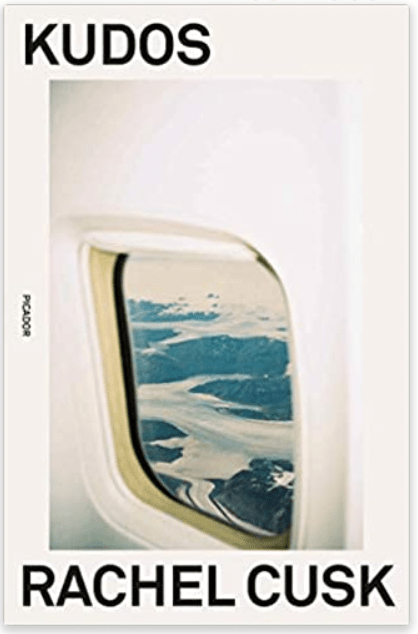
Kudos, by Rachel Cusk. In this, the final novel in the Transit trilogy, Cusk again stunned me with the precision, strangeness, and almost overwhelming honesty with which the people in her books speak to each other. Every bit of social niceties is stripped away, so that each conversation goes straight to the gut, or jugular, or heart of the heart of the situation. Our same novelist is again traveling to another part of Europe for a book conference. Cusk neither analyzes nor returns to conversations between the people in her novels, but fragments of them haunt me, such as the unknowing contempt, in Kudos, of a celebrated male writer for the wife he describes as perfectly happy being the stay at home mother of their children. After which he casually mentions she just finished a book for children which happened to sell in a three-book deal. DUDE. Cusk’s people have conversations that lay bare the complexities of marriage and divorce in a way that’s profoundly uncomfortable for me to read. I’ve never read someone who writes like Rachel Cusk.

Lucy by the Sea, by Elizabeth Strout. Because of my no-prior-info policy with regard to reading, this latest Lucy Barton novel by Strout took me by surprise. This is the first pandemic novel I’ve read, and it hurt in ways I wouldn’t have predicted. Everything we/the world went through. All the ways we/the world changed. Add to the omnipresent fear, pain and loneliness the murder of George Floyd, which happened a 20-minute from my own house in Minneapolis, which Strout pinpoints as ground zero for the resulting wild anger and uprisings that rose around the country, and this novel went straight to my gut. Although I initially wanted to throttle Lucy for her dithering, by the end of this slender novel I was struck –yet again—by the odd, organic wisdom this fascinating fictional woman brings to her understanding of life and human relationships and, by extension, to our current lives.
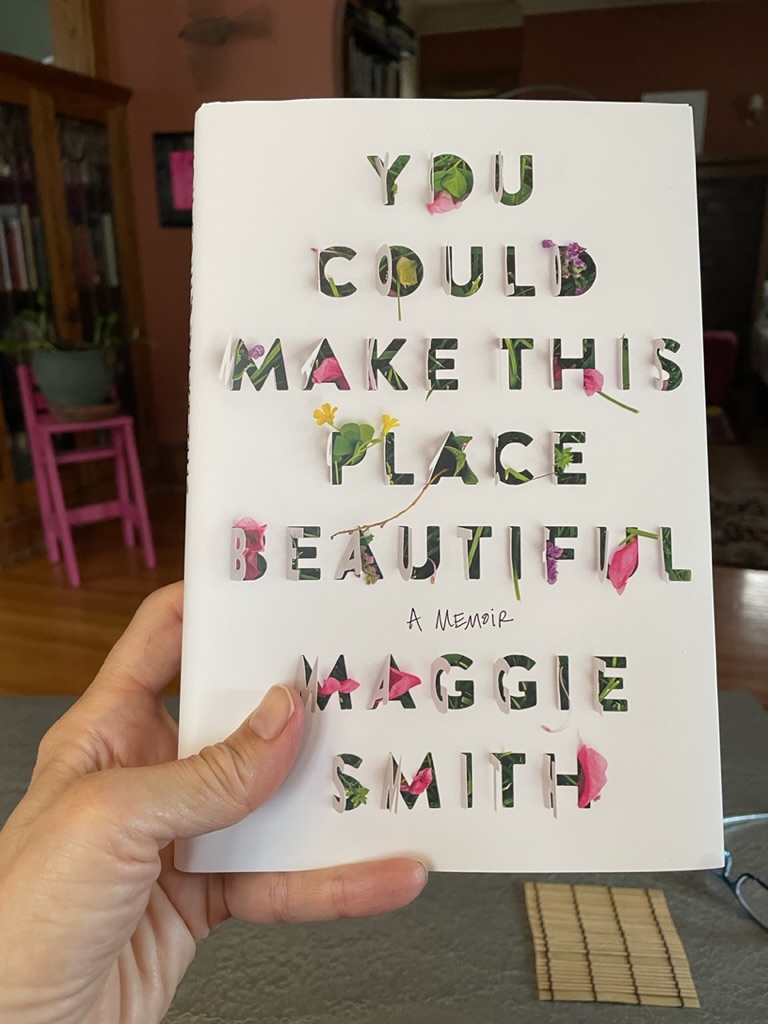
You Could Make This Place Beautiful, by Maggie Smith. In this memoir, by the poet who penned Good Bones, a poem that stunned me (and the rest of the world) when it came out, Smith wonders aloud on the page in each of the brief, illuminative passages that compose the book about the selves she was in her marriage, as it crumbled, and as she makes her way through the first years afterward. Widely thought of as a “divorce” memoir, I see this book as so much more than that: a woman finding her place as an artist in a world that regards the work of writing as not work, as something to be done when it doesn’t inconvenience others, as something so difficult to claim that I remember how awkward and embarrassed I felt when, in my own life, I forced myself to say “I’m working” instead of “I’m writing.” Why can’t we (and I’m talking specifically about women here) be partners and mothers and artists? Answer: we can. You Could Make This Place Beautiful is the fierce, searching story of a woman staking her claim in the world.


 Alison McGhee