Books I Read in May

Unless, by Carol Shields. Long ago I read The Stone Diaries (which won the Pulitzer Prize), my only Shields novel until now. Which is too bad, because Unless is a wonderful novel. In an uncanny way, Shields strikes me as a bridge between tell-nothing-about-the-narrator Rachel Cusk and allow-us-fully-in Elizabeth Strout, not to mention that all three novelists are writing books about women who are writers (something which did not occur to me until I’d finished all three books, which you can take as proof of my obtusity). Set north of Toronto, Unless charts both the writing life and the mothering life of Reta Winters, whose beloved oldest child, in an abrupt turnaround, spends her days on a Toronto corner with a begging bowl, seeking goodness. The daughter’s mysterious malady and her mother’s heartbreak are charted in one of the most quietly fierce feminist novels I’ve read. Beautiful.
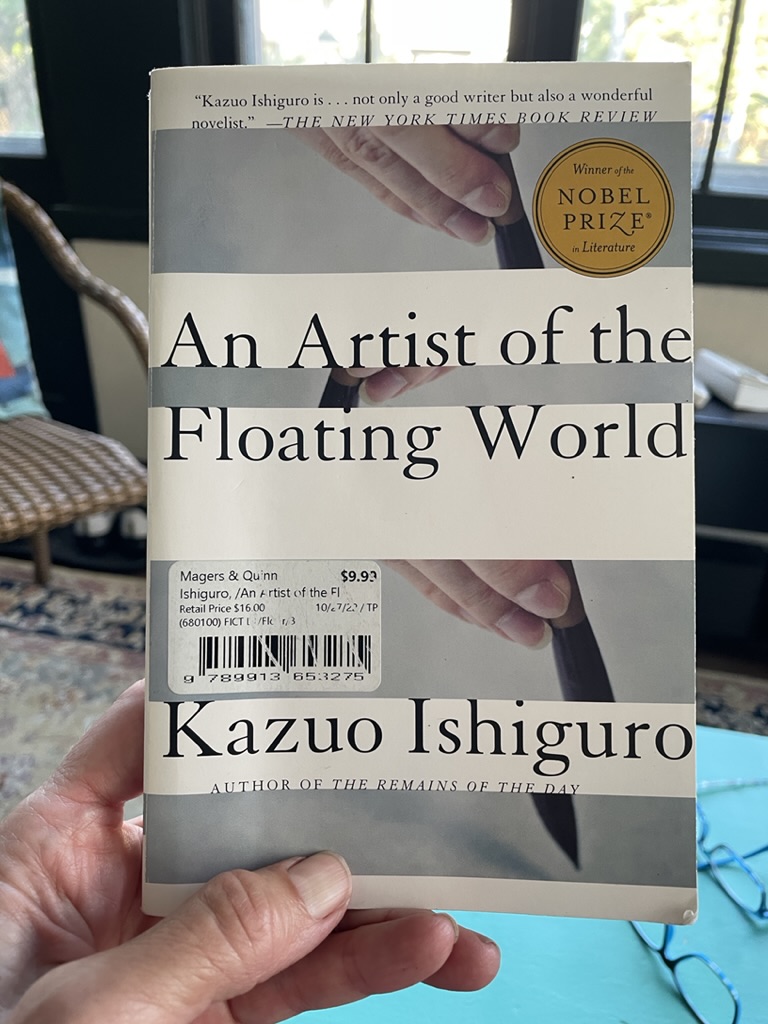
An Artist of the Floating World, by Kazuo Ishiguro. I space my Ishiguro novels out, mostly because I don’t want to run out of them in my lifetime, and I picked up this one at Magers & Quinn fully intending to save it for later, but then read the first page and boom, finished it. I have come to understand there’s a central mystery at the heart of all Ishiguro novels, one that will be revealed to me slowly, in small bits and fragments of narrative and dialogue, and that by the end will have torn my heart open. Such is the way with An Artist of the Floating World, Ishiguro’s second published book. Set in Japan in the first few years after WWII, an older artist, paying close attention to those around him, begins to rethink his role, both personal and public, in his country’s march to war. A quiet, introspective, profoundly human book.

The Corrected Version, by Rosanna Young Oh. In this collection of poems, Oh reflects on a childhood as the daughter of Korean immigrants who opened a small grocery store on Long Island. From the future she lives in now, Oh looks back on the details of her family’s life, and what her parents taught her in word and example as they devoted themselves not to the work of the mind they’d been educated for, but to the labor of keeping the store and their children going. The poet’s eye Oh brings to scene and imagery turns memory vivid, infused with both love and clarity. From my favorite poem, in which she and her father are picking through blueberries: Suddenly, my father’s voice emerges as though from a / distance: “You were not meant to live this kind of life.” / But nor was he—a man with a mind made wide by books,/who as a child rose with the sun to read by its light. To me, born and raised in a nation where most inhabitants, like me, are descended from immigrants, this lovely book feels both familiar and deeply specific.

Useful Phrases for Immigrants, by May-Lee Chai. Short story collections can be hard for me, only because each story often feels novel-like in its depth and scope, and then poof, it’s over and there are many more to read. Not so with Chai’s stories, which are similar (sometimes puzzlingly so; family configurations and objects can be startling alike, especially in two of the stories) – I read the collection in a single day. Chai is piercingly honest and evocative in her exploration of the Chinese immigrant experience, both recent (xìa hai, jumping into the ocean) and generational, in long-established families. In this way, Useful Phrases for Immigrants reminds me of Kelly Yang’s wonderful novels for children; I was equally absorbed in Chai’s people and their frustrations, accomplishments, longings, and relationships both familial and cross-cultural. I wish that Chai’s fictional Uncle Lincoln, who radiates kindness and clarity, existed in real life, so that we we could be friends.

Horse, by Geraldine Brooks. This is my first novel by Pulitzer Prize winner Brooks, and…wow. I learned so, so much about the world of horses, horse racing back when it was a national obsession, and aspects of the Civil War I hadn’t known about. Horse skips back and forth from mid-1800s Kentucky and points south to 2019 D.C. to 1950s Manhattan, and is mostly told through the voices of Jarret, an enslaved horseman; Thomas, an equestrian artist; Martha, a mid-century pioneer contemporary art collector; Jess, a scientist who specializes in articulating the skeletons of long-gone animals, and Theo, finishing his Ph.D. in art history. I list these voices because they all seem so different from one another, and yet part of Brooks’ genius is weaving an increasingly intimate net that enfolds them all –and us—in the historical and ongoing racial wrongs of this country and the world. Jarret is (to me) by far the most affecting person in this exceptional, extraordinarily researched novel.
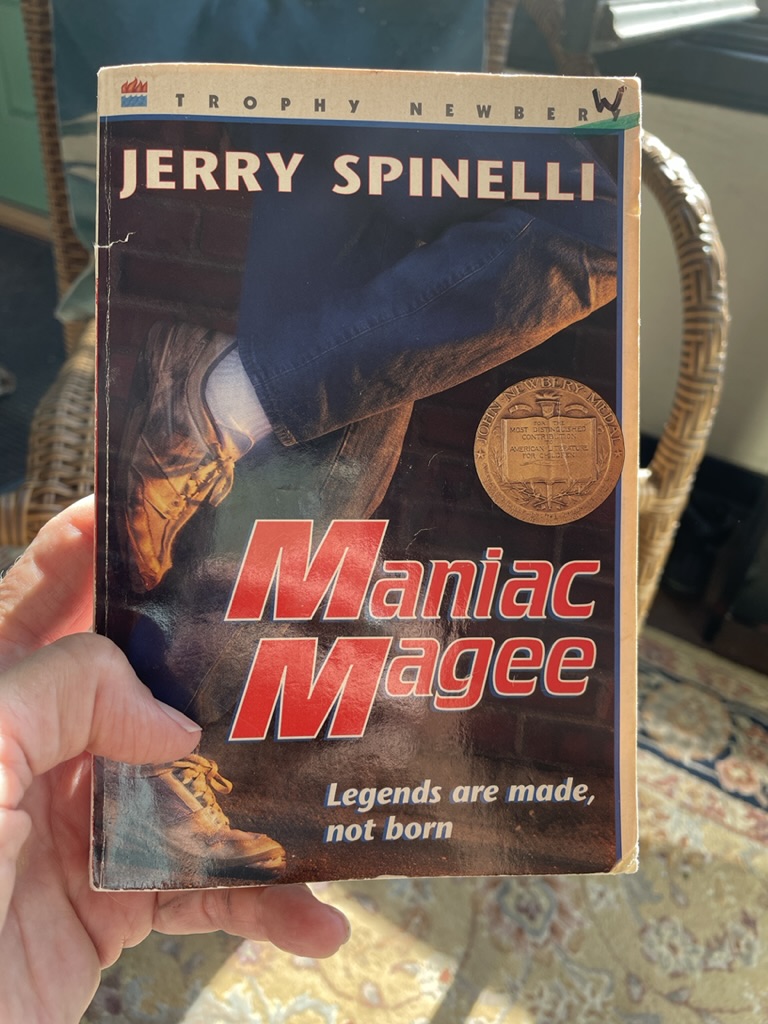
Maniac Magee, by Jerry Spinelli. Another in my never-read-this-children’s-classic when it came out books. What an interesting, unusual, challenging book. Jeffrey Magee, aka Maniac Magee, takes off running (literally) in the first few pages and never stops. Set in a Pennsylvania town divided (again literally) into Black and white halves, Maniac takes it upon himself, in his search for a home and family to call his own, to unite the townspeople. The book is unrealistic and yet, in what feels like an absolute determination toward happiness and resolve, transcends that unrealism to become a story of optimism, belief that change can happen, and love. Somehow I wasn’t fundamentally put off by the fact that it’s a white kid written by a white author who opens up hearts on both sides of the divide. I ended up loving everyone in this book, which, I noticed only after finishing it (see obtusity comment above), is another Newbery winner.

Ivy and Bean, by Annie Barrows and Sophie Blackall. I found this wee book, the first in the beloved series, in a little free library and gobbled it down as I drank a mug of coffee (I drink coffee slowly). Such a charming, funny, spirited novel. I kept thinking all the way through of how much fun my friend and I had writing the Bink & Gollie books together, and the effervescence of Ivy and Bean, both in the evocation of the two kids and in the pairing of text and illustration, made me think that Barrows and Blackall must also have so much fun writing and illustrating these books. A charmer.
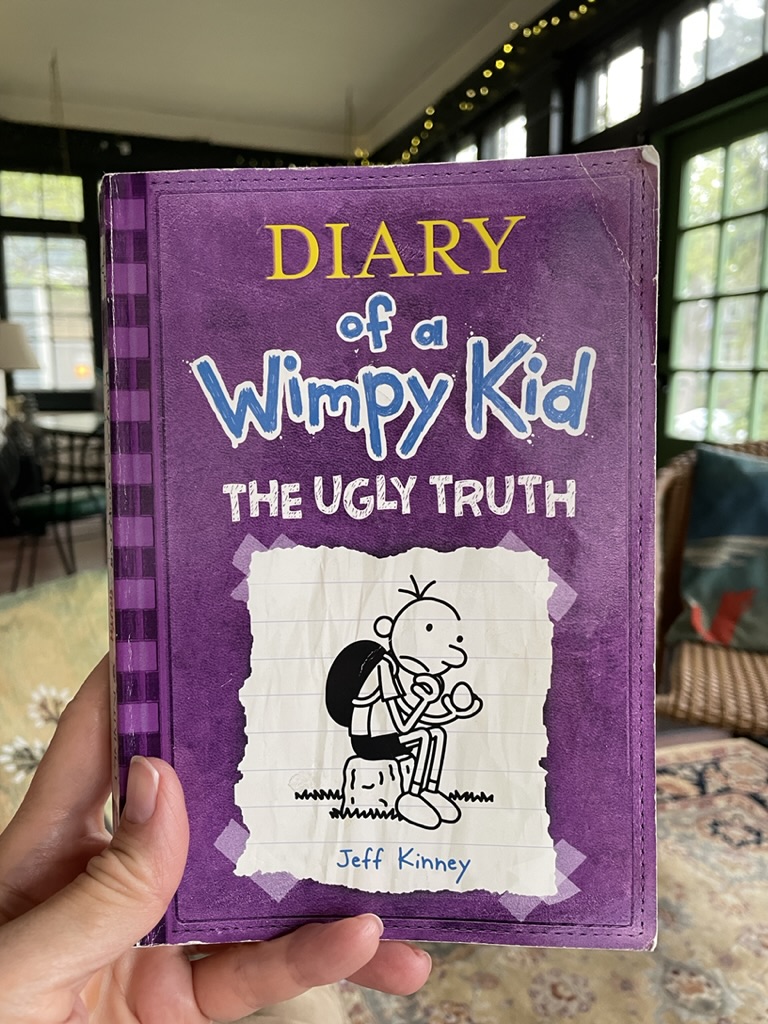
Diary of a Wimpy Kid: The Ugly Truth, by Jeff Kinney. I remember reading and enjoying the first Wimpy Kid when it came out long ago. Either I’ve changed or the books have, because I didn’t just enjoy The Ugly Truth, which was published a few years later, I sat on my porch chortling out loud all the way through. Kinney is so, so good at being inside the head of a middle school kid, and so is the way he relays family, school, and social situations. The diary format is perfect because it allows the reader to feel and empathize with child narrator Greg’s point of view while also stepping back and viewing him from an outsider’s point of view. Nothing is off-limits for discussion, and yet there’s something so reassuring in the way everything is discussed. I finished The Ugly Truth and texted a friend: “Kinney’s a damn genius.” Truth.

Books I Read in March

March 2023

Saints of the Household, by Ari Tison. Brothers Jay and Max live in a home charged with the constant worry and fear that their abusive father will again unleash his violence on their mother and them. Their own unspoken, buried rage at their father erupts one day when they beat up their cousin Nicole’s threatening boyfriend. That single act of violence propels the boys into both enforced counseling and a first-ever pulling away from each other. Max turns his pain into art in the form of paintings, while Jay’s awareness of his own frustrated sorrow begins to inform his plans for the future, his close friendship with Nicole, and his understanding of his place within his family. Alternating chapters in the voice of each brother interweave stories and wisdom from their Bri Bri and Anishinaabe ancestors, and the physical presence of their gentle Bri Bri grandfather lends depth and insight to their struggles. A beautiful, heartfelt book.

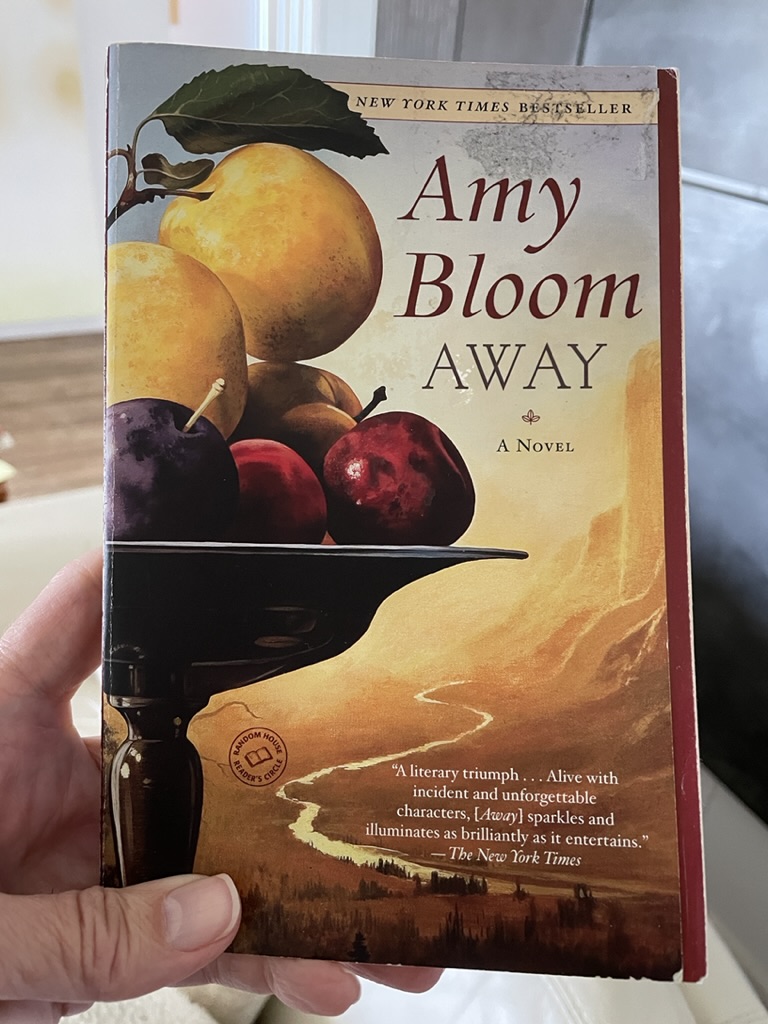
Away, by Amy Bloom. Damn, this writer can tell a story. Fearless, funny, written in times and places far from ours but so rich in detail that you feel as if you’re living her people’s lives right along with them, Away is the story of Lillian, who survived the massacre of her family and village back in Russia and escaped to the Lower East Side. When you’ve lost everything, you’ll do whatever it takes to thrive, and Lillian does. But the news that her daughter survived death sets her on a quest across America and into Alaska. Bloom never, not once, loses sight of the joy and humor that can be found in the darkest of circumstances. This novel propels its way forward, shimmering with light and life and laughter and love.

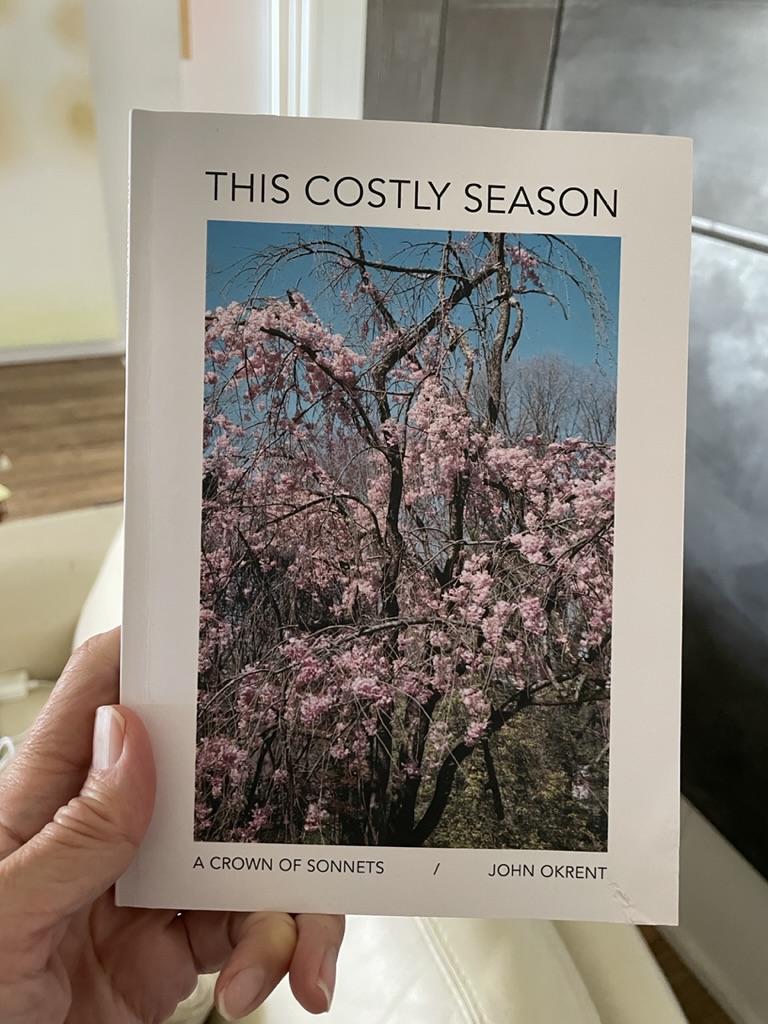
This Costly Season, by John Okrent. It usually takes me a while to read a book of poetry –poems I love being to me tiny emotion bombs—but not this one. A collection of free-form sonnets written by a family physician in the Pacific Northwest over several months in the beginning of the pandemic, This Costly Season is almost hallucinogenic in its evocation of those early days. The fear. The inability to help. The lack of knowledge or cure. The title of each poem is the day’s date, and each ending line is woven into the first line of the next poem. Time marches on, the pandemic deepens, questions remain unanswered but for the fact that all answers, for the living, still and always remain the same: to love our people and our world and hold them close, because time, time is always short.

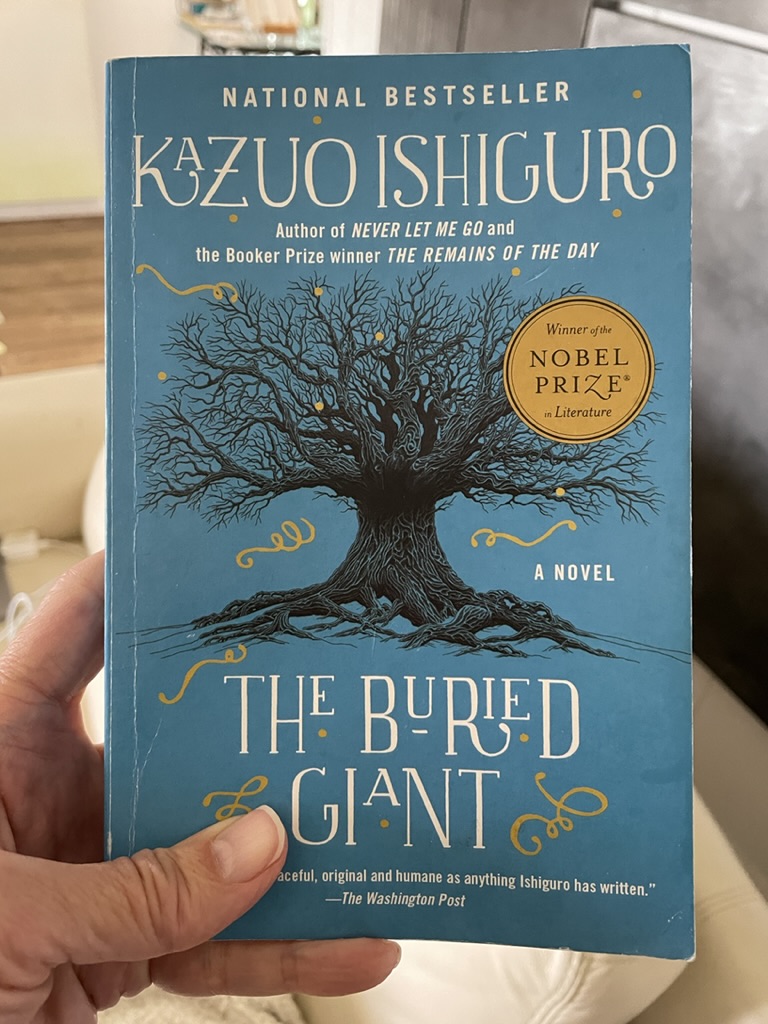
The Buried Giant, by Kazuo Ishiguro. I’ve been a writer my entire life, something that influences the way I relate to structure, point of view, storytelling. Most of the time, I instinctively understand the decisions a writer made, no matter the form, because the process of writing is so familiar to me – I’ve been there and done that (this is not a negative). But with writers who are my personal giants, I am rarely able to anticipate from which deep well their books emerged or how they managed to pull them off. These writers are few. Ishiguro is one of them. I space out his books because I know each one will in a small, profound way transform me – but the transformation will not come without cost. Few writers break my heart the way Ishiguro does. Set in post-Arthurian England, The Buried Giant is odd, dreamlike, unlike anything else I’ve ever read by the man, and, like everything he writes, mesmerizing.

The Lowland, by Jhumpa Lahiri. To pick up a Lahiri novel or collection of stories is to commit yourself to a journey: through time, eras, over continents, in and out of the minds and hearts of the people who populate these deeply internal worlds. I seem to be in a heartbreaking-book streak and The Lowland is not an exception. Set in post-partition Calcutta and Rhode Island and spanning half a century, this novel, despite a plot that in one particular way occasionally strained my credulity (possibly because one of my own plots strains my credulity in the exact same way?) kept me up late. Two brothers, alike and unlike, one enigmatic woman, political divides, and the weight and painful beauty of parenthood. Carefully wrought and utterly absorbing.

Notorious Nineteen, by Janet Evanovich. Years ago my parents, believing I should read more books that make me laugh, turned me on to the Stephanie Plum novels, about a Jersey bond enforcement girl. After reading the first in the series I realized my parents were correct, so I bought the first twenty-two off eBay in one big cheap used batch. I dole them out to myself when in need. These books exist in a slightly parallel world that looks like ours but is funnier, and where everyone has a gun but the guns aren’t actually dangerous. By the end of each book Stephanie will have ordered from Cluck in a Bucket at least twice, had great sex with Joe Morelli and contemplated even greater sex with Ranger, been covered with paint, garbage, or something else icky, witnessed her car go up in a ball of fire, done something mildly illegal with her friend Lula, and rescued her grandmother from making yet another scene at yet another funeral viewing. There’s a reason people read Evanovich novels. If you know you know.

Mini-book reviews

Ohhhhh I am so behind with my 2020 mini-book reviews. My lofty goal of a round-up review each month entirely fell by the wayside, along with so much else in this overwhelming year. Let me partially remedy that right this minute with mini-book reviews of books I read in the last few months, written on the spot just now.

Note that I only review books I loved or that, even if I didn’t love them, have stayed with me in inexplicable ways that somehow merit attention. Note also that all these books were ordered and bought from indie bookstores, the beautiful lifeblood of readers and publishers. Please support your independent bookstores. You can find yours right here at this handy-dandy link: https://www.indiebound.org/

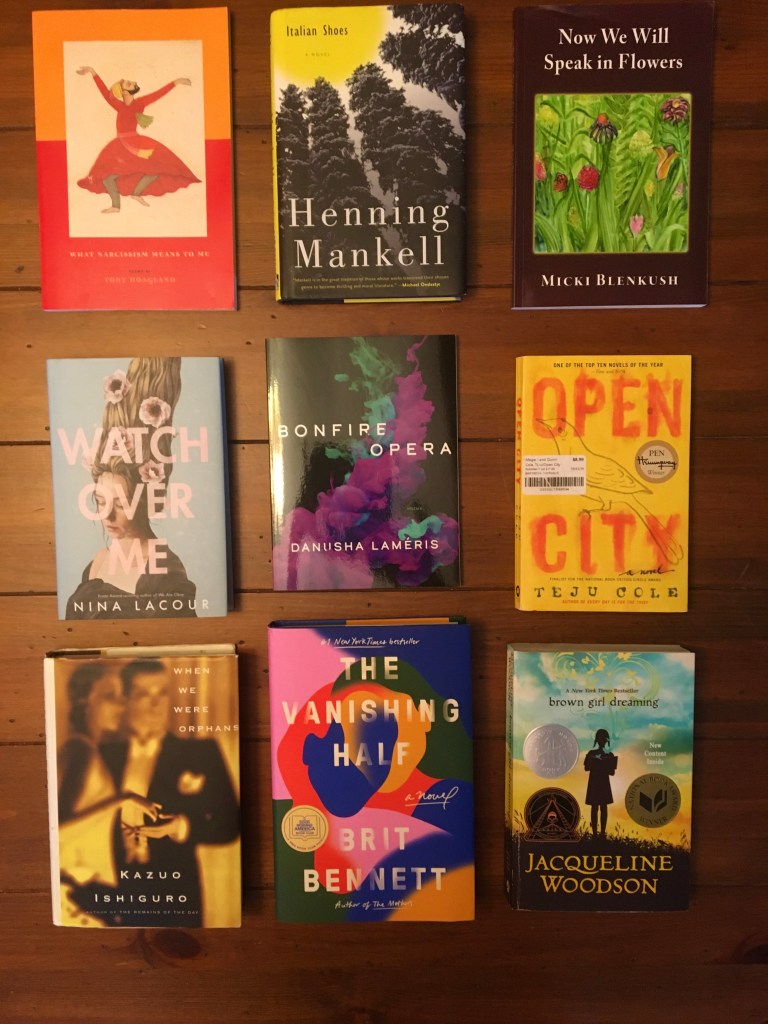
Bonfire Opera, by Danusha Lameris. Oh, I love this woman’s poems. The first time I read Small Kindnesses, I wrote it out by hand and then copied it into my Favorite Poems files. And then scurried over to Magers and Quinn to pre-order Bonfire Opera, the book from whence it came. Lameris writes of ordinary life the way our greatest writers do, the way that allows us to see that no life is ordinary, that our every smallest action ripples out. A beautiful, beautiful book.

Brown Girl Dreaming, by Jacqueline Woodson. I’m late to the party with this lovely book, a memoir in verse-like prose written for middle grades readers but which really, like all great books ostensibly for children, is written for everyone. Woodson writes about her life, from birth through middle school, dipping down into small details the way a hummingbird alights on the sweetest flowers. Each chapter is so brief, so full of love and wonder and subtle commentary on life as a brown girl in the 60s and 70s, and every few chapters is one consisting solely of a haiku that somehow punctuates and coheres the entirety. Such a beautiful book.

The Vanishing Half, by Brit Bennett. This woman is such a good writer. I loved her first novel, The Mothers, and this one is equally absorbing. Identical twins Stella and Desiree, born in the 60s into an almost-mythical small town populated entirely by light-skinned Black citizens, leave home at age sixteen to make their way in the wider world. Stella chooses to “pass” as white, a decision that haunts every aspect of her life thereafter, while Desiree gives birth to a daughter as “black as tar.” Bennett infuses her fictional people with such specificity that their pain, joy, and unbreakable sisterly bonds reveal the intricacies of our nation’s historical racism and sexism while pulling the reader so deeply into their personal life struggles that they will be with me forever.

Italian Shoes, by Henning Mankell. This is my first dip into the vast array of books by renowned Swedish writer Mankell (the man who writes the Kurt Wallander detective series), It’s an intensely serious, quiet novel narrated by a former doctor who, after a tragic surgical mistake, chooses to isolate himself on the island his grandparents left to him, where he is the sole inhabitant. He cuts a hole in the ice of the bay every morning and plunges in – the only time he feels truly alive. Over the course of the novel he encounters, for the first time in decades, a past love who comes in search of him, sparking a small but profound reconnection with the wider world. While I did not love, or even particularly like, the narrator of this book, I remain both haunted and heartened by his inherent sadness and gradual, slow, opening back up to his fellow humans.

Watch Over Me, by Nina LaCour. I loved Nina’s novel We Are Okay and I loved this one too, for the same reasons – her uncanny way with the small, perfect detail that bring both setting and people to life. LaCour writes of the Bay area the way that only an observer with a poet’s eye can, so that the landscape becomes as much a character as the people. Set on a farm for foster-to-adopt children, Watch Over Me follows teenager Mila as she gradually, painfully begins to place pattern to the trauma of her past. LaCour’s descriptions of The Farm are like a dream, the kind of farm where everyone is loved and cared for, where there’s always plenty to eat, plenty of blankets, flowers everywhere, warmth when you need it, solitude when you need it, and, I imagine board games everywhere. The foster parents surround their traumatized charges with the kind of love and support that would heal the entire world should we all be so lucky to experience it. A lovely novel, full of hard-earned hope.

Now We Will Speak in Flowers, by Micki Blenkush. I read this slender book of poetry in one sitting, and felt as if I’d been given a glimpse into the poet’s entire life. Set in northern Minnesota and dipping down into childhood, young adulthood, middle age, town and country and church and work, this is a work set firmly in place and time. The poet’s perspective, wise from experience and innate understanding of how the small and subtle inform the wider world, is captivating in a quiet, gentle way. Lovely.

Open City, by Teju Cole. Set entirely in New York City and almost exclusively in Manhattan, this slender novel follows its main character, a young Nigerian scholar, as he walks about the city. As I read, I kept having to remind myself that it was a novel and not a memoir, so intimate and quiet is the voice of the narrator. As a lifelong walker who soaks up the world through the soles of my feet while silently thinking and observing, the book felt deeply familiar both in its perspective and its essential loneliness. Toward the end, a small scene in a tailor’s shop shocked me. I did not love the main character but I will be thinking about him, and what he has to say about the world we all live in, for a long, long time.

What Narcissism Means to Me, by Tony Hoagland. How I love this man’s poems, and how I wept and wept when he died, too young, of cancer. There are few poets whose poems I almost universally love and treasure; Hoagland is one of them. This book was published in 2003 but no matter, any Hoagland poem lives in its own time and place that transcend the current time and place of the world. Hoagland aches for the world, and life, and his place in it, the same way my own heart does. Go forth and read him.

When We Were Orphans, by Kazuo Ishiguro. Ishiguro’s Never Let Me Go is one of my favorite books of all time. So far, he has not written a book I haven’t loved, although there are several I haven’t yet read. It takes me a while to work up to an Ishiguro novel because I know that a few chapters in, he will have inexorably taken hold of me and pulled me into whatever world he’s created. This one is no exception. Set in London and (mostly) Shanghai in the 1940s, this novel follows Banks, a celebrated London detective, as he attempts to discover why he was orphaned at age nine. Nothing is as it seems in When We Were Orphans, and every small revelation leads the reader further down a path of no return. Quintessential Ishiguro in his understanding of loneliness, longing, and transcendent love.