Poem of the Week, by Sonya Renee Taylor
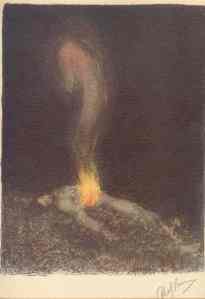 This body of mine. These bodies of ours. As a girl I often witnessed both my friends and older women close to me disparage their bodies. One of my grandmothers had been a model in her youth, and she despised photos of her aged self so much that I couldn’t let them near her – she would snatch them and tear them up. My other grandmother openly hated her heavy legs, had hated them her whole life long. In response to this self-hatred, which was so painful to see, I early on vowed never to say one bad word about my body to anyone, especially my daughters. This is a vow I kept. But still. This body of mine. This body that will do everything in its power to keep me alive until my last breath. Oh my body, I have not always loved you the way you deserve to be loved. Fearfully and wonderfully made body, I have not always been good to you. When I heard this poem, I wept.
My Mother’s Belly, by Sonya Renee Taylor
The bread of her waist, a loaf
we would knead with 8 year old palms
sweaty from play. My brother and I marvelled
at the ridges and grooves. How they would summit at her navel.
How her belly looked like a walnut. How we were once seeds
that resided inside.
We giggled whenever she would recline on the couch,
lift her shirt, unbutton her pants, let her belly spread like cake batter in a pan.
It was as much a treat as licking the sweet from electric mixers on birthdays.
The undulating of my mother’s belly was not
a shame she hid from her children. She knew
we came from this. Seemed grateful.
Her belly was a gift we kept passing between us.
It was both hers, of her body
and ours for having made it new, different.
Her belly was an altar of flesh built in remembrance
of us, by us.
What remains of my mother’s belly
resides in a container of ashes I keep in a closet.
Every once and again, I open the box,
sift through the fine crystals with palms
that were once eight. Feel the grooves and ridges
that do not summit now but rill through fingers.
Granules that are so much more salt
than sweet today. And yet, still I marvel
at her once body. Even in this form say,
“I came from this.”
For more information on Sonya Renee Taylor, please check out her website.
 As she left the
  Alison McGhee