Poem of the Week, by May Swenson
My new poems podcast, Words by Winter, can be found here.
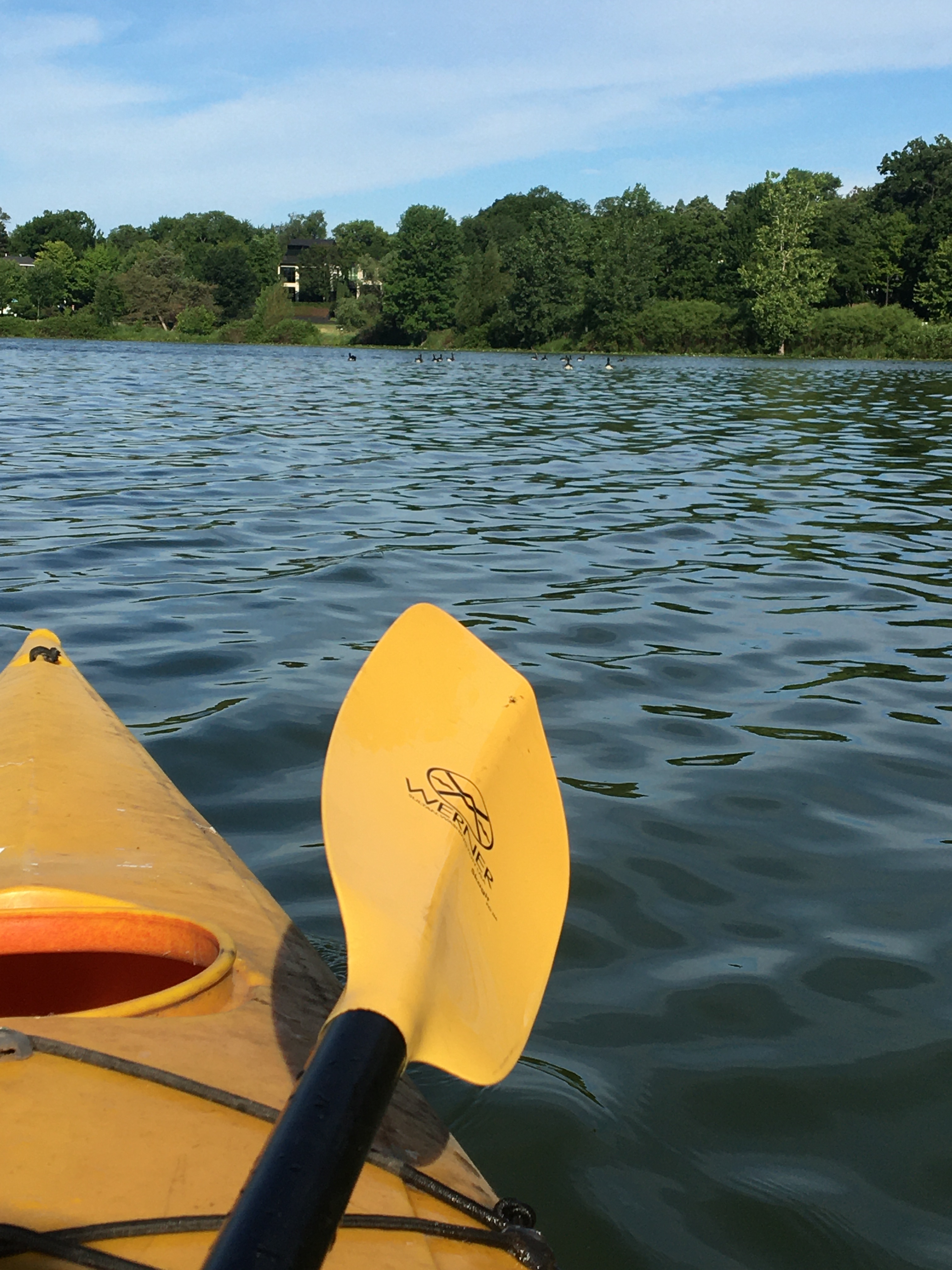 Last week I woke up on a cold and windy day and did my own tiny triathlon: jog, kayak, bike. I did this only for myself, for the hell of it, no time pressure, no expectations, no one watching. The jog went well. The kayaking was hard (the wind was so strong it was all I could do to keep from going backward). By the time I got to the bike portion I decided to keep it simple and just ride around the same lake four times like a hamster on a wheel, which was ridiculous and made me laugh. But when I finished my tiny anonymous tri I felt so unexpectedly happy. So grateful for these muscles and bones and heart and lungs. How great and wonderful it is to be alive inside a body.
Question, by May Swenson
Body my house
my horse my hound
what will I do
when you are fallen
Where will I sleep
How will I ride
What will I hunt
Where can I go
without my mount
all eager and quick
How will I know
in thicket ahead
is danger or treasure
when Body my good
bright dog is dead
How will it be
to lie in the sky
without roof or door
and wind for an eye
With cloud for shift
how will I hide?
For more information on May Swenson, please click here.
alisonmcghee.com
Words by Winter: my new podcast
 Sometimes I feel so sad for men. All the unspoken rules. All the ways our culture tries to train boys out of their openness, their gentleness, their human need for hugs and touch. I think of the multiple men I know who have told no one but me the ways they were sexually abused as children. I think of my giant of a father, and the look on his face when he told me how his mother used to scream at him when he was little. I think of all the men I know who depend on the women they love to translate the world of emotion for them, to navigate the nuances of relationships. I think of how sex sometimes seems the only acceptable way for a man to give and receive physical affection, the only time they can let down their guard.
 Most of the furniture in our house is wood, found curbside like the tiny wooden table that caught my eye yesterday a few blocks from home. Polished burled top, slender wooden dowels, sturdy legs, it looked handmade. My backpack was stuffed full of heavy groceries but I picked the table up anyway and carried it home like a baby.
  Here in the Time of Covid, my younger daughter and I have figured out how to maintain her complicated haircut. She does the back and sides with her electric clippers, and then I take over with my scissors, layering the sweep of black hair we refer to as “the plume” and lock by lock trimming and blending the rest.
  From my porch, which is all windows, people walk by in pairs or threes or solo. Some of them stop by my poetry hut and take a poem. Some keep their heads down and never look up. Some are slow and wandery, holding hands and scuffing their feet. Others stare straight ahead and laugh while they chatter to the person on the other end of their earbuds.
 Small, wooden, stained a peeling dark red-brown, our kitchen table has moved with us from apartment to condo to house. It’s too short, so over the years I’ve glued and re-glued blocks of wood to the bottom of each leg. My little kids did their homework on it while I cooked for them, my teenagers and their friends talked and laughed around it while I cooked for them, my grown children sit around it laughing and drinking wine while I cook for them.
  Relaxation is not my style. My style is more making long daily to-do lists and then crossing items off one by one. Sometimes I can trick myself into relaxing if I turn it into a task and add it to the list —rest and read–which when you think about it is kind of pathetic.
 This morning on the porch a bee was bumbling against one of the screened windows. Its little legs drifted below its huge, furry body as it tried over and over to get out. So I
