Poem of the Week, by Wallace Stevens

My new poems podcast, Words by Wintercan be found here.

Late night. Eight inches of heavy wet flakes. Sound of shovels up and down the block. The specific silence of air that comes only with snow.

Lifelong northerner that I am, snow is part of my earliest memories. Snow so deep my sisters and I could walk right up onto the roof of the garage and slide down the other side.

When I go to California in January, the way I do now, I think about snow. Dream of it. Miss the way, when you breathe in that cold, cold air, your whole body feels clear. Winter is something I’ve both loved and dreaded (S.A.D.) my whole life. But these days, on this melting planet, winter feels like a treasure always mine in such measure that I was heedless with it.

The Snow Man, by Wallace Stevens

One must have a mind of winter
to regard the frost and the boughs
of the pine-trees crusted with snow;
and have been cold a long time
to behold the junipers shagged with ice,
the spruces rough in the distant glitter
of the January sun; and not to think
of any misery in the sound of the wind,
in the sound of a few leaves,
which is the sound of the land
full of the same wind
that is blowing in the same bare place
for the listener, who listens in the snow,
and, nothing himself, beholds
nothing that is not there and the nothing that is.    


For more information about Wallace Stevens, please click here.

alisonmcghee.com

Poem of the Week, by Gregory Djanikian

My new poems podcast, Words by Wintercan be found here.

A few days ago we hiked a remote trail north of Yellowstone, a passage between two high ridges that had burned maybe twenty years ago. Carry bear spray and know how to use it. Avoid places where ravens have gathered. Dress your kill and remove the meat immediately. Because I’m scared (understatement) of bears, I constantly scanned the ridges and the rushing creek between them.

Half an hour in, the sound of high-pitched screaming rose from behind the ridge line. We stopped and stared at each other. Bears? The wailing was carried on the wind, and we realized it was the wind itself, rising above and between the ridges and slopes littered with charred trunks. An unearthly companion, marking the twists and turns of the trail, the waterfalls, the huge burnt trunks and the little new pines growing in their wake. A reminder –a relief?–of how small my humanness is, how inconsequential in the great scheme of the wilderness.

So Much of the World, by Gregory Djanikian

So much of the world exists
without us

the mountain in its own steepness

the deer sliding
into the trees becoming
a darkness
in the woods’ darkness.

So much of an open field
lies somewhere between the grass
and the dragonfly’s drive and thrum

the seed and seedling,
the earth within.

But so much of it lies in someone
standing alone at the edge of a field
with a life apart

feeling for a moment
the plover’s cry
on the tongue

the curve and plumb
of the apple bough
in limb and bone.

So much of it between
one thing and another,

days of invitation,
then of release and return.


For more information on Gregory Djanikian, please check out his website.

alisonmcghee.com
Words by Winter: my new podcast

Poem of the Week, by Tania Runyan

My new poems podcast, Words by Wintercan be found here.

In the university class I’m teaching this fall we gather online, small heads nodding from frames, mics unmuting, videos flicking on and off to show children climbing on laps, housemates in the background, dogs and cats, the sound of traffic. Thank you for doing such a good job in difficult times, I tell them, and I mean it.

The thought of us all trying so hard makes my heart ache the same way it aches at the memory of my young son, shuffling out of his first locker room with his first pair of flip-flops threaded through the wrong toes, knowing something was wrong but not knowing what, insisting he was okay —I’m okay, I’m okay.

I read this poem and wish I could go back in time and put my arms around my little boy. And my students. All of us trying so hard.

Villanelle for My Son, by Tania Runyan

You cried because you dropped a butter knife.
Everything I do is stupid and wrong!
I want to reach into your nine-year-old life,

but my mind, too, is murky and rife
with the morning’s thoughts like ricocheting frogs
that made you drop the butter knife.

You collapse on the couch, your naked strife
abrading your throat like a funeral song.
I want to reach into your nine-year-old life

and gather the joys that scattered like wildlife
the first time you stared at a question too long
and felt your spirit dissolve like butter on knife.

I’ve lurched and careened my way to midlife,
and child, I will not lie to you: even the strong
reach from the middle of their nine-year-old lives

for rescue from the wreckage, the jackknifed
pileups from adulthood’s rushing throng.
You cried because you dropped a butter knife.
I’m desperate to save your nine-year-old life.


For more information on Tania Runyan, please click here.
alisonmcghee.com
Words by Winter: my new podcast

Poem of the Week, by Emma Hine

My new poems podcast, Words by Wintercan be found here.

Last weekend I showed my daughters around the barn my sisters and I used to play in. The old red barn, where I used to fling the feed in the general direction of my chickens so I could get the hell out of there before Big Red, the rooster, attacked me. We used to build hayforts in here. See that beam? That’s where the rope swing used to be. When you jumped, you had to be careful not to fall through the hay chute.

Now I look at the barn and try to figure out how old those supporting beams are – two hundred fifty years, maybe? Standing there with my daughters, telling them family stories, I could feel the shadow presence of my sisters, the selves we used to be, wandering the woods of our childhood.

Young Relics, by Emma Hine

They broke into houses,
my sisters. The empty ones,
just built, where nobody had yet
tried to sleep. Little mounds
of sawdust still in the corners,
no floorboards loose.
I imagine them being the way
I’ve seen them be with horses,
hands gentle on the walls—after all,
a house must learn to hold a family
with all its quivering systems
of energy and grief. I once saw Sierra
with a colt that wasn’t ready
to be ridden. She stood in the stall
and talked until his heart rate slowed.
All through our neighborhood
new houses were dark and panicking.
Enter sisters.
Bringing comfort where it wasn’t
supposed to be, no key for entry,
no light allowed, just a ritual gift
for the rooms alone to remember:
hands on their painted flanks.
Voices in the eaves.

For more information on Emma Hine, please click here.
alisonmcghee.com
Words by Winter: my new podcast

Poem of the Week (excerpt), by Diane Wakoski

My new poems podcast, Words by Wintercan be found here.

Me to the elementary or high school students I sometimes visit in person or via Zoom: Sometimes does it feel like your feelings are too big to hold inside? Like you might explode because life feels so overwhelming?

Heads nod. Hands go up.

Maybe you do something when you feel that way. Maybe some of you run and run, maybe some of you put your music on loud and dance and dance, maybe some of you . . . write?

Everyone always turns quiet. They nod. Maybe we all need a way out, a way to channel and calm and transform the giantness of what it is to be alive in a body in the world. I feel this poem in my very bones.

Thanking My Mother for Piano Lessons (excerpt), by Diane Wakoski

The relief of putting your fingers on the keyboard,
as if you were walking on the beach
and found a diamond
as big as a shoe;

as if
you had just built a wooden table
and the smell of sawdust was in the air,
your hands dry and woody;

as if
you had eluded
the man in the dark hat who had been following you
all week;

the relief
of putting your fingers on the keyboard 


For more information about Diane Wakoski, please click here.   

alisonmcghee.com
Words by Winter: my new podcast

Poem of the Week, by Kari Gunter-Seymour

My new poems podcast, Words by Wintercan be found here.

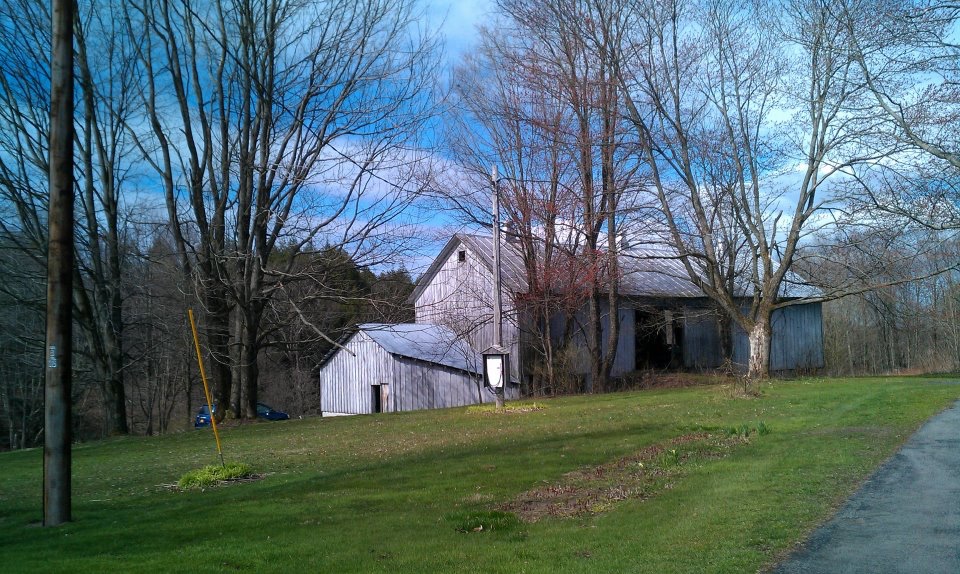
Yesterday my parents sent photos of the dairy farm on McGhee Hill Road, in downstate New York, where my father grew up and where my sisters and I spent a lot of time as children. I drove by it last year, after visiting my grandparents in Irondale Cemetery, pulled into the long driveway, and started to cry. So many memories all wrapped up in that old farmhouse, that barn. The still-there, although barely noticeable, remnants of my grandmother’s giant flower garden. Their dog Jody, who ate the same dinner we did every night, warmed up in his very own frying pan with a rich brown gravy. The upstairs bedroom with the yellow curtains where I slept and woke to the smell of scrambled eggs made only the way my grandmother made them. The bookcases filled with the heavy anthologies she taught at her second job as a high school English teacher. At age ten, when they sold the place, I cried and cried.

I Come From A Place So Deep Inside America It Can’t Be Seen, by Kari Gunter-Seymour
       

White oaks thrash, moonlight drifts
the ceiling, as if I’m under water.
Propane coils, warms my bones.

Gone are the magics and songs,
all the things our grandmothers buried—
piles of feathers and angel bones,

inscribed by all who came before.
When I was twelve, my cousins
called me ugly, enough to make it last.

Tonight a celebrity on Oprah
imagines a future where features
can be removed and replaced

on a whim. A moth presses wings
thin as paper against my window,
more beautiful than I could ever be.

Ryegrass raise seedy heads
beyond the bull thistle and preen.
Everything alive aches for more.

For more information on Kari Gunter Seymour, please check out her website: https://www.karigunterseymourpoet.com/bio

Poem of the Week, by May Swenson

My new poems podcast, Words by Wintercan be found here.


Last week I woke up on a cold and windy day and did my own tiny triathlon: jog, kayak, bike. I did this only for myself, for the hell of it, no time pressure, no expectations, no one watching. The jog went well. The kayaking was hard (the wind was so strong it was all I could do to keep from going backward). By the time I got to the bike portion I decided to keep it simple and just ride around the same lake four times like a hamster on a wheel, which was ridiculous and made me laugh. But when I finished my tiny anonymous tri I felt so unexpectedly happy. So grateful for these muscles and bones and heart and lungs. How great and wonderful it is to be alive inside a body.


Question, by May Swenson

Body my house
my horse my hound
what will I do
when you are fallen

Where will I sleep   
How will I ride   
What will I hunt

Where can I go
without my mount   
all eager and quick   
How will I know   
in thicket ahead
is danger or treasure   
when Body my good   
bright dog is dead

How will it be
to lie in the sky
without roof or door   
and wind for an eye

With cloud for shift   
how will I hide?

For more information on May Swenson, please click here.

alisonmcghee.com
Words by Winter: my new podcast

Poem of the Week, by Aracelis Girmay

My new poems podcast, Words by Wintercan be found here.

IMG_0531

A few days ago I was walking past Lakewood Cemetery when I saw a fresh grave, covered with dirt, through the tall iron fence. A young man and woman sat next to it with flowers, talking quietly. Something about them –their youth, their sadness–stopped me. Was the person in the grave their mother or father? A boyfriend or girlfriend? A sister or brother? A friend? 

My heart hurt for them. And there was also something beautiful about the fact they were there, wanting to be at the grave, abiding by the body of someone they loved. The young man glanced up and saw me. I blew them a kiss, pressed my hands to my heart, and walked on. 

Ars Poetica, by Aracelis Girmay

May the poems be
the little snail’s trail.
 
Everywhere I go,
every inch: quiet record
 
of the foot’s silver prayer.
I lived once.
Thank you.
It was here.

For more information on Aracelis Girmay, please click here.

alisonmcghee.com

Poem of the Week, by Danez Smith

My new poems podcast, Words by Winter, can be found here.
D11E1B29-F92F-4FBA-B4E3-866135CE8A9F_1_105_cSometimes I feel so sad for men. All the unspoken rules. All the ways our culture tries to train boys out of their openness, their gentleness, their human need for hugs and touch. I think of the multiple men I know who have told no one but me the ways they were sexually abused as children. I think of my giant of a father, and the look on his face when he told me how his mother used to scream at him when he was little. I think of all the men I know who depend on the women they love to translate the world of emotion for them, to navigate the nuances of relationships. I think of how sex sometimes seems the only acceptable way for a man to give and receive physical affection, the only time they can let down their guard.

Lifelong fierce feminist that I am, I think of all the bright, tender little boys I know, and knew, and how we need a world softer for them. Which would translate into a world softer for us all. I cried when I read this poem. 


from Differences, by Danez Smith

once, there was a boy
who learned to sing
who then learned not to sing

once, there was a boy
who heard another boy singing
then told him to stop

these are the same boy
this is every boy

another story: once, a boy
loved summer & so moved
to the sun

same story: once, a boy
ran from winter but could
not shake the dead trees

same story: once, a boy
stood in the woods
until he became it

same story: a boy is a tree

same story: my mother cries
whenever she sees a tree


For more information about the wondrous Danez Smith, please check out their website.

alisonmcghee.com

Words by Winter: my new podcast

Poem of the Week, by June Jordan

My new poems podcast, Words by Wintercan be found here.


First there was childhood, with the woods and the fields and the wondering. Then came college, where the roof of your life disappeared and you found your tribe. Then came all the years of struggle and love and longing –to be a writer, to be a mother, to be a transplant in a new land, to be a someone. And then there was the breaking, and the reconfiguration, and now there is the Reckoning. E1A4EEB4-48CE-45F2-8516-A11D28953DB0

I’m talking to myself here, trying to place pattern to my life, to reconcile past and present and possible future. Taking stock of what I’ve surrounded myself with and what I’ve put forth. If all these books and poems and teaching and essays and blogs and letters and cards and now a podcast mean I’m just fragmented? Chaotic?

Then comes this poem by a woman I idolize, a woman who wrote as many different kinds of words as I do, and it runs through me like cool water on a parched day. Maybe all these words, no matter their form, are the through-thread work of my life. My invisible hands reaching out to all the invisible people. 


These Poems, by June Jordan

These poems
they are things that I do
in the dark
reaching for you
whoever you are
and
are you ready?

These words
they are stones in the water
running away

These skeletal lines
they are desperate arms for my longing and love.

I am a stranger
learning to worship the strangers
around me

whoever you are
whoever I may become.


For more information about the astonishing, fierce, and brilliant June Jordan, please click here.

alisonmcghee.com

Words by Winter: my new podcast