 I’m the mother of an immigrant and the aunt to immigrants. Family members and many of my dearest friends are gay. I am both a patron and former client of Planned Parenthood. I do not identify as Christian. These four facts alone make me –a white, middle-class born-and-bred citizen of this country– and my immediate and extended family current targets for persecution by my own government. Beyond that, many of my students, colleagues and friends are a) not white, b) Muslim, c) immigrants, d) people living with mental and physical disabilities. Being a patriotic American, which I most certainly am, means that my responsibility is to speak out against fascism. Being a progressive, which I also most certainly am, means keeping my focus on the bigger picture, which is the world as I know it to be, the one that Naomi Nye so beautifully brings to life in this poem.
Gate A-4, by Naomi Shihab Nye
Wandering around the Albuquerque Airport Terminal, after learning
my flight had been delayed four hours, I heard an announcement:
“If anyone in the vicinity of Gate A-4 understands any Arabic, please
come to the gate immediately.”
Well—one pauses these days. Gate A-4 was my own gate. I went there.
An older woman in full traditional Palestinian embroidered dress, just
like my grandma wore, was crumpled to the floor, wailing. “Help,”
said the flight agent. “Talk to her. What is her problem? We
told her the flight was going to be late and she did this.”
I stooped to put my arm around the woman and spoke haltingly.
“Shu-dow-a, Shu-bid-uck Habibti? Stani schway, Min fadlick, Shu-bit-
se-wee?” The minute she heard any words she knew, however poorly
used, she stopped crying. She thought the flight had been cancelled
entirely. She needed to be in El Paso for major medical treatment the
next day. I said, “No, we’re fine, you’ll get there, just later, who is
picking you up? Let’s call him.”
We called her son, I spoke with him in English. I told him I would
stay with his mother till we got on the plane and ride next to
her. She talked to him. Then we called her other sons just
for the fun of it. Then we called my dad and he and she spoke for a while
in Arabic and found out of course they had ten shared friends. Then I
thought just for the heck of it why not call some Palestinian poets I know
and let them chat with her? This all took up two hours.
She was laughing a lot by then. Telling of her life, patting my knee,
answering questions. She had pulled a sack of homemade mamool
cookies—little powdered sugar crumbly mounds stuffed with dates and
nuts—from her bag—and was offering them to all the women at the gate.
To my amazement, not a single woman declined one. It was like a
sacrament. The traveler from Argentina, the mom from California, the
lovely woman from Laredo—we were all covered with the same powdered
sugar. And smiling. There is no better cookie.
And then the airline broke out free apple juice from huge coolers and two
little girls from our flight ran around serving it and they
were covered with powdered sugar, too. And I noticed my new best friend—
by now we were holding hands—had a potted plant poking out of her bag,
some medicinal thing, with green furry leaves. Such an old country tradi-
tion. Always carry a plant. Always stay rooted to somewhere.
And I looked around that gate of late and weary ones and I thought, This
is the world I want to live in. The shared world. Not a single person in that
gate—once the crying of confusion stopped—seemed apprehensive about
any other person. They took the cookies. I wanted to hug all those other women, too.
This can still happen anywhere. Not everything is lost.
For more information on Naomi Shihab Nye, please click here.
 Friends, I’m old enough to remember the Willie Horton ad. I’m old enough to remember when the Central Park Jogger –who was around my age, a jogger like me, white like me, educated like me– was raped and left for dead. I remember being terrified at the idea of “wilding” youths –who, somehow, were always black– out to get girls like me. And I remember three months ago, when I was stunned at the outcome of this election and none of my friends who aren’t white were.
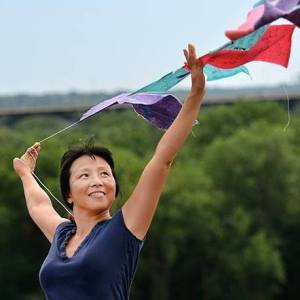 hat before spellcheck, he would say the word out loud and then look through the dictionary trying to find it by first letter. A word like psychology, for example, he would sound out and then search through all the S words. Not finding it, he would then look through all the C’s even though he was sure that it couldn’t begin with C. It was a slow and agonizing process, and all his papers came back with low grades and comments like “Your insights are terrific but you must learn to proofread.”
  Yesterday I sprinkled some sliced almonds into a small pan and turned the flame on low. I stood beside the stove watching over the pan and occasionally flipping the almonds so that they would brown evenly and not burn. When they were dark golden I shook a little sugar over them and stirred until they were caramelized. Then I turned the almonds out onto a plate to cool and took the pan over to the sink. The sink is a strange, cheap, plasticky thing, scarred from hot pans, so I held the pan up to the faucet and ran water in it to cool it down first. The water hit the pan and steam billowed up into my face. Suddenly I was breathing in vaporized sugar – I could feel it in my lungs and taste it as it went down. It was the most amazing sensation. I stood there by the sink and thought, All these years I’ve been alive and this has never once happened to me before. Then I thought of this poem, which I have secretly treasured ever since I first read it because I love how words, if you toss them around in your mind and on your tongue, turn surprising and magical in that same alchemical way.
 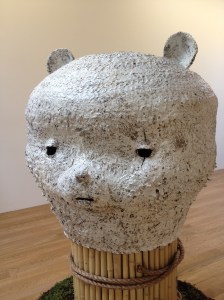 A long time ago, I floated down a tunnel toward a light far away. The floating was slow and the sensation around me was warm and soft. I was conscious the entire time, not thinking but feeling, and the feeling was Here we go again. At a certain point, soft bits of metal touched the top and sides of my head. Nothing hurt. Everything was inevitable. What would happen, would happen. This is my memory of being born. (The soft bits of metal part had always confused me, until one day my mother told me I had been a forceps baby, pulled out at the end with metal tongs.) The below excerpt from Kao Kalia Yang’s beautiful, haunting memoir The Latehomecomer makes me remember it all over again, in a different way. From the sky, I would come again.
 Like many other patriotic citizens these days, free-range anxiety keeps waking me up in the middle of the night: health care, sexual assault, violence, our natural world, the crumbling of the democratic principles laid out in our constitution. Brutality in many and repulsive forms, from public mockery to online assaults. I’ve always been critical of what I see as the wrongs of some of my nation’s policies. But I never knew until now how much I love my country and how much I want it to keep righting its wrongs instead of retreating into some mythological past that served only one small segment of its citizens. The strange and powerful little poem below haunts me. No no no no no, is how most of its lines begin, and No no no no no is my response. I dream I’ve been captured forced into a cage, which is exactly why next weekend, my son and my daughters and I and many thousands of others will be descending on our nation’s capital to take a stand against fascism.
 ollege, and how when I make coffee for her she sits quietly at the kitchen table, her head slightly bowed, silent, because she’s not a morning person, and how her black hair shines in the lamplight. Then I pictured the other daughter, who lives in Boston and whose room still smells like her, and I resisted the urge to get up and walk across the hall and open the door to her so I could breathe her in. Then I pictured the son who lives in Chicago and I remembered the collection of duct tape + cardboard swords he made when he was a little boy. And the other people I most love –the best friend, the painter, the sisters and brother and parents and friends– gathered together in my mind in the dark. All this is to say that when I read the poem below, it feels exactly like those middle of the night thoughts – that everything that matters is small and specific and enormous at the same time.
 Young woman across the street, waving and calling to me as I trudge through the snowdrifts on the way home from
  Alison McGhee