Poem of the Week, by William Butler Yeats

IMG_5657This was back in the days of dial-up modems with their squealy screechy sounds. The first line of the first review of my first novel came shimmering up on that clunky old computer screen: “First time novelist tries but fails to move or matter.” 

Or matter.”

I sat staring at the screen, my little kids looking at me silent and troubled, knowing something was wrong. I turned to them and smiled. I laughed about the review, pretended I didn’t care. But the photo above is what I typed into my journal that night.

This is not a story about a writer who got a bad review – all writers get bad reviews. Nor is it a story about a plucky young woman whose novel went on to win a bunch of awards so haha. It’s a tiny story that stands in for a much larger story of casual, ongoing cruelty in a world in which those two words –or matter–should never be written by a human being about another human being. 

Those two words broke something in me a long time ago that can’t be fixed. That’s what cruelty does. When judgment rears its ugly head inside me, as it does way too often, I recite the last two lines of this poem to myself.


He Wishes for the Cloths of Heaven, by William Butler Yeats

Had I the heavens’ embroidered cloths,
enwrought with golden and silver light,
the blue and the dim and the dark cloths
of night and light and the half-light,
I would spread the cloths under your feet:
But I, being poor, have only my dreams;
I have spread my dreams under your feet;
tread softly because you tread on my dreams.

For more information on Yeats, please click here.

Twitter and Instagram: @alisonmcgheewriter 

 

Spreading the word about The Opposite of Fate

Screen Shot 2020-01-21 at 7.59.57 AM

Here we go! The Opposite of Fate comes out next month and the countdown is officially on. I’m thrilled by the positive reception the novel has already received (scroll below for samples). If you’d like to help spread the word, not only about The Opposite of Fate but also about other books you love, here are four ways you can do so. Please know how grateful I am to you, and how much your support means to me.

1. SOCIAL MEDIA: Share news about the book via social media (please tag me when you do, so I can thank you). Also, feel free to use the hashtag #TheOppositeOfFate when posting.

2. PRE-ORDER THE BOOK: Please consider buying the book or ordering it from your library. Bookstore or library preorders, along with the first few days of sales, are crucial for a new book. The Opposite of Fate can be pre-ordered from these links, including IndieBoundAmazon and Barnes & Noble.

3. WRITE A REVIEW: If you like the novel, post a positive review/rating of the book in as many places as you can. Amazon (https://amzn.to/2NxceQq) if you purchased it from there or on your social media platforms. The more positive reviews, the better.

4. GOODREADS: If you’re a Goodreader, add The Opposite of Fate to your shelf on Goodreads and rate it (preferably 5 stars but I’ll take what I can get!). (https://bit.ly/2Ntxvds)

Whatever you decide to do, big or small, it helps. I’m happy to pay it forward, anytime. Many, many thanks.


THE OPPOSITE OF FATE 

One of Parade‘s “20 Most Anticipated Books of Early 2020”
One of Working Mother‘s “20 Most Anticipated Books of 2020”
One of Beyond the Bookends‘ “New Releases for Winter 2020”
One of She Reads‘ “7 Books About Strong Women” 

“The Opposite of Fate dives deep into one of the more terrifying—and yet hopeful—questions of life. How do we choose when we don’t know the right answer? Alison McGhee is a fearless writer, full of love for humanity and a tender touch with words. You’ll love this book.”
—Rene Denfeld, bestselling author of The Child Finder 

“Alison McGhee’s The Opposite of Fate plunges fearlessly into the core of the pro-choice vs. pro-life debate…staggering…[McGhee] maneuvers the weight of this tight-rope topic with grace and unwavering symmetry…[The Opposite of Fate] teaches us that at the end of the day the story of our lives comes down to our choices. Even when we are dealt a bad hand, a hand beyond our control, the decision of how we carry on is still up to us. We always have the option to keep moving forward as best we can.”
Paperback Paris

“The Opposite of Fate is an uplifting novel about the life-changing decisions we make and the way they shape our lives.”
She Reads, “7 Books About Strong Women” 

“McGhee uses thoughtful language and rich, meditative imagery to paint a picture of one young woman facing a difficult new path ahead.”
Booklist​

“This is, at its heart, a novel about family—including chosen family—autonomy, and identity…Thoughtful and moving.”
Kirkus

“Humanizes the abortion issue in a way that is unexpected and heartening…The Opposite of Fate is a timely work.”
PopMatters 

“Alison McGhee’s The Opposite of Fate is, like everything she writes, as close to poetry as prose gets . . . I was driven to turn page after page to find out what would happen.”
—Maggie Smith, author of Good Bones

The Opposite of Fate shows the ways in which imagination can sometimes save us. This is a powerful and beautiful book.”
—Julie Schumacher, author of The Shakespeare Requirement

 “The Opposite of Fate is a story for our times. . .  a powerful book about family, love, faith and the will to survive.”
—Kao Kalia Yang, author of The Song Poet

My websiteMy blogMy Facebook page.

Twitter and Instagram: @alisonmcgheewriter


Poem of the Week, by Danusha Lameris

Screen Shot 2020-01-13 at 7.55.08 AMEverything physical, everything specific: the sharp scent of the woods that night in the Adirondacks when the rain drummed down on the canvas tent. The cold clear water that dazzled your body when you plummeted from the rope swing. The softness of the loam under your boots that cold dawn hike in Vermont.
How free it feels to dance alone late at night in your dark living room. How his hand over yours felt that day on the train when you were too full of feelings to talk. How rough and full of sun the cotton sheets dried outside feel when you slide between them.

Sometimes you imagine the moment you’ll leave this physical world, and in those moments it’s these sensations that wash over you. You think, this is what I’ll miss most. Being alive in a wild animal body in a wild animal world.


Bird, by Danusha Lameris

We were sitting on the couch in the dark
talking about first pets, when I told him how,
as a girl, I kept a blue and white parakeet I let
fly around the house and, sometimes, outside,
where he’d land on the branches of pine
and eucalyptus, balancing between seedpods
and spines. Only, while I was telling it,
my companion began to stroke, very lightly,
the indent of my palm, the way you do when you’re
sitting in the dark with someone you’ve never kissed
but have thought about kissing. And I told him
how my bird would sit on a high branch and sing,
loudly, at the wonder of it—the whole, green world—
while he traced the inside of my arm with his fingers,
opening another world of greenery and vines,
twisting toward the sun. I loved that bird for his singing,
and also for the way his small body, lifted skyward,
made my life larger. And then it was lip-to-lip,
a bramble, and it was hard to say who was who—
thumb to cheek to chest. The whole ravening.
When I told him I did not clip my bird’s wings,
I was talking about hunger. When he pressed me
hard against the back of the couch, named a litany
of things he’d do to me, I wanted them all.
I, too, have loved to live in a body. To feel the way
it lifts up the octaves of sky, cells spiraling
through smoke and mist, cumulus and stratus,
into that wild blue. And though I knew
there was always a hawk somewhere in the shadows
ready to snatch his heart in its claws, still,
I couldn’t help letting that parakeet free.


For more information on Danusha Lameris, please check out her website.


My websiteMy blogMy Facebook page.

Twitter and Instagram: @alisonmcgheewriter


Poem of the Week, by William Stafford

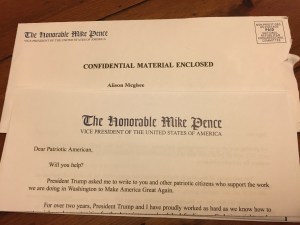
60004839212__30E2EEDE-424A-48BE-B9AD-706C3B31C6F8Last fall I began getting letters like this from the president, the vice-president, the NRA, anti-abortion organizations. Not my typical mail. Why me? Then it came to me: in August a friend died, a Marine combat veteran, and in his honor I made a donation to the Wounded Warrior project, which must have triggered a hundred conservative mailing lists.

Given my political leanings, it would be easy to post those letters on Twitter with a snarky comment and watch the equally snarky responses roll in, but that would only make things worse. Here’s the thing: most people are not zealots. You can be a pacifist and still support veterans. You can be an atheist and still respect your neighbor’s need to pray to a God you don’t believe in. You can have deep qualms about abortion and still support the right to have one.

You can despise your uncle’s racist comments and cut off contact with him, or you can remember how he taught you to ride a bike and showed up at all your basketball games. You can remember how it felt when you woke up to your own internalized racism. You can choose to open a conversation with him, one that might open a mental window, one that will take a lot of patience that you might assume neither of you have. 

But you do have that patience. We all do, once we recognize how deep the darkness is, and how easy it is to get lost. 


A Ritual to Read to Each Other, by William Stafford

If you don’t know the kind of person I am
and I don’t know the kind of person you are
a pattern that others made may prevail in the world
and following the wrong god home we may miss our star.

For there is many a small betrayal in the mind,
a shrug that lets the fragile sequence break
sending with shouts the horrible errors of childhood
storming out to play through the broken dike.

And as elephants parade holding each elephant’s tail,
but if one wanders the circus won’t find the park,
I call it cruel and maybe the root of all cruelty
to know what occurs but not recognize the fact.

And so I appeal to a voice, to something shadowy,
a remote important region in all who talk:
though we could fool each other, we should consider—
lest the parade of our mutual life get lost in the dark.

For it is important that awake people be awake,
or a breaking line may discourage them back to sleep;
the signals we give — yes or no, or maybe —
should be clear: the darkness around us is deep.


​For more information about William Stafford, please click here.​


My websiteMy blogMy Facebook page

Twitter and Instagram: @alisonmcgheewriter 


Poem of the Week, by Armen Davoudian

IMG_E4279Last summer, driving to Vermont, I detoured past my grandparents’ dairy farm. That’s how I think of it –their farm, on McGhee Hill Road–even though it’s been almost half a century since it changed hands, bought by city dwellers who turned the barn into a house and the house into guest quarters. 
This time, instead of crawling past in my rental car, I parked. The new owner came out and against my will I started crying. She showed me around and I pointed out where the Christmas tree used to stand, where the long dining room and pantry used to be, the bedroom with the secret doorway.

As a little girl my sisters and I spent a week every summer at our grandparents’ farm, roaming the woods and fields and barn, going to Dairy Queen for ice cream. My grandmother, big efficient whirlwind of a farm wife and English teacher. My grandfather, tall and lean and handsome, washing up with Lava soap at the soapstone wash sink, a man who didn’t finish high school but could recite endless poetry. 

You can’t ever go back. But the past lives inside you, and it can’t ever be taken away, either. 


Wake-up Call, by Armen Davoudian

 
I can see my mother, apron over her nightgown,
setting the table for breakfast, a stack of lavash
steaming at the center, honey and milk skin,
feta with fruit, chickpea-and-chicken mash
dusted with cinnamon. I can see my father,
already in his coveralls and cap,
filling a cup to the brim with hot tapwater
and emptying it into another cup
and emptying that cup into another
until all three are warmed for tea. I can hear
the kettle whistling and pull the covers tight
around my head, against the coming light,
for any moment now they will open the door
and lift the covers and find that I’m not there.


For more information on Iranian poet Armen Davoudian, please check out his website


My websiteMy blogMy Facebook page
Twitter and Instagram: @alisonmcgheewriter 


Poem of the Week, by Martha Postlethwaite

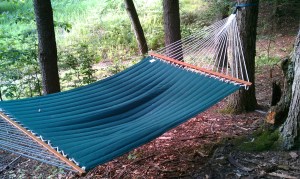
Shack hammockWho am I? What is my place in this world? How do I stay steady and strong and never stop trying to help the world? Our burning planet. The onrush of artificial intelligence. This heedless erosion of democracy. These are my three biggest panics.

Panic is the right word but not the right reaction, because in me it leads to resignation that leads to paralysis. So I’ve been quiet the last few months, thinking. Reflecting. Insighting, which wasn’t a word but is now. Smiling at everyone I encounter, saying hello, giving a compliment. Trying to forge that human connection, person by person, moment by moment. Trying to create a clearing. 

Clearing, by Martha Postlethwaite

Do not try to save
the whole world
or do anything grandiose.
Instead, create
a clearing
in the dense forest
of your life
and wait there
patiently,
until the song
that is your life
falls into your own cupped hands
and you recognize and greet it.
Only then will you know
how to give yourself
to this world
so worthy of rescue.

​For more information about Martha Postlethwaite, please click here​.

My websiteMy blogMy Facebook page. Twitter and Instagram: @alisonmcgheewriter 

Poem of the Week, by Lisel Mueller

IMG_2176Once, when he was about eight, my son looked up at me and said, “Mama, what if we’re all characters in a book, and someone is writing us right now?”
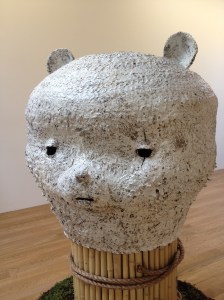
Once, before the scale at the Y was digital, I stepped on it ready to maneuver the sliding weights, only to find that the unknown woman who had stood on it before me weighed, to the ounce, exactly as much as me. 

Somehow those two memories are connected, and somehow the poem below brings them back to me. I don’t understand why we are here in the world, or what the meaning of our lives is. I don’t understand why life is so unfair. Sometimes I wonder if there is a shadow Alison in a nearby, invisible world, living an alternate Alison life, and if she has the answers I don’t. 


In November, by Lisel Mueller

Outside the house the wind is howling 
and the trees are creaking horribly. 
This is an old story 
with its old beginning, 
as I lay me down to sleep. 
But when I wake up, sunlight 
has taken over the room. 
You have already made the coffee 
and the radio brings us music 
from a confident age. In the paper 
bad news is set in distant places. 
Whatever was bound to happen 
in my story did not happen. 
But I know there are rules that cannot be broken. 
Perhaps a name was changed. 
A small mistake. Perhaps 
a woman I do not know 
is facing the day with the heavy heart 
that, by all rights, should have been mine.


For more information about Lisel Mueller, please click here.

My websiteMy blogMy Facebook page.
Twitter and Instagram: @alisonmcgheewriter 

Poem of the Week, by Gerard Manley Hopkins

img_3440How I first found this poem is lost to me –was it in one of my grandmother’s huge and heavy high school English anthologies?–but it stunned me. I remember laboriously copying it word by word, line by line, complete with the strange little marks I would later learn were scansion, into my diary. 
What the poem was about I couldn’t have told you when I was a child, but I knew that the poet, dead long before I was born, had reached into the future and written it for me. In the same intuitive way I understood the made-up words wanwood and leafmeal, I knew the Margaret of the poem was me. The sorrow and longing that welled up from the first sentence to the last were in me then and they are in me still. At age nine this poem explained something deep and true and achingly beautiful about the world, something I already knew in my bones, and I knew it would be the poem of my life.


Spring and Fall, by Gerard Manley Hopkins

to a young child

Margaret, are you grieving
over Goldengrove unleaving?
Leaves, like the things of man, you
with your fresh thoughts care for, can you?
Ah! as the heart grows older
it will come to such sights colder
by and by, nor spare a sigh
though worlds of wanwood leafmeal lie;
and yet you will weep and know why.
Now no matter, child, the name:
sorrow’s springs are the same.
Nor mouth had, no nor mind, expressed
what heart heard of, ghost guessed;
It is the blight man was born for,
It is Margaret you mourn for. 


For more information on Gerard Manley Hopkins, please click here.

Website

Blog

Facebook page

@alisonmcghee

Poem of the Week, by Alison Luterman

WesternThe summer I turned nineteen I took the bus west to Wisconsin, to work at a mom and pop resort where the owners housed us in a firetrap and fed us leavings from the guests’ plates. After the second bout of food poisoning –through which we worked between dashes to the bathroom–my friend Polly and I quit.

Before dawn we snuck into the resort kitchen, loaded up on rolls and butter and apples, and waited, laughing, in the dark for the Greyhound, then jumped on board, still laughing.We had a layover in Chicago and we took ourselves and our duffels out to dinner at The Berghoff, spending most of the little bit we had earned that summer. The waiters flirted with us and we flirted back.

We were free, we were free, we were free. Now I know you can hold a moment of freedom in your heart your whole life long. My love affair with the west began that summer in Montana. Wide-open streets, the snow-capped Rockies, how it felt to laugh and jump naked late at night into the shockingly cold water of Flathead Lake.


Canoe, by Alison Luterman

When I was young, years ago, canoeing on the green
Green River, with my young first husband,

I wriggled out of my shorts, eased over the lip
of our little boat, and became eel-woman,

naked and glistening, borne along in the current.
He paddled, I floated and spun,

and let the ripples take me.
Even an hour of that kind of freedom

can last for years and years,
can become a touchstone you return to

long after the rented canoe has been returned,
and the road trip has ended, and then the marriage,

and then the husband’s brief life, and you yourself
have become someone else entirely; still

you return in your mind to the days
you could set up a tent in the dark,

and build a small fire
from birch bark and newspaper

and sit beside it, sipping tea, savoring your muscles’ sweet ache,
as one by one the uncountable stars came out.


For more information about Alison Luterman, please check out her website.

Poem of the Week, by Derek Walcott

IMG_0342People who say they have “no regrets” mystify me. Regrets, oh I’ve got a few. Like last night when I couldn’t get back to sleep for thinking about the times I yelled at my children when they were little. This didn’t happen much, but every time it did, my self-hatred was huge. It still is. As a mother I wanted always and only to be a comfort to my kids. But when you’re yelling, you’re not a comfort, are you?

In the dark hours before dawn, in hopes of forgiving myself by understanding myself, I tried to see myself as the little girl I used to be, the child who, like all children, had little control over her own life. No dice.

This morning I wrote notes to my children, telling them how sorry I was for having yelled. Because what else can I do? You can’t go back in time and undo things. Then my favorite line from this beautiful poem —give back your heart to itself–drifted into my head. 


Love After Love, by Derek Walcott

The time will come
when, with elation
you will greet yourself arriving
at your own door, in your own mirror
and each will smile at the other’s welcome,

and say, sit here. Eat.
You will love again the stranger who was your self.
Give wine. Give bread. Give back your heart
to itself, to the stranger who has loved you

all your life, whom you ignored
for another, who knows you by heart.
Take down the love letters from the bookshelf,

the photographs, the desperate notes,
peel your own image from the mirror.
Sit. Feast on your life.

For more information about Derek Walcott, please click here.