See that old photo to the right? I found it yesterday in a scrapbook filled with random high school mementoes. The girl with the beautiful smile playing the violin used to be one of my closest friends . She lived in a small bright green ranch house right across the street from the middle school, which meant that all she had to do was walk out her front door, cross Route 365 –the main street of the town– and there she was, at school. Unlike me, sitting on that accursed bus, groaning and lurching its way around endless curve after endless curve, down from the foothills, 45 minutes or more to school.
In my memory she is always smiling. She had silky dark brown hair, parted in the middle, falling over her shoulders. Her nose was sharp and red and a bit hooked, and her eyes, in my memory, are blue, blue, blue. And the smile. A big, merry smile that showed off her high cheekbones. I can picture her in the yearly school class photo. She would have been in the back row, with me, because when we were kids she was tall, too. She would have been smiling that big happy smile.
In middle school the two of us used to escape at lunch and walk across the street to the bright green ranch house. She lived there with her older brothers and her older sisters and her mother, who was, I’m pretty sure, a teacher down in Utica. Her father had died when she was a baby.
Her sisters and brothers were in high school, unimaginably older and cool. They were hippies. She and I were too young, we missed out on that. But often, when we walked into that little house with her, they and their friends would be there. Lying on the old couch, sitting on chairs, laughing and talking and wrestling and making offhand comments and jokes about things like sex and drugs and rock ‘n roll.
Had I been alone I would have been stunned and cowed and half-paralyzed by their coolness, their easy laughter. But I wasn’t alone. I was with her.
Why did she like me? In retrospect I was quiet and reserved and an observer and not much fun back then, although maybe I’m not the best judge of that. But one reason she liked me is easy: she liked nearly everyone. She had a huge and generous heart. She was also unafraid of things that I was afraid of, like saying out loud that which scared me, hurt me, made me angry. She was honest about things. She saw life clearly, and stating the obvious didn’t scare her.
The boy I had a crush on used to ask if he could have a punch off my lunch ticket.
“Sure,” I used to say.
“I’ll pay you back,” he used to say.
I would watch him run across the grass, back into the school. She and I would be nearly to Route 365 now, ready to zip across and into the safety of that little green house.
“He won’t, you know,” she observed. “He won’t pay you back. And you’ll give it to him tomorrow if he asks.”
I looked at her. She looked at me and smiled. She was wise. She was honest. She stated things the way they were. And she was unjudging. Into her house the two of us would go, breaking the school rule, although in retrospect it’s hard to imagine that any number of teachers didn’t see us zipping across that street every day and mentally shrug.
The cool older siblings and their cool older friends might be lounging about. She would greet them all, smiling, and then the two of us would go into the tiny dark kitchen and pour enormous glasses of milk. Stir in the Quik with tall-handled spoons. Dig the knife into the big jar of peanut butter and spread giant swaths of it on slices of Wonder bread.
We would sit eating and drinking while I tried to overhear the conversations in the other room, trying to get some sense of what life could be like, were I cooler and older and wore tight bell bottoms and peasant shirts. She was one of the few friends I kept in touch with after high school. She stayed there, in the tiny town, population 300. She went to college, sure, but she never wanted to leave the town. Me? I left at 18 and never went back other than to visit my family. Not that I didn’t, and don’t, love it there, love the way I grew up. But staying there never felt like an option. For her, there was no other.
“I love it here,” she said. “I want to live here my whole life.”
She got a degree in gerontology and worked with old people. She loved them too. People on the fringes, people unnoticed, people quiet and shy, she saw them. She noticed them.
Twice that I know of, because she told me, men asked her to marry them.
“I said no,” she said. Smiling that big bright smile.
I asked her why. She shrugged.
“Didn’t feel right,” she said. “I don’t know. I’m happy just the way I am.”
She was Catholic and that, too, was something she loved. Hers was a happy Catholicism, a big bright generous religion whose God was always with her.
Everyone in the town knew her. At the drugstore, at the one tiny bar, at the church, in the one tiny grocery store, at the bank. She was one of those rarest of creatures, a human being completely comfortable in her own skin.
She’s been gone almost twenty years now, but I think of her most every day. When she appears in my mind, it’s always in winter. She’s always brushing up against me, wearing a bright blue nylon parka. That dark hair, those blue blue eyes, that grin. On the rare occasions when I drink chocolate milk, I make a mental toast to her. When I write my annual check to the food bank in that little town, I fill in the “in honor of” box in her name. If she were still here, she’d no doubt be running the place. I wish I could go home and see her again. Walk into that bright green house and have a peanut butter sandwich. I’d go to the bar with her, let her introduce me around.
When I think of her, I also think of this poem by Marie Howe, one of my all-time favorites. Whatever leads to joy, they always answer, to more life and less worry.
My Dead Friends, by Marie Howe
I have begun,
when I’m weary and can’t decide an answer to a bewildering question
to ask my dead friends for their opinion
and the answer is often immediate and clear.
Should I take the job? Move to the city? Should I try to conceive a child
in my middle age?
They stand in unison shaking their heads and smiling—whatever leads
to joy, they always answer,
to more life and less worry. I look into the vase where Billy’s ashes were —
it’s green in there, a green vase,
and I ask Billy if I should return the difficult phone call, and he says, yes.
Billy’s already gone through the frightening door,
whatever he says I’ll do.
For more information on Marie Howe, please
click here.
 Mama passed, honey. That was the subject line of my friend S’s email to me last week. S had been by the side of the woman who, though not her mother, was close enough to be. S had helped Mama out of this world into whatever comes after. Before work, after work, on weekends, she was with her, a steadying presence full of love and jokes. When Mama told her she was hungry, S would feed her little bites of avocado, apple sauce, ice cream. S was with Mama when she finally said goodbye to the world. Mama was in her 90’s. It was time.
  Remember the man in the photo to the right? He stood in front of those tanks during the Tiananmen Square protest in 1989, nothing but a briefcase in his hands. When the tanks tried to maneuver around him, he stepped in front of them again. I don’t know what became of him.
 I’m going through my entire house, cleaning and sorting and organizing and paring. Most things I can jettison, but the things I can’t ever seem to throw away are cards and notes and notebooks and little scraps of paper with lists jotted onto them. The other day I found one that I had written a long time ago, titled Things I Love. Among them: that one small cup of coffee with heavy cream at dawn, the way the little white solar lights look when they flicker on at dusk, the raspberries that ripen for three weeks each summer, the sound of my best friend’s voice on the phone, time with my parents, time with my children, time with my friends, time with my sweetheart, doing nothing but being. It’s a big fat life and it’s filled with love and today’s my birthday so I’m celebrating, beginning with this beautiful poem by the wondrous Alden Nowlan. Enjoy.
 Once I had a friend who shared my love of strong flavors. We would buy things like kimchee and Limburger cheese and pesto that was mostly garlic and sit at the small kitchen table in the 4th-floor walkup I shared with my sister eating it. You two and your stinky food!, my sister would say, and she was right. Intensity is a good thing when it comes to food. And gin, the kind where you can taste all the plants and flowers and life that’s been infused into it: bay and juniper and sage, dry sunshine air. “Whatever’s your most botanical,” is what I say to the bartender when they ask. I don’t care if there’s a heaven and I don’t believe anyone who tells me there are rules for getting into it, because why does it matter? This is the world we live in. This is our hell and our heaven, this world right here, the one with the Limburger and the pesto and the St. George terroir. Which is why I love this poem, by the great Kim Addonizio, a woman who has never been afraid of strong flavors.
 This poem keeps drawing me to it, or it to me, and I don’t know why. The last two lines come back to me when I wake up at night, or sometimes when I’ve been walking or hiking for a long time. I don’t know where I found this poem, or where it found me. Sometimes when I read it, the hard times, I feel like a child who doesn’t know what she did wrong, why she’s being yelled at, a child who would do anything to be better and to make it better. Other times I feel a huge relief, a letting-go, as though the you in the poem, in the ending three lines, has finally found me and I don’t have to keep trying anymore.
 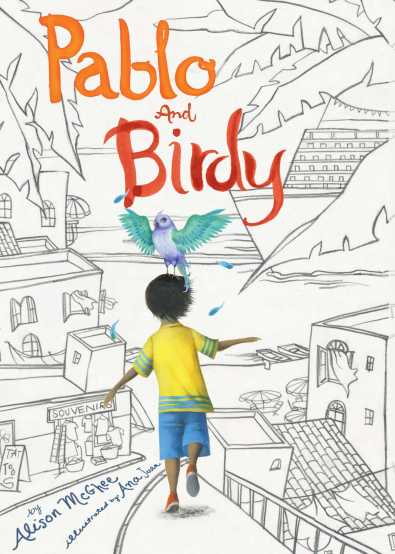 me, belonging, and identity (that) smoothly incorporates elements of magical realism and powerful allusions to the refugee experience.”
  Once, at the end of a book club discussion held in the library of a women’s prison, the women (who are addressed as “offenders” on the prison P.A. system, as in, “Offenders, cell check in fifteen minutes”) took turns asking me personal questions from a list they had prepared. I remember only one of them: “
 Alison McGhee