Poem of the Week, by Suji Kwock Kim
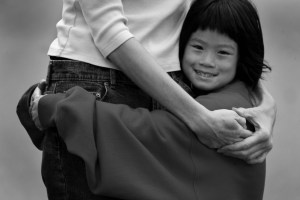 When an idea for a new book comes to me, it feels obsessive and overwhelming and makes me almost panicky. I cope by breaking the writing down into small daily tasks. Becoming a mother felt, and still feels, the same way. The fact that my babies depended on me for their very lives was almost paralyzing. There were times when I had to force myself not to think about the immensity of the responsibility or I would have lost my mind.
Now I look back on those days, and they still feel overwhelming. I remember rocking and rocking my son, singing the Circle Game over and over, as he struggled to find peace and sleep. I remember how my daughter couldn’t fall asleep unless she was touching me, my hand on her arm or leg. I remember slowing my breathing down because her breathing would slow and deepen too, and finally she would drift off. Later, when I flew across the world and met my youngest, she first stared at me in suspicion, her dark eyes fixed on mine, and then kicked her legs, started laughing and just kept on laughing.
One thing that helped me in a strange way, back then, was the sense that before any of my children were born, they already were. That my presence in their lives was part of a continuum that began before any of us were born. There’s nothing rational about that feeling, but there’s nothing rational about having a child. The poem below stuns me.
Fugue, by Suji Kwock Kim
Out of albumen and blood, out of amniotic brine,
placental sea-swell, trough, salt-spume and foam,
you came to us infinitely far, little traveler, from the other world—
skull-keel and heel-hull socketed to pelvic cradle,
rib-rigging, bowsprit-spine, driftwood-bone,
the ship of you scudding wave after wave of what-might-never-
have-been.
Memory, stay faithful to this moment, which will never return:
may I never forget when we first saw you, there on the other side,
still fish-gilled, water-lunged,
your eelgrass-hair and seahorse-skeleton floating in the sonogram
screen
like a ghost from tomorrow,
moth-breath quicksilver in snowy pixels, fists in sleep-twitch,
not yet alive but not not,
you who were and were not,
a thunder of bloodbeats sutured in green jags on the ultrasound
machine
like hooves galloping from eternity to time,
feet kicking bone-creel and womb-wall,
while we waited, never to waken in that world again,
the world without the shadow of your death,
with no you or not-you, no is or was or might-have-been or never-
were.
May I never forget when we first saw you in your afterlife
which was life,
soaked otter-pelt and swan-down crowning,
face cauled in blood and mucus-mud, eyes soldered shut,
wet birth-cord rooting you from one world to the next,
you who might not have lived, might never have been born, like
all the others,
as we looked at every pock and crook of your skull,
every clotted hair, seal-slick on your blue-black scalp,
every lash, every nail, every pore, every breath,
with so much wonder that wonder is not the word—
For more information about Suji Kwock Kim, please click here.

 A few weeks ago an anonymous teen sent me the note to the right, and I wished I could put my arms around them. Three times in my own life, I’ve called a crisis hotline. Each time, I was calling because someone I loved was contemplating suicide, and I wanted to get help for them. Advice by proxy, with me as the conduit. Each time, the volunteer kept ignoring my pleas for help for my friend and calmly and gently steered me back to myself: Where are you right now? How do you feel right now? What’s your plan for when we hang up?
  Here’s the fourth-floor walkup you called home. Here’s the tiny room overlooking Joy Street where Laurel used to roll her waitressing change into paper tubes for the rent. Here’s your room, with the big saggy bed left by a previous tenant. Here’s the bathroom where you didn’t pee at night because darkness was the domain of the cockroaches. Here’s the plant in the sunny window that you wound around itself because it was out of control.
  When he was little, my son sometimes asked me questions that seized my heart, questions like Mama, what if we’re all characters in a book, and someone is writing us right now? Where these questions came from, I don’t know. Then and now he was what I think of as an old soul. Once, when he was a teenager and we sat in a waiting room, I assumed he was bored and offered him a book to read. No, he said, I’m just going to sit here and think.
 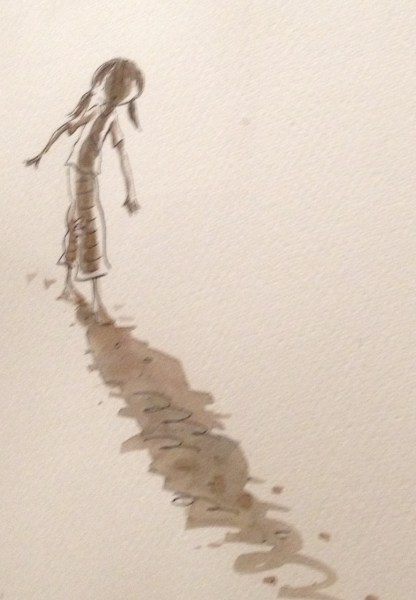 My friend Todd is an art museum guard by day and an artist by day and night. He composes and records original songs, dives deep into pop music he orders from Japan, watches and re-watches Miyazaki films, reads and re-reads favorite novels and finds something new in them each time. Whatever draws him, he will follow: He’s learning Japanese, has become a sushi expert, and gradually, over the years, has compiled a collection of hilarious and somehow profound observations on life as a museum guard.
  Q: Does writing about hard things ever make you agitated and upset, so that you have to walk away from the writing and regain your equilibrium?
 A few years ago I sat in a crowded auditorium listening to a speaker lecture on a topic I don’t remember. What I do remember is that fifteen minutes into his lecture, he was interrupted by an audience member who jumped to his feet and, under the guise of asking a question, began to harangue the speaker. The speaker, who was elderly and softspoken, was clearly stunned at the interruption, which had clearly been planned. The audience member grew taller and louder as he launched into his own, counterpoint lecture. He gesticulated. He menaced.
 Long ago I left behind the simple prayers of my childhood, the ones spoken in unison with others in church, or around the table at a special meal when everyone named something they were thankful for. I’ve never known what God is, and I don’t know what God is to others. If forced to come up with a definition, my definition of God would be something like the feeling of my children on either side of me in bed as I read them to sleep when they were little. God would be the high school students I used to teach, ringed on the floor in our classroom on the giant pillows I’d made, still and silent and sometimes falling asleep on Friday afternoons as I read them stories. God would be the idea and the feeling of peace, of a place where nothing bad can happen, where only love and comfort dwell. God would be the poems that swell my heart open in a way that almost hurts, like this one below.
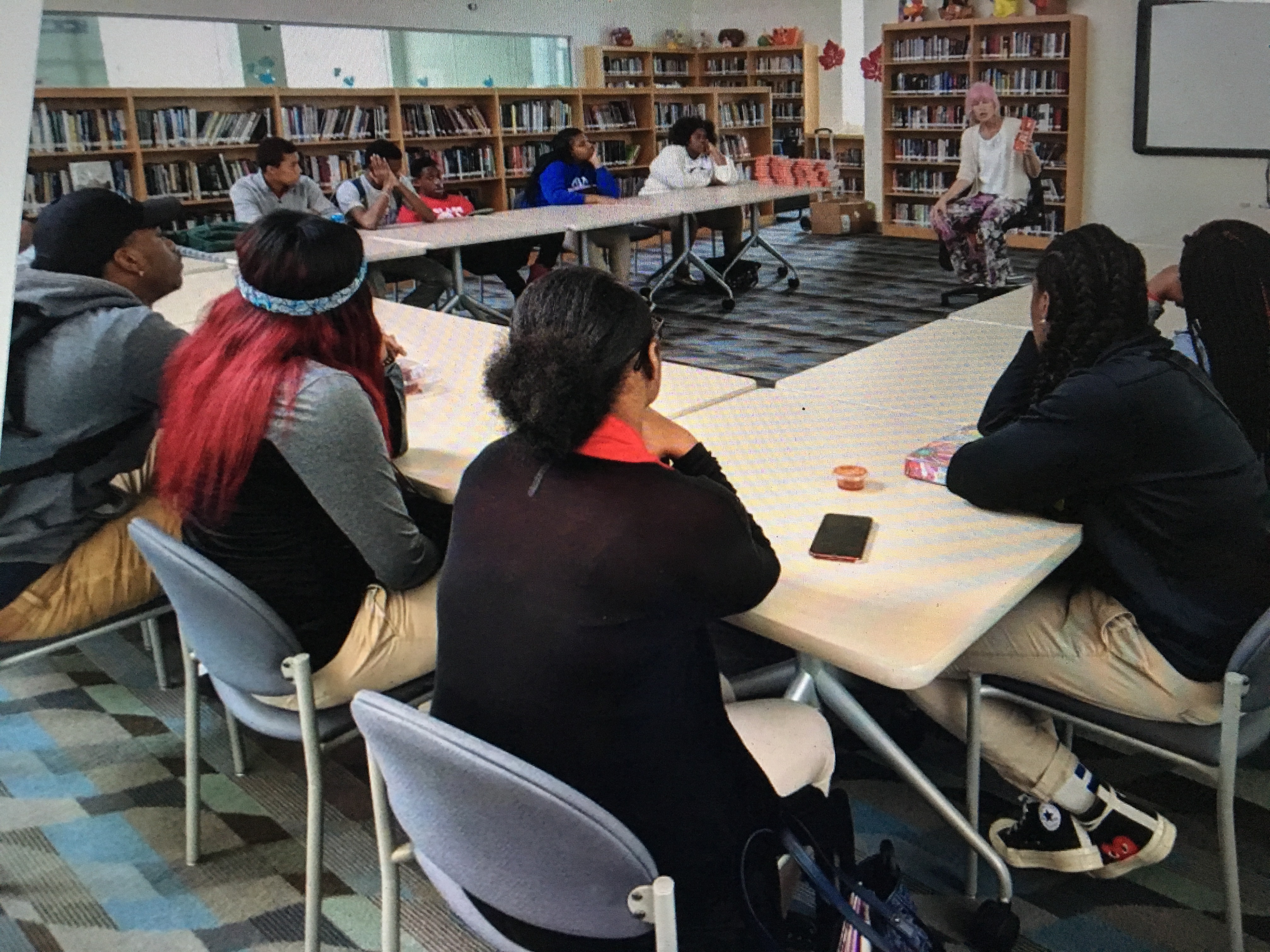 Me to a roomful of high school students last week: “Raise a hand if you’ve lost someone you love to murder.”
 Alison McGhee