Poem of the Week, by Catherine Pierce

IMG_0531We were classmates. He was a country kid, like me, and like me, he was condemned to ride the bus for miles and miles. I dreaded that bus every day of my life –it was a place of fear and intimidation and endless cruelty.
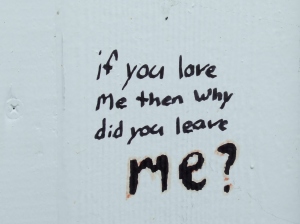
On this particular day, he sat down next to me and everyone began teasing us. They were loud and relentless. I was desperate to make them stop, make it stop, make it all stop just stop just stop, and at some point I picked up my empty lunch box and bashed it over his head. 

Did the teasing end? I don’t remember. What I do remember is how he held his hands up to protect himself. The poem below brought me back to those years of fear and that day on the bus. Kindness is in part an act of self-preservation. Had I just sat still and endured the ride I could have spared myself the lifelong memory of having hurt a kid like me, another kid who was only trying to get home. 


Poem for the Woods, by Catherine Pierce 
        

Not as I would dream them now, not with growls
and twig snaps, not with dark birds and thorned vines

I’ve invented (keening blackwing, violencia). Not late-dayblood-
sun-dappled, not refuge of men equipped

with knives and lust, not a mouth into which you might
venture and not return, no, nothing like that.

This is a poem for the woods as I knew them,
shaded and cool behind the Novaks’ house.

They seemed endless, but there was a shortcut
to Fairblue Swim Club. They held no growls,

no spikes. Only squirrels skittering, plunking acorns
down the canopy. We’d been warned of poison ivy,

but never found it. We’d been warned of rotten limbs,
but none fell. One muddy, sun-laced afternoon, we took salt

from the pantry and ventured out to where the rocks
teemed with slugs. I’d like to say our cruelty

had to do with power—human girls versus torpidity—
but really it was our curiosity, pure and unnuanced.

We wanted to see mineral against membrane.
We wanted to see something living melt. If I could,

I’d find my younger self in those woods and stop her.
I’d say, Someday you’ll carry your cruelties with you

and you’ll never be able to set them down. Keep walking now.
Keep pretending you know of nothing but kindness
.


For more information on Catherine Pierce, please check out her website.

Poem of the Week, by Adelia Prado

Photos 997My daughter at eight: What would happen if you die? I tell her she would be very sad but everyone would take such good care of her, and she says No, they wouldn’t. Because I would be dead too, of sadness. My son at four shuffles out of the bedroom in his first pair of flip-flops, having put them on himself with the strap between his second and third toes. It’s fine, mama, don’t worry, they don’t hurt, I can walk. My grandmother, flustered and red-faced in the small kitchen where she’s trying to make dinner for me: Oh Alison, I’m just no use at all anymore. Me outwardly protesting but inwardly stricken by the knowledge that in that single instant, everything is now changed.  
“Because living is just too much!” I always say when someone in an audience asks why I became a writer. “It’s all too hard! I’d lose my mind if I didn’t turn it into books!” 

I laugh and they laugh, but do they know I’m not joking? Writing makes it possible for me to live in a world without my grandmother in it, a world where my heart beats outside my body in the form of my children, where every new day brings a thousand possibilities and a thousand losses. Writing is my way of cheating time.


The Mystical Rose, by Adelia Prado

The first time
I became conscious of form,
I said to my mother:
“Dona Armanda has a basket in her kitchen
where she keeps tomatoes and onions”
and began fretting that even lovely things
eventually spoil,
until one day I wrote:
“It was here in this room that my father died,
here that he wound the clock
and rested his elbows
on what he thought was the windowsill
but was the threshold of death.”
I understood that words grouped like that
made it possible to live without
the things they describe,
that my father was returning, indestructible.
It was as if someone had painted a picture
of Dona Armanda’s basket and said:
“Now you can eat the fruit.”
So, there is order in the world!
—where does it come from?
And why does order, which is joy itself,
and bathes in a different light
than the light of day,
make the soul sad?
We must protect the world from time’s corrosion,
cheat time itself.
And so I kept writing: “My father died in this room…
Night, you can come on down,
your blackness can’t erase this memory.”
That was my first poem.    


​For more information on Adelia Prado, please follow this link.​

Website

Blog

Facebook page

@alisonmcghee

Poem of the Week, by Adam Tavel

Screen Shot 2019-02-16 at 10.16.17 AMMy five year old nephew is currently huddled behind closed doors inside his family’s new freestanding pantry, where he fits neatly into the bottom cupboard. I know this because my brother texts me ongoing updates as to this fixation with the pantry, along with the fact that my nephew just declared he’s no longer a ninja genius but a secret agent. (Didn’t surprise me at all. I never bought the ninja genius line.) My nephew cracks me up and breaks my heart the way all little kids, over and over, break my heart.
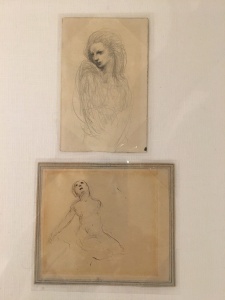
The poem below makes me want to put my arms around every little kid in the world – the solemn-eyed children at the schools I visit, the cardboard sword-wielding child in this poem, my secret agent nephew, and every single one of the migrant children I keep seeing in photos, crying at the border. Maybe they don’t know how tiny they are. Maybe we don’t know how strong they are. 


Halloween Vespers with Homemade Vader, by Adam Tavel 
        

Bless the amber porch light that coronets
his flimsy helmet’s sheen and the ringlets
this dusk breeze bounces on elastic
straps, thin as earthworms baked black
atop the stoop. Bless the dragging cape
I forgot to hem that brooms its scrape
of maple leaves trailing down beyond
the sidewalk to a dozen murky ponds
pocking our gravel drive with day-old rain.
Bless this Sith Lord’s right glove stained
with juice — it transubstantiates to blood
from rebel galaxies that fought the flood
of clones who stomped peasant martyrs free
of blasters, cause, and zealotry.
Bless the cardboard saber crayoned red
that hums its slash through Wookiee dread,
each Tusken Raider’s door we dash
to swell our bucket’s mounting stash
before we tramp across another lawn.
Bless the mask that slides for coughs and yawns.
Bless the snacking boy who curses Jedi scum,
this son who cleaves my hand and calls me son.


For more information about ​Adam Tavel, please click here.

Poem of the Week, by Gibran Kahlil Gibran

IMG_2158In the lobby of the Minnesota Public Radio headquarters are three white egg-shaped chairs. Whenever I’m there I crawl into one of them, sit cross-legged, and close my eyes. Sitting in one is like wearing a warm sweatshirt with the hood pulled entirely over your head. My love for those chairs is inordinate. When I picture a safe place to comfort myself when sad or troubled, those egg-shaped chairs come to mind. 

When I was a little girl, the poems in The Prophet, by Kahlil Gibran, used to bring me the same kind of solace. A few days ago I stood in a museum in Mexico City admiring some beautiful paintings by an artist named Gibran Kahlil Gibran, the similarity of whose name to the poet made me happy. A display case was filled with handwritten letters by the artist and I read each one out loud to myself. The fact that the painter wondered about the same things I do, love and longing and sadness, was as inexpressibly comforting to me as the egg-shaped chairs. It turns out that the painter and my poet are the same man. His words from a hundred years ago, found in an unfamiliar museum in an unfamiliar city in a country not my own, go straight to my heart.


Found poem, by Gibran Kahlil Gibran (lines from his handwritten letters, arranged by Alison McGhee)

Are you unhappy, my beloved?
I, too, am unhappy sometimes.
There are days when
bitterness mingles itself with life—
days when my dreams are
dreams of hunger and
my songs are sighs, and the
things I try to create are
sad, so very sad.

And there are days when I
want to be nothing but a
shepherd somewhere on a
faraway mountain, or an
unthought-of brother in an
unknown convent, or an
outcast on a lonely,
undiscovered island.

I have journeyed twenty-five
times around the sun—and
do not know how
many times the moon has
sailed around me—and I have
not solved the
mystery of light yet.

For more information about the painter and poet Gibran Kahlil Gibran, please click here.​


Poem of the Week, by Kim Addonizio

IMG_1960A few years ago a lifelong minor heart glitch spiraled out of control. I didn’t tell anyone until a couple hours before the surgery to fix it, so as not to worry them, and I took a Lyft to the hospital. But just before the procedure, as the surgical team was pushing the gurney into the OR, I put my hand on the arm of the nearest blue-masked nurse. Please take good care of me, I said. I don’t want to die. 
Everyone’s eyes filled with surprise and concern and they all bent over me. Of course we will. We’ll take good, good care of you. And then I was under the lights and then I was floating away and then I was waking up to the surgeon, standing at the end of the bed with his arms crossed, grinning. Do you remember telling us to stop setting your heart on fire? he asked.

 I didn’t. But that whole day came washing back over me when I read this poem below. The kindness of the nurses and doctors. The wondrousness of a world in which a heart can be precisely burned in multiple places and emerge stronger. The openheartedness of an unknown person who, long before their own death, chose to save another’s life with their own body. The knowledge that we get just one heart, and whether we’re conscious of it or not, it’s always on fire.


February 14, by Kim Addonizio

This is a valentine for the surgeons
ligating the portal veins and hepatic artery,
placing vascular clamps on the vena cava
as my brother receives a new liver.

And a valentine for each nurse;
though I don’t know how many there are
leaning over him in their gauze masks,
I’m sure I have enough—as many hearts

as it takes, as much embarrassing sentiment
as anyone needs. One heart
for the sutures, one for the instruments
I don’t know the names of,

and the monitors and lights,
and the gloves slippery with his blood
as the long hours pass,
as a T-tube is placed to drain the bile.

And one heart for the donor,
who never met my brother
but who understood the body as gift
and did not want to bury or burn that gift.

For that man, I can’t imagine how
one heart could suffice. But I offer it.
While my brother lies sedated,
opened from sternum to groin,

I think of a dead man, being remembered
by others in their sorrow, and I offer him
these words of praise and gratitude,
oh beloved whom we did not know.


​For more information on Kim Addonizio, please check out her website.​


Website

Blog

Facebook page

@alisonmcghee


Poem of the Week, by Naomi Shihab Nye

quilt, overviewThe day after I moved to Minneapolis, I bought a sewing machine. This was in the days of newspaper ads, and I found a used one for $60 and insisted my then-boyfriend and I track it down that very day. That ancient, impossibly heavy machine is what I’ve used to make all the quilts I’ve ever made, sewing together blocks I hand-stitch piecemeal. Story quilts, every one of them, made not according to a pattern but out of my head and heart. 

All these years since I bought that machine, I’ve wondered why I was so determined to get it when I was still surrounded by unpacked boxes and bags. I mean, a sewing machine? Strange. Now I think it represented security in a bewildering new place. Making friends had always been like breathing to me –easy, automatic, not something to think about–but it felt almost impossible when I moved to Minneapolis. Back then it was not the cosmopolitan city it is now, with young residents coming and going. People hung out with the same friends they’d had since kindergarten.

In retrospect, I was lonely, always trying to curb myself, be on the lookout, quiet my quick east coast way of speaking when out with my boyfriend and his friends. Maybe the sewing machine was something I could turn to for solace, something that the lonely girl I was could use to turn scraps of imaginary ideas and real fabric into something beautiful. Like the wondrous Naomi Nye says below, maybe it was a way to re-invent what my life had given me. 


Valentine for Ernest Mann
            by Naomi Shihab Nye

You can’t order a poem like you order a taco.
Walk up to the counter, say, “I’ll take two”
and expect it to be handed back to you
on a shiny plate.

Still, I like your spirit.
Anyone who says, “Here’s my address,
write me a poem,” deserves something in reply.
So I’ll tell a secret instead:
poems hide. In the bottoms of our shoes,
they are sleeping. They are the shadows
drifting across our ceilings the moment 
before we wake up. What we have to do
is live in a way that lets us find them.

Once I knew a man who gave his wife
two skunks for a valentine.
He couldn’t understand why she was crying.
“I thought they had such beautiful eyes.”
And he was serious. He was a serious man
who lived in a serious way. Nothing was ugly
just because the world said so. He really
liked those skunks. So, he re-invented them
as valentines and they became beautiful.
At least, to him. And the poems that had been hiding
in the eyes of skunks for centuries 
crawled out and curled up at his feet.

Maybe if we re-invent whatever our lives give us
we find poems. Check your garage, the off sock
in your drawer, the person you almost like, but not quite.
And let me know.    


Click here for more information about Naomi Shihab Nye.

Website

Blog

Facebook page

@alisonmcghee

Poem of the Week, by Mary Oliver

img_20190116_094526699Someone close to me sent me a booklet a while ago, photos and written memories of her life. It’s a fascinating glimpse into a childhood spent solo with older parents in upper Manhattan, a gentle childhood filled not with money, of which there was very little, but with family card games, shared meals, trips to museums and playgrounds, school days and summer camp upstate. Black and white photos show a small, smiling girl in the embrace of a mother and father who clearly adored her. Here they are leaning against a railing by Rockaway Beach. Here they are on the stoop of an apartment building. Here’s the little girl on the first day of school. 

One page in the booklet stands out to me. Titled “Dresses,” it details three dresses from her childhood – the look and feel of each, from fabric to trim to length and fit. Her mother made her these dresses while she was away at camp one summer, and she returned to find them carefully laid out on her bed.  When I told the writer how struck I was by that particular entry, she laughed, embarrassed. I almost didn’t put that page in the book, she said. Dresses. Such a silly, superficial thing to write about. But it was that small page, so precise in detail and image, that almost brought me to tears. We don’t have to write about the blue iris. We can write about weeds in a vacant lot, or a few small stones, or three small dresses. The memory of which, still bright and clear after a lifetime, feels to me like a doorway into thanks, and into the nature of love. 


Praying, by Mary Oliver

It doesn’t have to be
the blue iris, it could be
weeds in a vacant lot, or a few
small stones; just
pay attention, then patch

a few words together and don’t try
to make them elaborate, this isn’t
a contest but the doorway

into thanks, and a silence in which
another voice may speak.


For more information on Mary Oliver, please click here.​

Reports from the Road: Minneapolis to California 2019

img_1769In my life as a road tripper I’ve been to every one of the forty-eight lower states multiple times. Road trips have been part of my life since I was a little girl and my family went on a two-week driving vacation every summer. Now I go solo, for the most part, and mostly westward because I love the west. The endless rangeland, mesas and buttes and mountains rising in the distance. Sweeping across the country on wide-open highways. This is when I think best. This is when ideas for books come to me. This is when knotty problems unknot themselves. This is when I see parts of my country that I don’t live in and don’t often know much about. My road trip rules: A la Bertrand Russell in his ten commandments of critical thinking and democratic decency, Don’t be absolutely certain of anything. Be open to new information. Make conversation with everyone you meet. Listen to what they have to say. 


img_e1762Days One and Two: 807 miles, five states –Minnesota, Iowa, Nebraska, Kansas, Colorado– and two time zone changes. A thousand twirling wind turbines across endless Iowa fields in all the colors of brown. The near-empty highways of Nebraska and Kansas, swooping across plains so vast you swear you can see the curvature of the earth. Soundtrack: an utterly enchanting acoustic covers playlist, Ted Radio, Hidden Brain, Beautiful Stories from Anonymous People, and the first two lessons from Coffee Break Spanish twice over. 

img_1771

Day Three: 367 miles from the high plains of eastern Colorado to the mesas and mountains of New Mexico. Enormous grain elevators rising up from empty roads and hardscrabble towns. Traffic so sparse that oncoming drivers raise a hand in greeting, the way we always did in my rural childhood. Pulled over to take a photo and a truck pulled up beside me: “You okay? Need some help?” “Nope, just taking a photo.” Grins. Waves.

Turn a long curve and see the first snow-capped peak in the distance and feel that familiar awe surging through you. The Sangre de Cristos, southernmost range of the Rockies, look like someone gently pleated them between thumb and finger.


img_e1778

Day Four: 410 miles, from Taos to El Paso. Woke up before dawn, finished my words before breakfast, and consequently felt so free that I decided to spend the entire day exploring. Wandered around Taos and had a long and serendipitous conversation about poets and writers with the owner of Brodsky’s Books. Exchanged info. Gave him a copy of Never Coming Back.

img_1798Drove south and on a whim decided to head into Santa Fe, where I had never been. Within five minutes of arriving had decided to sell all my possessions and move there. Kidding. Maybe. I’m smitten. It was one of those magical afternoons where everyone I walked past smiled at me, everyone I talked to was interesting and kind, and the whole place is down home, lived-in, human-scale beauty. Tore myself away because miles to go before I sleep. Drove south 300 more miles to El Paso. Arrived long after dark, winding my way around a mountain below which sprawls the twinkling lights of this border city of border cities.


img_e1834Day Five: El Paso. Snippets from my long conversation with Carlos, the trolley driver.

*
Carlos: “You know how San Antonio calls itself the Gateway to Mexico? Well, they’re a couple hundred miles from Mexico. Two hundred miles? How about three feet? See that bridge down at the end of the street? Walk across it and you’re in Juarez.”

*
Carlos: “See that big high school at the end of that street? That’s El Paso High School.”
Me: “Wow, that’s a beautiful building. Did you go there?”
Carlos: “No. El Paso was segregated when I was growing up. That was the white high school. I went to the other high school.”
Me: “Which I’m sure was just as beautiful, right?”
(At which point we both smile.)

img_1825*
Carlos: “See that bar, Tap? Famous for its nachos. U2 went there in the 80’s and no one recognized them so they loved it. They spread the word to all their musician friends, hey, go to Tap if you’re in El Paso.”
Me: “Which ruined it, I bet.”
Carlos: “Yep. The nachos are still good, though.”

*
Carlos: “You know the barrio you were walking around in all morning?”
Me: “Where I felt so white and non-Spanish speaking?”
Carlos: “That’s the place. Young people are moving in there now, opening up all kinds of shops and things. They’re making it cool to live in downtown El Paso.”

*
Carlos: “That’s the public library over there. They built it on Indian burial grounds. Dug up the bodies and tossed them. So, it’s haunted. Don’t go inside, Alison. Trust me.” img_e1826

*
Me: “Carlos, what are your thoughts on the wall?”
Carlos: “See that brownish thing at the end of the street? It’s a partial fence. We’ve had it for a decade now. We have a bunch of partial fences. No one needs a wall.”

*
Carlos: “When we were in high school the plan was that if any of us did anything bad we’d just run onto the bridge. There’s a four-foot no man’s land and our plan was just to stand there, free from prosecution by anyone.”

Then the trolley ride was over and we took a selfie and Carlos told me he hoped he wasn’t overstepping but he had greatly enjoyed our conversation and would I allow him to take me out to dinner.


img_1840Day Six. Breakfast in El Paso, where all the servers and half the customers switch fluidly from Spanish to English. Happy to recognize many words from my first three Coffee Break Spanish lessons. What’s the problem with multiple languages and cultures anyway? Isn’t multiplicity only a good thing? Doesn’t it make the world bigger and also smaller, for everyone? Yes, these questions are rhetorical. But they are on my mind, because this road trip was originally going to be a hike our national parks road trip, and the reasons it’s not are so, so troubling to me.

img_1843Drove to Saguaro National Park anyway, to behold the giant sentinels standing guard over the red hills that belong to all of us, unearthly beautiful hills that I couldn’t hike because of human stupidity and ego. Aldo Leopold: “When we see land as a community to which we all belong, we may begin to use it with love and respect.” Same thing with people.


img_1857Last two days: 547 miles total, from Tucson to southern California. Do you know what to do in a dust storm? Based on the hundred or so signs on the highways yesterday, I do: Pull off the road, turn off your ignition, turn off your lights, stay buckled, wait until it passes. Yesterday: one of the great museums of the world, the Arizona Sonora Desert Museum, to see raptors, wolves, coyotes, javelinas, all manner of cacti and interesting bugs. Afterward hiked the King’s Canyon trail nearby because even though there are no rangers, there were lots of cars at the trailhead. Drove on through the nearly humanless Arizona desert to Yuma, where everyone in the breakfast room this morning was mysteriously dressed in Victorian period costume. 

img_1870Drove through the nearly deserted Mexicali desert and mountains, encountering distinct and extreme landscapes. Enormous sand dunes that looked as if sand-colored heavy cream had been whipped to soft peak status. Huge fields between mountain ranges that, from a distance, looked to be growing a kind of black shrub I’d never seen before, which turned out to be solar panels up close. “Danger: rock slides next 15 miles” territory in which I felt as if I were driving a hotwheels car around huge piles of boulders flung down by a giant.

Drove through Pima County surrounded by what looked like cotton fields and semis loaded with huge round bales of plastic-encased cotton and thought Cotton? Can this be real? and then thought, Pima cotton! This must be where it comes from!  Listened to a This American Life interview 

img_1871with Pima County’s longtime sheriff, a thoughtful, smart and experienced man who is concerned with the fact that many families, instead of single men, now try to cross the border. Thought about his concerns as I looked out on that forbidding landscape. Stopped at my third border patrol checkpoint in as many hours, the final one patrolled by many men with many guns, drug-sniffing dogs, and hundreds of cameras. “Are you a U.S. citizen?” “Yes.” “Have a good day.” Could not shake the unease from all the guns and dogs and men and cameras. Imagined myself with my three small children, trekking through hundreds of miles of desert to get to a human-made border. How much guts does it take to be an undocumented migrant in this country? Way, way more than I have.


Poem of the Week, by Sonya Renee Taylor

Photos 223This body of mine. These bodies of ours. As a girl I often witnessed both my friends and older women close to me disparage their bodies. One of my grandmothers had been a model in her youth, and she despised photos of her aged self so much that I couldn’t let them near her – she would snatch them and tear them up. My other grandmother openly hated her heavy legs, had hated them her whole life long. In response to this self-hatred, which was so painful to see, I early on vowed never to say one bad word about my body to anyone, especially my daughters. This is a vow I kept. But still. This body of mine. This body that will do everything in its power to keep me alive until my last breath. Oh my body, I have not always loved you the way you deserve to be loved. Fearfully and wonderfully made body, I have not always been good to you. When I heard this poem, I wept.


My Mother’s Belly, by Sonya Renee Taylor

The bread of her waist, a loaf
we would knead with 8 year old palms
sweaty from play. My brother and I marvelled
at the ridges and grooves. How they would summit at her navel.
How her belly looked like a walnut. How we were once seeds
that resided inside.
We giggled whenever she would recline on the couch,
lift her shirt, unbutton her pants, let her belly spread like cake batter in a pan.
It was as much a treat as licking the sweet from electric mixers on birthdays.

The undulating of my mother’s belly was not
a shame she hid from her children. She knew
we came from this. Seemed grateful.
Her belly was a gift we kept passing between us.
It was both hers, of her body
and ours for having made it new, different.
Her belly was an altar of flesh built in remembrance
of us, by us.

What remains of my mother’s belly
resides in a container of ashes I keep in a closet.
Every once and again, I open the box,
sift through the fine crystals with palms
that were once eight. Feel the grooves and ridges
that do not summit now but rill through fingers.
Granules that are so much more salt
than sweet today. And yet, still I marvel
at her once body. Even in this form say,
“I came from this.”


​For ​more information on Sonya Renee Taylor, please check out her website.

Website

Blog

Facebook page

@alisonmcghee

Poem of the Week, by Ada Limon

Boston public garden ducklingsMy three children and I were in upstate New York. This was a long time ago, and we were making our annual summer trek around New England to visit family and friends.  We had just finished touring the Utica Club Brewery, one of my favorite childhood destinations, a tour that ends with a complimentary beer or root beer in a Victorian saloon. We were all tired. I was chatting with my parents while my children wandered around, trying out various red velvet chairs.

I was sitting on one of those red chairs when my son came up to me and wordlessly sat on my lap. Reading this poem below, by the wondrous Ada Limon, brings the moment rushing back over me. He was almost twelve at the time, not much shorter than me, his tall mother, and it had been a long time since he sat on my lap. I put my arms around him the way I always used to and held him tight. Time was rushing by me, by us, by our family and the world, and I remember thinking Is this the last time? –it was–Will he ever do this again?–he didn’t. I’m sitting here now remembering that moment, and picturing my son and his sisters, grown and scattered around the country. I don’t love anything in the world the way I love them. 


The Raincoat, by Ada Limon

When the doctor suggested surgery
and a brace for all my youngest years,
my parents scrambled to take me
to massage therapy, deep tissue work,
osteopathy, and soon my crooked spine
unspooled a bit, I could breathe again,
and move more in a body unclouded
by pain. My mom would tell me to sing
songs to her the whole forty-five minute
drive to Middle Two Rock Road and forty-
five minutes back from physical therapy.
She’d say that even my voice sounded unfettered
by my spine afterward. So I sang and sang,
because I thought she liked it. I never
asked her what she gave up to drive me,
or how her day was before this chore. Today,
at her age, I was driving myself home from yet
another spine appointment, singing along
to some maudlin but solid song on the radio,
and I saw a mom take her raincoat off
and give it to her young daughter when
a storm took over the afternoon. My god,
I thought, my whole life I’ve been under her
raincoat thinking it was somehow a marvel
that I never got wet.    


For more information on Ada Limon, please check out her website.

Website

Blog

Facebook page

@alisonmcghee