Hello friends,
Wow, what a year. Is that even possible to say, since we’re only halfway through? All the everything happening around us and to us, the swirl of life in 2020. It feels as if we’re at a breaking point, a breaking point that’s necessary, scary, exhilarating, exhausting.
Some days I’m filled with fear, some days with fury, and every day a kind of wonder and hope for the future world we can make together. A world we can all breathe in. With that better, kinder world in mind, I’ve created a new podcast and moved all my one-day workshops to Zoom, on a pay-what-you’re able basis. I’d love to see you in one!
Welcome to my new podcast, Words by Winter
Words by Winter: Conversations, reflections, and poems about the passages of life. Because it’s rough out there, and we have to help each other through. Each brief episode includes a story or conversation or letter from a listener, along with a poem. Words by Winter can be found anywhere you listen to your podcasts.
Click here for Words by Winter on Apple Podcasts.
Click here for Words by Winter on Google Podcasts.
Click here for Words by Winter on Spotify.
I’d love to hear from you about what you’re going through, what uncertainties or troubles you’re dealing with, maybe in the silence of your own mind and heart. Let me know, and I’ll go in search of a poem to help you through, one that might help all of us through, in the way that poems have been helping me ever since I was a little girl.
Sometimes life feels too hard, too intense, just too much, and if that’s where you are right now, reach out. Whoever you are, whatever age, whatever place in life, you can drop me a line or send a voice memo to wordsbywinterpodcast@gmail.com.
Note: Music-free episodes are available upon request to listeners with hearing difficulties.
Introducing the Summer Session Workshops!
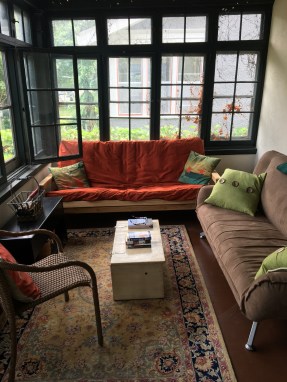 Come join me on my (virtual) porch this summer! All my three-hour workshops are now taught via Zoom and designed for writers of any and all experience. No preparation required. Each workshop is intensive, exhilarating, and fun. Consider them a recharge of your creative spirit. I regularly update my class offerings (and I’d also be happy to design one specifically for your group, whatever that group is).
NOTE: I welcome everyone and respect everyone’s individual financial circumstances. Sometimes, when under great duress, it’s even more important to feed your creative soul.
Therefore, all my classes are pay-as-you’re-able (truly, no questions asked), from free to a maximum of $75. Payment can be made via Venmo to Alison-McGhee-1, or via my Paypal account, which is alison_mcghee@hotmail.com. Personal checks are also fine.
All workshops are strictly limited to ten participants. To register for one or more, please email me.
Creative Writing Kickstart!
Date and Time: Tuesday, August 4, 10-1 pm, CST
Have you always wanted to write but aren’t sure how to begin? Or, are you a writer in need of an energy boost and a fresh start? This three-hour intensive Kickstart workshop will recharge your writing energy and help you develop a regular writing practice. We’ll do several brief writings and talk about various aspects of craft and process –maybe language, maybe flow, maybe dialogue, maybe tense and point of view, maybe some other things– in terms of what makes great writing great.
The class is designed for writers of all abilities, experience levels and genres – so I forbid you to worry if you’ve never written before! Whether you’re a longtime writer in need of a boost or someone who’s always had an interest in writing but never known how to sit down and get started, the class is designed for you.
Bonus: Weekly writing prompts will be emailed to you for one month following the end of class.
The Art of Writing Picture Books
Date and Time: Saturday, August 8, 10-1 pm CST
Do you love picture books? Have you ever wanted to write one? Are you curious how to go about it? Welcome to my one-day picture book writing workshop! In our intensive, fun class, we’ll deconstruct some classic picture books, talk about ideas for new ones, and go through all the nuts and bolts, such as how long can a picture book be? What’s the relationship between writer and artist? How do you write a picture book that children will love and adults won’t mind reading ten thousand times in a row?
We’ll come up with ideas, draft a basic outline for one or more picture books, read aloud some favorite passages, and provide instant feedback on anything you come up with. This class is designed for people of any writing ability or experience – all are welcome. Guaranteed to be illuminating, exhilarating and fun.
The Freedom of Form
Date and Time: Friday, August 14, 10-1 pm CST
When you’re stuck in a piece of writing, feeling lifeless, what do you do? Grind through, hoping desperately that a window will open? Give up? Take a break? Declare yourself a failure and slink off to drown your sorrows? I’ve taken a shot at all these methods, and none of them work as well for me as re-framing the work itself. I give myself seemingly arbitrary rules to work within, e.g., Write this scene as a series of text messages, or, Write this novel as a series of one-hundred-word passages.
The freedom of assigned form is real, people, and it’s why novels usually have chapters, and picture books are usually under 500 words. It’s why enduring forms of poetry like haiku and sonnets and sestinas are still alive and thriving. In this workshop, which is designed for writers in all genres, we will play with form as a way to open up your writing, your mind and your heart to the freedom and creativity inherent in all art. This class is designed for people of any writing ability or experience – all are welcome. Guaranteed to be illuminating, exhilarating and fun. Enrollment is limited.
Bonus: Weekly writing prompts will be emailed to you for one month following the end of class.
Memoir in Moments: Writing Your Life
Date and Time: Tuesday, August 18, 5-8 pm CST
Maybe you’re at a new stage of life, looking back. Maybe you’re thinking about your family, or your children, and all the stories they might not know about you. Maybe you’re looking back on your childhood, the things you wondered about back then, the conversations you had, the places you went, how all of them were pieces of a much larger life puzzle. Think about that T-shirt you wore all the time in seventh grade. Think about your favorite dessert when you were five years old. Your favorite song as a senior in high school. The secret you’ve never told anyone. The dream that came true, and the one that didn’t. The unexpected turns your life has taken, and how they placed pattern to everything that came after.
This class is for anyone interested in writing out some of their own life stories. We’ll focus on memoir moments in this class, brief, specific writing prompts that shine up from the page and give readers a perhaps unexpected window into who you are. This class is designed for people of any writing ability or experience – all are welcome. Guaranteed to be illuminating, exhilarating and fun. Enrollment is limited.
Bonus: Weekly writing prompts will be emailed to you for one month following the end of class.
A Novel Idea: Ways to Coax that Book Into Reality
Date and Time: Saturday, August 23, 10-1 CST
Is there a book within you that wants to be written? Stories that want to be told? Do ideas and an urge to write them out come to you at work, while walking the dog, cooking dinner, folding laundry, and in dreams? Are you frustrated because you don’t know how to begin, or how to keep going once you’ve begun? Welcome to this workshop, drawn from my own experience as a novelist, in which every single book presents its own specific building-block challenges.
Through a series of in-class prompts, discussion of creative process –both general and specific to you– and intuitive and practical analysis, we’ll come up with an individual book-writing practice plan for each participant. Note: This class will be helpful for anyone who wants to write a book, regardless of genre or subject matter.
Bonus: Weekly writing prompts will be emailed to you for one month following the end of class.
 From my porch, which is all windows, people walk by in pairs or threes or solo. Some of them stop by my poetry hut and take a poem. Some keep their heads down and never look up. Some are slow and wandery, holding hands and scuffing their feet. Others stare straight ahead and laugh while they chatter to the person on the other end of their earbuds.
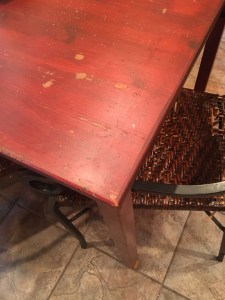 Small, wooden, stained a peeling dark red-brown, our kitchen table has moved with us from apartment to condo to house. It’s too short, so over the years I’ve glued and re-glued blocks of wood to the bottom of each leg. My little kids did their homework on it while I cooked for them, my teenagers and their friends talked and laughed around it while I cooked for them, my grown children sit around it laughing and drinking wine while I cook for them.
  Relaxation is not my style. My style is more making long daily to-do lists and then crossing items off one by one. Sometimes I can trick myself into relaxing if I turn it into a task and add it to the list —rest and read–which when you think about it is kind of pathetic.
 This morning on the porch a bee was bumbling against one of the screened windows. Its little legs drifted below its huge, furry body as it tried over and over to get out. So I
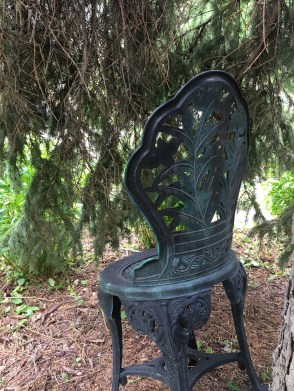 Last week I was weeding my garden on a steambath afternoon when clouds tiered overhead, the air turned greenish, and a breeze sprang up. There’s a tall pine tree in my tiny front yard, with limbs that sweep down to earth, and when the first drops splatted down, I stepped inside them to watch the storm.
 A couple of years ago my publisher emailed the cover art for a new novel. I thought it was beautiful – the rich color, the design, the way the title spread itself across the image– so I showed it to the Painter and our painter friend next door.
 Yesterday a friend told me how she longed for her father to show any interest in her. How she’d carefully planned to text him a few days before Father’s Day so that he wouldn’t feel the pressure of the holiday itself, but maybe he’d respond? I listened to her, told her how sorry I was, told her about others I knew in the same situation, thinking it might help her not feel so alone, as this poem by the magnificent Dwayne Betts floated through my mind.
  Twice in my life I’ve started down a road and kept going, even when the road narrowed and turned into thorns, brambles, impenetrable darkness. A symbol of my refusal to accept that I had made the wrong choice in the very beginning. Years later, when I read about the theory of “sunk profits,” which describes a past investment that shouldn’t but still affects your decisions about the future, I knew it was what I had done in those situations. Kept going, because with so much invested, it felt impossible to let go, even though that
 The area around Cup Foods in Minneapolis has become a memorial, and I walked there yesterday from my house, past a smiling man holding up a cardboard sign at 36th and Stevens.
  Alison McGhee