(early) Poem of the Week, by Grant Clauser

It was surprisingly easy to get, someone who never should have been able to buy a gun once mused to me, a sentence that still turns my body to ice.

Last week at a Moth live show I sat in the front row the way I always do and watched warily as one of the storytellers brought a prop concealed in a plastic bag on stage. I turned to the stranger next to me and said I hope that’s not a gun in there, and then looked around to plot my exit routes. Should I crouch and scuttle or run in a zig zag?

We cover sockets with plastic caps, put car seats in cars, buckle our seatbelts, put locks on cabinets, stop signs at corners, add a rotten egg stink to odorless gas. We keep ourselves safer in common sense ways. We can do the same with guns. Mass violence is inevitable only if we shrug and say it is. Mass violence is acceptable only if we shrug and say it is. We are helpless only if we give up. So don’t give up. Take action. Here is one of my favorite organizations.

J35, by Grant Clauser
       
For two weeks
a killer whale
pushed its dead calf
around the ocean,
diving to the cold darkness
each time the desiccating baby
sank to the bottom.
She cradled her offspring
in her dangerous mouth,
raised the stillborn
back to the surface
to make sure its collapsed blowhole
could reach the air.

What if mythology
got it wrong about Sisyphus?
The rock not punishment
from the gods, but the weight
of regret falling
back on him,
grief rolling over
him each night
as he tried to quiet
the nightmares,
then woke again
to push it as far
up the mountain
as his shoulders could take.

Finally the whale-watchers
said it was over,
the body too decomposed
and eaten by fish
for the mother to keep
carrying, and the ocean
eventually separated them
by wave and storm,
the orca rejoined its pod
to follow the salmon,
something to focus on
while moving forward

Click here for more information about Grant Clauser.

alisonmcghee.com

Words by Winter: my podcast

Poem of the Week, by Eileen Sheehan

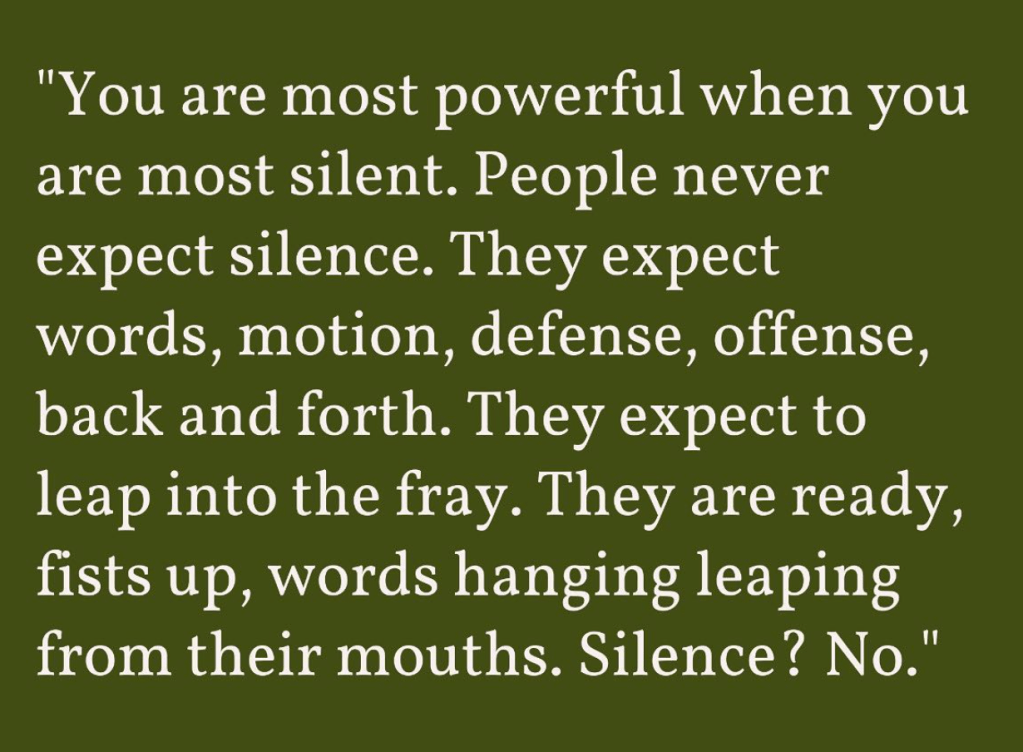
This quote is from my novel All Rivers Flow to the Sea. It pops up here and there around the world, on Instagram pages and Pinterest boards, translated into various languages. It’s taken on a life of its own, one I couldn’t have predicted. But I do remember writing these words, how the sentences spun themselves out as if they were trying to tell me something important. This poem feels the same way.

Holding the Note, by Eileen Sheehan

Singing class began with me being asked
to sing the scale. The class would laugh.

I never laughed because I already knew
I could not hold a tune, except inside my head.

For almost half a term I dreaded
Thursday mornings, until I told my mother

how I was used as an anti-tuning fork
to demonstrate how not to climb the scale.

My mother simplified it all with her advice,
Girl, on Thursday next, don’t sing.

So, next class I met her gaze dead on,
sealed my mouth tight shut. No matter

how many times she ordered me,
I allowed not one sound escape my throat.

Silence spread across the room
like a held note. I knew I had her then

for silence was my realm, not hers.
She rammed the tuning fork against

the wooden desk and instructed the
best singer in the room to lead

the group. My mother never asked a thing
when I got home but she sang, around the house,

a song that had my name in it:
and the girl inside the song could sing.

I carry every word and turn to The Spinning
Wheel: inside my head I sing it still.

For more information about Eileen Sheehan, please click here.

alisonmcghee.com

Words by Winter: my podcast

Poem of the Week, by Muriel Rukeyser

Yesterday I opened a can of tomatoes, squished them through my fingers to break them up, added them to the soup, and suddenly pictured the long line of people who made this possible. The invisible humans who planted the seeds, watched over the growing plants, harvested the tomatoes, hauled them to the processing plant, trucked them to the store, stocked the shelf I plucked them from. The people who made the can, cast the iron pot, strung together the gas lines that feed my stove.

I happily eat alone at restaurants and bars, go to movies alone, travel thousands of miles and across oceans alone, work alone, spend much of my time alone. But still, my life is entirely dependent on the decency of people I don’t know and will never know. Every time I read this poem I think about that.

Islands, Muriel Rukeyser

O for God’s sake
they are connected
underneath

They look at each other
across the glittering sea
some keep a low profile

Some are cliffs
The bathers think
islands are separate like them

For more information about Muriel Rukeyser, please click here.
alisonmcghee.com

Words by Winter: my podcast

Poem of the Week, by Sara Teasdale

The other night I dreamed I saw a girl in a treehouse, reading. A girl in a hay fort, reading. A girl in her room, reading about worlds she didn’t live in, worlds that weren’t hers but maybe someday could be.

All the girls were me. All were alone, none were lonely. None needed someone else to tell her what she could or couldn’t do with her life. Do unto others as you would not have them do unto you, Supreme Court injustices. I will disregard you. You’re afraid of that girl with a book because you should be.

The Crystal Gazer, by Sara Teasdale

I shall gather myself into myself again,
   I shall take my scattered selves and make them one,
Fusing them into a polished crystal ball
   Where I can see the moon and the flashing sun.

I shall sit like a sibyl, hour after hour intent,
   Watching the future come and the present go,
And the little shifting pictures of people rushing
   In restless self-importance to and fro.

For more information about Sara Teasdale, please click here.
alisonmcghee.com

Words by Winter: my podcast

Poem of the Week, by Jim Moore

When someone signs up for a workshop they often say something like Alison, I need you to be hard on me. Don’t sugarcoat anything. I just tilt my head and smile.

When I was young I sat through lots of tense workshops in which a few lukewarm-nice things were said and then the “real” critique started, about everything wrong with the piece. Too many times I watched students turn bright red, fight back tears.

“I do best when a teacher is tough on me.” Do you, though? What about when someone focuses on what’s beautiful, what is yours and yours alone? Watch a wild, silent power emerge. The teacher in this poem speaks to the artist in me.

A Young Man, a Stranger, Smiled at Me, by Jim Moore

           Maybe I reminded him of his grandfather
or his favorite teacher in grade school,
           the one who lied to him
about his painting of the goldfish bowl,
           who looked hard at it and said, Beautiful.

For more information about Jim Moore, please visit his website.

alisonmcghee.com

Words by Winter: my podcast

Poem of the Week, by Anne Carson

I once had a hideous job traveling to various colleges for short stints teaching Speed Reading (useless), Study Skills (mostly useless), and Mnemonics (useless unless memorizing long random numbers is your thing). The job paid almost nothing so I camped in state parks and scooped up extra packages of crackers, butter, mayonnaise, and marmalade at fast-food restaurants for supplemental calories.

But the students were great, because students are always great, and sometimes they were sad to say goodbye. Our paths will cross again in an airport someday, I used to tell them, and I believed it. I still believe it, even though it’s never happened. Someday I will meet them again: lost friends, lost students, lost loves. We’ll each be late for our flights, with time for only a few words, so we’ll have to make them count: I hope you know how much I loved you.

excerpted from The Glass Essay, by Anne Carson

Perhaps the hardest thing about losing a lover is
to watch the year repeat its days.
It is as if I could dip my hand down

into time and scoop up
blue and green lozenges of April heat
a year ago in another country.

I can feel that other day running underneath this one
like an old videotape—

For more information about Anne Carson, please click here. 

alisonmcghee.com

Words by Winter: my podcast

Poem of the Week, by Ada Limón

When I was a little kid I loved the book The Prophet, by Kahlil Gibran, to the extent that I memorized my favorite lines: Your children are not your children. They are the sons and daughters of life’s longing for itself. Then I grew up and had children, and then my children grew up, and sometimes it feels so befuddling, like wait, stop, come back, how did this all happen so fast?

This is when I instinctively and silently recite one of my mantras – They’re people in the world before they’re your children, Alison – a line that came to me years ago and which I never fully understood until three days ago, when I read this poem by the wondrous Ada Limón.

What I Didn’t Know Before, by Ada Limón

was how horses simply give birth to other
horses. Not a baby by any means, not
a creature of liminal spaces, but a four-legged
beast hellbent on walking, scrambling after
the mother. A horse gives way to another
horse and then suddenly there are two horses,
just like that. That’s how I loved you. You, 
off the long train from Red Bank carrying
a coffee as big as your arm, a bag with two
computers swinging in it unwieldily at your
side. I remember we broke into laughter
when we saw each other. What was between
us wasn’t a fragile thing to be coddled, cooed
over. It came out fully formed, ready to run.

For more information about Ada Limón, whose poems are beloved to me, please visit her website.

alisonmcghee.com

Words by Winter: my podcast

Poem of the Week, by Robert Frost

In the book I’m writing, a desperate child imagines himself far above the planet, far from the endlessly breaking bad news. He isn’t wired for the constant barrage of awfulness. None of us are. This is why I love and admire people like thirty-three-year-old Chris Smalls, who, independent from any giant outside organization, unionized the Staten Island Amazon warehouse last week. Smalls and three friends saw injustice, jumped in and built the Amazon Labor Union from scratch. There are so many good people out there just jumping in and getting things done, so many ideas we haven’t yet tried.

Riders, by Robert Frost

The surest thing there is is we are riders,
And though none too successful at it, guiders,
Through everything presented, land and tide
And now the very air, of what we ride.

What is this talked of mystery of birth
But being mounted bareback on the earth?
We can just see the infant up astride,
His small fist buried in the bushy hide.

There is our wildest mount, a headless horse.
But though it runs unbridled off its course,
And all our blandishments would seem defied,
We have ideas yet that we haven’t tried.


For more information about Robert Frost, check out this site, where an unknown someone has written about him in an odd, strangely phrased (“happily buried”?) and somehow charming way.

alisonmcghee.com

Words by Winter: my podcast

Poem of the Week, by Ursula K. Le Guin

Click here for details on my one-day spring workshops, including The Intuitive Leap on April 7 and Freedom of Form on April 8.

The animal world I can understand: kill or be killed, kill or watch your children be killed. But so many of the things humans kill about are invisible and imaginary, like the boundaries between nations, like nations themselves, like the invisible systems of capitalism and other systems we all live and struggle within. That’s harder for me to wrap my head around.

The Next War, by Ursula K. Le Guin

It will take place,
it will take time
it will take life,
and waste them.

Click here for more information about Ursula K. Le Guin.​

alisonmcghee.com

Words by Winter: my podcast

Poem of the Week, by Tadeusz Dabrowski

For details on my one-day workshops, including Memoir in Moments on March 30 and The Art of Writing Picture Books on April 3, please click here.

When he was eight, my son –known in the family for his rare, uncanny pronouncements–looked at me one day and said, “Mom, what if we’re all just people in a book, and someone somewhere is writing us?” 

A few months ago, inside a little free library, I saw a hardcover copy of my first published novel. I pulled it out and looked through it –it was like an artifact from a previous life–and an airplane ticket fell out. That too was old and faded, but I made out the name of an acquaintance from many years ago. I pictured him on a plane, high above the clouds, carrying the secret lives of my people with him as he turned the pages.

Secret Reading Matter, by Tadeusz Dąbrowski, translated by Antonia Lloyd-Jones

I take the books left for free recycling mainly for their smell, 
I stick my nose among the pages, into business not my own, 
then stroll around someone else’s home,
peeping into their kitchen and their bedroom. But once 
their smell has faded and the book’s imbued with mine, 
I leave it at a bus stop or in a mailbox.
Busy nonstop with their crimes, their love lives, 
good and evil, keeping an eye on the time
and the setting, the characters haven’t a clue how many books 
they’re carrying away in their clothing


Please click here for more information on Tadeusz Dąbrowski.

alisonmcghee.com

Words by Winter: my podcast