Never Coming Back: Free Skype visits to your book club!

Screen Shot 2017-07-15 at 4.04.18 PMMy new novel Never Coming Back has been in the world just over a month now. I’m grateful to the readers and reviewers who have responded to it with such heart. If you are one of them, I’d be eternally grateful if you’d post a positive review on Amazon or Goodreads. Never Coming Back is on the Midwest Indies bestseller list and is also a featured Midwest Connections pick for December.

The novel has been described as “book club gold” – music to a writer’s ears. In honor of book clubs everywhere, I’m offering free Skype visits to any book club who chooses to read Never Coming Back. No matter your time zone or when you hold your meeting, I promise to show up! And I’ll answer any and all questions as best I can.  

Not only that, but I am hosting a giveaway along with a Skype visit to two book clubs. Each club will receive three signed copies of the novel in addition to a Skype visit. To enter the giveaway, like and share this post and your name will be added to the hat.

Some of my most treasured responses to the novel have come from readers’ personal emails, such as the reader who wrote, I wish I could elegantly express what this book meant to me, but at this point, the thoughts are still assembling themselves in my soul. I felt you were writing the book just for me. Silly, yes. But I felt it so profoundly that I may believe it when I’m old and doddering around. I wept for Tamar and Clara, for all of us who have unsaid important things, for all who want to ask the questions when we can get answers, even if we’re not ready.

What the critics are saying: 

A luminous novel.” (Kirkus)

“McGhee’s magnetic prose and her ability to pack a richly detailed story into a slim novel. Atmospheric and introspective, Never ComingBack will resonate with those who have lost a parent to illness or estrangement but still have questions they’d like to be answered.”Booklist

“McGhee has an almost musical ability to repeat the themes of her novel with enough variation to keep them fresh. Fierce, complicated characters appear to grow out of the severe Adirondack landscape, and McGhee swerves away from sentimentality in addressing the relentlessly changing relationship at the novel’s core.”Kirkus Reviews

“[A] poignant meditation on the relationship between a mother and daughter…this well-written story will appeal to a broad range of readers for its rich characterization, mothers and daughters will especially find Clara’s and Tamar’s story moving and memorable.”Publishers Weekly

“McGhee’s latest novel… tackles the complexities of a mother-daughter relationship and the unresolved conflicts that can have lasting effects on both women.”Library Journal

Never Coming Back is a deeply moving exploration of growing up and growing old, and the ties that bind parents and children – and the mysteries that sometimes keep us apart.”Chris Bohjalian, bestselling author of The Sleepwalker, Midwives, and The Sandcastle Girls 

“When a parent is involved, the journey of a caregiver can take the mind back through all the bumps and beauties of a complicated relationship and the heart and soul into new and challenging territory. Alison McGhee captures this–all the nuances and conflicts–in her beautifully written novel. Much to praise here but it is the remarkable characterization of the mother, the indomitable Tamar, who McGhee paints with such feeling, that lingers for me. A wise, humane book and a very special novelist.”George Hodgman, New York Times bestselling author of Bettyville  

“Alison McGhee returns to the landscape of the Adirondacks in this beautifully devastating novel about the things that remain unspoken between parent and child. Never Coming Back is an exquisite book, brim-full with nostalgia, love, regret, humor, yearning–and unforgettable prose.”Julie Schumacher, author of Dear Committee Members

 * * *


Screen Shot 2017-07-15 at 4.04.18 PMNever Coming Back, my new novelwrote itself in a compulsive rush of words. Questions tumbled out across the pages, fierce questions that I have spent my own life asking myself. Why do we so often hide so much from the people closest to us? Why, much of the time, do we assume that there will always be more time? Why, for so many of us, is it only at the end of life that we spill our secrets, desperately seeking to close the distance between ourselves and the people we most love?

How well can we ever really know one another?

Faulkner’s famous, ferocious question was one of the guiding lights behind Never Coming Back, a book about the relationship between two people –Tamar Winter and her daughter Clara– who, despite their profound love for each other, have never been able to talk about the secrets they hold in their hearts. But now Tamar has early-onset Alzheimer’s, and time is running out. Tamar and Clara struggle and stumble toward reconciliation, resolution, and clarity. They try, and try, and try again. Like most of us.

Poem of the Week, by Alberto Rios

Photos 223This semester I taught a class about creative writers, identity and race. Forty students of wildly different backgrounds, ethnicities, religions and race sat in a huge square in an underground room in a building next to the train tracks midway between Minneapolis and St. Paul. We were strangers to each other. On the first day of class, I gave them a writing-from-life prompt. They wrote quickly and in silence, then some of them read their pieces aloud. The class is over now, and in their final paper, one student wrote of that first day, back in August, 
I had no idea that we would all be so comfortable with each other so quickly, especially since it was such a big class. There was a woman who talked about how she missed home and she started crying. To me, that was when the wall sort of came down for everyone and everyone was much more willing to share. I remember that in just one day, there was one man who talked about how his roommate had committed suicide on 9/11 and there was another man that talked about how his father killed his mother. These are major life events that they were sharing to basically complete strangers. That was the most open conversation I’d ever had with other students. These are things that we suppress and don’t want to admit to ourselves, so for people to tell a room full of people that, was amazing.

The instant connection that follows writing and sharing stories has been my experience all the years I’ve been teaching, and it humbles me. Listening to others’ stories always humbles me. Alberto Rios’s beautiful lines in the poem below about how We give because giving has changed us make me think about my life as a teacher and a writer, and about my students, and about all the classrooms I’ve had the honor to sit in, and it’s all I can do not to cry. Stories humble, stories hurt, stories heal. 


When Giving Is All We Have
               – Alberto Rios

 One river gives
its journey to the next.
We give because someone gave to us.
We give because nobody gave to us.
We give because giving has changed us.
We give because giving could have changed us.
We have been better for it,
we have been wounded by it—
Giving has many faces: It is loud and quiet,
big, though small, diamond in wood-nails.
Its story is old, the plot worn and the pages too,
but we read this book, anyway, over and again:
Giving is, first and every time, hand to hand,
mine to yours, yours to mine.
You gave me blue and I gave you yellow.
Together we are simple green. You gave me
what you did not have, and I gave you
what I had to give—together, we made
something greater from the difference.

For more information on Alberto Rios, please click here.

Website
Blog
Facebook page
@alisonmcghee

Poem of the Week, by Wendell Berry

Photos 851When my children were tiny they went to a neighborhood preschool two or three mornings a week. It was a gentle place, taught by lovely teachers who never got upset if a glass of milk was toppled or if someone broke a crayon. There was a dress-up corner, a story-time corner, a Lego corner. In nice weather the kids went outside and worked and played in a flower garden the school had created along a biking and walking path.
If it was too cold, there was a big empty room with hardwood floors and lots of tricycles and scooters to zip around on. The one trike that every child craved was known as The Double Bike, because that’s exactly what it was, an elongated trike with two seats, kind of a primitive version of a tandem bicycle. It was a great day when someone got to ride The Double Bike first. 

Once I arrived very early to pick up my youngest. Recess was just about to begin. I stood in the doorway and watched as she –not knowing I was there– bent down in a sprinter’s crouch, a giant grin on her face. “Are you ready?” she said to her buddies. “Get ready!” As the door to the trike room opened, she and her friends zoomed toward The Double Bike. When I think of joy, I picture my daughter’s face on that day, how her black hair flew behind her, the echo of her wild laughter.

This past week some of my closest friends and I, quiet activists all, talked briefly about the effects of this past year on our health. Messed-up sleep. Apocalyptic nightmares. Stomach ailments. Weight gain. Weight loss. Heart problems. After the conversation I felt, weirdly, better. What’s that old saying, trouble shared is trouble halved? Solidarity soothes. 

But fighting against the forces of darkness is only part of this equation. Doing something for the pure joy of it, like my little girl at the gym, and like the kingfisher in this beautiful poem below, is another kind of activism. 


Before Dark
     – Wendell Berry

From the porch at dusk I watched
a kingfisher wild in flight
he could only have made for joy.

He came down the river, splashing
against the water’s dimming face
like a skipped rock, passing

on down out of sight. And still
I could hear the splashes
farther and farther away

as it grew darker. He came back
the same way, dusky as his shadow,
sudden beyond the willows.

The splashes went on out of hearing.
It was dark then. Somewhere
the night had accommodated him

—at the place he was headed for
or where, led by his delight,
he came.


For more information on Wendell Berry, please click here.

Poem of the Week, by Naomi Shihab Nye

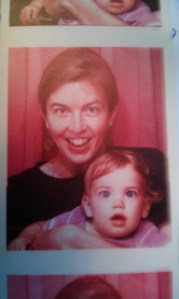
Luke and me, photo boothWhen my son was a year and a half he came down with a stomach flu. After a couple of days the vomiting and diarrhea had calmed down, but he was quiet and listless. I wasn’t terribly worried but something told me to take him to the clinic, so I did. His doctor examined him in the little bright-lit room the same way I had grown used to, with calm and gentleness. I trusted this doctor completely and instinctively the minute I met him. He was older, small and lean, with wise eyes. 

“I feel kind of dumb bringing him in,” I said, “but I just wanted to make sure.”

The doctor nodded. “It’s good you did bring him in,” he said. 

Then he went to the phone on the wall and called the hospital and asked them to reserve a room, that my son and I would be there shortly. I looked at him in bewilderment.

“The hospital?” I said, and he nodded. “Well, okay. I’ll go home and pack some clothes and”–but he shook his head. “Go now,” he said, gently. “Dehydration.”

So I went. And waited while the nurses and doctors sought to find a vein in my little boy’s small body, and then sat beside him for a couple of days while the i.v. dripped life-giving liquid into him. It was like watching a half-dead green plant revive. It took me a little while to realize that my baby had not been far from losing his life. I remembered how the doctor had pinched up the skin of his tiny belly, and how it had just stayed pinched up. I remembered how the doctor had gone immediately to the phone on the wall.

This doctor retired from active practice when my children were still small. Last week, for no known reason, the image of him flashed into my mind and I wondered where and how he was. It had been 20 years. Then, not two days later, I walked into my neighborhood bookstore to give a reading from my new novel, Never Coming Back, and just inside the door, there he was. He was older, still lean and small, still with those calm, observant eyes. He had seen that I was giving a reading, and he wanted to come. There was a lump in my throat as I hugged him.

That man is the kind of person that makes me think of this beautiful poem, one of my favorites, by Naomi Shihab Nye.


Famous
     – Naomi Shihab Nye

The river is famous to the fish.

The loud voice is famous to silence,
which knew it would inherit the earth
before anybody said so.

The cat sleeping on the fence is famous to the birds
watching him from the birdhouse.

The tear is famous, briefly, to the cheek.

The idea you carry close to your bosom
is famous to your bosom.

The boot is famous to the earth,
more famous than the dress shoe,
which is famous only to floors.

The bent photograph is famous to the one who carries it
and not at all famous to the one who is pictured.

I want to be famous to shuffling men
who smile while crossing streets,
sticky children in grocery lines,
famous as the one who smiled back.

I want to be famous in the way a pulley is famous,
or a buttonhole, not because it did anything spectacular,
but because it never forgot what it could do.


For more information on Naomi Shihab Nye, please click here.

Website
Blog
Facebook page
@alisonmcghee

Poem of the Week, by Maggie Smith

IMG_4760After a reading from my new novel Never Coming Back the other night, I spoke with a woman in the audience about synesthesia, that syndrome whereby senses cross and fuse with each other. “So as someone is talking, you don’t simultaneously see the words they’re saying inside your head?” I asked the woman, and she shook her head.

 “Then how do you understand them?” I asked her. “Is it just. . . sound? Sound that makes sense in your ears and translates itself into meaning?” She nodded. 

Everything I say, and everything others say to me, transcribes itself instantly into words that run across the bottom of the movie screen in my mind. I can’t imagine how I would ever understand language otherwise, and the woman I was talking with couldn’t imagine how this happens for me. Our conversation reminded me of this poem by Maggie Smith, a poem that stays with me for many reasons: because I love flowers and their names, because I also love my children who can’t ever remember the names of the flowers I’ve grown in our garden their whole lives long, and because, in the end, I guess it’s the sight of them both that matters, and not the names we give them.


Goldenrod, by Maggie Smith 
        

I’m no botanist. If you’re the color of sulfur
and growing at the roadside, you’re goldenrod.

You don’t care what I call you, whatever
you were born as. You don’t know your own name.

But driving near Peoria, the sky pink-orange,
the sun bobbing at the horizon, I see everything

is what it is, exactly, in spite of the words I use:
black cows, barns falling in on themselves, you.

Dear flowers born with a highway view,
forgive me if I’ve mistaken you. Goldenrod,

whatever your name is, you are with your own kind.
Look—the meadow is a mirror, full of you,

your reflection repeating. Whatever you are,
I see you, wild yellow, and I would let you name me.


​For more information on Maggie Smith, please click here​.

Poem of the Week, by Derek Sheffield

IMG_0696

Write about a powerful moment in your childhood, a time when you felt seen, heard, acknowledged and powerful,  for exactly who you were.

This was the ten-minute writing prompt a few weeks ago in my Writing for Children and Young Adults class. Memories conjured themselves up around the room. A boy known as the Fat Kid watched a Chris Farley sketch and ran to the mirror to begin practicing comedy. A shy girl, quiet and overshadowed by the big sister who had always scoffed at her taste in music, received a package filled with homemade mix tapes of classic rock songs put together by that same big sister’s college roommate, with a note that began, “So I hear you like classic rock. And so do I.” 

And a little girl watching her older sister perform a play, in Hmong, the language that she had grown up speaking and hearing only in the safety of her family home, and felt for the first time “that I was at a place that wasn’t home, but that in my heart felt like home.” 

I listened to these stories and felt like crying. It takes so little, in the life of a child. A single moment can either take away their power or infuse them with it, as in this beautiful poem below.


First Grade, by Derek Sheffield
Sunday afternoon and she looks up
from her drawing, wants to know
if I know the game where you put
your head down and thumb up

until someone picks you.
“Yes,” I say, across the room and half-
listening. “‘Well, I always pick my friends
but they never pick me.” I pause

in the middle of a sentence.
“Who are your friends?”
“Everyone!” she says, as if I had asked
one plus one or the color of the sky.

Sunlight draws a skewed rectangle
across the floor. “I see,” I say
and let my notebook close, seeing
children in rows, heads on desks,

her big ears poking through sandy hair,
listening for a step or a breath, “Yes,
I remember that game.” And I stand
and walk over to find the outline of her hand

plunging through a white sky.    


​For more information on​ Derek Sheffield, please click here

Website
Blog
Facebook page
@alisonmcghee

Poem of the Week, by Derek Walcott

img_5354This fall I’m teaching a class on identity and race and creative writers. Last week’s assignment was to choose an author from the wonderful anthology A Good Time for the Truthsomeone influential to you personally, and write about why. One of my African students, in a short, beautiful paper, wrote of the importance of reminding her black American-born nephews that “. . . they are not what the media or the world portrays them to be. They are what those who love them see in them.” And what they see in themselves. Which reminds me of this poem by the wondrous Derek Walcott, a poem I don’t often live out myself, but which I love and aspire to anyway.


Love After Love, by Derek Walcott

The time will come
when, with elation
you will greet yourself arriving
at your own door, in your own mirror
and each will smile at the other’s welcome, and say, sit here. Eat.
You will love again the stranger who was your self.
Give wine. Give bread. Give back your heart
to itself, to the stranger who has loved you

all your life, whom you ignored
for another, who knows you by heart.
Take down the love letters from the bookshelf,

the photographs, the desperate notes,
peel your own image from the mirror.
Sit. Feast on your life.

For more information on Derek Walcott, please click here.

Poem of the Week, by Bob Hicok

img_0560

This one goes out to all those who keep the world humming. To the servers and mechanics and plumbers and caterers and farmers and housecleaners and personal care attendants and orderlies and shift workers and convenience store clerks and landscapers and migrant workers and everyone else publicly championed and secretly scorned by those in power. We need more plumber poems, I always say to my students, we need more veteran poems and housecleaner poems and migrant worker poems. Write them. The world needs them. 


By Their Works

     – Bob Hicok

Who cleaned up the Last Supper? 
These would be my people. 
Maybe hung over, wanting 
desperately a better job,
standing with rags
in hand as the window
beckons with hills
of yellow grass. In Da Vinci,
the blue robed apostle
gesturing at Christ
is saying, give Him the check.
What a mess they’ve made
of their faith. My God
would put a busboy
on earth to roam
among the waiters
and remind them to share
their tips. The woman
who finished one
half eaten olive
and scooped the rest
into her pockets,
walked her tiny pride home
to children who looked
at her smile and saw
the salvation of a meal.
All that week
at work she ignored
customers who talked
of Rome and silk
and crucifixions,
though she couldn’t stop
thinking of this man
who said thank you
each time she filled
His glass.


​For more information on Bob Hicok, please click here.​


Poem of the Week, by Mary Oliver

Pete in first snow, 2011Yesterday my faithful companion and I were out for his twice-daily walk, and by “walk” I mean amble. Wander. Meander. Pete is fourteen years old now, and the boy who used to tear around the lakes for hours on end, never tiring, with me half-jogging to keep up, and who would then come home to do hot laps with the neighbor dogs in our adjoining back yard, now sways from side to side and every now and then stumbles over sidewalk heaves and steps. He breathes heavily and coughs often (heart failure), his joints are stiff (arthritis), he doesn’t notice the squirrels he used to leap after (eyes/hearing). This has happened gradually, so that I’ve had time to get used to it. Or so I thought.

But when flipping through photos the other day, I found this one and it nearly brought me to my knees. I remember when I took it. It was the first snow of the year that night, probably ten years ago, and he stood there at the end of the leash waiting impatiently for me to take the photo so that he could get back to what he wanted, which was to go, go, go through new snow, down the unshoveled sidewalk.

Petey-boy, I hope you’re still around for this year’s first snow. Are you our good boy? Are you? Are you the best, best dog? 

 * * *


from “Work”
     – Mary Oliver

All day I have been pining for the past.
That’s when the big dog, Luke, breathed at my side.
Then she dashed away then she returned
in and out of the swales, in and out of the creeks,
her dark eyes snapping.
Then she broke, slowly,
in the rising arc of a fever.

And now she’s nothing
except for mornings when I take a handful of words
and throw them into the air
so that she dashes up again out of the darkness,

like this–

this is the world.

 
For more information on Mary Oliver, please click here.​
Website
Blog
Facebook page
@alisonmcghee

Poem of the Week, by Alexandra Lytton Regalado


IMG_3122

A long time ago, far away, a wiggly baby dressed in a little purple-and-white striped number was handed over to me. She took one look at the tall, strange woman holding her and squinched up her face to cry.

Who could blame her? But I quickly whispered to her that it’s okay, it’s okay, I’m your mama and you’re my little girl and we’re going to have so much fun together. She unsquinched her face and kicked her legs and gave me a big grin and we went back to the hotel. I laid her on my stomach so we could have a chat and get to know each other, whereupon she peed on me a little. Which made me laugh. Which made her laugh. Which made me laugh. Which made her laugh, and this little closed loop of laughing went on for a while.

But then I needed to go to the bathroom, and not knowing yet if she were capable of rolling right off the bed, I lowered her into the little white iron crib that had been set up in the room. It’s okay, I’ll be right back, I said. She stopped laughing and looked up at me with dark, dark eyes. Those dark eyes followed me into the bathroom. She did not smile when I smiled and waved from the open door. She just watched me. I remember being overcome by how a baby has no control –beyond crying– over its world. How everything depends on decisions made by grownups. How the life of this dark-eyed child was now in my hands. The awesome, overwhelming responsibility of it all. Please, please let me be a good mother to her, I remember thinking. Please let me do right by her.


The T’ai Chi of Putting a Sleeping Child to Bed
     – Alexandra Lytton Regalado 

        
In the lull of evening, your son nested in your arms
becomes heavier and with a sigh his body
sloughs off its weight like an anchor into deep sleep,
until his small breath is the only thing that exists.

And as you move the slow dance through the dim hall
to his bedroom and bow down to deliver his sleeping form,
arms parting, each muscle defining its arc and release—
you remember the feeling of childhood,

traveling beneath a full moon,
your mother’s unmistakable laugh, a field of wild grass,
windows open and the night rushing in
as headlights trace wands of light across your face—

there was a narrative you were braiding,
meanings you wanted to pluck from the air,
but the touch of a hand eased it from your brow
and with each stroke you waded further

into the certainty of knowing your sleeping form
would be ushered by good and true arms
into the calm ocean that is your bed.


For more information on Alexandra Lytton Regalado, please click here