Fall Workshops!

Hello friends,

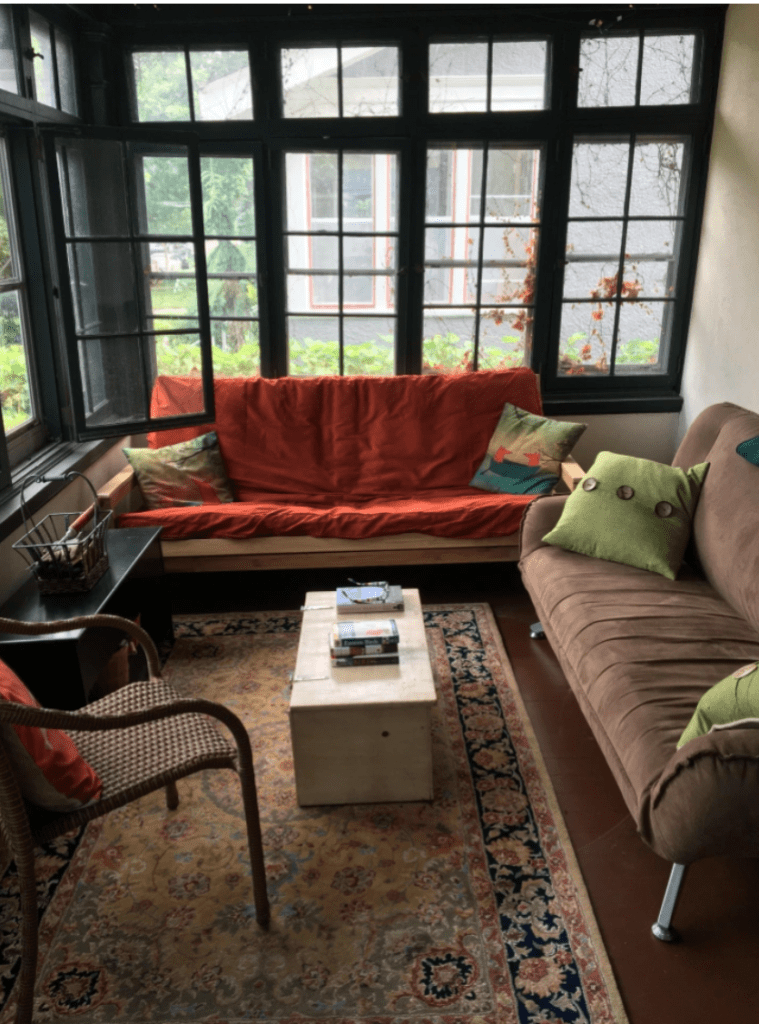
Happy fall to all! Here in Minneapolis it’s crisp and cool and invigorating, my favorite kind of weather. I’ve just scheduled my fall series of workshops and would love to see you on my (virtual) porch for an exhilarating, fun, intensive afternoon or evening. All my 3.5-hour workshops are taught via Zoom and designed for writers of any and all experience. No preparation or skills required. Each workshop requires a minimum of five participants and is strictly capped at ten.

One-day workshop fee: $100. Note that I also offer a pay-as-you’re-able option to participants under financial duress (I’ve been there myself), up to two per class, from $10-$95, no questions asked.

Registration and payment: To register for an individual workshop, email me at alisonmcghee@gmail.com or simply send payment and note which class you’re registering for. Registration is tentative until payment is received. You may send payment via Venmo to @Alison-McGhee-1, Zelle to alisonmcghee@gmail.com, or by personal check. Please email me with any questions.

See below for our fall workshop at a glance. For details about each workshop and testimonials from past participants, please head on over to my workshop page.

FALL 2022 WORKSHOP SCHEDULE AT A GLANCE

Memoir in Moments: Thursday, October 13, 2022, 6-9:30 pm Central Time (note time zone)
The Transformation of Trauma: Friday, October 14, 1-4:30 pm Central Time (Note: this class is always free)
The Freedom of Form: Sunday, October 16, 1-4:30 pm Central Time (note time zone)
The Art of Writing Picture Books: Sunday, November 6, 2022, 1-4:30 pm Central Time (note time zone)
The Intuitive Leap: Tuesday, November 8, 2022, 6-9:30 pm Central Time (note time zone)
The Gift of Words: Tuesday, November 15, 2022, 6-9:30 pm Central Time (note time zone)

ALSO, I’m in the midst of designing a one-week Writing Together session for January 2023. This is a brand-new offering of morning and/or evening one-hour writing sessions offered via Zoom. Each morning and evening for one full week, I’ll open by reading a poem or micro prose piece focused on a certain emotion or experience, then offer an accompanying 20-minute prompt in which we all write together. There’s strength and joy in working together, even if it’s silent, even if our little Zoom boxes are black, and I’m so looking forward to this new offering. More details to come!

Poem of the Week, by Ron Koertge

As a little kid I had a baby doll I loved and played with, but no Barbies – I hated them. They scared me. Maybe because they were so grownup-looking. Those big boobs, the feet permanently stuck in a pointing-down position. I didn’t want big boobs, high heels, fancy clothes.

Ken creeped me out too – that coiffed hair, that shoulders-back confidence, that gleaming I’ll be the decision-maker here, little lady look in his eye. It all gave me the willies. It still does.

Cinderella’s Diary, by Ron Koertge

I miss my stepmother. What a thing to say,
but it’s true. The prince is so boring: four
hours to dress and then the cheering throngs.
Again. The page who holds the door is cute
enough to eat. Where is he once Mr. Charming
kisses my forehead goodnight?

Every morning I gaze out a casement window
at the hunters, dark men with blood on their
boots who joke and mount, their black trousers
straining, rough beards, calloused hands, selfish,
abrupt…Oh, dear diary—I am lost in ever after:
those insufferable birds, someone in every
room with a lute, the queen calling me to look
at another painting of her son, this time
holding the transparent slipper I wish
I’d never seen.

Click here for more information about Ron Koertge.

alisonmcghee.com

Words by Winter: my podcast

Poem of the Week, by Gerald Stern

A long time ago, one of the men from my writing class at the Minnesota AIDS Project, a beautiful writer whose memoirs I still keep in a “Favorites” file, invited us all over to his house for a potluck dinner. I remember he was lying on the couch when we arrived. He hadn’t felt well for years. He’d had to leave his job at the theater. He moved slowly.

But at one point in the evening, talking about one of his favorite performances, he suddenly drew back, hands extended, and transfixed me with a few lines from the play. I remember how his eyes blazed, how his voice changed. I saw for a minute the wildness of his young man self, in love with theater, in love with life, before disease ravaged him.

The Dancing, by Gerald Stern

In all these rotten shops, in all this broken furniture
and wrinkled ties and baseball trophies and coffee pots
I have never seen a post-war Philco
with the automatic eye
nor heard Ravel’s “Bolero” the way I did
in 1945 in that tiny living room
on Beechwood Boulevard, nor danced as I did
then, my knives all flashing, my hair all streaming,
my mother red with laughter, my father cupping
his left hand under his armpit, doing the dance
of old Ukraine, the sound of his skin half drum,
half fart, the world at last a meadow,
the three of us whirling and singing, the three of us
screaming and falling, as if we were dying,
as if we could never stop—in 1945—
in Pittsburgh, beautiful filthy Pittsburgh, home
of the evil Mellons, 5,000 miles away
from the other dancing—in Poland and Germany—
oh God of mercy, oh wild God.

Click here for more information about Gerald Stern.

alisonmcghee.com

Words by Winter: my podcast

Poem of the Week, by Luci Shaw

When Alison shuffles up on a playlist, or in a store, or on the radio, I take it as a sign: There’s my song. A sign of what, who knows, other than that it brings me back to high school, waitressing at Friendly Ice Cream, and the guy at the counter who said Elvis Costello wrote a song about you, you know.
Someone wrote a song about me? And he even spelled it with one l.

Something changed, in a tiny way, for the better that night, as it did the night someone told me, at a wedding where I’d avoided them all weekend, that they had, despite how it seemed, truly loved me all that time ago. The way it changed when, going through a giant bin of old letters, I found one signed We all adore you, from a troubled time. It takes so little, sometimes, to reshape the past.

Wrong Turn, by Luci Shaw

I took a wrong turn the other day.
A mistake, but it led me to the shop where I found
the very thing I’d been searching for.

With my brother I opened a packet
of old letters from my mother and saw a side of her
that sweetened what had been deeply sour.

Later that day the radio sang a song from
a time when I was discovering love,
and folded me into itself again.

Click here for more information about Luci Shaw.

alisonmcghee.com

Words by Winter: my podcast

Poem of the Week, by Paul Zimmer

My grandmother McGhee lived her entire life in the Hudson River valley of downstate New York. She was a young mother in the Great Depression, a farm wife, a high school English teacher, a gardener, canner, cook, needle pointer and housekeeper extraordinaire, and the kind of grandmother who always shook her head sadly at my standard DQ order of a small vanilla cone. Oh Alison, she would say sorrowfully, that tiny little cone? Are you sure you don’t want a sundae instead?

She was a big woman, ashamed of her heavy legs, and she never danced, except alone, in her kitchen, to Herb Alpert and the Tijuana Brass. I know this because of the times (unbeknownst to her) that I witnessed her, standing in place, swaying ever so slightly from side to side, one hand moving in the air to the music, which she loved. When she died, at ninety, I dropped to my knees and made a sound that my children –who were tiny at the time–still remember.

Bach and My Father, by Paul Zimmer

Six days a week my father sold shoes
to support our family through depression and war,
nursed his wife through years of Parkinson’s,
loved nominal cigars, manhattans, long jokes,
never kissed me, but always shook my hand.

Once he came to visit me when a Brandenburg
was on the stereo. He listened with care—
brisk melodies, symmetry, civility, and passion.
When it finished, he asked to hear it again,
moving his right hand in time. He would have
risen to dance if he had known how.

“Beautiful,” he said when it was done,
my father, who’d never heard a Brandenburg.
Eighty years old, bent, and scuffed all over,
just in time he said, “That’s beautiful.”

Click here for more information about Paul Zimmer.

alisonmcghee.com

Words by Winter: my podcast

Poem of the Week, by Joyce Sutphen

I was a girl, walking along the Charles River in Boston on a sunny day, no one else within earshot, when suddenly a young couple got out of a car next to me, the girl in a tight sundress and heels, big smile, radiating friendliness. Her male partner silent, a half-smile on his face.

The girl was full of questions for me. She invited me to join them for coffee, tea, lunch. It’ll be fun, she said. That big smile. But something in me was wary. Something in me knew to smile, excuse myself, and back away.

I’ve never forgotten this five-minute encounter. It’s haunted me for decades, but why? Because they were going to do something terrible to you, I woke up thinking a few weeks ago. They were going to do something indescribably awful, and somehow you knew it.

Last week some friends and I were talking about all the narrow escapes in our lives, all the twists and turns of fate that somehow we’d eluded. Do you think life is just a never-ending series of lucky misses? one of them asked.

My Luck, by Joyce Sutphen

When I was five, my father,
who loved me, ran me over
with a medium-sized farm tractor.

I was lucky though; I tripped
and slipped into a small depression,
which caused the wheels to tread

lightly on my leg, which had already
been broken (when I was three)
by a big dog, who liked to play rough,

and when I was nine, I fell
from the second-floor balcony
onto the cement by the back steps,

and as I went down I saw my life go by
and thought: “This is exactly how
Wiley Coyote feels, every time!”

Luckily, I mostly landed on my feet,
and only had to go on crutches
for a few months in the fifth grade—

and shortly after that, my father,
against his better judgment,
bought the horse I’d wanted for so long.

All the rest of my luck has to do
with highways and ice—things that
could have happened, but didn’t.

Click here for more information about the wondrous Joyce Sutphen.

alisonmcghee.com

Words by Winter: my podcast

Poem of the Week, by John Daniel

So last week I was talking with this guy at a party, both of us horrified by this country’s lack of affordable housing, the grinding pain of life on the streets or in a tent city. How to make things better? Tiny house communities, with onsite health care and social services? Onsite laundry, a door you can lock, access to food, community, nature? Each of us had done a bunch of research. We didn’t agree on everything.

Guess what, I’m Republican, he said at one point, as if it were a bad word that would come as a shock to me (apparently I give off a certain political vibe).

Oh, I could tell, I said, and he laughed. Big deal.

Enough with the endless fixation on dividing ourselves into camps. Enough, enough, enough. Our problems are too big. We’re all dependent on each other.

Dependence Day, by John Daniel

It would be a quieter holiday, no fireworks

or loud parades, no speeches, no salutes to any flag,

a day of staying home instead of crowding away,

a day we celebrate nothing gained in war

but what we’re given—how the sun’s warmth

is democratic, touching everyone,

and the rain is democratic too,

how the strongest branches in the wind

give themselves as they resist, resist

and give themselves, how birds could have no freedom

without the planet’s weight to wing against,

how Earth itself could come to be

only when a whirling cloud of dust

pledged allegiance as a world

circling dependently around a star, and the star

blossomed into fire from the ash of other stars,

and once, at the dark zero of our time,

a blaze of revolutionary light

exploded out of nowhere, out of nothing,

because nothing needed the light,

as the brilliance of the light itself needs nothing.

Click here for more information about John Daniel.


alisonmcghee.com

Words by Winter: my podcast

Poem of the Week, by Joseph Hutchison

So here’s the way it’ll go down when I win the Powerball: a million each to my nearest and dearest and three million to me. With the gazillions left, we’ll set up a foundation to make the world better, with the caveat that every penny has to be spent within fifteen years. None of that endowment crap; that cash is going out the door in the here and now.

Priorities? Green energy. Women and children. The wilderness. Food insecurity. Dismantling things that hurt all of us, like racism and the patriarchy. And, and, and. . . Alison, focus. Don’t dilute the mission! Prioritize, Allie!

Check your ticket. Aw, crap. Well, there’s always next week.

Artichoke, by Joseph Hutchison 

O heart weighted down by so many wings


Click here for more information about Joseph Hutchison.

alisonmcghee.com

Words by Winter: my podcast

Poem of the Week, by George Kalogeris

It makes life easier to love what you already have, my partner said the other night when we were talking about a friend who is never satisfied.

Easier, but not always easy. Sometimes I look back in time and wonder what would have become of me if I’d stayed in Vermont. If I’d studied poetry instead of Mandarin. If I’d moved to Thailand. If I’d said no, said yes, said Please let me think this through because something doesn’t feel right, said I need help, said No, I can’t. Or said nothing at all, but walked away, walked toward, walked around.

All the lives we might have lived. All the people we might have been. All the could’ves, reaching their small hands out to us through time and space.

The Evening Star, by George Kalogeris

I boarded the Blue Line at Aquarium station.
The only empty seat was the one by that young,

head back, eyes closed, exhausted-looking father
holding his sleeping child in his folded arms.

It was already suppertime, and the Evening Star,
as Sappho sings, was calling all of the creatures

home to their mother, through the rush-hour traffic.
The subway was coming out of the tunnel’s mouth

and I was sixty when I suddenly felt
a tiny hand start pulling at my sleeve.

In his sleep the child I never had was reaching
out for me, while the father I never became

kept his eyes shut. And all the way to my stop
at Orient Heights, nothing disturbed our dream

Click here for more information about George Kalogeris.

alisonmcghee.com

Words by Winter: my podcast