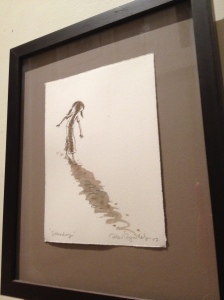
A house I used to live in was filled with a dark and ominous energy that I felt every time I approached the front door. When I dreamed, dark birds hovered silently in the air around me, landing on my shoulders and head. The dark birds wanted me — they wanted me dead. I lived in a state of permanent exhaustion, surrounded by the forces of darkness.
Two choices: I could sell the house or I could fight. Fighting was worth a shot. One sunny day, I dragged my furniture outside and set it on the walkway. I hauled out the rugs and beat them with a stick. I filled a bucket with hot water and soap, scrubbed the furniture, opened up the doors and windows and went back inside and scrubbed the walls and counters and cabinets.
The darkness began to lift, but it wasn’t enough. So I ran around windmilling my arms and yelling at the dark birds to Go away, get the hell out of here, fuck you, you will not suck me down. Then I blasted music and kept cleaning and concentrated my inward energy on driving the invisible birds away. When I returned in the morning, everything was different. The forces of darkness had been driven away.
This is a true story. I was close to losing my life. But all it took to drive out the darkness was me, standing up to it with soap and water and sunlight and resolve. Dark energy is at work right now in this country. When you wake in the night from apocalyptic dreams, when you wake in the morning terrified of what the news will bring, that’s the virus seeking entry into you. The only antidote is to gather your own forces of light and fight. We have so much more power than we think we do.
Praise Song for the Day, by Elizabeth Alexander
Each day we go about our business,
walking past each other, catching each other’s
eyes or not, about to speak or speaking.
All about us is noise. All about us is
noise and bramble, thorn and din, each
one of our ancestors on our tongues.
Someone is stitching up a hem, darning
a hole in a uniform, patching a tire,
repairing the things in need of repair.
Someone is trying to make music somewhere,
with a pair of wooden spoons on an oil drum,
with cello, boom box, harmonica, voice.
A woman and her son wait for the bus.
A farmer considers the changing sky.
A teacher says, Take out your pencils. Begin.
We encounter each other in words, words
spiny or smooth, whispered or declaimed,
words to consider, reconsider.
We cross dirt roads and highways that mark
the will of some one and then others, who said
I need to see what’s on the other side.
I know there’s something better down the road.
We need to find a place where we are safe.
We walk into that which we cannot yet see.
Say it plain: that many have died for this day.
Sing the names of the dead who brought us here,
who laid the train tracks, raised the bridges,
picked the cotton and the lettuce, built
brick by brick the glittering edifices
they would then keep clean and work inside of.
Praise song for struggle, praise song for the day.
Praise song for every hand-lettered sign,
the figuring-it-out at kitchen tables.
Some live by love thy neighbor as thyself,
others by first do no harm or take no more
than you need. What if the mightiest word is love?
Love beyond marital, filial, national,
love that casts a widening pool of light,
love with no need to pre-empt grievance.
In today’s sharp sparkle, this winter air,
any thing can be made, any sentence begun.
On the brink, on the brim, on the cusp,
praise song for walking forward in that light.
For more information on Elizabeth Alexander, please click here.
 “It was a time like this. . . when all things fall apart.”
 Thirty years ago I stood in a kitchen reading through a letter of complaint sent to a business about one of their products. “Oh my God,” I remember saying. “Whoever wrote this letter is a horrible speller. And the grammar? Jeez!” Then I turned the page over and looked at the signature. And realized that the letter had been written by someone I loved, someone who had worked incredibly hard their whole life long, someone who could always be counted on to help, someone who was right there in the room.
  Hey there, elected employees, thanks for an especially sickening week. Proud of yourselves and your ongoing attempts to destroy our democracy?
  My new novel
  This semester I taught a class about creative writers, identity and race. Forty students of wildly different backgrounds, ethnicities, religions and race sat in a huge square in an underground room in a building next to the train tracks midway between Minneapolis and St. Paul. We were strangers to each other. On the first day of class, I gave them a writing-from-life prompt. They wrote quickly and in silence, then some of them read their pieces aloud. The class is over now, and in their final paper, one student wrote of that first day, back in August,
  When my children were tiny they went to a neighborhood preschool two or three mornings a week. It was a gentle place, taught by lovely teachers who never got upset if a glass of milk was toppled or if someone broke a crayon. There was a dress-up corner, a story-time corner, a Lego corner. In nice weather the kids went outside and worked and played in a flower garden the school had created along a biking and walking path.
 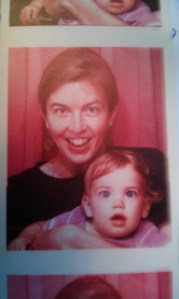 When my son was a year and a half he came down with a stomach flu. After a couple of days the vomiting and diarrhea had calmed down, but he was quiet and listless. I wasn’t terribly worried but something told me to take him to the clinic, so I did. His doctor examined him in the little bright-lit room the same way I had grown used to, with calm and gentleness. I trusted this doctor completely and instinctively the minute I met him. He was older, small and lean, with wise eyes.
  After a reading from my new novel